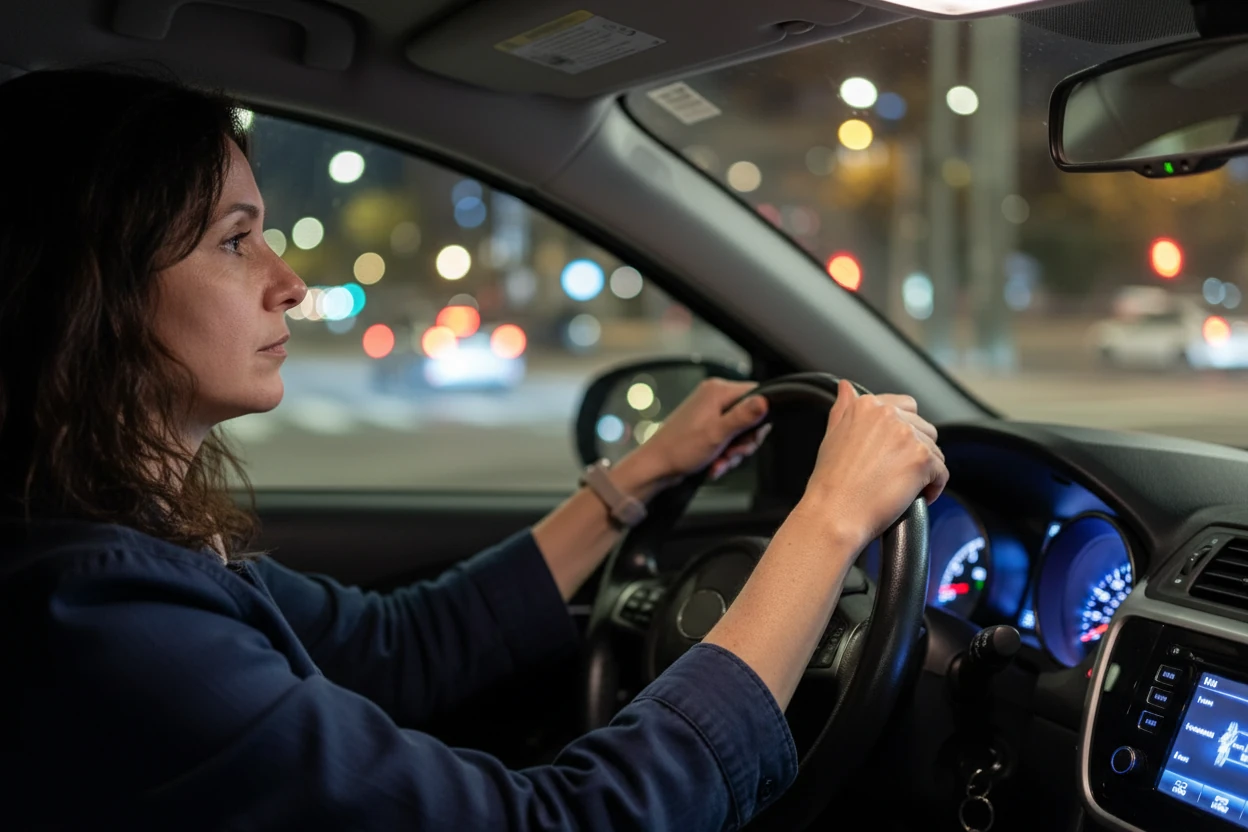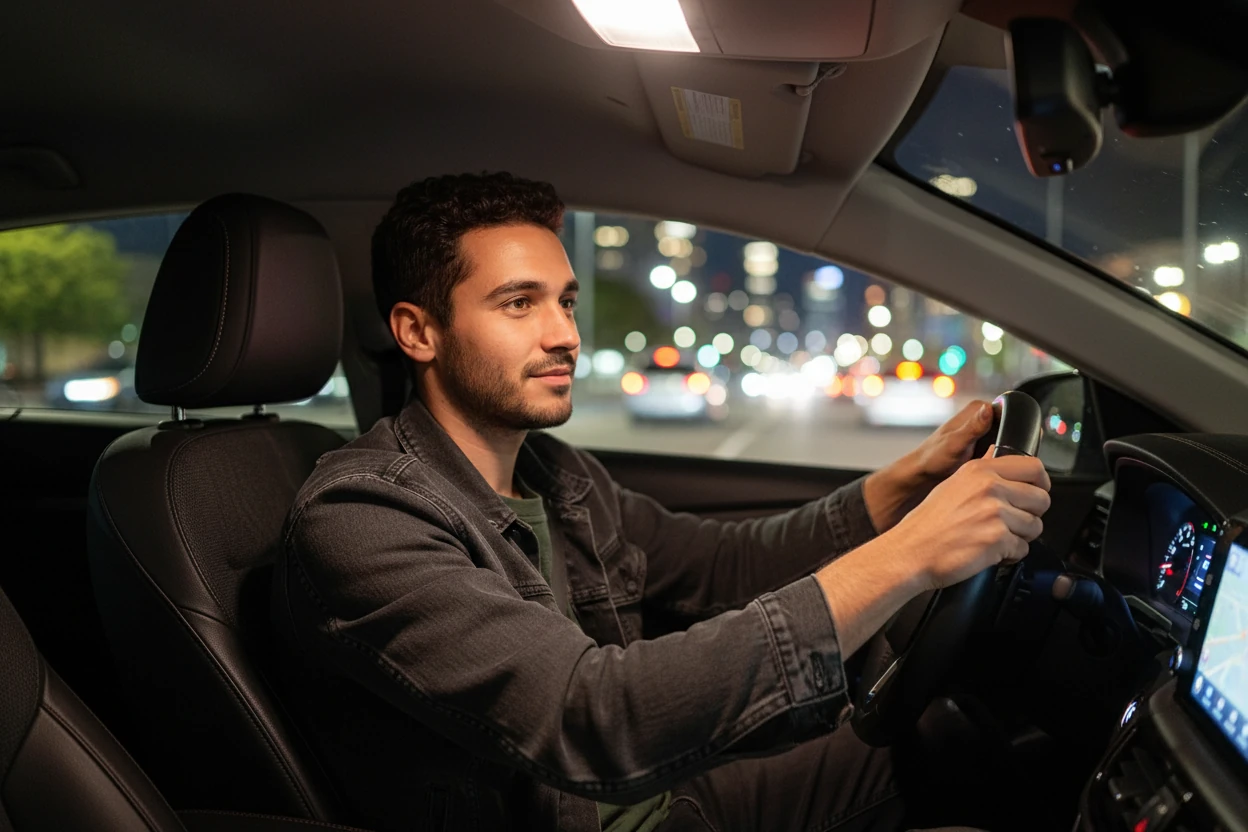
Astigmatism affects about 30% of people and causes irregular curvature of the eye’s cornea, leading to distorted or blurry vision1. This condition can make night driving especially challenging, as lights often appear streaky, blurry, or surrounded by halos, which worsens under bright or flashing light conditions like holiday decorations21. Understanding how astigmatism interacts with lighting and adopting proper safety measures can help reduce risks and improve driving comfort during the holiday season3.
“It's pretty common to see halos around lights while driving at night. But if you have significant astigmatism, the halos look more like comets with lines of light radiating out from the center.”
— Nicole Bajic, Cleveland Clinic1
Holiday Lights Risks for Astigmatism
Astigmatism causes the eye’s cornea or lens to have an irregular shape, bending light unevenly and creating multiple focal points instead of one. This leads to blurred or distorted vision, especially noticeable at night when pupils dilate and more light enters the eye1. Holiday lights, with their bright, colorful, and often flashing displays, can exacerbate these visual distortions.
People with astigmatism frequently experience glare, halos, and starbursts around lights, which can make recognizing traffic signals and road signs difficult45. The intense contrast between bright lights and darkness during holiday seasons increases these effects, causing discomfort and distraction6. Wet road surfaces can further amplify glare by reflecting lights, reducing visual clarity and increasing accident risk7.
Flashing or moving lights increase cognitive load and visual distraction, impairing driving safety for individuals with astigmatism8. Bright LED headlights, common on modern vehicles, are particularly bothersome for those with astigmatism or cataracts, intensifying glare and discomfort1.
“Bright LED headlights can be bothersome, especially for people with significant astigmatism or cataracts.”
— Nicole Bajic, Cleveland Clinic1
To reduce risks during the holiday season, experts recommend avoiding driving in areas with heavy decorative lighting when possible9. If driving is necessary, taking precautions to manage glare and visual disturbances is essential.
Driving Safely With Astigmatism at Night
Driving at night with astigmatism requires awareness of your vision limitations and proactive steps to improve safety. The following sections outline key strategies to help drivers with astigmatism navigate nighttime roads more safely.
“There is limited research about the efficacy of night-driving glasses. Many patients find them useful, and wearing them does no harm, so it is acceptable to use them if they help improve safety.”
— Nicole Bajic, Cleveland Clinic1
Understand Your Vision Limitations
Astigmatism causes irregular curvature of the cornea, often making lights appear blurry or haloed, which can seriously impact night driving skills2. The irregular shape causes light to scatter, creating visual distortions such as starbursts or comet-like halos around lights1. These effects reduce contrast sensitivity and depth perception, both critical for safe driving4.
Visual disturbances from astigmatism can lead to faster eye strain and fatigue, decreasing concentration and reaction times behind the wheel10. Recognizing these limitations is the first step toward safer driving.
Schedule Regular Eye Exams
Regular eye examinations are vital to ensure your prescription is current and to monitor changes in your vision, especially as astigmatism can worsen with age111. Everyone over 40 should see an eye doctor annually to detect and manage vision changes that affect driving1.
Eye care professionals can provide personalized advice on managing night driving challenges and recommend appropriate corrective measures11. If you notice increased glare, halos, or difficulty seeing at night, schedule an exam promptly1.
“If your vision is affecting your daily activities like driving at night, if it's changed or become bothersome, get it checked out.”
— Nicole Bajic, Cleveland Clinic1
Prioritize Appropriate Eyewear
Wearing the correct prescription glasses or contact lenses is essential for reducing visual distortions caused by astigmatism122. Toric contact lenses are designed specifically to correct astigmatism and can improve night driving skills2. Glasses with anti-reflective coatings reduce glare and improve visual comfort in bright or low-light conditions12.
“Everyone over 40 should see an eye doctor every year. Changes in your eye occur as you age and distort your vision.”
— Nicole Bajic, Cleveland Clinic1
Other eyewear tips include:
- Use glasses with non-glare lenses to minimize reflections13.
- Consider photochromic lenses that adjust to lighting changes12.
- Clean your glasses regularly to maintain clear vision2.
For some, surgical options such as LASIK or toric lens implants may be considered to correct astigmatism, but these should be discussed thoroughly with an eye care professional21.
Adjust Your Driving Habits
Drivers with astigmatism should adapt their habits to compensate for reduced night vision and increased glare sensitivity. Key adjustments include:
- Increase following distances to allow more reaction time14.
- Avoid driving in areas with excessive decorative lighting or bright festivals9.
- Use the night setting on your rearview mirror to reduce glare from headlights2.
- Dim interior dashboard lights to minimize distractions2.
- Avoid looking directly at oncoming headlights to reduce glare effects13.
These changes help maintain focus and reduce visual strain during nighttime driving.
Reduce Driving Distractions
Visual distractions from flashing holiday lights or bright streetlights can increase cognitive load, impairing driving safety for those with astigmatism8. Minimizing distractions inside the vehicle is crucial:
- Turn off or dim unnecessary interior lights13.
- Limit use of mobile devices or infotainment systems while driving8.
- Focus attention on the road and avoid staring at bright lights2.
Reducing distractions helps maintain attentional focus, which is critical for safe driving8.
Holiday lights can create overwhelming glare and starbursts for astigmatism sufferers, making night driving risky. Avoid driving during bright light festivals or heavy decorative lighting when possible.93
Clean Windshield and Headlights Regularly
Dirty windshields, mirrors, and headlights can scatter light and worsen glare, especially for drivers with astigmatism2. Keeping these surfaces clean improves visual clarity and reduces reflections from bright lights.
Regular maintenance tips include:
- Clean windshield and side mirrors frequently2.
- Ensure headlights are clear and properly aligned2.
- Remove any smudges or dirt that can amplify glare2.
These simple steps enhance visibility and reduce eye strain during night driving.
Schedule an eye exam for astigmatism. Ask about treatment options for astigmatism. Look into non-glare lenses for astigmatism. Avoid looking directly at headlights when driving with astigmatism. Dim interior lights when driving with astigmatism. Don't drive tired when you have astigmatism. Follow basic nighttime driving tips with astigmatism.13
Give Your Eyes Breaks
Driving with astigmatism under challenging visual conditions can cause eye strain and fatigue, which reduce concentration and reaction times10. Taking breaks during long drives helps rest your eyes and maintain alertness.
If you feel tired or your vision becomes blurry, pull over safely and rest before continuing10. Avoid driving when fatigued, as this increases accident risk13.
Know When You Shouldn't Drive
If visual disturbances from astigmatism are severe, it may be safest to avoid driving at night or in areas with heavy lighting decorations119. Consider alternative transportation or adjusting your schedule to drive only during daylight hours1.
Being honest about your vision limitations and prioritizing safety protects both you and others on the road.