Astigmatism is a common eye condition affecting about one in three people, where the cornea or lens has an irregular curvature that causes blurred or distorted vision at all distances1. This refractive error occurs when light entering the eye bends unevenly and cannot focus properly on the retina, leading to symptoms such as headaches, eye strain, and difficulty seeing clearly, especially at night12. Understanding the types, symptoms, causes, diagnosis, and treatment options for astigmatism is essential for managing this condition effectively and maintaining good vision34.
Types of Astigmatism
Astigmatism is classified based on the anatomical structure involved and the type of refractive error present5. The two main anatomical types are:
- Corneal astigmatism: Caused by irregularities in the curvature of the cornea, the clear front surface of the eye5. This is the most common type3.
- Lenticular astigmatism: Results from irregularities in the shape of the eye’s lens inside the eye5.
Astigmatism can also be categorized by the refractive error it causes:
- Myopic astigmatism: Astigmatism combined with nearsightedness (myopia), where distant objects appear blurry52.
- Hyperopic astigmatism: Astigmatism combined with farsightedness (hyperopia), causing difficulty focusing on close objects5.
- Mixed astigmatism: A combination of myopic and hyperopic refractive errors in different meridians of the eye52.
These classifications help eye care providers select the most appropriate treatment based on the specific type and severity of astigmatism5.
Astigmatism Symptoms
Astigmatism causes a range of visual symptoms due to the irregular focusing of light on the retina4. Common symptoms include:
- Blurred or distorted vision at all distances, making objects appear wavy or stretched41.
- Difficulty seeing clearly at night or in low light conditions42.
- Squinting to try to improve vision4.
- Eye strain and fatigue, especially after reading or using digital devices47.
- Headaches related to eye discomfort4.
- Sensitivity to glare or halos around lights1.
Children with astigmatism may not realize their vision is blurry and often do not complain, making regular eye exams important for early detection6.
Astigmatism Causes
Astigmatism occurs when the cornea or lens has an irregular shape, preventing light from focusing properly on the retina85. Instead of a smooth, spherical surface, the cornea or lens is curved more steeply in one direction, resembling an oval or rugby ball shape9. This irregular curvature causes light rays to focus at multiple points, leading to blurred or distorted vision56.
Risk Factors
Several factors increase the risk of developing astigmatism:
- Genetics: Astigmatism often runs in families, indicating a hereditary component56.
- Age-related changes: The shape of the cornea and lens can change with age, contributing to astigmatism development or progression5.
- Eye injury or trauma: Damage to the cornea or lens can cause irregularities leading to astigmatism5.
- Eye surgery: Procedures such as cataract surgery or refractive surgery can induce astigmatism as a postoperative complication510.
- Keratoconus: A progressive thinning and bulging of the cornea that causes severe astigmatism11.
- Excessive screen time in young children: Linked to an increased risk of astigmatism development12.
It is a myth that squinting, reading in low light, or watching TV causes astigmatism or worsens it6.
“Astigmatism is caused by a cornea or lens that has a different shape than normal. Astigmatism is very common. Doctors don't know why the shape of the cornea or lens varies from person to person. But they do know the risk of getting astigmatism is inherited (passed down from parents).”
— American Academy of Ophthalmology6
Diagnosing Astigmatism
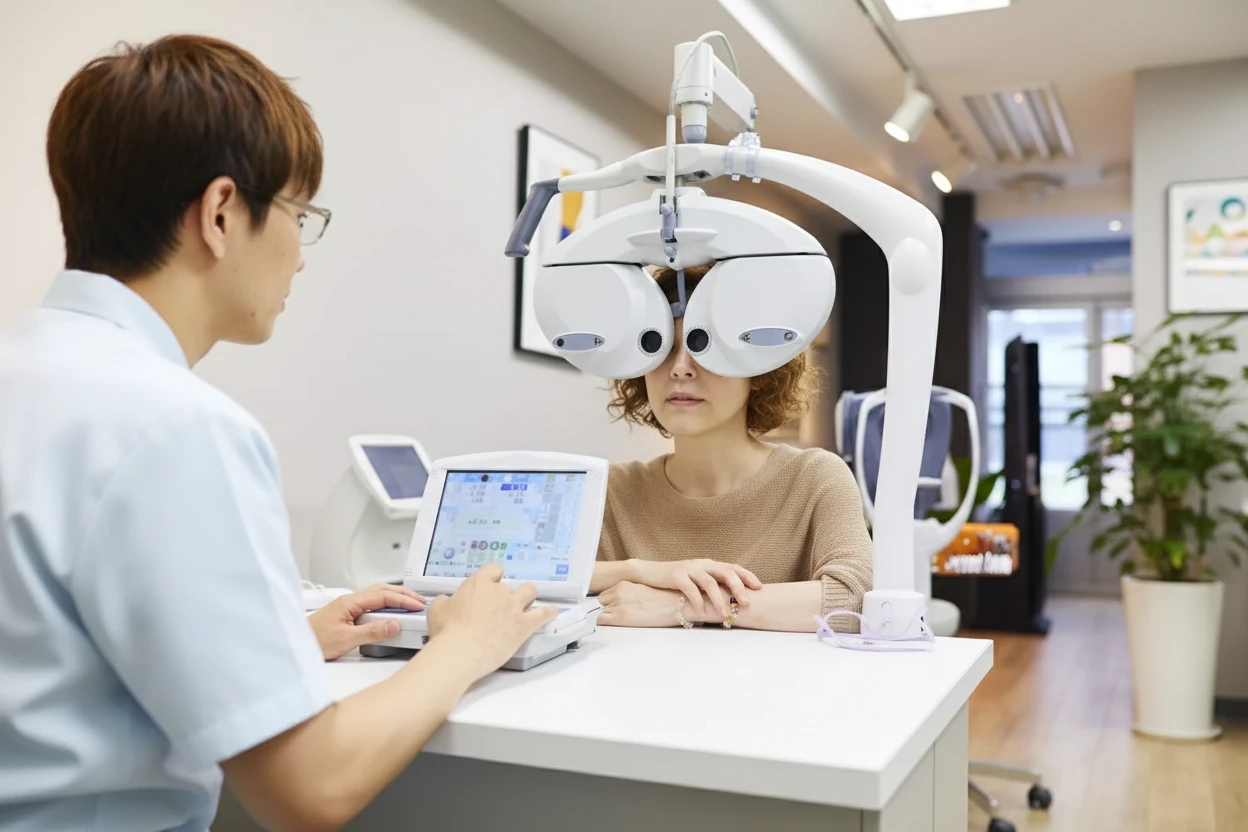
Diagnosis of astigmatism requires a comprehensive eye examination by an eye care professional34. The exam includes several tests to assess the shape of the cornea, the refractive error, and overall eye health:
- Visual acuity testing: Measures the clarity of vision at various distances using eye charts4.
- Refraction testing: Determines the degree and type of refractive error by using lenses to find the best correction4.
- Retinoscopy: A technique to observe how light reflects off the retina to estimate refractive errors4.
- Keratometry: Measures the curvature of the cornea to detect irregularities causing astigmatism4.
- Pachymetry: Assesses corneal thickness, important for planning surgical treatments4.
- Corneal topography: Maps the surface of the cornea in detail to identify irregular shapes13.
These tests help guide treatment decisions and monitor changes over time34.
“Astigmatism is diagnosed with a complete eye exam involving tests to check eye health and refraction to determine how eyes bend light. Treatment goals are to improve vision clarity and eye comfort through corrective lenses or refractive surgery.”
— Mayo Clinic14
Astigmatism Treatment
Treatment for astigmatism aims to improve visual clarity and reduce symptoms by correcting the irregular focusing of light4. The choice of treatment depends on the severity and type of astigmatism, as well as patient preferences and lifestyle54.
Refractive Surgery
Surgical options reshape the cornea to correct astigmatism and reduce dependence on glasses or contact lenses415. Common procedures include:
- Astigmatic keratectomy: Uses precise incisions to alter corneal curvature4.
- LASIK (Laser-Assisted In Situ Keratomileusis): A laser reshapes the cornea beneath a thin flap to correct vision414.
- PRK (Photorefractive Keratectomy): Removes the outer corneal layer with a laser to reshape the cornea413.
- SMILE (Small Incision Lenticule Extraction): A minimally invasive laser procedure to remove corneal tissue and correct astigmatism10.
Surgical correction is generally effective and long-lasting but may carry risks such as dry eyes, halos, undercorrection, or infection14.
Orthokeratology
Orthokeratology uses specially designed rigid gas-permeable contact lenses worn overnight to temporarily reshape the cornea4. This non-surgical option can reduce astigmatism during the day without glasses or contacts4. Multiple sets of lenses may be needed to maintain the effect4.
Glasses and Contact Lenses
Corrective lenses are the most common and non-invasive treatment for astigmatism34. Options include:
- Eyeglasses: Lenses with cylindrical power compensate for the uneven curvature4.
- Toric contact lenses: Soft or rigid lenses designed to correct astigmatism by aligning with the corneal shape13.
- Scleral lenses: Larger rigid lenses that vault over the cornea, used in severe cases or irregular astigmatism13.
Mild astigmatism may not require correction but should be monitored regularly4.
“There is no best way to correct your astigmatism—the most appropriate correction is one that best suits your vision needs and lifestyle.”
— American Academy of Ophthalmology6
Astigmatism Prevention
Currently, there is no proven way to prevent astigmatism because its exact cause is unknown85. Lifestyle habits such as squinting or watching television do not cause or worsen astigmatism56. However, excessive screen time in young children may increase the risk of developing astigmatism12.
Mild astigmatism may resolve on its own, but regular eye exams and adherence to treatment are important to prevent progression and complications54. Early detection allows timely management to minimize worsening vision5.
Astigmatism treatments range from simple glasses to advanced laser surgeries. Each option aims to improve vision clarity and reduce discomfort, with choices tailored to individual needs and severity.144
Related Eye Conditions
Astigmatism is often associated with other vision problems, increasing the risk of:
- Myopia (nearsightedness) and hyperopia (farsightedness), which frequently coexist with astigmatism42.
- Cataracts, with 35% to 40% of cataract patients also having astigmatism4.
- Amblyopia (lazy eye), especially when astigmatism is present in childhood and left untreated164.
- Strabismus (eye misalignment), which may develop secondary to uncorrected astigmatism4.
- Double vision and keratitis as complications of untreated astigmatism4.
Early diagnosis and treatment of astigmatism can help reduce the risk of these related conditions34.
Living With Astigmatism
Living with astigmatism requires regular eye care and adherence to prescribed treatments to maintain good vision and quality of life34. Untreated astigmatism can significantly impair daily activities such as reading, driving, and computer work74. Most patients who follow treatment recommendations can lead normal, active lives with minimal visual discomfort4.
Regular eye exams are essential to monitor changes in astigmatism and adjust treatment as needed34. Vision therapy may also help improve eye coordination and reduce symptoms in some cases17.
Proper management of astigmatism not only improves vision but also reduces the risk of developing other eye problems. Regular check-ups and treatment adherence are key to living well with astigmatism417.
Astigmatism FAQs
Can astigmatism be prevented?
No, astigmatism cannot be prevented because its exact cause is unknown. Lifestyle habits like squinting or watching TV do not cause it56.
Does astigmatism get worse over time?
Astigmatism can progress, especially if left untreated, so regular monitoring is important to detect changes early4.
What are the treatment options for astigmatism?
Treatment includes glasses, contact lenses, orthokeratology, and refractive surgery such as LASIK or PRK, depending on severity and patient preference415.
Can children have astigmatism?
Yes, children can have astigmatism and may not realize their vision is blurry. Early eye exams are important for detection and treatment to prevent complications like amblyopia6.
Is surgery a permanent fix for astigmatism?
Surgical procedures like LASIK and PRK are generally effective and long-lasting but may not be suitable for everyone. Discuss risks and benefits with your eye doctor14.