Ptosis is a condition where the upper eyelid droops over the eye, potentially limiting or completely blocking vision depending on the severity1. It can affect one or both eyelids and may be present at birth or develop later in life1. Understanding the types, causes, symptoms, and treatment options of ptosis is essential for timely diagnosis and management to prevent complications such as vision impairment23.
Types of Ptosis: Congenital, Acquired & Pseudoptosis Explained
Ptosis is classified based on its underlying cause into several types: congenital, neurogenic, myogenic, mechanical, aponeurotic, and traumatic45.
- Congenital ptosis is present at birth and accounts for approximately 70-80% of pediatric cases62. It results from developmental abnormalities of the levator muscle or its nerve supply67. Children with congenital ptosis may have limited eyelid muscle function from birth8.
- Neurogenic ptosis arises from nerve dysfunction affecting eyelid elevation. Common causes include third cranial nerve palsy, Horner syndrome, and myasthenia gravis95.
- Myogenic ptosis is due to primary muscle disease such as myasthenia gravis or chronic progressive external ophthalmoplegia, where the levator muscle itself is weakened105.
- Mechanical ptosis occurs when physical factors like tumors, scarring, or edema weigh down the eyelid, impairing its elevation45.
- Aponeurotic ptosis is the most common acquired form, often related to aging, trauma, or surgery. It results from stretching, dehiscence, or disinsertion of the levator aponeurosis115.
- Traumatic ptosis results from direct injury to the eyelid muscles or nerves, such as from accidents or surgery125.
| Ptosis Type | Approximate Prevalence | Common Causes | Typical Treatment |
|---|---|---|---|
| Congenital | 70-80% of pediatric cases26 | Levator maldevelopment, nerve defects | Surgery (levator resection, frontalis sling)13 |
| Aponeurotic | Most common acquired type11 | Aging, trauma, surgery | Surgery (levator aponeurosis repair)11 |
| Neurogenic | ~6%2 | Third nerve palsy, Horner syndrome | Treat underlying cause, surgery if needed9 |
| Mechanical | ~9%2 | Tumors, scarring | Surgery, tumor removal4 |
| Myogenic | ~4%2 | Myasthenia gravis, myopathies | Medical therapy, surgery14 |
| Traumatic | ~11%2 | Injury | Surgery, supportive care12 |
Ptosis Symptoms: Visual Impairment, Fatigue & Aesthetic Concerns
The hallmark symptom of ptosis is drooping of one or both upper eyelids61. This drooping can vary from mild to severe and may affect vision depending on the extent of eyelid coverage over the pupil1.
Common symptoms and signs include:
- Visible drooping of the upper eyelid(s), which may be more pronounced in one eye61.
- Asymmetry or abnormal eyelid crease height, especially noticeable when looking down13.
- Visual field obstruction in severe cases, potentially leading to amblyopia (lazy eye) in children3.
- Compensatory behaviors such as tilting the head backward or raising the eyebrows to improve vision151.
- Forehead wrinkling due to overuse of the frontalis muscle to lift the eyelid4.
- Eye strain, difficulty focusing, and a sensation of heaviness or tiredness around the eyelid64.
- Secondary complications in children, including strabismus (crossed eyes) and amblyopia if untreated16.
Ptosis Causes: Muscle Weakness, Nerve Damage & Underlying Conditions
Ptosis occurs when the muscles or nerves responsible for elevating the upper eyelid fail to function properly41. The levator palpebrae superioris muscle and Müller's muscle are primarily responsible for eyelid elevation4.
Causes vary by ptosis type:
- Congenital ptosis is caused by developmental abnormalities of the levator muscle or its innervation during fetal growth68.
- Aponeurotic ptosis results from stretching or detachment of the levator aponeurosis, often due to aging, trauma, or surgery115.
- Neurogenic ptosis arises from nerve damage affecting eyelid muscles, such as third nerve palsy, Horner syndrome, or myasthenia gravis95.
- Myogenic ptosis is caused by muscle diseases weakening the levator muscle1017.
- Mechanical ptosis occurs when physical factors like tumors, scarring, or swelling weigh down the eyelid4.
- Traumatic ptosis results from direct injury to the eyelid muscles or nerves12.
Additional causes include:
- Aging-related weakening of eyelid muscles and tissues17.
- Diseases such as stroke, tumors, or systemic neuromuscular disorders181917.
- Eye surgery complications or prolonged contact lens use118.
Severe ptosis can obstruct the visual axis, impairing vision and potentially causing amblyopia in children3. Bilateral ptosis is less common than unilateral, with a slight predilection for the left eye in unilateral cases2.
Diagnosing Ptosis: Clinical Examination, Imaging & Specialized Tests
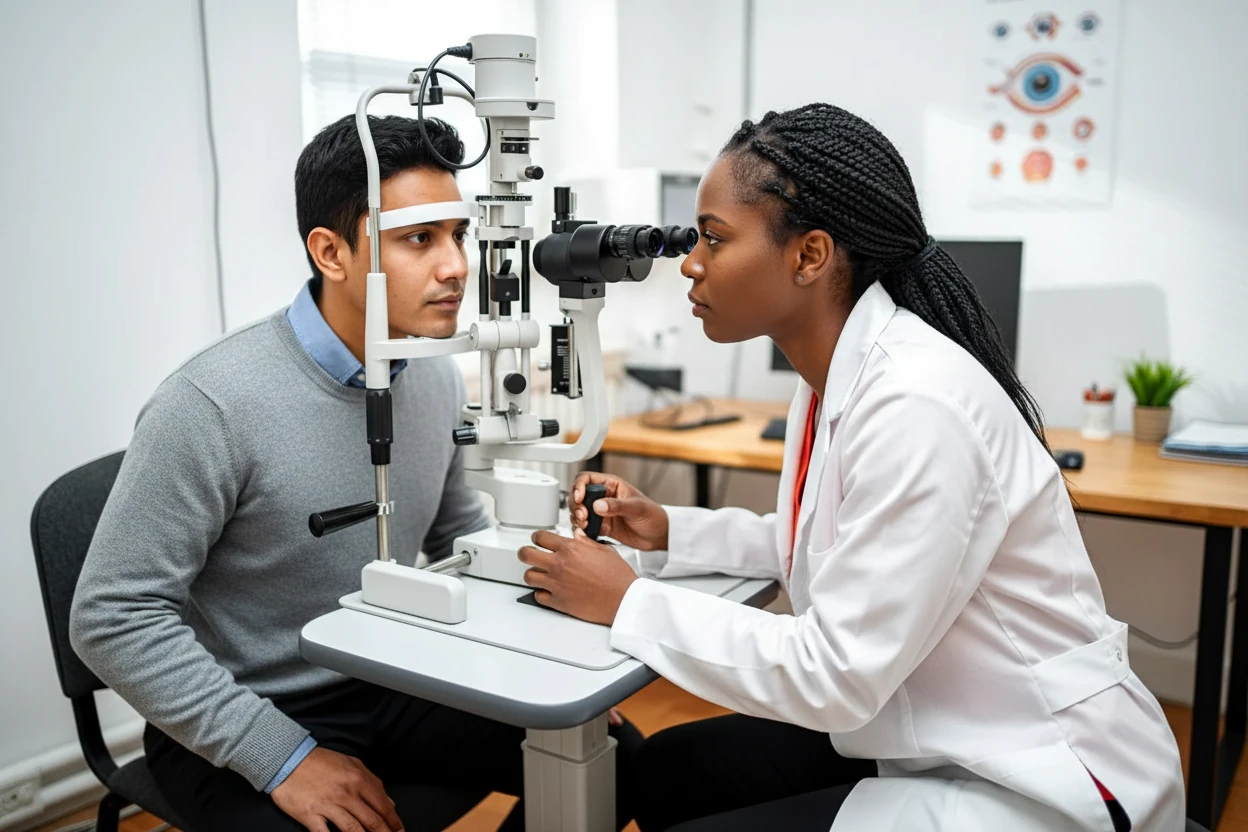
Diagnosis of ptosis involves a thorough clinical evaluation to determine the severity, cause, and impact on vision94.
Key diagnostic steps include:
- Assessing levator muscle function by measuring eyelid excursion from downgaze to upgaze13.
- Measuring margin-reflex distance 1 (MRD1), the distance from the corneal light reflex to the upper eyelid margin; an MRD1 under 2 mm typically indicates ptosis13.
- Measuring palpebral fissure height to quantify eyelid droop severity13.
- Comparing eyelid positions between eyes to distinguish unilateral from bilateral ptosis4.
- Observing eyelid crease height changes on downgaze, which may suggest levator dysfunction13.
- Screening for thyroid disease, as thyroid eye disease can cause eyelid abnormalities9.
- Testing visual acuity to assess the impact on vision and exclude other ocular pathology3.
- Performing serologic tests for myasthenia gravis antibodies if myogenic ptosis is suspected14.
- Ordering orbital and brain-fog-causes-symptoms-and-treatment">brain fog causes symptoms and treatment-injury-symptoms-and-signsbrain imaging when tumors or neurological causes are suspected2018.
Grading Ptosis
Ptosis severity is graded based on eyelid measurements and functional impact:
- Mild ptosis: Minimal eyelid drooping, usually with MRD1 slightly less than normal; often no vision impairment6.
- Moderate ptosis: More noticeable drooping with partial obstruction of the visual axis; may require treatment4.
- Severe ptosis: Significant eyelid drooping covering the pupil, causing visual impairment and risk of amblyopia in children3.
Grading helps guide treatment decisions and urgency4.
“Ptosis is when the upper eyelid droops over the eye. The eyelid may droop just a little, or so much that it covers the pupil (the black dot at the center of your eye that lets light in). Ptosis can limit or even completely block normal vision.”
— Cesar A. Briceno, American Academy of Ophthalmology1
Ptosis Treatment Options: Surgical Correction, Non-Surgical & Medical Management
Treatment depends on the ptosis type, severity, and impact on vision or appearance421. Mild ptosis without visual obstruction often requires no intervention6. Moderate to severe cases may need surgical or nonsurgical treatment.
Surgeries
Surgery is the mainstay of ptosis treatment, aiming to restore eyelid height, contour, and function while preventing complications such as corneal exposure11422.
Common surgical procedures include:
- Levator resection: Tightening and shortening the levator muscle to elevate the eyelid; suitable for patients with moderate levator function1323.
- Frontalis sling surgery: Connecting the eyelid to the frontalis muscle (forehead muscle) to lift the eyelid in cases of poor levator function13.
- Aponeurosis repair: Reattaching or repairing the levator aponeurosis in aponeurotic ptosis11.
- Matais procedure: Attaching the levator to the superior rectus muscle to improve eyelid elevation222.
Most surgeries are outpatient procedures performed under local anesthesia with or without sedation424. Postoperative care includes managing edema and bruising with cold compresses and analgesics4.
Patient satisfaction rates after surgery range from 78% to over 90%, with low complication rates2522.
| Surgical Procedure | Indication | Description |
|---|---|---|
| Levator resection | Moderate levator function | Tightening levator muscle to lift eyelid1323 |
| Frontalis sling surgery | Poor levator function | Connecting eyelid to frontalis muscle13 |
| Aponeurosis repair | Aponeurotic ptosis | Repairing levator aponeurosis11 |
| Matais procedure | Selected cases | Attaching levator to superior rectus222 |
Nonsurgical Treatment
Nonsurgical options are limited but may be considered in specific cases or as adjuncts:
- Eyelid exercises to strengthen the levator muscle, though evidence of efficacy is limited226.
- Electrical stimulation of eyelid muscles using devices like an electrical toothbrush, applied multiple times daily226.
Medication
A prescription eye drop called oxymetazoline (Upneeq) is available for some adults with acquired ptosis. It acts on Müller's muscle to temporarily lift the eyelid21271. Daily use is required to maintain effect. However, it is not effective for ptosis caused by nerve injury or trauma1.
Ptosis Prevention: Lifestyle Adjustments & Early Intervention Strategies
Prevention of congenital ptosis is generally not possible due to its developmental origin6. For acquired ptosis, avoiding trauma and managing underlying diseases may reduce risk11.
Surgical techniques like the Matais procedure can help reduce ptosis severity by improving eyelid muscle function222.
Conditions Related to Ptosis: Myasthenia Gravis, Stroke & Ocular Diseases
Ptosis can be associated with other ocular and systemic conditions:
- Amblyopia (lazy eye) and strabismus (misaligned eyes) may develop secondary to untreated ptosis in children316.
- Eyelid pressure from ptosis can induce astigmatism by altering corneal curvature16.
- Compensatory head postures such as torticollis (head tilt) may develop to improve vision15.
- Ptosis may be a sign of systemic diseases like myasthenia gravis, stroke, or tumors141819.
- Some patients use exercises or electrical stimulation to strengthen eyelid muscles, though evidence is limited226.
Living With Ptosis: Coping Strategies, Support & Quality of Life Improvement
Living with ptosis can impact vision, appearance, and quality of life. Children with ptosis are at higher risk of ocular complications and may develop abnormal head postures to compensate615.
Psychosocial distress is common due to altered appearance, affecting self-esteem and social interactions25. Comprehensive care including psychological support can improve outcomes25.
Most ptosis surgeries have good functional and cosmetic results, with healing stabilizing within weeks to months4. Regular follow-up is important to monitor vision and eyelid function.
Ptosis can cause vision problems and affect appearance, but early diagnosis and treatment improve outcomes. Surgery is usually safe and effective, with high patient satisfaction rates1226.
Ptosis FAQs: Common Questions About Drooping Eyelids Answered
Q: Can ptosis affect vision?
A: Yes, severe ptosis can block the visual axis and cause vision impairment or amblyopia in children31.
Q: Is surgery the only treatment for ptosis?
A: Surgery is the main treatment, but prescription eye drops like oxymetazoline may help some adults with acquired ptosis211.
Q: Can ptosis be prevented?
A: Congenital ptosis cannot be prevented, but avoiding trauma and managing diseases may reduce acquired ptosis risk611.
Q: What is the recovery like after ptosis surgery?
A: Most surgeries are outpatient with local anesthesia. Postoperative swelling and bruising are common but resolve with care over weeks to months4.