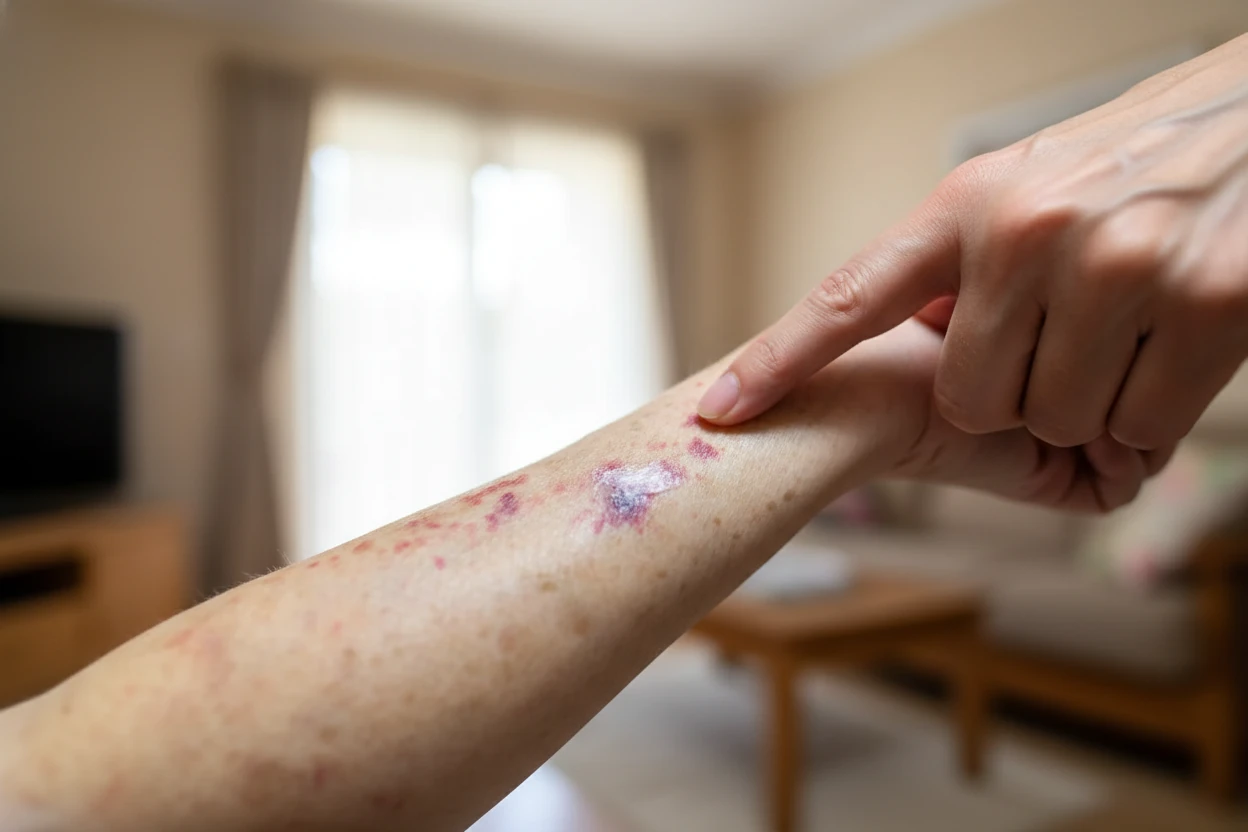
Skin diseases affect millions of adults worldwide, causing symptoms ranging from mild irritation to severe discomfort and disfigurement. These conditions can result from infections, immune responses, genetic factors, or environmental triggers, often leading to visible changes such as rashes, bumps, or discoloration1. Effective treatment depends on accurate diagnosis and tailored management strategies to reduce symptoms and improve quality of life2.
1. Acne
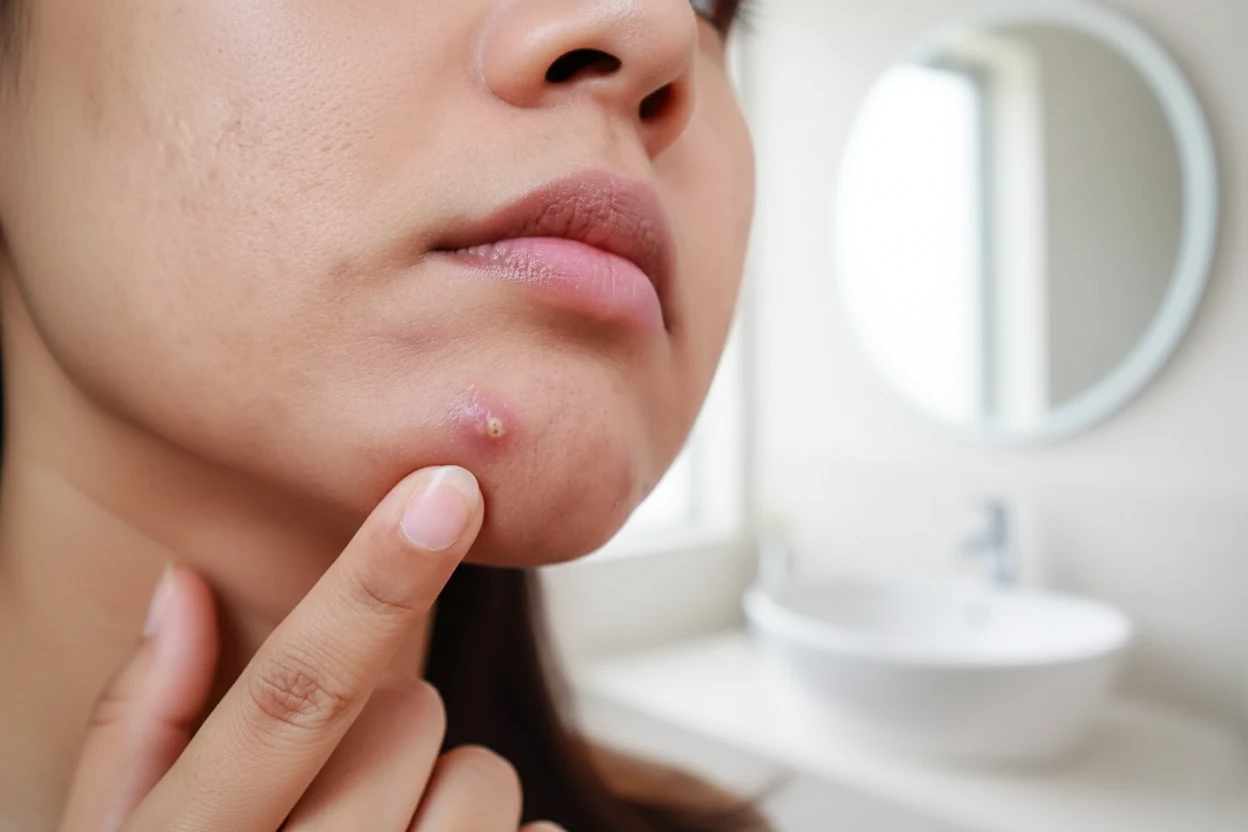
Acne occurs when hair follicles become clogged with excess oil (sebum) and dead skin cells, creating an environment for inflammation and bacterial growth3. It commonly affects the face, upper back, chest, and shoulders, presenting as whiteheads (closed comedones), blackheads (open comedones), inflammatory papules, pustules, nodules, and cysts3. Hormonal fluctuations, particularly increased androgens, stimulate sebum production, contributing to pore blockage and acne development3. Cutibacterium acnes bacteria and inflammation further exacerbate the condition3. Acne is most prevalent during adolescence but can affect adults as well3.
Treatment Options
- Topical treatments such as retinoids and antibiotics help reduce inflammation and bacterial colonization3.
- Systemic antibiotics and oral retinoids are used for moderate to severe acne3.
- Intralesional corticosteroids provide rapid relief for inflammatory nodules and cysts3.
- Phototherapy and laser treatments serve as adjunctive options to improve lesions and reduce scarring3.
- Individualized treatment plans consider lesion type, severity, and patient characteristics to optimize outcomes3.
2. Atopic Dermatitis (Eczema)
Atopic dermatitis is a chronic inflammatory skin condition characterized by dry, itchy, and inflamed skin that can affect any body area3. It is the most common form of eczema worldwide and involves impaired epidermal barrier function, often linked to filaggrin gene mutations3. Acute flares may present with vesiculation and oozing, while chronic disease leads to thickened, scaly skin3. Atopic dermatitis is non-infectious but associated with increased risk of allergic comorbidities such as asthma and food allergies3.
- Emollients and moisturizers restore skin barrier function and hydration3.
- Topical corticosteroids reduce inflammation and itching during flares3.
- Dupilumab, a monoclonal antibody targeting IL-4 and IL-13, is approved for moderate-to-severe cases3.
- Systemic immunosuppressants like cyclosporine are reserved for severe or refractory disease3.
- Avoidance of known triggers and good skin care practices support long-term management3.
3. Cellulitis
Cellulitis is a bacterial infection involving the dermis and subcutaneous tissue, commonly affecting the lower extremities in adults3. It presents with erythema, edema, tenderness, and warmth, and can rapidly progress if untreated3. Early diagnosis and treatment are critical to prevent complications such as abscess formation or systemic infection3.
- Antibiotic therapy is the cornerstone, often requiring systemic agents targeting common pathogens3.
- Combination antibiotic therapy may be necessary in severe or resistant cases3.
- Supportive care includes limb elevation and wound management to reduce swelling and promote healing3.
- Monitoring for signs of systemic involvement or treatment failure is essential3.
4. Cold Sores
Cold sores, caused by herpes simplex virus type 1 (HSV-1), manifest as clusters of painful, fluid-filled vesicles typically on the vermilion border of the lips3. HSV-1 is highly contagious and can be transmitted via oral contact. Prodromal symptoms such as tingling or burning often precede lesion appearance. Cold sores usually resolve within 7 to 14 days but can recur3.
- Oral or topical antiviral agents reduce outbreak duration and severity3.
- Suppressive antiviral therapy is recommended for frequent recurrences3.
- Avoiding known triggers such as stress, sun exposure, and fever may reduce outbreaks3.
- Good hygiene and avoiding direct contact with lesions prevent transmission3.
5. Contact Dermatitis
Contact dermatitis is an immune-mediated skin inflammation triggered by exposure to irritants or allergens3. It presents as inflamed, itchy, and red rashes. There are two main types: irritant contact dermatitis caused by direct chemical damage (e.g., soaps, acids) and allergic contact dermatitis, a delayed hypersensitivity reaction to allergens like nickel or poison ivy3.
- Primary management involves avoidance of the causative agent3.
- Topical corticosteroids reduce inflammation and itching3.
- Emollients help restore skin barrier function3.
- Oral antihistamines alleviate pruritus3.
- Severe cases may require systemic immunosuppressants such as cyclosporine3.
- Patch testing is the gold standard for identifying allergens in allergic contact dermatitis3.
6. Dry Skin
Dry skin (xerosis) results from decreased water content in the stratum corneum, often worsened by environmental factors like cold weather, low humidity, and excessive heat3. Symptoms include scaling, roughness, fissures, and itching, with severe xerosis causing pain, burning, and peeling3.
- Regular use of emollients restores skin hydration and barrier function3.
- Shorter showers with lukewarm water reduce skin dryness3.
- Addressing underlying dermatologic diseases is essential for effective management3.
- Avoidance of harsh soaps and irritants supports skin health3.
7. Hives
Hives (urticaria) are transient, pruritic wheals that vary in color from red to skin-colored and can appear anywhere on the body3. The lifetime prevalence is approximately 20%. Acute urticaria often results from allergic triggers, while chronic urticaria persists for more than six weeks and may be idiopathic3.
- Second-generation antihistamines are the first-line treatment3.
- Short courses of systemic corticosteroids may be used for severe flares3.
- Identification and avoidance of triggers help prevent recurrences3.
- Supportive measures include cool compresses and soothing lotions3.
8. Lupus
Systemic lupus erythematosus (SLE) is a multisystem autoimmune disease affecting approximately 1.5 million Americans3. Cutaneous manifestations are common and may be the presenting feature. Symptoms include joint inflammation, photosensitivity, edema, and characteristic skin findings such as the malar rash and oral or nasal ulcers3. Cutaneous lupus erythematosus primarily involves the skin without systemic disease3.
- Sun protection is critical to prevent photosensitive flares3.
- Topical corticosteroids and immunomodulators manage skin lesions3.
- Systemic immunosuppressants are used for severe or systemic involvement3.
- Regular monitoring for systemic symptoms is important3.
9. Psoriasis
Psoriasis is a chronic autoimmune disease characterized by hyperproliferation of keratinocytes, leading to thickened, scaly skin plaques3. Epidermal turnover accelerates from 28 days to 3-5 days. Plaque psoriasis commonly affects extensor surfaces and the scalp, presenting with silvery scales3.
- Topical corticosteroids and phototherapy are standard for mild to moderate disease3.
- Systemic agents, including biologics targeting immune pathways, are used for moderate to severe psoriasis3.
- Lifestyle modifications such as smoking cessation and alcohol moderation may reduce flares3.
- Regular follow-up is necessary to monitor treatment response and side effects3.
10. Ringworm
Ringworm (tinea) is a dermatophyte fungal infection causing annular, scaly, itchy lesions with central clearing3. Common forms include tinea capitis (scalp), tinea pedis (athlete's foot), and tinea cruris (jock itch). The infection is contagious and spreads by direct contact3.
- Topical antifungal creams are first-line for localized infections3.
- Systemic antifungals may be necessary for extensive or scalp involvement3.
- Keeping affected areas clean and dry helps prevent recurrence3.
- Avoid sharing personal items to reduce transmission3.
11. Rosacea
Rosacea manifests as persistent facial erythema, often accompanied by burning sensations, papules, pustules, rhinophyma (thickened skin), and ocular irritation3. It predominantly affects fair-skinned adults aged 30-50, with a female predominance. The exact cause is multifactorial and not fully understood3. Though incurable, symptoms can be managed effectively3.
- Lifestyle modifications to avoid triggers such as sun exposure, spicy foods, and alcohol3.
- Topical metronidazole reduces inflammation and lesions3.
- Oral antibiotics help control papules and pustules3.
- Laser therapy treats visible blood vessels and thickened skin3.
“People don’t always think of skin diseases as going deeper than the rash, discoloration, blistering, or itchy bumps that can be seen on the surface. But often, closer scrutiny is needed.”
— Yale Dermatologist4
12. Shingles
Shingles (herpes zoster) results from reactivation of latent varicella-zoster virus in dorsal root ganglia, causing a painful vesicular rash in a dermatomal distribution, typically unilateral3. Prodromal symptoms include burning, itching, or dysesthesia before rash onset. Postherpetic neuralgia is a common complication53.
- Early initiation of antiviral therapy (acyclovir, valacyclovir, famciclovir) within 72 hours reduces severity and duration53.
- Pain management is critical during acute and chronic phases53.
- Vaccination reduces the risk and severity of herpes zoster5.
- Supportive care includes skin hygiene and symptom relief3.
13. Skin Cancer
Non-melanoma skin cancers include basal cell carcinoma (BCC) and squamous cell carcinoma (SCC), commonly occurring on sun-exposed skin3. BCC often presents as pearly papules with telangiectasia, while SCC appears as scaly, erythematous plaques or nodules that may ulcerate3.
- Early diagnosis and biopsy confirm the diagnosis3.
- Surgical excision is the mainstay of treatment3.
- Other options include Mohs micrographic surgery, cryotherapy, and topical agents depending on lesion type and location3.
- Sun protection is essential to prevent skin cancer development3.
14. Vitiligo
Vitiligo causes depigmented patches on the skin due to autoimmune destruction of melanocytes. It is a chronic condition with variable progression. Treatment aims to restore pigmentation and prevent spread.
- Topical corticosteroids and calcineurin inhibitors to reduce immune activity2.
- Phototherapy stimulates repigmentation2.
- Camouflage cosmetics improve cosmetic appearance2.
- Counseling and support address psychosocial impact5.
15. Warts
Warts are benign skin growths caused by human papillomavirus (HPV), commonly appearing on fingers and hands2. They spread through direct contact and can be persistent.
- Topical medications such as salicylic acid promote wart removal2.
- Cryotherapy and laser therapy are effective physical removal methods2.
- Surgical excision is reserved for resistant cases2.
- Preventive measures include avoiding sharing personal items and covering warts2.
16. Common Causes of Skin Conditions
Skin diseases arise from diverse causes including:
- Bacterial infections and trapped bacteria in pores3.
- Fungal and viral infections such as dermatophytes and herpes viruses3.
- Immune-mediated inflammation and autoimmune processes3.
- Genetic predispositions affecting skin barrier and immune responses3.
- Environmental exposures to allergens, irritants, and ultraviolet radiation1.
17. When to See a Doctor
Seek medical evaluation if you experience:
- New or changing skin lesions, especially those that bleed, itch, or do not heal2.
- Severe pain, swelling, or signs of infection such as fever with skin changes3.
- Persistent or worsening symptoms despite home care1.
- Skin changes affecting quality of life or causing psychological distress5.
- Suspected skin cancer or unusual moles3.
18. Prevention Tips
Prevent or reduce skin disease risk by:
- Using broad-spectrum sunscreen to protect against UV damage3.
- Maintaining good hygiene and moisturizing regularly to support skin barrier3.
- Avoiding known allergens and irritants3.
- Managing stress and maintaining a healthy lifestyle1.
- Avoiding sharing personal items to reduce contagious infections1.
19. Summary
Adult skin diseases encompass a wide range of conditions caused by infections, immune dysfunction, genetics, and environmental factors. Common disorders like acne, eczema, rosacea, and psoriasis require tailored treatments that may include topical agents, systemic medications, and lifestyle modifications. Early diagnosis and appropriate management improve outcomes and quality of life. Preventive measures such as sun protection and skin care are essential to reduce disease burden.
20. Frequently Asked Questions
Q: Can acne be completely cured?
Acne is often manageable with treatment, but it may persist or recur. Individualized therapy can control symptoms and reduce scarring3.
Q: Is rosacea contagious?
No, rosacea is not contagious. It is a chronic inflammatory condition with multifactorial causes3.
Q: How can I prevent shingles?
Vaccination significantly reduces the risk and severity of shingles, especially in older adults5.
Q: Are warts dangerous?
Warts are benign and usually harmless but can be bothersome and contagious2.
Q: When should I see a dermatologist?
Consult a dermatologist for persistent, worsening, or suspicious skin changes, or if over-the-counter treatments fail1.