Basal cell carcinoma (BCC) is the most common form of skin cancer deaths deaths-effects-on-black-womencancer-effects-on-black-womencancer worldwide, accounting for about 75–80% of all nonmelanoma skin cancers1. It arises from basal cells in the epidermis, the outermost layer of the skin, and usually develops on sun-exposed areas such as the face and neck2. While BCC grows slowly and rarely spreads to other parts of the body, it can cause significant local tissue damage if left untreated3. Early detection and treatment are crucial to prevent disfigurement and other complications4.
Types of Skin Cancers
Skin cancers are broadly classified into three main types: basal cell carcinoma (BCC), squamous cell carcinoma (SCC), and melanoma5. BCC and SCC together make up over 95% of nonmelanoma skin cancers6. BCC is the most common human cancer worldwide and is especially prevalent in light-skinned populations7. SCC and BCC are also the most prevalent tumors affecting the lips8. Melanoma, although less common, is more aggressive and has a higher mortality rate compared to BCC and SCC5. Other less common skin tumors include Merkel cell carcinoma and pleomorphic dermal sarcoma, which are part of the differential diagnosis for skin tumors9.
Basal Cell Carcinoma Symptoms
Basal cell carcinoma presents with various clinical subtypes, each with distinct features10. The lesions most commonly appear on sun-exposed areas, particularly the head and neck, accounting for 70–80% of cases1.
Common clinical features of BCC include:
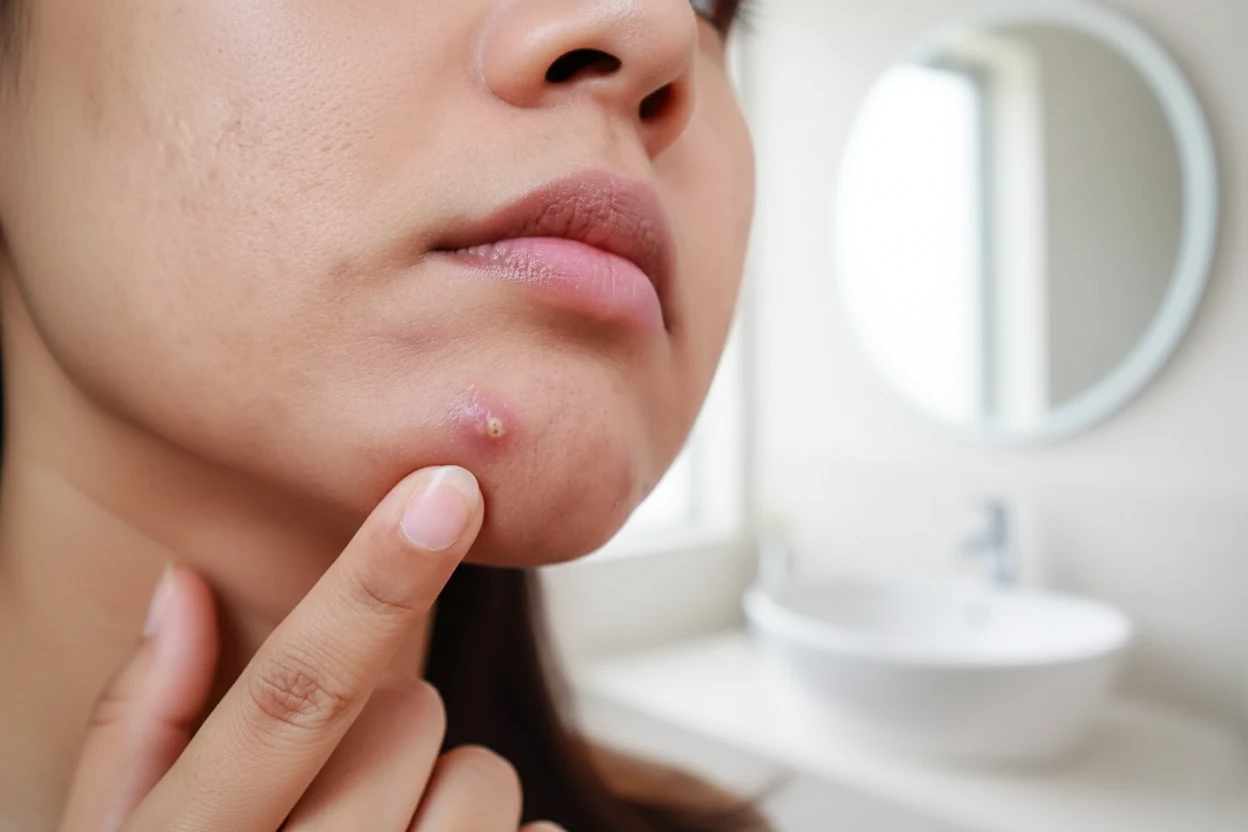
- A pearly, translucent, skin-colored or pink bump with visible tiny blood vessels (telangiectasia), typical of nodular BCC102
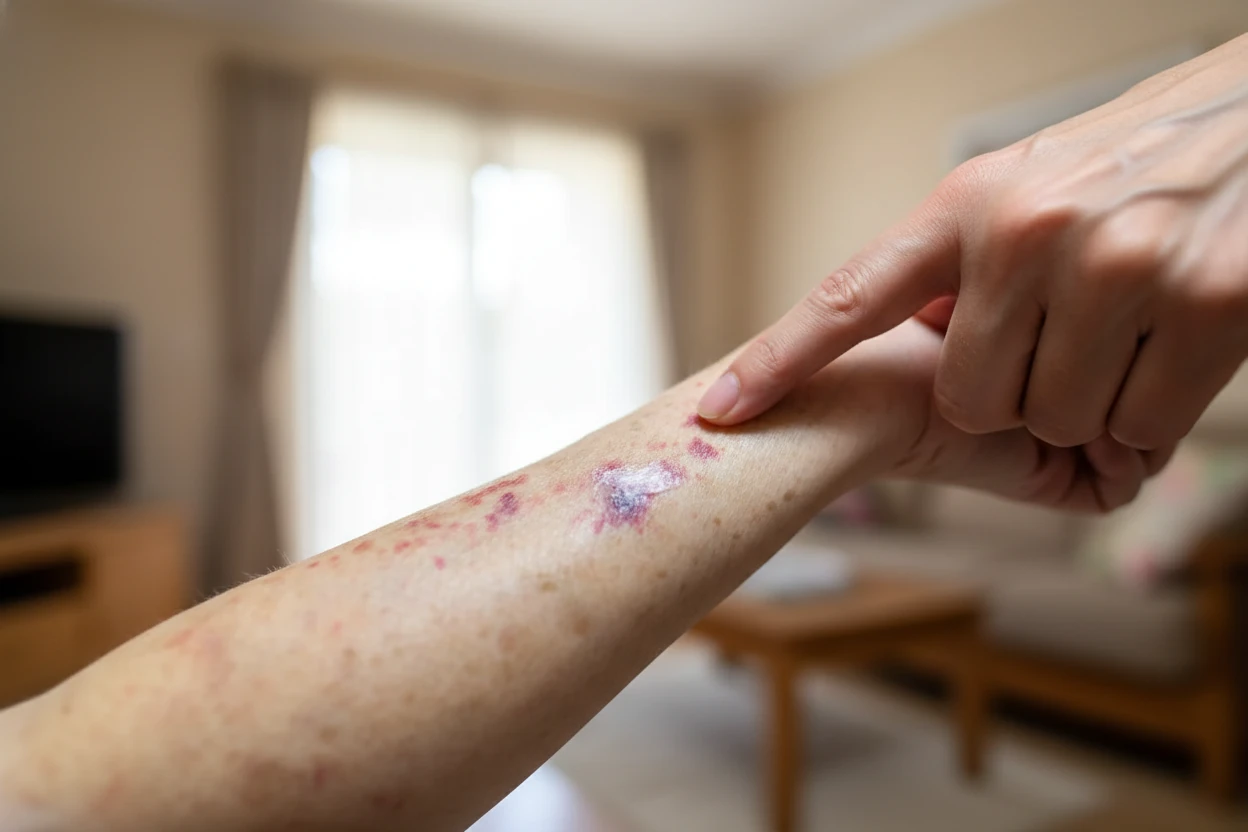
- An erythematous, scaly patch often seen in superficial BCC10
- A scar-like, white, waxy plaque without a clearly defined border, characteristic of morpheaform (sclerosing) BCC10
- Brown, black, or blue pigmented lesions with slightly raised, translucent borders in pigmented BCC102
- Raised, rolled borders with possible bleeding, ulceration, or crusting112
BCC lesions may bleed, crust over, or fail to heal, often resembling a sore that persists or recurs112. While BCC usually occurs on sun-exposed skin, it can occasionally develop on less exposed areas such as the genitals2.
Causes and Risk Factors
Basal cell carcinoma arises from a complex interaction of environmental, phenotypic, and genetic factors12. The most significant cause is exposure to ultraviolet (UV) radiation from sunlight, which damages the DNA in basal cells of the skin1113. This DNA damage leads to abnormal cell growth and tumor formation2.
Risk Factors
- Ultraviolet (UV) radiation exposure: Cumulative sun exposure is the primary risk factor for BCC development1113.
- Light skin type: Individuals with fair skin that burns easily are at higher risk14.
- Male sex: Men have a higher incidence of BCC compared to women14.
- Advancing age: The median age of diagnosis is around 68 years, with risk increasing with age15.
- Genetic predisposition: Overactive Hedgehog signaling pathway activity is found in most BCC cases, contributing to tumor growth11.
- History of previous BCC: Patients with one BCC lesion have a 10.6% risk of developing another asynchronous BCC in a different facial region15.
- Other factors: Exposure to ionizing radiation, arsenic, immunosuppression, and inherited syndromes can also increase risk4.
Diagnosis and Detection
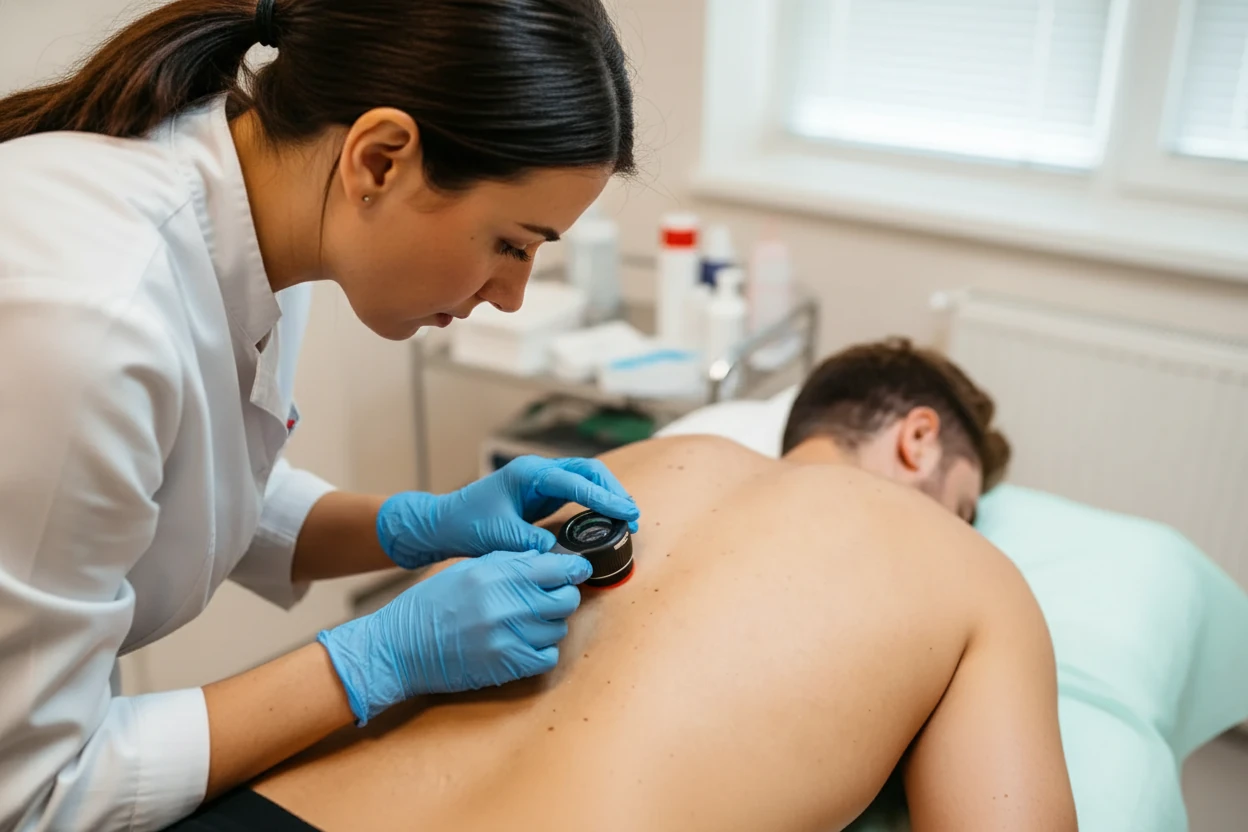
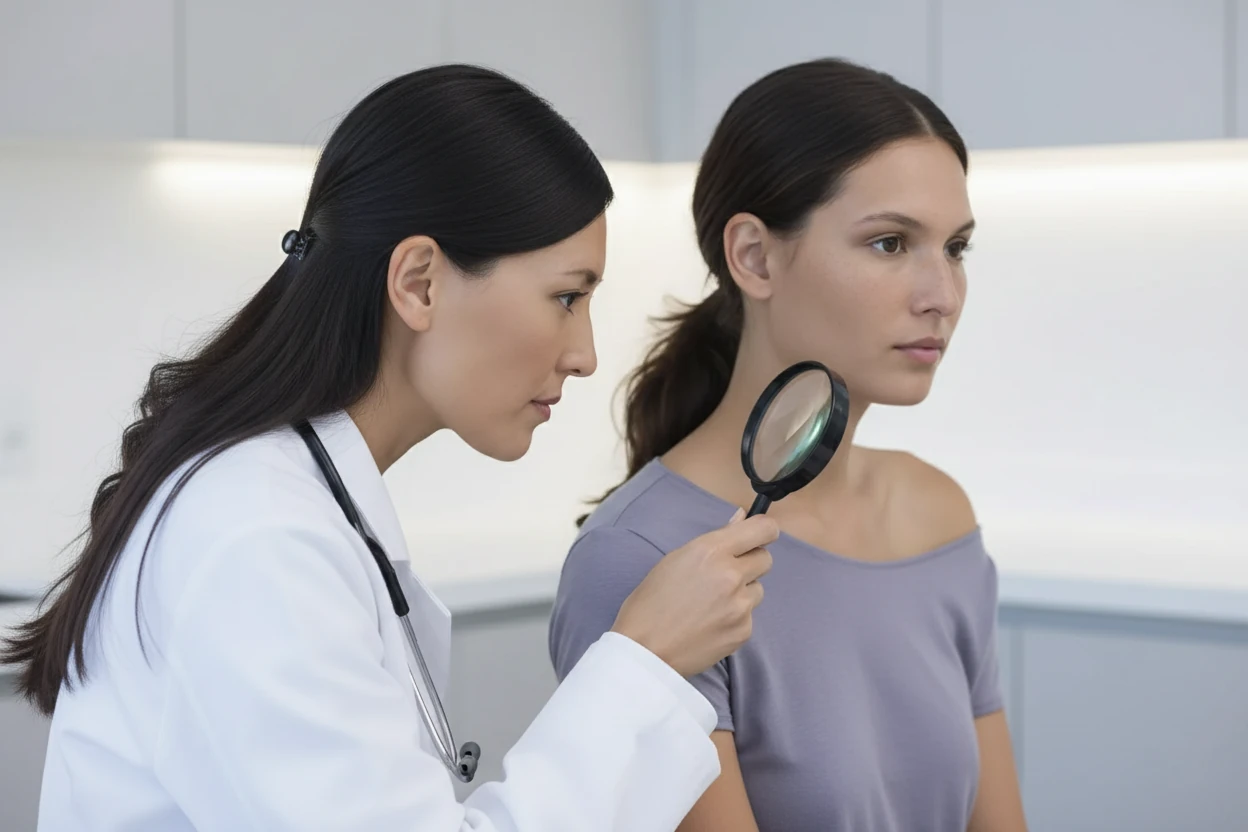
The diagnosis of basal cell carcinoma is usually clinical but requires confirmation through histopathological examination, which remains the gold standard1617. Dermoscopy, a non-invasive skin imaging technique, enhances diagnostic accuracy when combined with clinical evaluation16.
BCC is classified as a slow-growing, locally aggressive, low-grade cutaneous neoplasm that rarely metastasizes18. Early diagnosis is essential to prevent local tissue destruction and improve treatment outcomes16.
Stages of Basal Cell Carcinoma
BCC typically progresses slowly and is often categorized by clinical and histological subtypes rather than traditional cancer staging. However, the extent of local invasion can vary:
| Stage/Type | Description | Clinical Features |
|---|---|---|
| In situ (superficial) | Confined to the epidermis, early stage with minimal invasion | Flat, scaly erythematous patch |
| Nodular | Tumor grows into the dermis, forming raised pearly nodules | Pearly papule with telangiectasia |
| Morpheaform (sclerosing) | Infiltrative growth with scar-like appearance, more aggressive locally | Scar-like plaque with ill-defined borders |
| Pigmented | Contains melanin pigment, may resemble moles or melanoma | Brown/black lesion with translucent border |
| Advanced/Locally invasive | Tumor invades deeper tissues including muscle, bone, or cartilage (rare) | Ulceration, bleeding, tissue destruction |
Early detection limits progression to advanced stages, which are more difficult to treat4.
Watch for new or changing skin growths, especially on sun-exposed areas like the face and neck. Early diagnosis of basal cell carcinoma leads to highly effective treatment and prevents disfigurement.1920
Treatment Options
The primary goal of basal cell carcinoma treatment is complete tumor removal to prevent recurrence and preserve function and appearance21. Most BCCs are treated successfully with surgical methods822.
Common treatment options include:
“Basal cell carcinoma is unlikely to be fatal and rarely spreads to other parts of the body. However, in rare cases, it can spread, especially if tumors become very large. Over time, this skin cancer can grow deeply into muscle, fat, and bone, which can be serious and disfiguring. The deeper the cancer grows, the more challenging it is to completely remove. If a skin lesion is growing, bleeding, not healing, or changing, it is important to see a dermatologist for evaluation, as early detection can make a significant difference.”
— Daniel D. Bennett, MD, FAAD20
- Surgical excision: Complete removal of the lesion with a margin of healthy tissue; standard treatment for most BCCs218.
- Mohs micrographic surgery: Precise, layer-by-layer removal with immediate microscopic examination to ensure clear margins; preferred for high-risk or recurrent tumors21.
- Cryosurgery: Freezing the tumor with liquid nitrogen; used in select cases21.
- Electrodesiccation and curettage: Scraping and burning the tumor; suitable for small, superficial lesions21.
- Topical medications: Such as imiquimod or 5-fluorouracil for superficial BCCs21.
BCC has low mortality and extremely low metastatic rates, but untreated tumors can become locally destructive and require more extensive treatment2322.
| Treatment Method | Indications | Advantages | Limitations |
|---|---|---|---|
| Surgical excision | Most BCCs | High cure rate, tissue removal | May require reconstruction |
| Mohs surgery | High-risk, recurrent BCCs | Tissue-sparing, precise margins | Requires specialized expertise |
| Cryosurgery | Small, superficial lesions | Minimally invasive | Less control over margins |
| Electrodesiccation & curettage | Small, low-risk lesions | Quick, outpatient procedure | Higher recurrence risk |
| Topical medications | Superficial BCC | Non-surgical, easy application | Limited to superficial tumors |
Prevention Strategies
Preventing basal cell carcinoma focuses primarily on reducing exposure to ultraviolet (UV) radiation, the most important risk factor1113. Since cumulative sun exposure strongly correlates with BCC development, protective measures are essential.
Key prevention strategies include:
- Avoiding sun exposure during peak hours (10 a.m. to 4 p.m.)2.
- Wearing broad-spectrum sunscreen year-round on exposed skin2.
- Using protective clothing, hats, and sunglasses outdoors2.
- Avoiding tanning beds and artificial UV sources2.
- Regular skin self-examinations and prompt reporting of suspicious lesions to healthcare providers2.
Patients with a history of BCC should be especially vigilant, as they have an increased risk of developing new lesions, with a 10.6% chance of subsequent asynchronous BCC on the face15.
Related Skin Conditions
Basal cell carcinoma often occurs alongside or after other skin cancers, particularly squamous cell carcinoma (SCC)24. Patients may develop multiple tumors over time, and lesions can recur even after treatment24.
- Approximately 10.6% of patients develop new BCC lesions in different facial regions asynchronously15.
- Recurrence and multiple tumor development necessitate careful long-term follow-up and monitoring24.
- Other skin cancers, such as SCC and melanoma, may coexist or develop subsequently5.
Regular dermatologic evaluations are important to detect new or recurrent lesions early and manage them promptly24.
Living With Basal Cell Carcinoma
Living with basal cell carcinoma involves managing the disease and its treatment outcomes. Most BCCs are curable with appropriate treatment, but the risk of recurrence and new tumors requires ongoing vigilance22.
- Early diagnosis and timely treatment improve prognosis and reduce morbidity25.
- Patients should maintain regular follow-up appointments for skin checks24.
- Treatment may involve surgical removal that can affect appearance, especially on the face, requiring reconstructive procedures26.
- Psychological support may be beneficial for patients coping with the cosmetic and emotional impact of BCC and its treatment7.
💡 Did You Know? Basal cell carcinoma begins in the basal cells located at the bottom of the epidermis, the outermost skin layer2.
Frequently Asked Questions
Is basal cell carcinoma fatal?
Basal cell carcinoma is rarely fatal and seldom spreads to other parts of the body. However, if left untreated, it can grow deeply and cause significant tissue damage203.
Can basal cell carcinoma recur after treatment?
Yes, BCC has a high recurrence rate, and patients often develop multiple tumors over time. Regular follow-up is essential to detect and treat new or returning lesions early2417.
How quickly does basal cell carcinoma grow?
BCC typically grows slowly, often over months to years. Early-stage tumors are easier to treat and less likely to cause complications420.
Where does basal cell carcinoma usually occur?
BCC most commonly develops on sun-exposed areas such as the face, head, neck, and arms. It can occasionally appear on less exposed sites like the genitals227.
What are the treatment options for basal cell carcinoma?
Treatment usually involves surgical removal, including excision or Mohs surgery. Other options include cryosurgery, electrodesiccation and curettage, and topical medications for superficial lesions218.