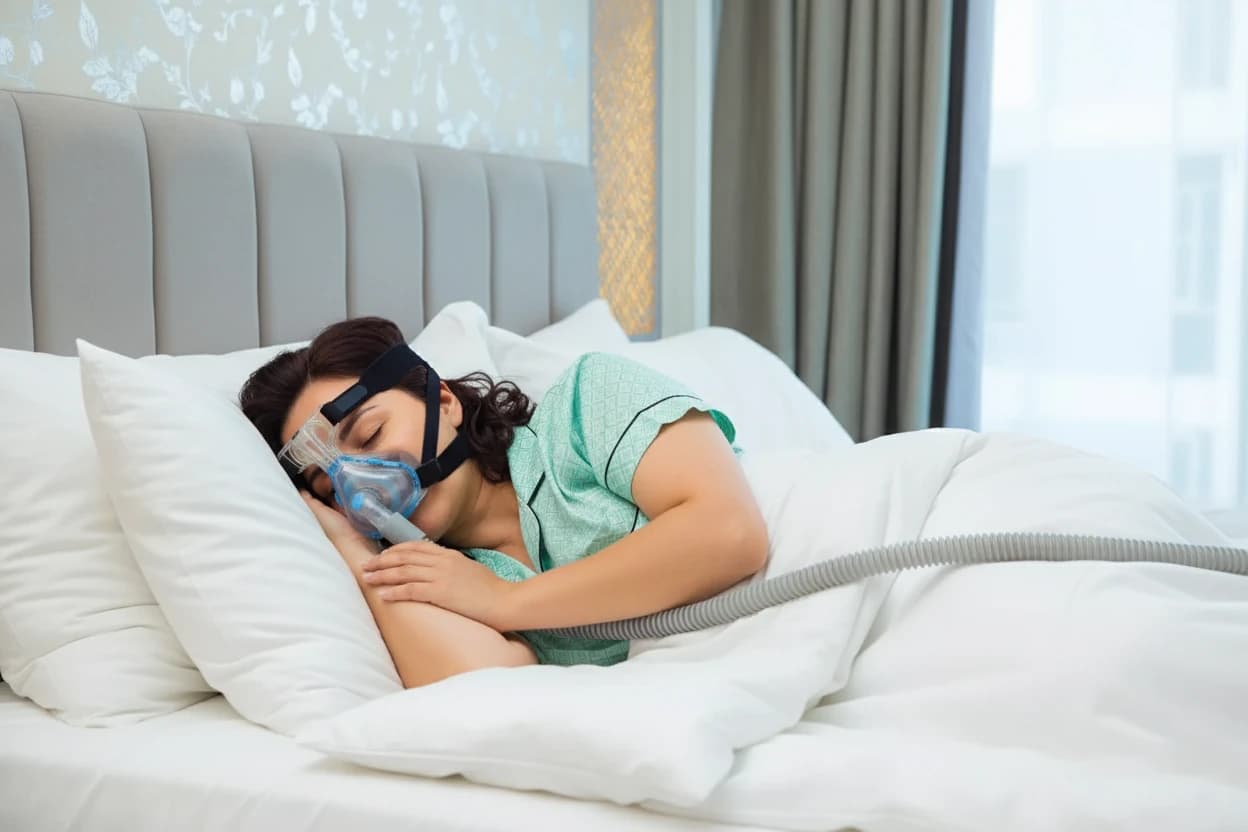
Obstructive sleep apnea (OSA) is a common sleep disorder that affects millions of people worldwide, especially those with obesity1 . Excess weight, particularly around the neck and abdomen, contributes to airway obstruction during sleep, leading to interrupted breathing and poor sleep quality2 1. Recent advances in weight loss medications, including glucagon-like peptide-1 (GLP-1) receptor agonists, have shown promise not only in reducing body weight but also in improving sleep apnea symptoms, offering new hope for patients3 4.
Sleep Apnea's Primary Symptom: Interrupted Breathing
Sleep apnea is a sleep-related breathing disorder characterized by repeated episodes of interrupted breathing during sleep. The most common form, obstructive sleep apnea (OSA), occurs when the upper airway becomes blocked, causing pauses in breathing5 6. This obstruction can result from anatomical or functional causes, such as excess fat deposits around the neck or changes in airway muscle tone5 7.
There are three main types of sleep apnea:
- Obstructive Sleep Apnea (OSA): Caused by physical blockage of the airway, accounting for the majority of cases5 .
- Central Sleep Apnea: Results from impaired respiratory drive by the central nervous system5 .
- Mixed Sleep Apnea: Features characteristics of both obstructive and central types5 .
Several factors increase the risk of developing OSA, including:
- Age and male sex7
- Genetic predisposition7
- Cardiovascular and renal diseases7
- Alcohol use and smoking7
Hormonal fluctuations, especially involving thyroid and sex hormones, can also contribute to airway collapsibility, worsening OSA symptoms7 .
Typical symptoms of OSA include:
- Nocturnal signs such as apnea episodes, loud snoring, and frequent urination at night (nocturia) 5
- Daytime effects like excessive sleepiness, impaired cognition, and mood disturbances5
Obesity is highly prevalent among OSA patients, with estimates suggesting that up to 70% of individuals with OSA are obese2 . Excess adipose tissue in the neck and abdomen increases mechanical pressure on the airway, leading to obstruction and impaired respiratory function during sleep6 8.
Sleep apnea interrupts breathing by blocking the airway during sleep, leading to poor oxygen levels and disrupted rest. Obesity is a major contributor, increasing airway fat and pressure that cause airway collapse2 56.
How Anti-Obesity Drugs May Improve Sleep Apnea
Weight loss is a cornerstone of managing obstructive sleep apnea, as reducing excess fat can relieve airway obstruction and improve breathing during sleep8 . Anti-obesity medications, particularly GLP-1 receptor agonists, have emerged as effective tools to promote sustained weight loss and thereby reduce OSA severity9 8.
Obesity worsens OSA through both mechanical and metabolic pathways. Fat deposits around the upper airway increase the likelihood of airway collapse, while abdominal fat impairs respiratory mechanics8 . Weight loss reduces these fat deposits, leading to:
- Less mechanical obstruction of the upper airway8
- Improved respiratory function due to decreased abdominal fat8
- Reduced severity or even remission of OSA with sustained weight loss exceeding 10-15% of body weight8
Several clinical trials have demonstrated the benefits of weight loss on OSA symptoms. For example, the SURMOUNT-1 trial showed that tirzepatide, a dual GIP/GLP-1 receptor agonist, can reduce body weight by over 10-20% and decrease the apnea-hypopnea index (AHI)—a measure of sleep apnea severity—by up to two-thirds in adults with obesity and OSA2 3.
Other benefits of weight loss in OSA patients include improvements in blood pressure, insulin sensitivity, and cardiovascular risk factors, which are often worsened by the combined effects of obesity and sleep apnea8 10.
- Excess neck fat increases airway collapsibility and worsens OSA symptoms8 1
- Weight loss medications can reduce fat tissue in the neck, opening airways and improving breathing4
- Even modest weight loss (10-15% of body weight) can significantly reduce OSA severity8 1
- Weight loss also improves daytime sleepiness and cognitive function by enhancing sleep quality5 1
- Combining weight loss drugs with lifestyle changes offers the best chance for long-term success1
“The FDA approval is a major milestone for treatment of obstructive sleep apnea, because it formally recognizes that obesity can be a root cause. Unlike most therapies that treat symptoms, this medication treats a common cause of sleep apnea.”
— Eric Yeh, MD, University Hospitals1
GLP-1 Medications and Sleep Apnea Research
Glucagon-like peptide-1 receptor agonists (GLP-1 RAs) are a class of medications originally developed to treat type 2 diabetes by improving blood sugar control and promoting weight loss9 . Recent research has explored their potential to improve obstructive sleep apnea by targeting obesity and possibly other mechanisms11 9.
Tirzepatide, a dual GIP/GLP-1 receptor agonist marketed as Zepbound, has become the first FDA-approved medication specifically indicated for moderate to severe OSA in adults with obesity12 13. It works by activating intestinal hormone receptors to reduce appetite and food intake, leading to significant weight loss12 13.
- Tirzepatide can reduce body weight by 10-20% or more, leading to substantial improvements in OSA severity as measured by the apnea-hypopnea index (AHI) 2312
- Up to half of patients treated with Zepbound for a year experienced improvements in sleep apnea symptoms sufficient to consider reducing or stopping CPAP therapy4
- GLP-1 RAs may also improve sleep apnea through anti-inflammatory effects that reduce airway obstruction and enhance sleep quality14
- These medications might influence central nervous system pathways involved in sleep regulation via hypothalamic mechanisms, though this is still under investigation11
Today’s approval marks the first drug treatment option for certain patients with obstructive sleep apnea. This is a major step forward for patients with obstructive sleep apnea12 .
— Sally Seymour, M.D., FDA’s Center for Drug Evaluation and Research
While continuous positive airway pressure (CPAP) remains the gold standard for OSA treatment, adherence challenges and limited cardiovascular benefits have led to interest in pharmacotherapies that address underlying causes like obesity16 17.
Tirzepatide and other GLP-1 RAs can cause side effects such as nausea, vomiting, diarrhea, constipation, abdominal discomfort, and injection site reactions12 4. Rare but serious risks include pancreatitis, gallbladder problems, diabetic retinopathy, and thyroid C-cell tumors observed in animal studies12 .
Patients with a personal or family history of medullary thyroid cancer or Multiple Endocrine Neoplasia syndrome type 2 should avoid these medications12 . Close medical supervision is essential to manage potential adverse effects.
GLP-1 receptor agonists like tirzepatide represent a revolutionary approach by treating obesity, a root cause of sleep apnea, rather than just the symptoms. This could transform treatment guidelines and reduce the economic burden of OSA18 19.
| Medication | Weight Loss (%) | AHI Reduction (%) | FDA Approval for OSA | Common Side Effects |
|---|---|---|---|---|
| Tirzepatide (Zepbound) | 10-20+ 23 | Up to 66% 23 | Yes12 13 | Nausea, diarrhea, vomiting, abdominal pain12 4 |
| Semaglutide | ~15% over 16 months4 | Significant improvement4 | No (for OSA) | Similar GI side effects4 |
| Sources: 2341213 | ||||