Obstructive sleep apnea (OSA) affects nearly 1 billion people worldwide, with millions experiencing moderate to severe forms of the disorder1 . This condition causes repeated interruptions in breathing during sleep due to airway blockage, leading to poor sleep quality and serious health risks such as cardiovascular disease and metabolic problems2 . Despite its high prevalence, many individuals remain undiagnosed, underscoring the importance of awareness and timely management3 .
Recognizing Obstructive Sleep Apnea Symptoms
Obstructive sleep apnea is characterized by repeated episodes of partial or complete upper airway obstruction during sleep, causing breathing to pause for at least 10 seconds4 . The most common symptom is loud snoring, which occurs in about 90% or more of patients with OSA and is often the first sign noticed by others4 . Other nighttime symptoms include abrupt awakenings accompanied by gasping or choking, frequent awakenings, and restless sleep4 .
Daytime symptoms often result from fragmented, nonrestorative sleep and include excessive daytime sleepiness, morning headaches, dry mouth, sore throat, and difficulty concentrating4 . Mood disturbances such as irritability and depression are common, as are cognitive impairments like memory deficits and trouble focusing4 . Additional symptoms include nocturia (frequent nighttime urination) and sexual dysfunction, including reduced libido4 .
- Loud snoring, often disrupting bed partners4
- Pauses in breathing or gasping during sleep4
- Excessive daytime sleepiness and fatigue4
- Morning headaches and dry mouth4
- Mood changes and cognitive difficulties4
These symptoms vary widely depending on the severity of OSA and the presence of other health conditions5 . Early recognition of these signs is critical for diagnosis and management6 .
Common Causes of Obstructive Sleep Apnea
OSA occurs when the muscles supporting the soft tissues in the throat relax excessively during sleep, causing the airway to narrow or collapse and block airflow despite ongoing respiratory effort7 . This leads to repeated episodes of apnea (complete cessation of breathing) or hypopnea (partial reduction in airflow) 8.
Risk Factors
Several anatomical and physiological factors increase the risk of developing OSA:
- Obesity, especially excess fat around the neck and upper airway, which narrows the airway9
- Male sex, with men having up to four times higher prevalence than women6
- Older age, particularly middle-aged and older adults6
- Craniofacial abnormalities such as retrognathia (receded jaw) and macroglossia (enlarged tongue) 4
- Upper airway soft tissue enlargement, including enlarged tonsils and adenoids3
- Family history of OSA or anatomical predispositions8
- Smoking and chronic nasal congestion, which increase airway inflammation4
During sleep, the upper airway dilator muscles, especially the genioglossus muscle, lose tone and fail to keep the airway open in susceptible individuals10 . This leads to repetitive airway collapse, intermittent hypoxia (low oxygen levels), and sleep fragmentation11 .
Diagnosing Obstructive Sleep Apnea
Diagnosis of OSA requires a combination of clinical evaluation and confirmatory sleep testing to assess the frequency and severity of breathing interruptions during sleep6 .
Medical History and Physical Exam
A thorough medical history includes inquiry about symptoms such as loud snoring, witnessed apneas, daytime sleepiness, and risk factors like obesity and family history6 . Sleep logs or diaries may help track symptom timing and severity6 . Physical examination focuses on airway anatomy, including assessment of facial structure, mouth, throat, tonsillar hypertrophy, nasal obstruction, and jaw alignment6 .
Sleep Studies
Polysomnography (overnight sleep study) is the gold standard diagnostic test for OSA. It measures the apnea-hypopnea index (AHI), which quantifies the number of apnea and hypopnea events per hour of sleep6 . Diagnostic criteria include an AHI of 5 or more events per hour with symptoms or an AHI of 15 or more regardless of symptoms4 .
Home sleep apnea testing is an accepted alternative for patients without significant comorbidities and involves simplified monitoring of breathing and oxygen levels during sleep at home6 . Emerging diagnostic algorithms and phenotyping approaches aim to improve accuracy and personalize management12 .
| Diagnostic Method | Description | Use Case |
|---|---|---|
| Polysomnography (PSG) | Comprehensive overnight sleep study measuring breathing, oxygen, heart rate, and brain activity6 | Definitive diagnosis and severity assessment6 |
| Home Sleep Apnea Testing | Simplified monitoring of breathing and oxygen saturation at home6 | Uncomplicated cases without major comorbidities6 |
| Sources: 6 | ||
Obstructive Sleep Apnea Treatment Options
Treatment of OSA aims to relieve symptoms, improve sleep quality, and reduce associated health risks such as cardiovascular disease6 . Therapy is individualized based on severity, anatomical factors, and patient preference6 .
Continuous Positive Airway Pressure (CPAP)
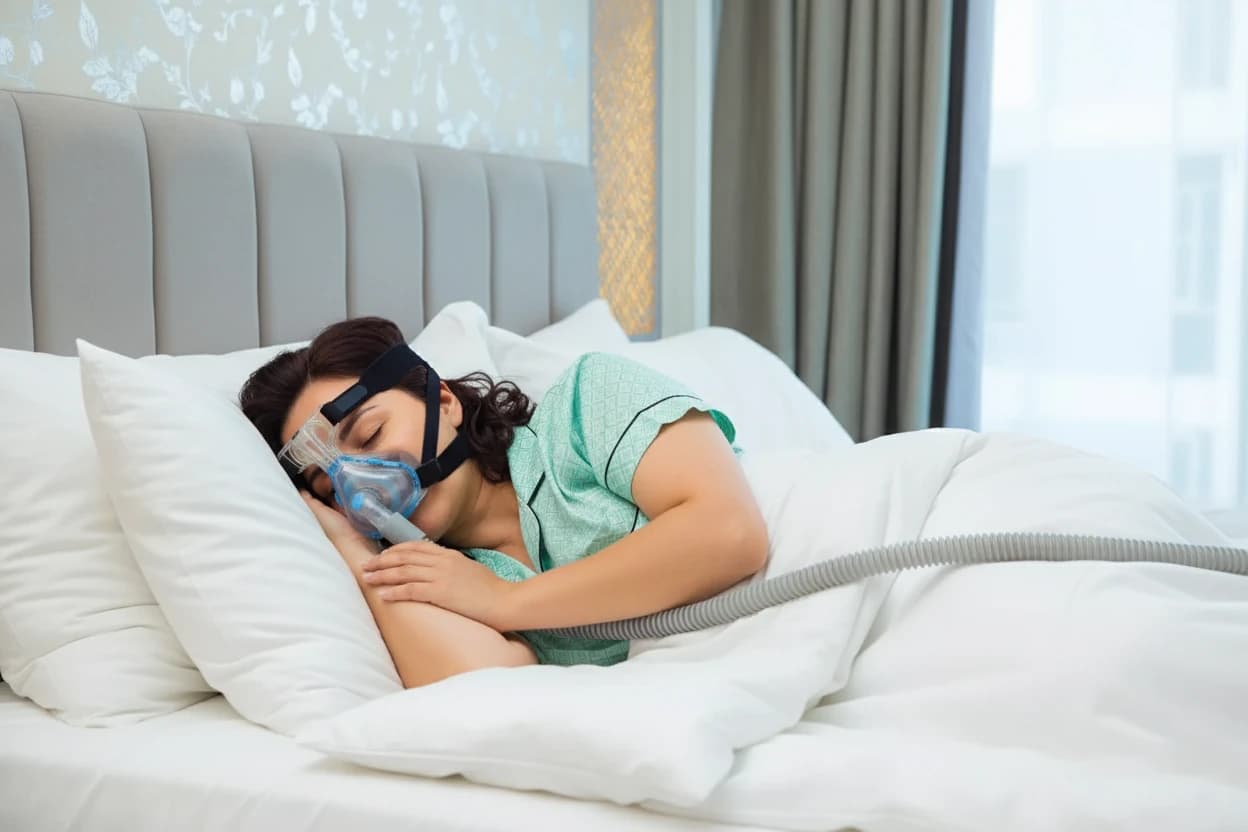
CPAP is the first-line treatment for most patients with moderate to severe OSA6 . It delivers continuous positive air pressure through a mask to keep the upper airway open during sleep, preventing airway collapse and apnea episodes6 . CPAP interfaces include nasal masks, nasal pillows, or full-face masks, chosen based on patient comfort6 .
Adherence to CPAP therapy is critical for clinical benefits, including reduced cardiovascular risk, improved daytime function, and decreased healthcare utilization13 6. However, poor adherence is common, with nearly half of patients discontinuing use within the first month1 .
Oral Appliances
Oral appliances are effective alternatives for patients with mild to moderate OSA or those intolerant to CPAP6 . The most common devices are mandibular advancement devices, which reposition the lower jaw forward to prevent airway collapse during sleep6 . Tongue retaining devices hold the tongue forward but are less commonly used6 .
Oral appliances are generally easier to use but less effective than CPAP and are best suited for selected patients with specific anatomical features6 .
Surgery
Surgical options are reserved for patients with anatomical abnormalities or CPAP intolerance6 . Procedures include:
- Uvulopalatopharyngoplasty (UPPP): removal of excess tissue from the throat to widen the airway14
- Tonsillectomy and adenoidectomy, especially in children or adults with enlarged tonsils/adenoids3
- Maxillomandibular advancement: repositioning of the jawbones to enlarge the airway6
- Radiofrequency ablation to shrink tissue at the back of the throat14
- Hypoglossal nerve stimulation to activate tongue muscles and prevent airway collapse1
Surgery may improve symptoms but is generally less reliable than CPAP14 .
Preventing Obstructive Sleep Apnea
Prevention focuses on modifying risk factors that contribute to airway obstruction during sleep4 . Lifestyle changes can reduce OSA severity and improve symptoms:
- Weight loss is the most important modifiable factor, especially in overweight individuals4
- Positional therapy to avoid sleeping on the back, which worsens airway collapse in positional OSA4
- Use of positional aids such as pillows or devices to maintain side sleeping4
- Smoking cessation reduces upper airway inflammation and improves respiratory health4
- Avoidance of alcohol and sedatives before bedtime to prevent muscle relaxation and airway obstruction4
Adopting these measures can help reduce the risk or severity of OSA and improve overall sleep quality4 .
Conditions Related to Obstructive Sleep Apnea
OSA is associated with a wide range of systemic complications due to intermittent hypoxia and sleep fragmentation4 . Key related conditions include:
- Cardiovascular diseases such as hypertension, arrhythmias, coronary artery disease, heart failure, and stroke15 4
- Metabolic disorders including insulin resistance and type 2 diabetes4
- Neurocognitive impairments like memory deficits, attention problems, and increased risk of dementia4
- Mood disorders including depression and irritability4
- Chronic pain syndromes, which may be worsened by sleep disruption4
Untreated OSA increases morbidity and mortality from these conditions, highlighting the importance of diagnosis and treatment4 .
Untreated obstructive sleep apnea significantly impairs quality of life and increases risks of cardiovascular and metabolic diseases. Effective treatment improves symptoms, reduces health risks, and enhances overall well-being4 6.
Living With Obstructive Sleep Apnea
Living with OSA can be challenging due to its impact on physical and mental health. Patients often experience daytime fatigue, mood changes, and cognitive difficulties that affect daily activities and quality of life4 . Adherence to treatment, especially CPAP therapy, is crucial for symptom control and reducing the risk of serious complications such as heart disease and stroke13 16.
Supportive care includes education about the disorder, encouragement of lifestyle changes, and regular follow-up to monitor treatment effectiveness and adherence17 . Many patients benefit from multidisciplinary care involving sleep specialists, primary care providers, and sometimes ear, nose, and throat (ENT) specialists14 .
“Adherence to positive airway pressure therapy is a major determinant of clinical outcomes in obstructive sleep apnea. Regular use reduces cardiovascular risk and improves daytime function.”
— Malhotra et al. 13
Obstructive Sleep Apnea FAQs
What causes obstructive sleep apnea?
OSA is caused by repeated collapse of the upper airway during sleep due to relaxed throat muscles and anatomical factors such as obesity and craniofacial abnormalities4 .
How is OSA diagnosed?
Diagnosis involves clinical evaluation and sleep studies, primarily polysomnography or home sleep apnea testing, to measure breathing interruptions and oxygen levels during sleep6 .
What are the main treatments for OSA?
Continuous positive airway pressure (CPAP) is the first-line treatment. Oral appliances and surgery are alternatives for selected patients6 .
Can lifestyle changes help?
Yes, weight loss, positional therapy, smoking cessation, and avoiding alcohol before bedtime can reduce OSA severity and improve symptoms4 .
What are the risks of untreated OSA?
Untreated OSA increases risks of hypertension, heart disease, stroke, diabetes, cognitive decline, and reduced quality of life4 .