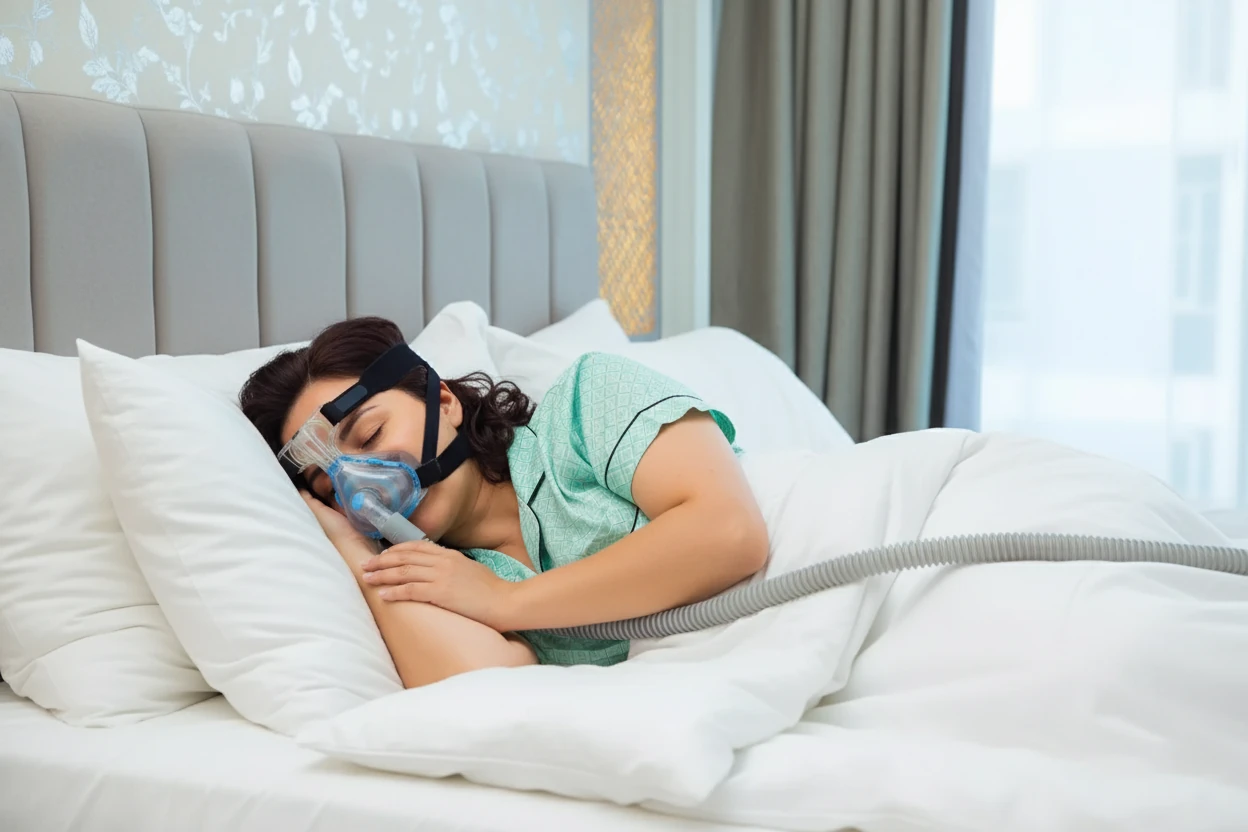
Sleep apnea is a common but serious condition that causes repeated interruptions in breathing during sleep. It affects millions of adults and is linked to significant health risks such as high blood pressure, heart attack, stroke, and type 2 diabetes12. Early and accurate diagnosis is essential to reduce these risks and improve quality of life through effective treatment32. The diagnosis process involves a combination of clinical evaluation and objective sleep testing to confirm the presence and severity of the disorder45.
Patient History and Symptoms
The diagnosis of obstructive sleep apnea (OSA) begins with a thorough clinical history focusing on key symptoms and risk factors. Patients often report loud snoring, witnessed pauses in breathing (apneas), frequent nocturnal awakenings, morning headaches, and excessive daytime sleepiness63. These symptoms reflect the repeated airway obstruction and oxygen deprivation that characterize OSA1.
Risk factors assessed during history taking include obesity, cardiovascular disease, family history of sleep disorders, alcohol and tobacco use, and lifestyle factors such as diet and physical activity63. Sleep position is also important, as supine (back) sleeping can worsen airway obstruction3. Comorbidities like hypertension and arrhythmias are frequently present and influence both diagnosis and management3.
Validated screening questionnaires such as the STOP-BANG tool are commonly used to identify patients at high risk for OSA and guide the need for further testing78. In some cases, a sleep diary may be recommended to track sleep patterns and daytime sleepiness9.
- Key symptoms and risk factors evaluated during history taking include:
- Loud snoring and witnessed apneas6
- Excessive daytime sleepiness and morning headaches3
- Obesity and cardiovascular disease3
- Alcohol and tobacco use3
- Family history of sleep disorders6
Sleep apnea is known to cause mental illness and chronic fatigue, highlighting the importance of early recognition and diagnosis10.
Physical Examination for Sleep Apnea
Physical examination aims to identify anatomical and physiological features that increase the risk of airway obstruction during sleep. Common findings include enlarged tonsils, macroglossia (an enlarged tongue), and craniofacial abnormalities such as a recessed jaw or narrow airway45. Neck circumference is a simple and reliable measure; a neck circumference greater than 40 cm is strongly associated with increased OSA risk3.
Obesity is a major risk factor and is routinely assessed by measuring body mass index (BMI) during the physical exam63. However, OSA can also occur in non-obese individuals due to other anatomical or neuromuscular factors6. Blood pressure measurement is important given the strong link between OSA and hypertension7.
No single physical exam finding can confirm OSA, but the combination of clinical features helps prioritize patients for objective sleep studies3.
- Important physical exam components in OSA evaluation:
- Assessment of upper airway anatomy for obstruction3
- Measurement of neck circumference (>40 cm increases risk)3
- Evaluation of obesity and BMI63
- Blood pressure measurement to detect hypertension7
- Identification of craniofacial abnormalities and enlarged tonsils45
Obstructive sleep apnea is the most common form of sleep-disordered breathing. Patients with sleep apnea exhibit persistent activation of the sympathetic nervous system11.
Sleep Study Procedures
Objective sleep testing is required to confirm the diagnosis of OSA and assess its severity. Two main types of tests are used: in-laboratory polysomnography (PSG) and home sleep apnea testing (HSAT). The choice depends on patient factors such as comorbidities and convenience412.
Polysomnography
Polysomnography is the gold standard for diagnosing OSA. It is conducted overnight in a sleep laboratory under technician supervision. PSG records multiple physiological parameters including depression diagnosis process and criteria waves (EEG), eye movements (EOG), muscle activity (EMG), airflow, respiratory effort, oxygen saturation, and heart rhythm (ECG)412.
This comprehensive monitoring allows detailed analysis of sleep stages and respiratory events such as apneas and hypopneas. Respiratory effort belts measure chest and abdominal movements to detect breathing effort during sleep3. Nasal cannulas monitor airflow, while pulse oximetry continuously tracks oxygen levels13.
Technicians remotely supervise PSG to ensure data quality and patient safety throughout the night3. The detailed data from PSG enables precise diagnosis and guides treatment decisions4.
Home Testing
Home sleep apnea tests are simplified devices that patients use in their own homes. These tests typically measure fewer parameters such as heart rate, oxygen saturation, airflow, and respiratory effort1214. HSAT offers convenience and lower cost compared to PSG and is suitable for patients without significant comorbidities1516.
However, HSAT may underestimate the severity of OSA in some cases, especially in patients with complex medical conditions16. Interpretation of HSAT data requires expertise from trained sleep specialists to avoid misdiagnosis4.
- Key differences between PSG and HSAT:
| Feature | Polysomnography (PSG)412 | Home Sleep Apnea Test (HSAT)151614 |
|---|---|---|
| Location | Sleep laboratory | Patient's home |
| Parameters monitored | EEG, EOG, EMG, airflow, respiratory effort, oxygen saturation, ECG412 | Heart rate, oxygen saturation, airflow, respiratory effort14 |
| Supervision | Technician supervised remotely3 | Unsupervised |
| Suitability | All patients, especially with comorbidities15 | Patients without significant comorbidities12 |
| Cost and convenience | Higher cost, less convenient | Lower cost, more convenient |
Your healthcare provider may refer you to a sleep disorder center for overnight polysomnography or suggest home sleep testing depending on your health status and risk factors14.
Diagnostic Criteria for Sleep Apnea
The primary metric used to diagnose OSA is the apnea-hypopnea index (AHI), which counts the number of apneas (complete cessation of airflow) and hypopneas (partial reduction in airflow) per hour of sleep417. An apnea is defined as a pause in breathing lasting at least 10 seconds, while hypopnea involves a reduction in airflow accompanied by a 3% or greater oxygen desaturation or arousal from sleep13.
Severity of OSA is classified based on AHI values in adults as follows: mild (5–15 events/hour), moderate (15–30 events/hour), and severe (>30 events/hour)318. These thresholds differ for children18. Diagnosis integrates AHI results with clinical symptoms such as daytime sleepiness and cardiovascular risk factors to guide treatment3.
- Diagnostic criteria summary:
- Apnea: complete airflow cessation ≥10 seconds13
- Hypopnea: partial airflow reduction with ≥3% oxygen desaturation or arousal13
- AHI thresholds for adults:
- Mild: 5–15 events/hour3
- Moderate: 15–30 events/hour3
- Severe: >30 events/hour3
- Consideration of symptoms and comorbidities alongside AHI for diagnosis3
Summary of Diagnosis Steps
Timely diagnosis of OSA is critical to reduce associated health risks such as hypertension, stroke, and heart disease23. The diagnostic process follows a stepwise approach starting with clinical evaluation and progressing to objective sleep testing.
- Clinical History and Symptom Assessment
Healthcare providers gather detailed information on sleep symptoms, risk factors, family history, and comorbidities63. - Physical Examination
Examination focuses on identifying anatomical features and measuring neck circumference, BMI, and blood pressure43. - Screening Questionnaires
Tools like STOP-BANG help stratify patients by risk and determine the need for sleep studies78. - Sleep Testing
Polysomnography is the gold standard, especially for patients with comorbidities. Home sleep apnea tests are an alternative for selected patients41215.
Testing hospitalized patients for sleep-disordered breathing — including apnea — can help save lives and enhance quality of life19.
- Diagnosis and Severity Classification
The apnea-hypopnea index (AHI) from sleep studies confirms diagnosis and classifies severity to guide treatment318. - Referral and Follow-up
Patients diagnosed with OSA may be referred to specialists for treatment options including CPAP therapy, oral appliances, or surgery143.
- Benefits of this structured approach include:
- Early identification and treatment of OSA to reduce cardiovascular risks2
- Tailored treatment plans based on severity and patient health3
- Improved patient outcomes and quality of life19