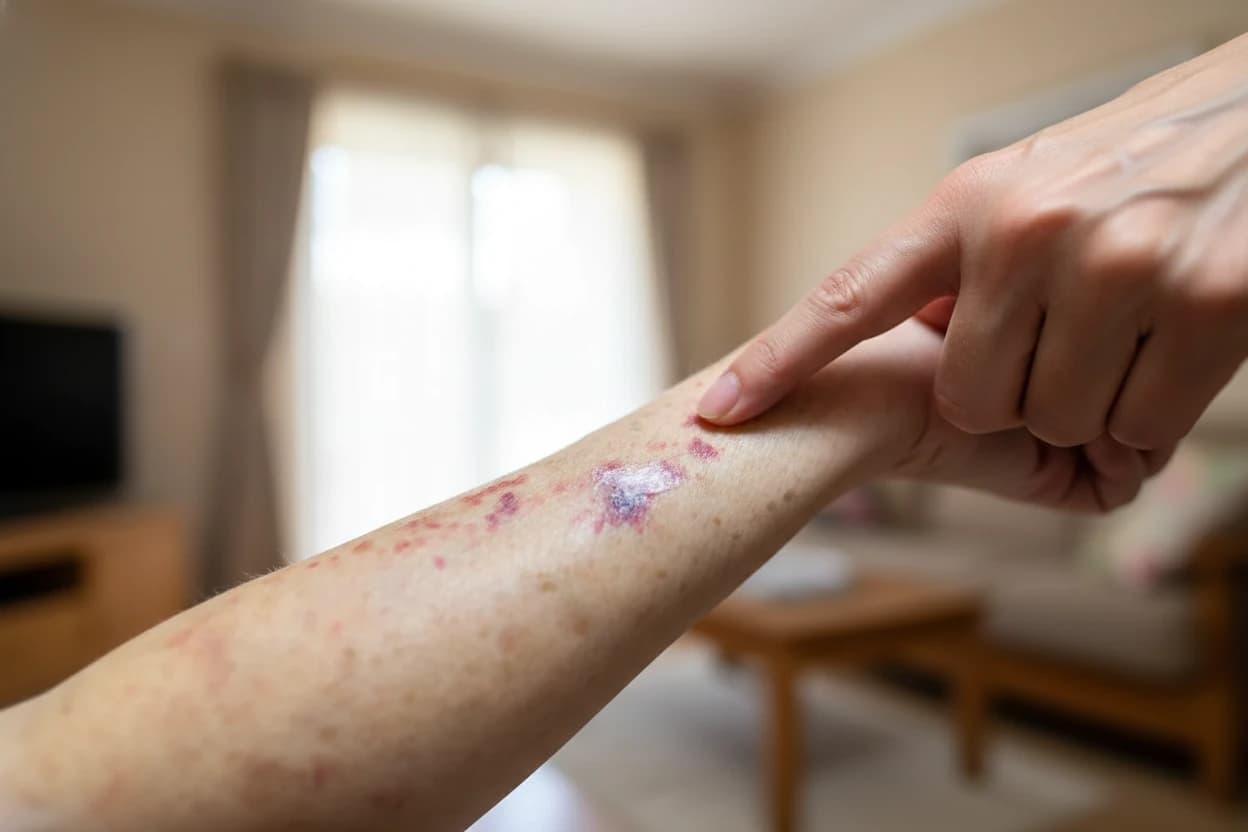
Psoriasis is a chronic skin condition affecting about 2–4% of the global population, characterized by red, scaly patches that can cause discomfort and emotional distress1 2. This disease arises from a complex interaction between the immune system, genetic factors, and environmental triggers, leading to rapid skin cell growth and inflammation3 4. Understanding these causes helps in managing symptoms and tailoring treatments effectively5 .
Immune System and Psoriasis
Psoriasis is fundamentally an immune-mediated disease where the body's defense system mistakenly attacks healthy skin cells2 . Normally, T-cells (a type of white blood cell) protect the body by targeting harmful invaders like bacteria and viruses. However, in psoriasis, these T-cells become overactive and attack the skin, causing inflammation and accelerating skin cell production6 5.
This immune dysfunction leads to a rapid turnover of skin cells, reducing the normal 3–4 week cycle to just 3–7 days. The immature skin cells accumulate on the surface, forming thick, scaly plaques that are typical of psoriasis3 7. Inflammation is driven by key cytokines—signaling proteins—including tumor necrosis factor-alpha (TNF-α), interleukin-23 (IL-23), and interleukin-17 (IL-17), which promote immune cell activation and skin cell proliferation8 910.
The disease involves both the innate immune system (the body's first line of defense) and the adaptive immune system (which targets specific pathogens), working together to initiate and maintain psoriatic lesions2 . Immune cells such as dendritic cells, macrophages, and neutrophils infiltrate the skin, further contributing to inflammation and plaque formation8 .
Biologic therapies that target these cytokines have revolutionized psoriasis treatment by reducing inflammation and controlling symptoms more effectively than traditional therapies9 11.
Psoriasis results from an immune system problem where T-cells attack healthy skin cells by mistake, causing rapid skin cell growth and inflammation. Targeted biologic treatments have transformed management by blocking key inflammatory cytokines6 9.
Genetic Factors in Psoriasis
Genetics play a crucial role in psoriasis, with heritability estimates ranging from 60% to 90% 4. The condition often runs in families, and having a close relative with psoriasis increases an individual's risk6 7. However, possessing psoriasis-related genes does not guarantee disease development, indicating that other factors are also necessary for onset6 .
Genome-wide association studies (GWAS) have identified over 60 genetic regions linked to psoriasis susceptibility, with the PSORS1 locus in the major histocompatibility complex (MHC) region being the most significant contributor12 13. Approximately one-third of the genetic impact on psoriasis is associated with this MHC region, particularly the HLA-C*06:02 allele, which is strongly linked to earlier disease onset and increased risk12 13.
Other genes involved affect immune system pathways such as antigen presentation, NF-kappa B signaling, and the IL-23/Th17 axis, as well as skin barrier function14 13. These genetic factors influence how the immune system reacts and how skin cells behave, contributing to the chronic inflammation and hyperproliferation seen in psoriasis15 4.
Epigenetic mechanisms, which modify gene expression without changing DNA sequences, also play a role by increasing the likelihood of disease in genetically predisposed individuals1 . This complex genetic architecture explains why psoriasis manifests differently among patients and why some with risk genes never develop symptoms12 13.
Psoriasis is a multifactorial disease caused by the interplay between multiple inherited alleles and environmental risk factors13 .
Common Psoriasis Triggers
While genetics and immune dysfunction set the stage for psoriasis, environmental triggers often initiate or worsen the disease1 16. These triggers vary among individuals but commonly include:
- Infections: Streptococcal throat infections are well-known triggers, especially for guttate psoriasis, a form that often affects children and young adults17 166. Other skin infections and microbiota imbalances may also contribute17 18.
- Skin Injury: Trauma such as cuts, scrapes, insect bites, or severe sunburn can provoke psoriasis lesions through the Koebner phenomenon, where new plaques appear at sites of skin damage16 7.
- Stress: Psychological stress can exacerbate psoriasis by influencing immune responses and promoting inflammation19 1.
- Medications: Certain drugs, including lithium, corticosteroids, antimalarials, and some blood pressure medications, may trigger or worsen psoriasis1 166.
- Lifestyle Factors: Smoking (nicotinism), heavy alcohol consumption, and obesity are significant contributors to psoriasis pathogenesis and flare-ups1 116.
- Weather: Cold, dry conditions can aggravate symptoms, although the exact effects of weather lack high-level evidence1 37.
Avoiding known triggers can help reduce flare-ups and improve disease control. Since triggers vary, patients benefit from identifying personal factors that worsen their psoriasis6 5.
| Common Psoriasis Triggers | Description |
|---|---|
| Infections | Streptococcal throat infections, skin infections17 16 |
| Skin Injury | Cuts, scrapes, insect bites, sunburn (Koebner phenomenon) 167 |
| Stress | Psychological stress increasing inflammation19 1 |
| Medications | Lithium, corticosteroids, antimalarials, blood pressure drugs1 166 |
| Lifestyle Factors | Smoking, alcohol, obesity1 116 |
| Weather | Cold, dry weather1 37 |
| Sources: 171619 | |
Psoriasis flare-ups can be triggered by infections, skin injuries, stress, medications, and lifestyle factors like smoking and alcohol use. Identifying and avoiding personal triggers is key to managing symptoms1 6.
Psoriasis Causes Summary
Psoriasis is a chronic, systemic, immune-mediated disease resulting from a complex interaction of immune system dysfunction, genetic predisposition, and environmental triggers1 2. The immune system mistakenly attacks healthy skin cells, leading to rapid skin cell growth and inflammation driven by cytokines such as TNF-α, IL-23, and IL-178 910.
Genetic factors, particularly variants in the MHC region including PSORS1, significantly increase susceptibility, but environmental factors are necessary to trigger disease onset and flares12 1. Common triggers include infections, skin trauma, stress, certain medications, smoking, alcohol, and obesity1 166.
Understanding these causes helps guide treatment strategies, including the use of biologics targeting immune pathways and lifestyle modifications to avoid triggers9 115.
- Psoriasis affects about 2–4% of people worldwide and is not contagious1 26.
- The disease is characterized by scaly, red plaques caused by accelerated skin cell turnover20 3.
- Immune cells and cytokines drive inflammation and skin changes8 9.
- Genetics contribute strongly, but environmental triggers are essential for disease expression12 1.
- Avoiding triggers and using targeted therapies can improve disease control9 11.
Psoriasis Causes FAQs
What causes psoriasis?
Psoriasis is caused by an overactive immune system that mistakenly attacks healthy skin cells, combined with genetic factors and environmental triggers6 5.
Is psoriasis contagious?
No, psoriasis is not contagious and cannot be spread by touch, swimming pools, or sexual contact6 .
Can psoriasis be cured?
Currently, there is no cure for psoriasis. Treatments focus on controlling symptoms and preventing flare-ups21 5.
What are common triggers for psoriasis flare-ups?
Common triggers include infections (especially strep throat), skin injuries, stress, certain medications, smoking, alcohol, and cold weather1 166.
Does psoriasis run in families?
Yes, psoriasis often runs in families, and having a close relative with the condition increases your risk, but not everyone with risk genes develops psoriasis12 6.