Electrolysis is a widely used method for permanent hair removal, especially important in gender-affirming medical care where hair removal is a crucial step before surgeries such as vaginoplasty and phalloplasty1. This technique offers a reliable solution for individuals seeking long-term hair reduction regardless of hair color or skin type2. Understanding the process, benefits, and risks of electrolysis can help patients make informed decisions about their hair removal options3.
Electrolysis Process Explained
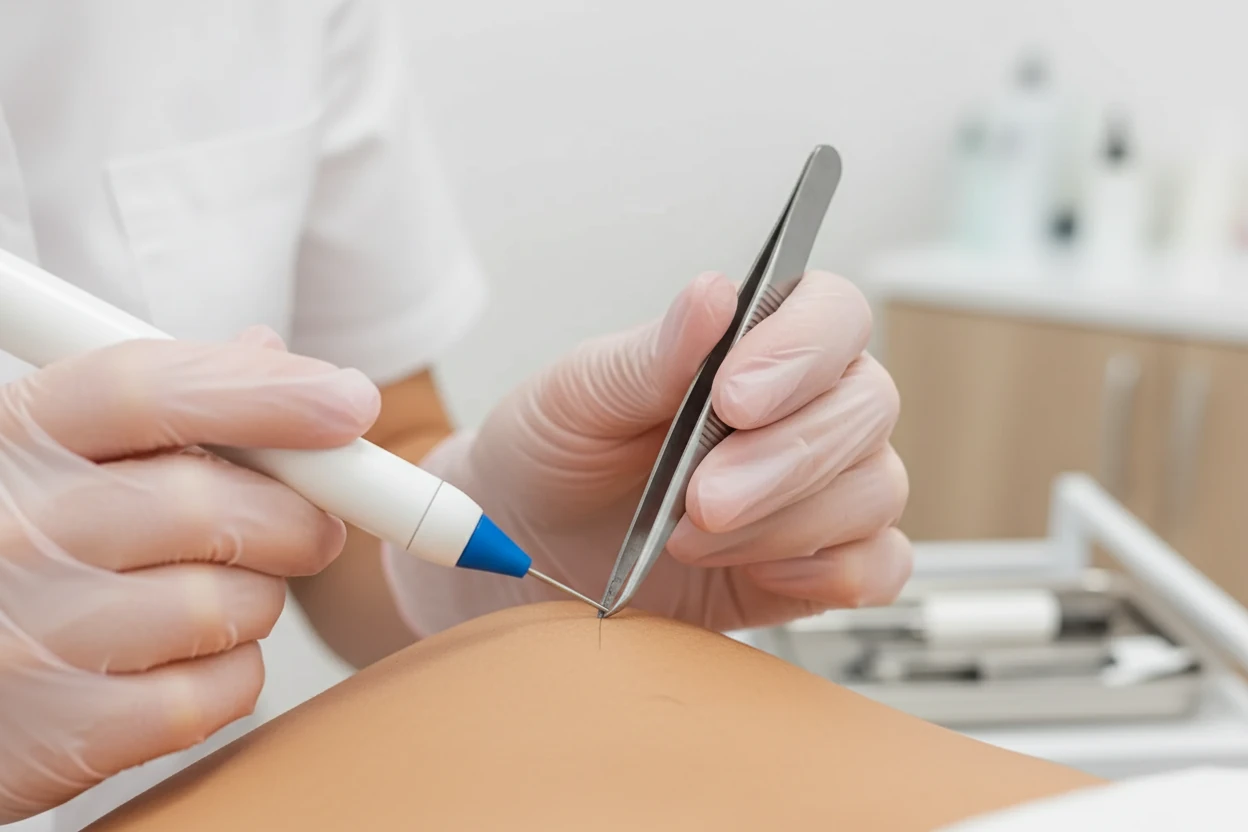
Electrolysis permanently removes hair by applying an electrical current directly to the hair follicle through a fine needle or probe2. The procedure involves inserting this fine needle into each hair follicle individually and delivering either a galvanic (direct current) or radiofrequency (high-frequency alternating current) current to destroy the hair root42. When the follicle is properly treated, the hair can be easily extracted without resistance using forceps5.
There are three main types of electrolysis:
- Galvanic electrolysis uses direct current to chemically destroy the follicle and is considered the most effective but also the most painful method42.
- Thermolysis applies high-frequency alternating current to generate heat that destroys the follicle; it is generally less painful but may require more sessions4.
- Blend method combines galvanic and thermolysis currents to maximize effectiveness while minimizing discomfort4.
Because each hair follicle must be treated individually and hair grows in cycles, multiple treatment sessions over 12 to 18 months are necessary to achieve permanent hair removal623. The process is time-consuming, with session duration varying based on the size of the treatment area—from a few minutes to over an hour3.
Benefits of Electrolysis Treatment
Electrolysis offers several key advantages that make it a preferred choice for permanent hair removal:
- It is the only hair removal method approved by the FDA for permanent results on all hair colors and skin types23.
- Electrolysis can be used safely on any body area, including sensitive zones3.
- Once the full course of treatment is completed, maintenance sessions are generally not required23.
- It is effective for patients with medical conditions such as diabetes-managementdiabetes-managementdiabetes-risk-despite-healthy-dietdiabetes-risk-despite-healthy-dietdiabetes, where other hair removal methods may be contraindicated3.
- Electrolysis is especially useful for removing light, gray, or white hair, which are less responsive to laser treatments673.
This permanence and versatility make electrolysis a valuable option for individuals seeking long-lasting hair reduction, including those undergoing gender-affirming procedures where hair removal is medically necessary17.
Comparing Electrolysis to Other Methods
Electrolysis differs significantly from other hair removal techniques in its mechanism and outcomes:
- Unlike temporary methods such as shaving or waxing, electrolysis destroys the hair follicle, providing permanent hair removal2.
- Laser hair removal, while effective for many, is less suitable for light or white hair and may not be FDA-approved for permanent removal across all skin types23.
- Electrolysis requires multiple sessions due to hair growth cycles, but once completed, further treatments are usually unnecessary23.
- It is effective on all hair colors and skin types, whereas laser treatments are often limited by pigment3.
- Consulting a qualified provider is essential to determine if electrolysis is the best option based on individual hair and skin characteristics3.
| Electrolysis Type | Mechanism | Pain Level | Effectiveness |
|---|---|---|---|
| Galvanic | Direct current causes chemical destruction42 | Most painful | Most effective |
| Thermolysis | High-frequency current generates heat42 | Less painful | Effective |
| Blend | Combination of galvanic and thermolysis42 | Least painful | Effective |
This table summarizes the main electrolysis types, highlighting their mechanisms, pain levels, and effectiveness42.
Electrolysis Treatment Experience
Electrolysis is generally safe and effective when performed by trained professionals such as board-certified dermatologists or certified electrologists3. The procedure involves inserting a fine probe into each hair follicle and delivering electrical current to destroy the root2. Patients often describe the sensation during treatment as a stinging or pricking feeling, similar to a bee sting5.
Treatment sessions vary in length depending on the size of the area being treated, ranging from a few minutes to over an hour3. Because hair grows in cycles, not all hairs are present during each session, necessitating multiple visits over months to target all follicles2. After treatment, the hair is gently extracted with forceps and should come out easily if the follicle was properly treated5.
Electrolysis is the only FDA-approved permanent hair removal method that works on all hair and skin types, making it a versatile option compared to laser treatments2. It is also considered safe for individuals with medical conditions such as diabetes when performed by qualified providers3.
“Electrolysis is a time-intensive process requiring skilled technique and patient perseverance to achieve permanent results.”
— J. Startin2
Electrolysis Risks and Side Effects
While electrolysis is generally safe, it carries some risks and side effects, especially if performed improperly:
- Discomfort or pain during treatment is common and varies by individual pain tolerance, often described as a stinging or bee sting sensation5.
- Temporary redness and irritation at the treatment site are frequent but usually resolve within hours to days without intervention53.
- Infection risk exists if sterile technique is not maintained during the procedure3.
- Improper technique or excessive electrical current can cause scarring or burns5.
- Individuals with darker skin tones may have a higher risk of keloid formation or post-inflammatory pigmentation changes such as hyperpigmentation or hypopigmentation after treatment53.
Because each follicle is treated individually, electrolysis is a lengthy process requiring multiple sessions, which may affect patient adherence2. The duration of each session depends on the treatment area size and hair density3.
Finding a Qualified Electrolysis Provider
Choosing a skilled and certified provider is crucial to minimize risks and ensure effective treatment outcomes. The FDA recognizes electrolysis as the sole method for permanent hair removal, but it must be performed by trained professionals3. Key considerations when selecting a provider include:
- Board certification in dermatology or electrology is a strong indicator of expertise3.
- Seek referrals from trusted healthcare professionals to find reputable practitioners2.
- Verify the provider’s credentials and experience before scheduling treatment2.
- Ensure the clinic follows strict sterile techniques to reduce infection risk3.
- Discuss your hair removal goals and medical history with the provider to confirm electrolysis suitability3.
Electrolysis Treatment Summary
Electrolysis is a proven, FDA-approved method for permanent hair removal that works on all hair colors and skin types23. It involves the precise destruction of hair follicles using electrical currents delivered via a fine needle, requiring multiple sessions over months due to hair growth cycles62. The procedure can be uncomfortable but is generally safe when performed by certified electrologists or dermatologists53.
Key takeaways include:
- Electrolysis offers permanent hair removal, unlike temporary methods such as waxing or shaving2.
- Multiple treatment sessions are necessary, but maintenance is usually not required after completion3.
- It is effective on all skin and hair types, including light and white hair23.
- Risks include pain, redness, infection, scarring, and pigmentation changes, which are minimized by choosing a qualified provider53.
- Electrolysis is important in gender-affirming care, especially before surgeries like vaginoplasty to prevent hair-related complications17.
This treatment demands patience and commitment but provides lasting results for those seeking permanent hair removal623.