Laser hair removal is one of the most popular cosmetic procedures in the United States, offering a long-lasting solution to unwanted hair growth1 . It uses concentrated light energy to target hair follicles, reducing hair growth over time with multiple treatments2 . While it is not a permanent removal method, laser hair removal can significantly decrease hair density and thickness, providing convenience and improved skin texture3 .
Laser Hair Removal Process
Laser hair removal works on the principle of selective photothermolysis, where specific wavelengths of light target melanin, the pigment in hair follicles2 . The laser emits light absorbed by melanin in the hair shaft and follicle, converting light energy into heat. This heat damages the hair follicle, inhibiting or delaying future hair growth4 . Because the laser selectively targets melanin, the surrounding skin remains unharmed, making the procedure safe when properly performed2 .
Different types of lasers are used depending on the patient's skin type, hair color, and treatment area:
- Alexandrite lasers (755 nm) are effective for lighter skin with dark hair but carry a higher risk of side effects in darker skin2 .
- Diode lasers (808–810 nm) penetrate deeper and are safer for a range of skin types, including darker skin tones2 .
- Nd:YAG lasers (1064 nm) offer the deepest penetration and are safe for all skin types, especially darker skin, due to reduced melanin absorption in the epidermis2 .
A course of treatments typically involves multiple sessions spaced weeks apart to target hair follicles in their growth (anagen) phase, as only actively growing hairs respond to laser energy2 . Clinical studies report hair reduction rates up to 75% after combined laser regimens2 .
| Laser Type | Wavelength (nm) | Best Skin Type | Hair Type | Notes |
|---|---|---|---|---|
| Alexandrite | 755 | Light skin (I-III) | Dark hair | Higher side effect risk in dark skin2 |
| Diode | 808–810 | Light to dark skin | Dark hair | Deeper penetration, safer for darker skin2 |
| Nd:YAG | 1064 | All skin types | Dark hair | Deepest penetration, low epidermal melanin absorption2 |
Benefits of Laser Hair Removal
Laser hair removal offers several advantages over traditional hair removal methods such as shaving, waxing, or plucking:
- Precision: Lasers selectively target dark, coarse hairs while sparing surrounding skin1 .
- Speed: Each laser pulse treats many hairs simultaneously; small areas like the upper lip can be treated in under a minute, while larger areas may take up to an hour1 .
- Long-term reduction: Most patients experience permanent hair loss after three to seven sessions, with significant reduction lasting months to years1 .
- Reduced ingrown hairs: By targeting follicles, laser hair removal decreases the occurrence of painful ingrown hairs3 .
- Therapeutic uses: Laser hair removal is used to manage medical conditions such as pilonidal sinus disease and hidradenitis suppurativa by reducing hair that contributes to disease recurrence5 6.
Optimal results are achieved in individuals with light skin and dark, coarse hair due to the contrast that allows better laser absorption2 . However, advances in laser technology have expanded safety and efficacy to darker skin types using appropriate lasers like Nd:YAG2 .
Patients often notice a significant improvement in the overall quality of their skin post-treatment3 .
Potential Side Effects and Risks
Laser hair removal is generally safe when performed by trained professionals, but some side effects can occur:
- Common mild effects: Temporary skin irritation, redness (erythema), and swelling (perifollicular edema) usually resolve within hours to days2 7.
- Pigment changes: Treated skin may become temporarily lighter or darker, especially in individuals with darker skin or those who do not avoid sun exposure before and after treatment7 .
- Rare severe effects: Blistering, scarring, crusting, or changes in skin texture are uncommon but possible7 .
- Paradoxical hypertrichosis: Rarely, increased hair growth can occur around treated areas, more common with certain laser types and skin types8 .
- Ocular risks: Accidental laser exposure to the eyes can cause serious complications such as choroidal neovascularization, highlighting the importance of protective eyewear during treatment9 .
Laser hair removal is not recommended during pregnancy due to a lack of safety data7 . The risk of side effects increases with improper use, untrained operators, or at-home devices7 .
Laser hair removal side effects are mostly mild and temporary, but proper eye protection is critical to prevent rare but serious eye injuries2 9.
Your Laser Hair Removal Appointment
How to Prepare
Proper preparation enhances safety and treatment effectiveness:
- Avoid plucking, waxing, or electrolysis for at least four to six weeks before treatment, as these remove the hair root needed for laser targeting1 .
- Shave the treatment area 24 to 48 hours before the appointment to remove hair above the skin while preserving the follicle1 .
- Avoid sun exposure and tanning beds for at least six weeks before and after treatment to reduce the risk of pigment changes1 .
- Discuss medications with your provider; some drugs may increase photosensitivity and should be paused if advised1 .
- For darker skin, your provider may recommend skin lightening creams before treatment1 .
During the Procedure
During the session:
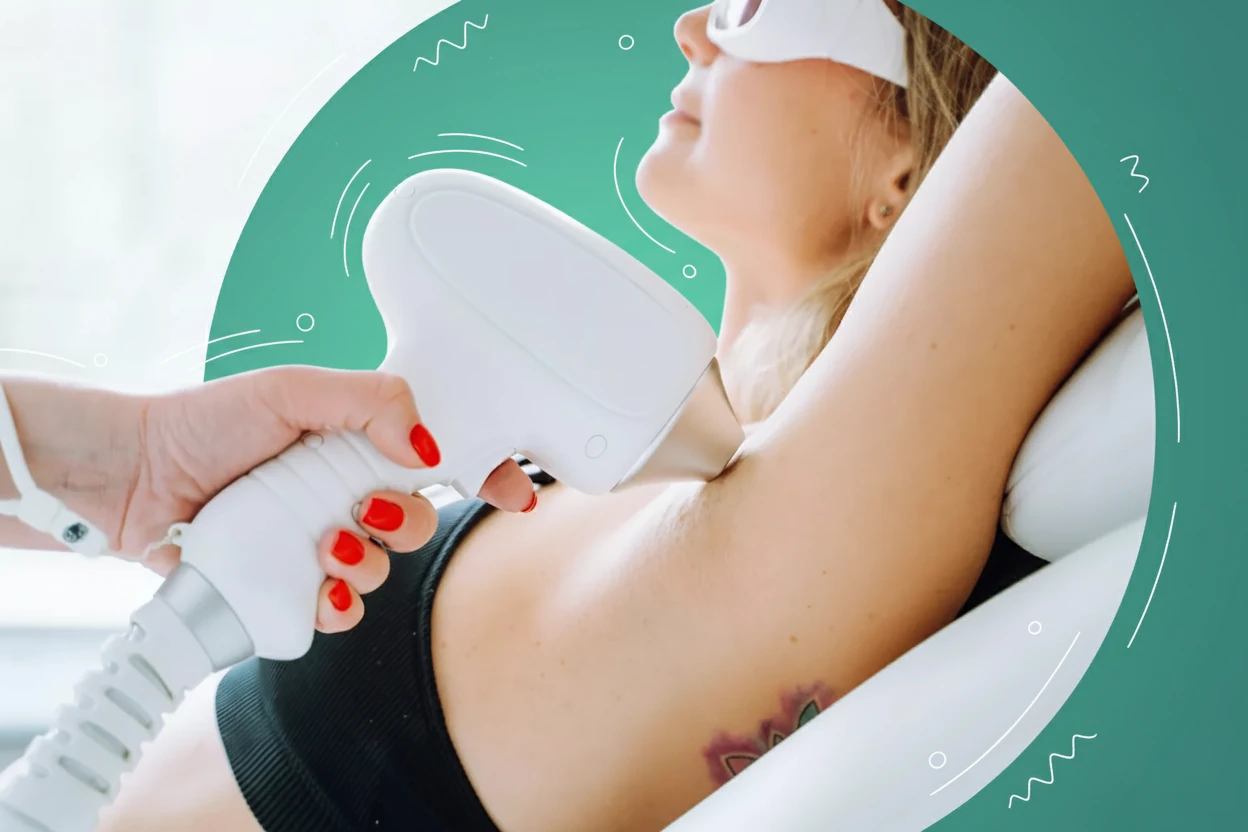
- Protective eyewear is worn by both patient and operator to prevent eye injury2 .
- The provider cleans the treatment area and may apply a cooling gel or use a cooling device to protect the skin and reduce discomfort1 .
- The laser handpiece is applied to the skin, delivering pulses of light absorbed by hair follicles2 .
- Patients may feel a warm pinprick or snapping sensation; topical anesthetics can be used to minimize discomfort1 .
- Treatment duration varies by area size, from a few minutes for small zones to an hour for larger areas1 .
Aftercare and Recovery
Post-treatment care includes:
- Expect mild redness and swelling, similar to a sunburn, lasting a few hours to days2 .
- Apply cold compresses or soothing creams to reduce discomfort1 .
- Avoid sun exposure and use broad-spectrum sunscreen (SPF 30 or higher) for at least six weeks1 .
- Do not pluck or wax between sessions; shaving is allowed1 .
- Follow-up treatments are scheduled every 4 to 8 weeks depending on the area and hair growth cycle1 .
Most side effects resolve quickly, and no long-term adverse effects have been reported in recent studies2 .
The procedure is generally well-tolerated, with most side effects being mild and transient2 .
Cost and Key Considerations
Laser hair removal costs vary widely based on factors such as treatment area size, number of sessions, provider expertise, and geographic location1 . On average, sessions can cost several hundred dollars each, and multiple treatments (typically 6 to 8) are needed for optimal results1 5.
Laser hair removal is a safe, effective way to remove unwanted body hair. Heat from a laser removes hair and destroys hair follicles. It’s not permanent, but the results last longer than plucking, tweezing, or waxing12 .
Key considerations include:
- Patient selection and skin preparation are critical for safety and efficacy10 .
- Individualized laser parameters tailored to skin type, hair color, and treatment area improve outcomes and reduce side effects2 .
- Operator proficiency and standardized protocols ensure consistent and safe energy delivery4 10.
- Maintenance treatments may be necessary to sustain hair reduction over time2 5.
| Factor | Impact on Cost and Outcome |
|---|---|
| Treatment area size | Larger areas require longer sessions, higher cost1 |
| Number of sessions | Multiple sessions needed; more sessions increase cost5 |
| Provider expertise | Experienced providers may charge more but reduce risks10 |
| Skin and hair type | Affects laser choice and treatment parameters2 |
| Geographic location | Costs vary by region and facility1 |
| Sources: 124578910 | |
At-Home Laser Hair Removal Options
At-home laser hair removal devices are available but differ from professional treatments:
- These devices deliver lower energy levels and are considered cosmetic rather than medical devices by the FDA1 .
- There are no high-quality, long-term studies comparing the safety and efficacy of at-home devices to professional laser treatments1 .
- Risks of misuse and injury, including eye damage, are higher without professional supervision7 .
- At-home devices may provide modest hair reduction but are generally less effective than in-office procedures1 .
Insurance coverage for laser hair removal is inconsistent and often limited to medical indications such as pilonidal sinus disease or gender-affirming care11 5. Access may be restricted by regulatory barriers, especially for transgender patients11 .
Laser Hair Removal Summary
Laser hair removal is a safe and effective method for long-term hair reduction, particularly for individuals with light skin and dark hair2 . It works by selectively damaging hair follicles with laser light, inhibiting future hair growth2 . Multiple sessions are required to target hairs in their growth phase, and maintenance treatments may be necessary2 .
Common side effects are mild and transient, including redness and swelling, while serious complications are rare when performed by trained professionals2 7. The procedure also has important medical applications, such as preparing transgender patients for gender-affirming surgery and managing chronic skin conditions11 5.
While at-home laser devices offer convenience, professional treatments provide higher energy and better safety profiles1 . Patients should consult qualified providers to ensure optimal results and minimize risks.