Teeth whitening is a popular cosmetic dental treatment that improves the color of natural teeth, making them whiter and brighter1 . Various methods are available, ranging from professional in-office procedures to at-home products and over-the-counter options2 . While whitening treatments can effectively address both extrinsic (surface) and intrinsic (internal) stains, it is important to understand their mechanisms, benefits, and potential risks before use2 .
Whitening Trays
At-home whitening trays use carbamide peroxide gels, typically in concentrations of 10–20%, applied in custom-fitted trays made by dental professionals1 . These trays allow the bleaching agent to stay in contact with the teeth for extended periods, usually daily for 2 to 6 weeks, leading to significant color improvement1 . Compared to in-office treatments, at-home trays often result in longer-lasting whitening effects and lower rates of color recurrence1 .
The bleaching agents in trays penetrate dental hard tissues, oxidizing pigmented molecules responsible for discoloration2 . Carbamide peroxide breaks down into hydrogen peroxide, which is the active whitening agent3 . This method is effective for both extrinsic and some intrinsic stains but only works on natural teeth, not on restorations like crowns or fillings2 .
Tooth sensitivity is a common side effect, affecting up to 78% of users, but it is usually temporary and mild1 . Using desensitizing agents before or after treatment can help reduce sensitivity4 . It is crucial to follow the manufacturer's instructions and dentist's guidance to avoid overuse and minimize risks5 .
Benefits of Whitening Trays:
- Custom fit ensures even application and comfort1
- Longer contact time with bleaching gel improves effectiveness1
- Lower recurrence of discoloration compared to in-office bleaching1
- Suitable for gradual whitening with controlled peroxide concentration2
- Can be used safely under dental supervision6
Whitening Strips
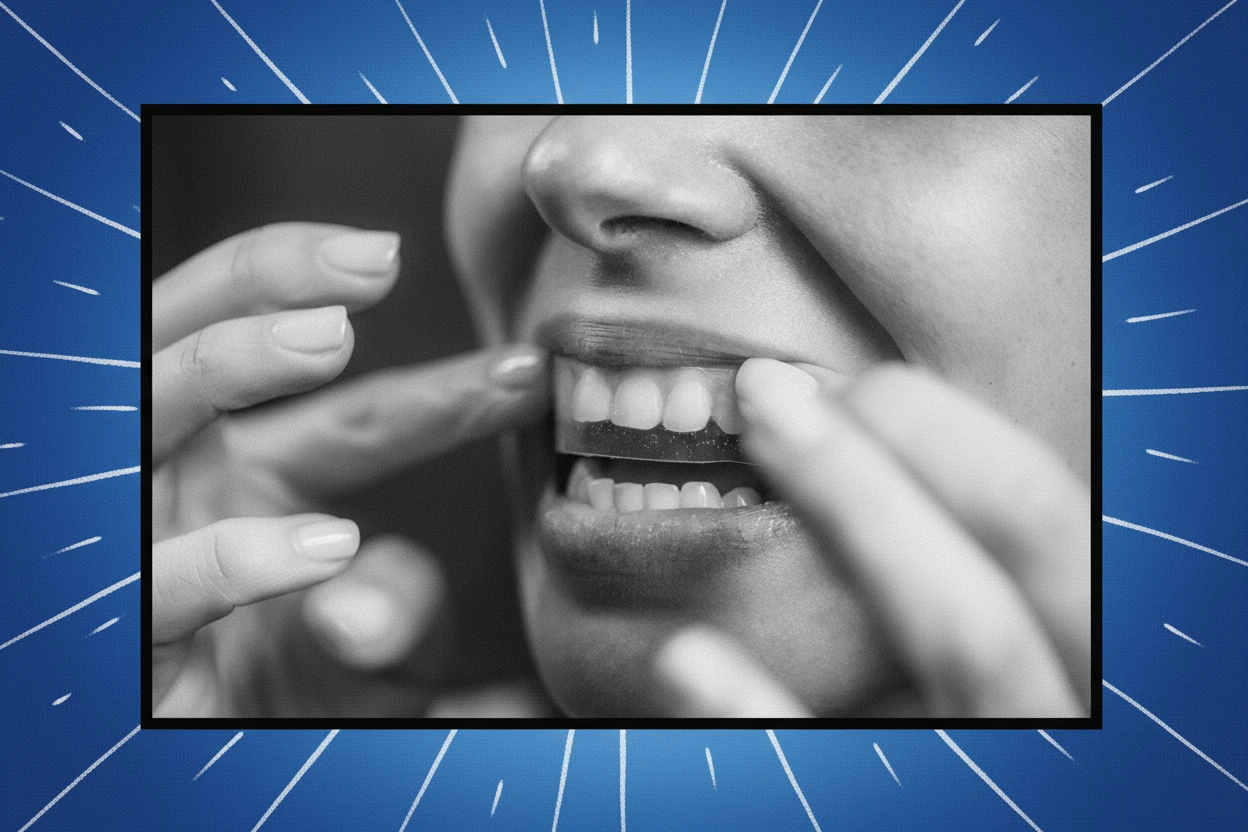
Whitening strips are thin, flexible plastic strips coated with hydrogen peroxide (3–10%) gel that users apply directly to their teeth once or twice daily for 5 to 30 minutes per session7 . They provide a convenient, at-home whitening option with generally high patient satisfaction7 .
Although whitening strips require much longer treatment durations—up to 14 to 280 times longer than in-office procedures—they can achieve effective whitening results when used consistently7 . The strips maintain peroxide contact with the tooth surface, allowing oxidation of stains over time3 .
Tooth sensitivity and gum irritation may occur but are typically mild and transient5 . Strips are less customizable than trays and may not cover all teeth evenly, which can affect uniformity of whitening3 .
Key points about whitening strips:
- Contain low to moderate hydrogen peroxide concentration7
- Require daily use over several weeks for noticeable results7
- Convenient and easy to use without dental supervision3
- May cause temporary tooth sensitivity or gum irritation5
- Less effective and slower than professional treatments7
Hydrogen Peroxide Toothpaste
Whitening toothpastes often contain hydrogen peroxide or carbamide peroxide at low concentrations combined with mild abrasives to remove surface stains8 . These toothpastes primarily work by mechanically scrubbing extrinsic discoloration and chemically oxidizing pigments on the enamel surface3 .
Studies show whitening dentifrices are more effective than regular toothpastes in reducing tooth surface discoloration, though their effect is modest compared to professional bleaching methods8 . The whitening effect typically results in a lightening of one or two shades over time with regular use5 .
The most common side effect is increased tooth sensitivity, especially with higher peroxide concentrations or abrasive formulations8 . Using toothpastes designed for sensitive teeth can help minimize discomfort3 .
Advantages of hydrogen peroxide toothpastes:
- Gradual whitening with daily brushing5
- Removes extrinsic stains through mild abrasion and peroxide action8
- Widely available and easy to incorporate into oral hygiene routines3
- Generally safe when used as directed9
- May cause mild, temporary sensitivity in some users8
Baking Soda Toothpaste
Baking soda (sodium bicarbonate) toothpastes whiten teeth primarily through mechanical removal of extrinsic stains rather than chemical bleaching10 . The mild abrasive action helps scrub away surface discoloration caused by foods, beverages, and tobacco10 .
In vitro studies confirm baking soda’s ability to remove stains but show it is less effective than peroxide-based whitening agents10 . It has limited impact on intrinsic tooth discoloration, which occurs within the tooth structure10 .
Baking soda is generally safe for daily use, but excessive abrasion from highly abrasive toothpastes can lead to tooth wear over time11 . Unlike peroxide-containing products, baking soda does not bleach teeth chemically and thus does not cause tooth sensitivity related to peroxide exposure10 .
Key features of baking soda toothpaste:
- Removes surface stains by gentle abrasion10
- Less effective than peroxide-based whitening agents10
- Safe for regular use with low risk of sensitivity11
- Limited effect on intrinsic tooth discoloration10
- Avoid highly abrasive formulations to prevent enamel wear11
Professional Teeth Whitening
Professional in-office whitening uses high concentrations of hydrogen peroxide (25–40%) applied by dental professionals, sometimes activated by light sources such as LED or laser12 . This method achieves rapid and dramatic whitening results, with laboratory studies showing up to 84% whitening degree12 .
The procedure typically lasts about 15 to 30 minutes per session, and patients often experience high satisfaction with the immediate improvement1 . Although enamel microhardness changes very little with short exposure, prolonged or repeated treatments may risk enamel demineralization12 .
Tooth sensitivity is a common side effect, often more intense but shorter in duration compared to at-home treatments1 13. Combining in-office and at-home bleaching can maximize whitening while minimizing sensitivity and damage14 15.
Professional whitening is effective for both extrinsic and some intrinsic stains but does not affect restorations2 . Patients are advised to follow dietary and lifestyle guidelines post-treatment to maintain results15 .
Benefits of professional whitening:
- Fast and noticeable whitening results12
- Uses higher peroxide concentrations for effective bleaching1
- Performed under dental supervision for safety6
- Can combine with at-home treatments for longer-lasting effects14
- Patient satisfaction is generally high1
Dentists will typically use a stronger peroxide bleaching agent and special lights to whiten your smile.
Fruit for Teeth Whitening
Some natural remedies like strawberries, lemon juice, and activated charcoal have been tested for teeth whitening effects10 . Baking soda, among these, showed some ability to remove extrinsic stains but was less effective than peroxide-based agents10 .
Lemon juice demonstrated mild enamel interprismatic dissolution, indicating potential harm with prolonged use10 . Other natural methods lack strong scientific evidence for efficacy and may damage enamel or oral tissues over time5 .
Experts caution against relying on fruits or household items for whitening, as these can be abrasive or acidic and cause enamel erosion or sensitivity5 .
Summary of fruit and natural remedies:
- Limited whitening effect compared to professional products10
- Potential enamel damage with acidic substances like lemon juice10
- Baking soda is safer but less effective than peroxide agents10
- Charcoal and other natural products lack strong evidence5
- Use with caution and avoid prolonged exposure5
Teeth Whitening Risks
Tooth Sensitivity
Tooth sensitivity is the most common side effect of whitening treatments, caused by peroxide penetration into dental tissues leading to transient inflammation of the dental pulp1 4. Sensitivity rates are similar between in-office and at-home bleaching, though in-office procedures may cause more immediate discomfort1 13.
Desensitizing agents applied before or after bleaching can reduce sensitivity symptoms4 . Sensitivity usually resolves shortly after treatment completion1 .
Gum Irritation
Gingival irritation can occur due to contact with peroxide gels, especially if trays are poorly fitted or whitening strips/gels are improperly applied2 . This irritation is generally mild and reversible with cessation of treatment or improved application technique6 .
Tooth Damage
Excessive or aggressive use of whitening products, particularly those with high peroxide concentrations or abrasive components, can damage enamel and dentin11 . Prolonged exposure to acidic natural remedies like lemon juice may cause enamel erosion10 .
Oxidative stress from bleaching agents can cause cellular damage in periodontal tissues, though newer lower-concentration products aim to reduce these risks17 18. Combining in-office and at-home treatments can minimize dental structure damage14 .
Common risks of teeth whitening:
- Temporary tooth sensitivity due to pulp inflammation1
- Mild gingival irritation from peroxide contact2
- Potential enamel erosion with overuse or acidic substances10
- Oxidative stress-related cellular damage with high peroxide17
- Damage risk reduced by following protocols and using desensitizers18
Teeth Whitening Don'ts
To ensure safety and effectiveness, avoid the following when whitening teeth:
- Using whitening products excessively or more frequently than recommended5
- Applying natural acidic substances like lemon juice directly to teeth10
- Using highly abrasive over-the-counter products for prolonged periods6
- Whitening teeth with restorations such as crowns, veneers, or fillings2
- Ignoring dental consultation before starting whitening treatments6
Given the higher concentrations of hydrogen peroxide or carbamide peroxide, it is important to read and follow product instructions and not use the product continuously.
5Good oral hygiene and regular dental visits are essential for maintaining whitening results and oral health5 .
💡 Did You Know?
Current research about tooth whitening shows that it is safe and effective when manufacturer's protocol is followed, yet there are risks. 9
Teeth Whitening Summary
Teeth whitening is a safe and effective cosmetic dental treatment when used properly under professional guidance or following manufacturer instructions9 . Various methods exist:
- Whitening trays with carbamide peroxide offer gradual, effective at-home whitening with longer-lasting results1 2
- Whitening strips provide convenient, moderate peroxide exposure but require longer treatment duration7 3
- Hydrogen peroxide toothpastes help remove surface stains gradually with mild sensitivity risk8 5
- Baking soda toothpastes mechanically remove extrinsic stains but are less effective than peroxide agents10
- Professional in-office whitening delivers fast, dramatic results using higher peroxide concentrations but may cause more immediate sensitivity12 1
Risks such as tooth sensitivity, gum irritation, and enamel damage can be minimized by following instructions, using desensitizing agents, and avoiding harmful natural remedies4 1018. Only natural teeth respond to whitening; restorations remain unchanged2 .
Maintaining good oral hygiene and avoiding staining foods and habits like smoking help prolong whitening effects5 .