Choosing the right breakfast can set the tone for your entire day, influencing energy levels, appetite, and overall health1 . Eggs and oatmeal are two popular breakfast options, each offering unique nutritional benefits that support different health goals2 . Understanding their differences can help you make an informed choice that fits your dietary needs and lifestyle3 .
Eggs vs. Oatmeal: Key Differences
Eggs and oatmeal come from distinct food groups, which naturally leads to differences in their nutrient profiles4 . Eggs are primarily a protein-rich food, providing all nine essential amino acids that the body cannot produce, making them a complete protein source2 . In contrast, oatmeal is a carbohydrate-rich whole grain, notable for its high fiber content, especially beta-glucan, a soluble fiber known to support heart and gut health5 .
Eggs contain minimal carbohydrates and no fiber, while oatmeal offers a significant amount of carbohydrates and fiber but less protein6 . This difference affects how each food influences blood sugar levels and satiety. Eggs have a low glycemic index, meaning they digest slowly and cause minimal blood sugar spikes, whereas oatmeal has a higher glycemic index but helps regulate blood sugar through its fiber content6 .
Additionally, eggs provide important antioxidants such as lutein and zeaxanthin, which support eye health, while oatmeal supplies minerals like manganese and iron, essential for metabolism and red blood cell production2 7.
Nutritional Breakdown of Eggs and Oatmeal
A standard comparison often uses one large hard-boiled egg and one cup of cooked fortified oatmeal to highlight their nutritional differences4 . Eggs are rich in high-quality protein, vitamins A, D, E, B5, and B12, and minerals such as selenium and choline7 . Selenium supports thyroid function and reproductive health, while choline is vital for memory, mood, and muscle control2 . Eggs also contain riboflavin, which helps convert food into energy2 .
Oatmeal, on the other hand, is a whole grain rich in fiber, particularly beta-glucan, which can lower cholesterol and improve blood sugar control5 . It provides important minerals including manganese, magnesium, selenium, zinc, and iron, as well as folate and vitamin A7 . Manganese acts as an antioxidant and supports blood clotting and immune health, while iron is crucial for healthy red blood cells7 . Folate is essential for DNA synthesis and pregnancy health2 .
| Nutrient | Eggs (1 large) 7 | Oatmeal (1 cup cooked) 7 |
|---|---|---|
| Calories | ~70 | ~135 |
| Protein (g) | 6 | 5 |
| Carbohydrates (g) | 0.6 | 28.1 |
| Fiber (g) | 0 | 4 (beta-glucan soluble fiber) |
| Selenium (% DV) | 28% | Varies, present |
| Choline (% DV) | 27% | Low |
| Vitamin A (% DV) | Present | 34% |
| Iron (% DV) | Low | Good source |
| Manganese (% DV) | Low | 75% (women), 60% (men) |
| Lutein & Zeaxanthin | Present | Absent |
Both eggs and oatmeal contribute to improved diet quality and nutrient intake across different populations, including children and adults5 8.
How to Choose the Best Breakfast for You
Selecting between eggs and oatmeal depends largely on your individual health goals, dietary preferences, and any medical conditions9 . If you seek a high-protein, low-carbohydrate meal to support muscle maintenance or weight loss, eggs may be the better choice due to their complete protein content and minimal carbs2 . Conversely, if you need to manage blood sugar levels or improve heart health, oatmeal’s high fiber content and cholesterol-lowering beta-glucan make it advantageous10 .
People with diabetes may benefit from oatmeal’s ability to improve blood sugar control, but portion control is important to avoid blood sugar spikes due to its carbohydrate content10 2. Those following low-carbohydrate or ketogenic diets might prefer eggs because of their low carbohydrate content2 .
Allergies and sensitivities also influence choice. Egg allergy can cause reactions ranging from mild rashes to severe anaphylaxis, requiring avoidance3 . Oatmeal is naturally gluten-free but may be cross-contaminated with gluten-containing grains, which is a concern for people with celiac disease or gluten sensitivity3 .
“Although the social media argument pits oatmeal against eggs, we see no reason for an either/or choice. Consider a serving of each at your morning meal, which allows you to reap the benefits of both.”
— Elizabeth Ko, UCLA Health7
Healthy Breakfast Preparation Tips
Both eggs and oatmeal are versatile and easy to prepare, making them convenient choices for a nutritious breakfast2 . To maximize health benefits:
- Choose whole, minimally processed oatmeal without added sugars or preservatives3 .
- Cook eggs using methods that avoid excessive added fats, such as boiling or poaching2 .
- Combine eggs and oatmeal in one meal to obtain a broader spectrum of nutrients, including protein, fiber, vitamins, and minerals2 .
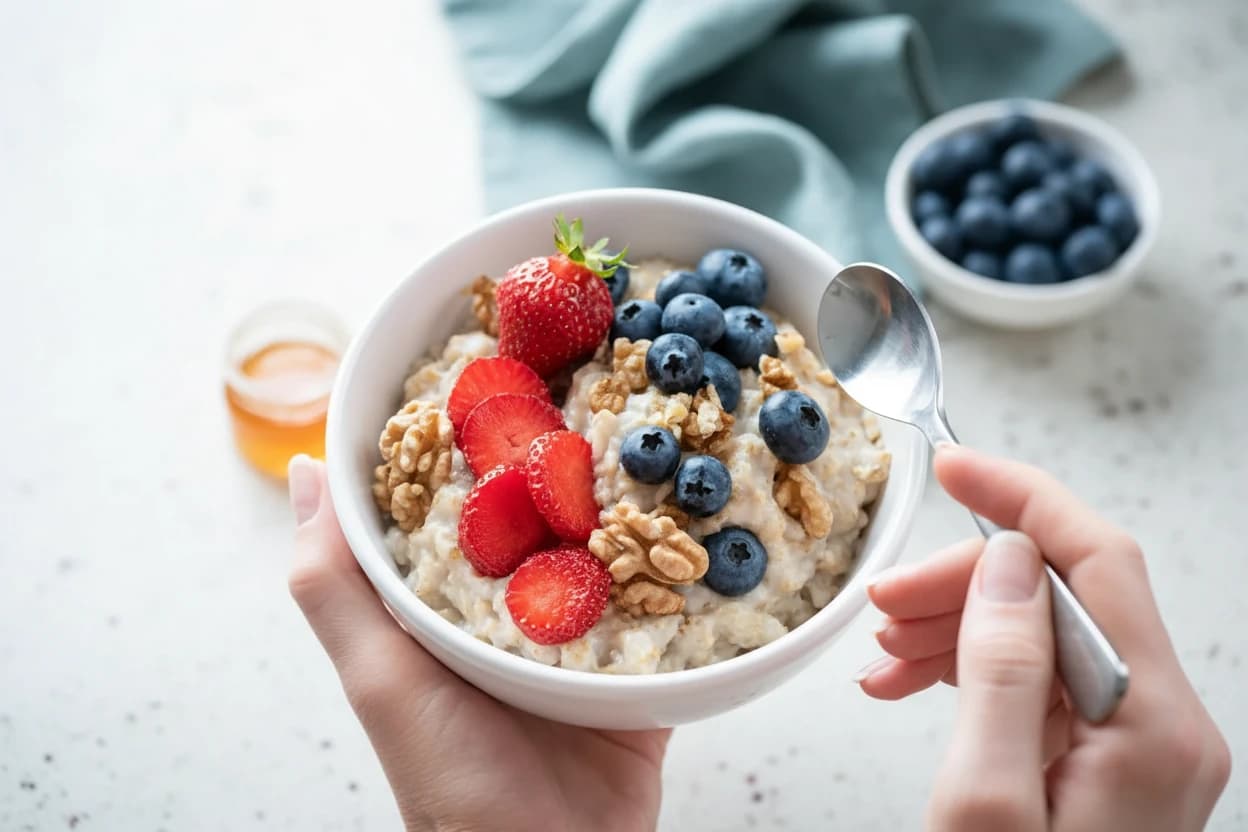
- For oatmeal, add fruits or nuts to enhance flavor and nutrient density without excessive sugar3 .
- Practice portion control, especially with oatmeal, to manage carbohydrate intake and blood sugar levels10 .
“We can assure you that your daily breakfast of oatmeal does pack a nutritious punch. A 1 cup serving of the cooked grain is rich in manganese. This mineral acts as an antioxidant and is important in blood clotting, blood sugar metabolism and management, and immune health.”
— Eve M. Glazier, UCLA Health7
Top Health Benefits of Eggs
Eggs are a nutrient-dense food offering several health advantages:
- Provide high-quality complete protein that supports muscle growth, repair, and maintenance2 .
- Contain choline, which is essential for brain function, memory, mood regulation, and muscle control2 .
- Rich in selenium, important for thyroid function and reproductive health2 .
- Loaded with antioxidants lutein and zeaxanthin, which protect eye health and reduce the risk of age-related macular degeneration2 .
- May increase high-density lipoprotein (HDL) cholesterol, linked to lower risk of heart disease, stroke, and type 2 diabetes2 .
Downsides
- Eggs contain cholesterol (about 186 mg per egg), which some individuals may need to monitor, especially those with specific heart conditions2 .
- Egg allergy affects some people and can cause mild to severe reactions, necessitating avoidance3 .
- Eggs contain no dietary fiber, so they do not support digestive health in this way2 .
Top Health Benefits of Oatmeal
Oatmeal offers unique benefits due to its whole grain and fiber content:
- High in soluble fiber beta-glucan, which lowers LDL cholesterol and improves heart health5 .
- Supports blood sugar control, making it beneficial for people with diabetes10 .
- Promotes gut health by feeding beneficial gut bacteria and improving digestive function3 .
- Rich in minerals such as manganese, iron, magnesium, and zinc, which support metabolism, immune function, and red blood cell production7 .
-
Provides folate, important for DNA synthesis and pregnancy health2 .
-
Oatmeal is high in carbohydrates, which may not suit low-carb or ketogenic diets2 .
- Excessive fiber intake from oatmeal can cause digestive discomfort such as gas and bloating3 .
- Potential cross-contamination with gluten-containing grains can be problematic for individuals with celiac disease or gluten sensitivity3 .
- Some commercial oatmeal products contain added sugars and preservatives, reducing their health benefits3 .
Summary and Key Takeaways
- Eggs and oatmeal are both healthy, nutrient-dense breakfast options with distinct nutritional profiles2 .
- Eggs provide complete protein, essential vitamins, and minerals like choline and selenium, supporting muscle, brain, and eye health2 .
- Oatmeal is rich in fiber, especially beta-glucan, and minerals like manganese and iron, promoting heart, gut, and metabolic health5 7.
- Choosing between eggs and oatmeal depends on individual health goals, dietary needs, and any allergies or sensitivities9 .
- Combining eggs and oatmeal in one meal can offer a balanced intake of protein, fiber, vitamins, and minerals2 .