Deep vein thrombosis (DVT) is a condition where a norovirus-symptoms-beyond-vomiting-and-diarrheadiarrhea-symptoms-causes-and-treatment">high white blood cell count causes symptoms and treatment clot forms in a deep vein, most commonly in the legs. It affects about 1 to 2 people per 1000 each year and can lead to serious complications such as pulmonary embolism, which can be life-threatening123. Early diagnosis and treatment are crucial to prevent clot progression and reduce the risk of fatal outcomes45. Understanding the symptoms, causes, diagnosis, and treatment options can help manage and prevent this condition effectively6.
Signs and Symptoms of DVT
Many cases of deep vein thrombosis are asymptomatic and may go undetected without clinical suspicion4. When symptoms do occur, they often include localized pain, swelling, and warmth in the affected limb7. The skin over the affected vein may appear red or discolored, and a palpable cord along the course of the vein can indicate thrombosis8. DVT typically affects the deep veins of the lower extremities and usually occurs on one side of the body4.
Common signs and symptoms of DVT include:
- Swelling of the leg or arm, often unilateral69
- Pain or tenderness, frequently starting in the calf69
- Warmth and redness or discoloration of the skin over the affected area86
- A feeling of heaviness or cramping in the limb6
- Enlarged surface veins or a palpable, hard vein89
Because DVT can be silent until complications arise, prompt evaluation is warranted if these signs appear8. A blood clot in a leg vein may cause pain, warmth, and tenderness, but sometimes there are no noticeable symptoms6. If symptoms of pulmonary embolism develop, such as sudden shortness of breath or chest pain, emergency medical help is necessary6.
Deep vein thrombosis can be hidden and sly, often causing aching, swelling, and heaviness in the limbs. Pulmonary embolism occurs when a clot breaks free and travels to the lungs, causing life-threatening respiratory distress.103
Deep Vein Thrombosis Causes
Deep vein thrombosis occurs when a blood clot forms within the deep veins, usually in the legs but sometimes in the arms or other deep veins11. The main causes involve factors that disrupt normal blood flow or clotting mechanisms, leading to clot formation.
Risk Factors
Several risk factors increase the likelihood of developing DVT by promoting venous stasis (slow or halted blood flow), endothelial injury (damage to the vein lining), or hypercoagulability (increased blood clotting tendency)123. Key risk factors include:
- Prolonged immobility, such as bed rest after surgery or illness, which reduces venous return313
- Immobilization from casts or braces following fractures or injuries1314
- Long periods of sitting during travel or work, causing venous stasis15
- Paralysis, which leads to reduced muscle pumping and blood flow3
- Trauma causing vascular injury, which can trigger clot formation14
- Hormonal changes during pregnancy and contraceptive use, increasing clotting risk16
- Malignancy (cancer), a major risk factor for venous thromboembolism including DVT17
- Age over 60 years, obesity, smoking, heart failure, and inflammatory diseases also contribute69
These factors often interact, increasing the overall risk of DVT. For example, an older patient with cancer who undergoes surgery and remains immobile is at particularly high risk123.
“Anything that prevents blood from flowing properly or affects clotting can cause a blood clot. Damage to veins from surgery, infection, or injury are common causes of deep vein thrombosis (DVT).6”
How DVT Is Diagnosed
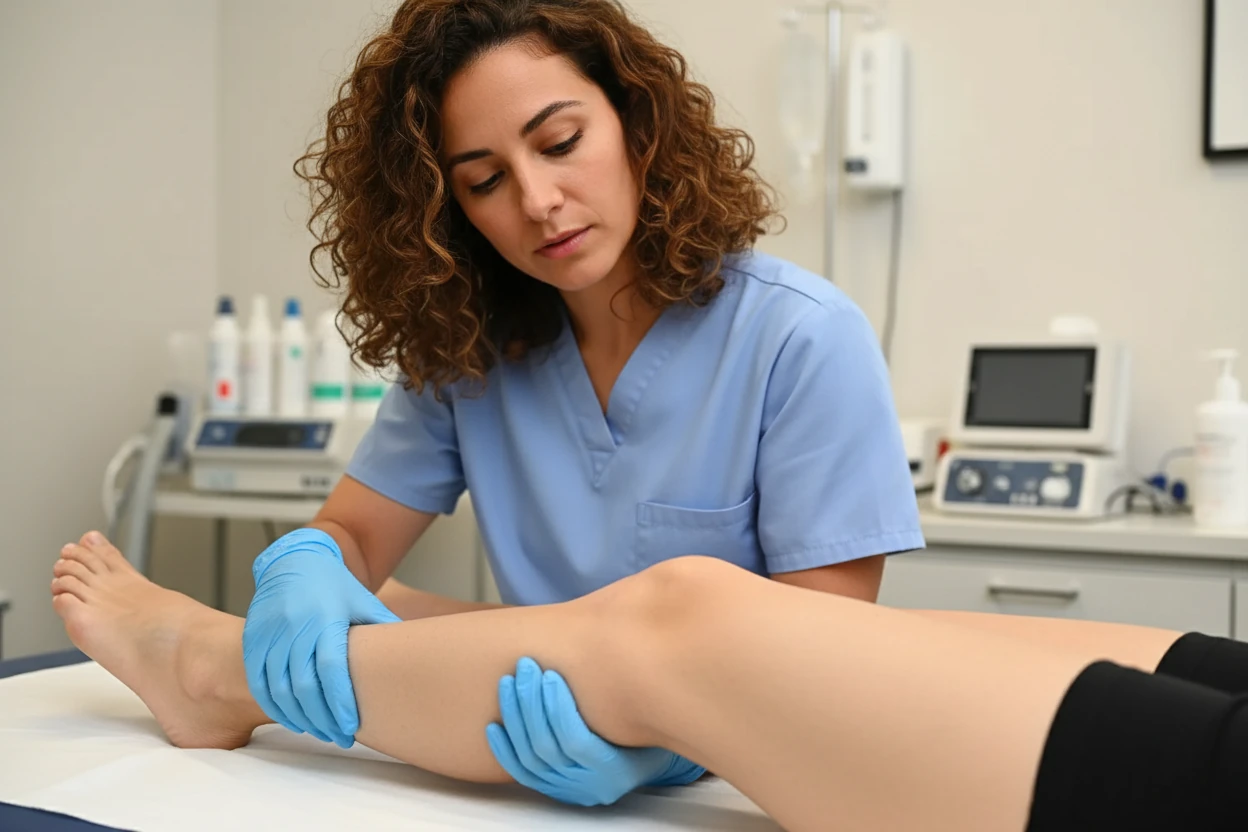
Diagnosing deep vein thrombosis involves a combination of clinical assessment and diagnostic testing5. A healthcare provider will take a thorough history and perform a physical exam, checking for swelling, tenderness, and skin changes in the affected limb18.
Key diagnostic tools include:
- D-dimer blood test: Measures fibrin degradation products that increase when clots form. Elevated D-dimer supports suspicion of DVT but is not specific to it125.
- Compression ultrasonography: The primary imaging method used to detect DVT. It assesses vein compressibility; noncompressible veins suggest thrombosis19.
- MR venography: An alternative imaging technique used when ultrasound results are inconclusive or in complex cases13.
- Venography: An X-ray test with contrast dye, less commonly used due to invasiveness18.
Clinical prediction rules, such as Wells' criteria, help estimate the probability of DVT and guide testing20. Early diagnosis is important because most DVTs require treatment to prevent progression and complications4.
“To diagnose DVT, your health care provider will do a physical exam and ask questions about your symptoms, checking the legs for swelling, tenderness, or changes in skin color. Tests used to diagnose DVT include D-dimer blood test, duplex ultrasound, venography, and MRI scan.”18
Deep Vein Thrombosis Treatments
The main goals of DVT treatment are to prevent the clot from getting bigger, stop it from breaking loose and traveling to the lungs, and reduce the chance of another DVT18. Treatment depends on the severity and location of the clot, as well as patient-specific factors.
Common treatment options include:
- Anticoagulation (blood thinners): The cornerstone of DVT treatment to prevent clot extension and pulmonary embolism. Medications include warfarin, direct oral anticoagulants, and low molecular weight heparin1259.
- Thrombolytic therapy: Clot-busting drugs used selectively in extensive or limb-threatening DVT cases12.
- Interventional procedures: Such as vena cava filters or surgical thrombectomy, reserved for patients with contraindications to anticoagulation or severe thrombosis2118.
- Compression stockings: Used after DVT to reduce the risk of post-thrombotic syndrome, a long-term complication causing leg pain and swelling22.
- Outpatient management: Many uncomplicated DVT cases can be managed outside the hospital with proper anticoagulation and monitoring5.
- Hospitalization: Indicated for severe cases or those at high risk of embolism13.
Patients are advised to start moving as soon as possible after diagnosis, as mobility helps improve venous return and reduces clot risk1823.
| Treatment Option | Purpose | Notes |
|---|---|---|
| Anticoagulation | Prevent clot growth and embolism | Requires monitoring for bleeding risk125 |
| Thrombolytic therapy | Dissolve large or limb-threatening clots | Used selectively due to bleeding risk12 |
| Interventional procedures | Remove or filter clots | For severe or anticoagulation-contraindicated cases2118 |
| Compression stockings | Reduce post-thrombotic syndrome | Recommended for up to 2 years post-DVT2223 |
| Outpatient management | Safe for uncomplicated cases | Requires adherence to medication and follow-up5 |
Anticoagulants are the mainstay of DVT treatment and effectively reduce the incidence of pulmonary embolism. Early treatment improves outcomes and reduces mortality.1235
Preventing Deep Vein Thrombosis
Prevention of DVT focuses on reducing risk factors and promoting blood flow, especially during periods of immobility or increased risk1513. Key preventive measures include:
- Maintaining mobility and regular exercise to promote venous return15
- Frequent ambulation during long travel or bed rest15
- Performing seated leg movements, toe lifts, and isometric muscle contractions to improve circulation during immobility15
- Avoiding tight clothing that impairs blood flow15
- Managing weight, quitting smoking, and controlling underlying medical conditions69
Mechanical measures such as compression stockings may also help prevent DVT in high-risk individuals13. Hospitalized patients often receive prophylactic anticoagulation to reduce clot formation13.
“Toe lifts and isometric muscle contractions are simple exercises that help maintain venous flow during prolonged sitting or bed rest.15”
Conditions Related to DVT
DVT is part of a broader condition known as venous thromboembolism (VTE), which includes both deep vein thrombosis and pulmonary embolism (PE)324. Pulmonary embolism results when a clot breaks free from a deep vein and travels to the lungs, causing obstruction of pulmonary arteries and impaired oxygenation3.
Other related conditions and complications include:
- Thrombophlebitis: Inflammation of a vein associated with thrombosis, causing localized pain, redness, and swelling8.
- Post-thrombotic syndrome: Long-term damage to veins after DVT, leading to chronic leg pain, swelling, and skin changes2522.
- Pulmonary embolism: The leading cause of death related to DVT, presenting with chest pain, shortness of breath, and rapid heart rate3.
Maintaining mobility and early treatment of DVT reduce the risk of these complications15.
Deep Vein Thrombosis Summary
Deep vein thrombosis is a serious medical condition characterized by blood clot formation in deep veins, most commonly in the legs111. It can be asymptomatic or present with pain, swelling, warmth, and discoloration of the affected limb478. Risk factors include immobility, trauma, surgery, cancer, hormonal changes, and genetic predisposition12317.
Diagnosis relies on clinical assessment supported by D-dimer testing and compression ultrasonography, with MR venography as an adjunct when needed41913. Treatment primarily involves anticoagulation to prevent clot extension and pulmonary embolism, with interventional procedures reserved for severe cases1221. Prevention focuses on maintaining mobility and using mechanical measures like compression stockings1513.
Early recognition and management of DVT are essential to reduce morbidity and mortality associated with this condition53.
“Deep vein thrombosis can cause aching, swelling, and heaviness in the limbs. Pulmonary embolism occurs when a clot breaks free and travels to the lungs, causing respiratory distress and potentially life-threatening complications. Anticoagulants are used to treat thrombosis.”
— Gabriela Cesarman-Maus, World Thrombosis Day / International Society on Thrombosis and Haemostasis10
DVT Frequently Asked Questions
Is deep vein thrombosis a serious condition?
Yes, DVT is serious because clots can break loose and travel to the lungs, causing pulmonary embolism, which can be fatal163.
Can DVT resolve on its own without treatment?
Spontaneous resolution of DVT is uncommon. Most cases require prompt treatment to prevent progression and complications4.
What should I do if I notice swelling and pain in my leg?
Early recognition of limb swelling and pain is critical. Seek healthcare consultation promptly for diagnosis and management813.
How can I reduce my risk of developing DVT?
Increasing mobility, avoiding prolonged immobility, exercising leg muscles during travel, and following medical advice for risk factors help reduce DVT risk15.
Do I need to see a doctor for DVT risk management?
Yes, personalized healthcare consultation is important to assess risk and guide prevention and treatment strategies13.