Breast cancer is one of the most common cancers affecting women worldwide, with survival rates improving due to advances in early detection and treatment1. However, emerging research shows that breast cancer survivors may experience accelerated biological aging, which can impact their long-term health and quality of life1. Understanding how breast cancer deaths and its treatments influence aging processes is crucial to improving survivorship care and managing age-related health risks2.
Breast Cancer and Accelerated Aging
Studies indicate that breast cancer survivors often face accelerated aging compared to women without cancer, with increased physical dysfunction and cognitive decline1. This accelerated aging may result from the combined effects of the cancer itself and the treatments used to combat it1. For example, chemotherapy and radiation therapies have been linked to higher levels of DNA damage and elevated inflammatory markers, which contribute to biological aging3.
A large prospective cohort study, the Sister Study, enrolled over 50,000 U.S. women with a family history of breast cancer but no personal history at baseline. A subset of these women provided paired blood samples approximately 8 to 10 years apart, allowing researchers to analyze changes in epigenetic aging over time4. The study found that women diagnosed and treated for breast cancer showed higher biological aging at the second blood draw compared to those who remained cancer-free4. Specifically, advanced tumor stage (Stage III/IV) and intermediate to high tumor grade were associated with greater acceleration of phenotypic age (PhenoAgeAccel), a biomarker of biological aging1.
Mechanisms driving this accelerated aging include treatment-induced DNA damage, chronic inflammation, and cellular senescence—the process where cells stop dividing but do not die, releasing harmful substances that damage surrounding tissues563. Adjuvant chemotherapy, in particular, has been shown to induce cellular senescence in hematopoietic (blood-forming) tissues, accelerating molecular aging5.
Importantly, no significant racial differences in biological aging rates were observed among breast cancer survivors in the Sister Study cohort, suggesting that accelerated aging effects are broadly relevant across populations4. However, the trajectory of aging after breast cancer diagnosis remains incompletely understood, and further research is needed to explore associations with age-related survivorship outcomes17.
Physical function decline is a common consequence of accelerated aging in breast cancer survivors. A prospective cohort study following patients from 1993 to 1998 through 2020 found that older breast cancer survivors experienced a decline in physical function starting a decade before diagnosis and continuing afterward, compared to cancer-free controls8. This decline may contribute to reduced independence and increased risk of age-related diseases.
Key factors contributing to accelerated aging in breast cancer survivors include:
- Tumor severity, with advanced stage and higher grade tumors linked to greater aging acceleration1
- Systemic treatments such as chemotherapy and endocrine therapy, which increase biological aging markers2
- Treatment-induced DNA damage and chronic inflammation promoting cellular senescence563
- Declines in physical and cognitive function over time compared to cancer-free women81
Radiation Therapy Effects on Aging
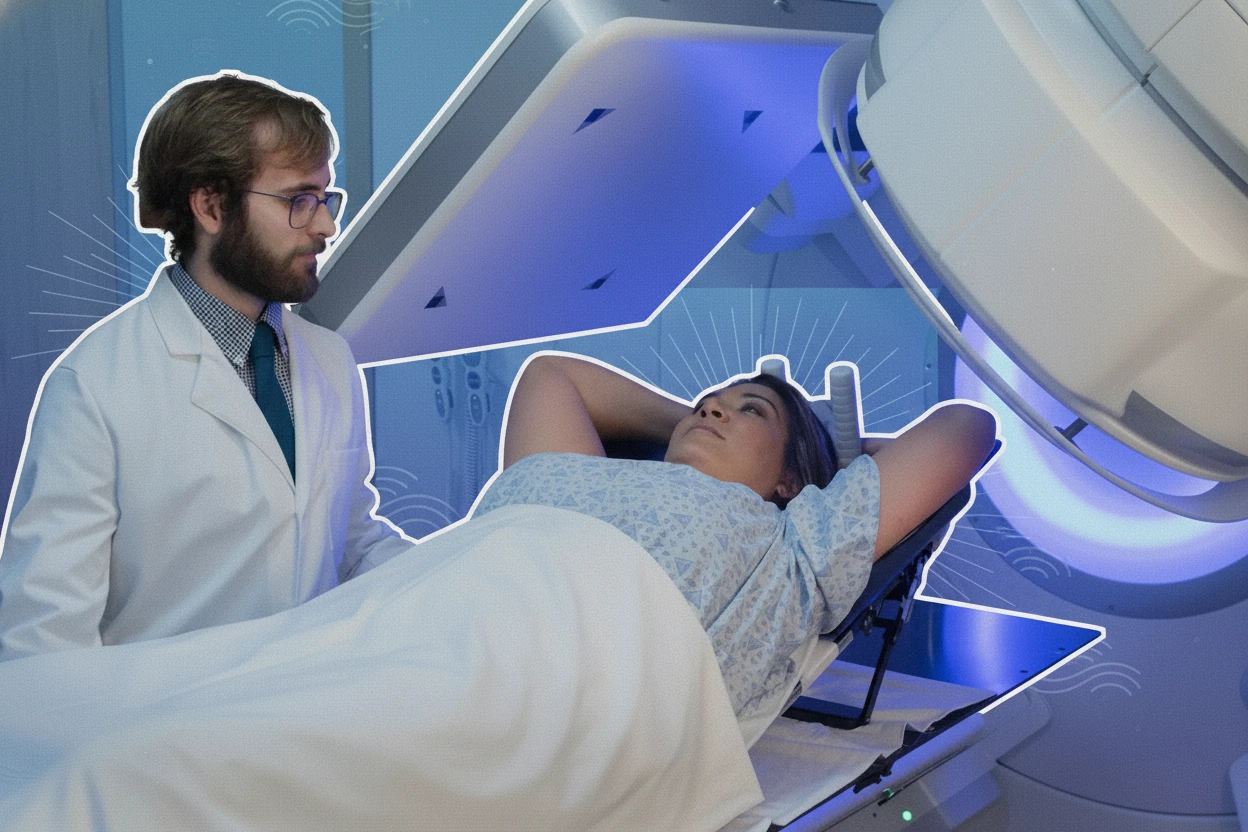
Radiation therapy is a common treatment for breast cancer, aimed at destroying cancer cells while minimizing exposure to healthy tissues. Despite advances in targeting, radiation can contribute to accelerated biological aging through mechanisms involving DNA damage, oxidative stress, and chronic inflammation63.
Ionizing radiation causes cellular damage by inducing DNA double-stranded breaks, oxidative stress, and inflammation, which are key drivers of the aging process9. These molecular events can lead to cellular senescence, apoptosis (programmed cell death), and tissue injury, all of which contribute to the deterioration of physiological functions necessary for survival9.
Radiation-induced aging shares many biological pathways with natural aging, including telomere shortening, genomic instability, and mitochondrial dysfunction9. Both chemotherapy and radiation impair telomere maintenance in normal human cells, promoting cellular senescence and increasing the risk of tissue damage and secondary malignancies in long-term cancer survivors9.
Hematopoietic stem cell injury is a significant side effect of radiation, causing bone marrow suppression and contributing to accelerated aging of blood-forming tissues9. This effect is compounded when radiation is combined with cytotoxic chemotherapy, which also induces DNA damage and inflammation9.
A recent longitudinal study found that breast cancer survivors who received radiation therapy exhibited increased expression of genes related to DNA damage response, cellular senescence, and inflammatory pathways, indicating accelerated immune cell aging10. Notably, these aging markers increased regardless of treatment type, including surgery alone, suggesting that the biological impact of breast cancer and its treatments on aging is more extensive than previously thought10.
Radiation therapy accelerates aging through:
- DNA damage, especially double-stranded breaks triggering cellular senescence9
- Oxidative stress causing persistent damage to cellular structures9
- Chronic inflammation promoting tissue deterioration63
- Impairment of telomere maintenance leading to genomic instability9
- Hematopoietic stem cell injury causing bone marrow suppression9
“While we expected to see increased gene expression linked to biological aging in women who received chemotherapy, we were surprised to find similar changes in those who only underwent radiation or surgery.”
— Janine E. Carroll, PhD, UCLA10
Advancing Radiation Therapy Understanding
Modern radiation therapy protocols strive to minimize exposure to healthy tissues beyond the breast tumor site, reducing collateral damage and aging effects. However, the precise biological mechanisms by which radiation accelerates aging remain under active investigation63.
Recent research highlights the importance of DNA methylation changes—epigenetic modifications that regulate gene expression—in radiation-induced aging. Chemotherapy has been shown to accelerate DNA methylation-based biological age in breast cancer patients, with significant increases observed after the first chemotherapy cycle11. Similar epigenetic changes may occur with radiation therapy, contributing to long-term aging effects6.
“The results suggest women who receive treatment for breast cancer have a pattern of gene expression that indicates increased DNA damage and inflammation, which could be important targets for recovering from cancer and having a better quality of life in survivorship.”
— Janine E. Carroll, PhD, UCLA10
Understanding these mechanisms is critical for developing interventions to mitigate treatment-related aging. Lifestyle factors such as exercise, stress management, and healthy sleep patterns may influence biological aging and improve recovery after cancer therapy10. Additionally, identifying biomarkers of accelerated aging can help tailor treatment decisions, especially in older adults, by considering both chronological and biological age alongside comorbidities and patient preferences12.
As the population of breast cancer survivors grows—currently about four million in the U.S. and expected to exceed six million by 2040—addressing the long-term health consequences of cancer treatment is increasingly important12. Research priorities include:
- Identifying reliable biomarkers of accelerated aging in cancer survivors613
- Testing interventions to reduce treatment-related aging effects613
- Enhancing shared decision-making in treatment planning based on biological aging12
- Exploring protective behaviors and medications to slow aging in survivors10