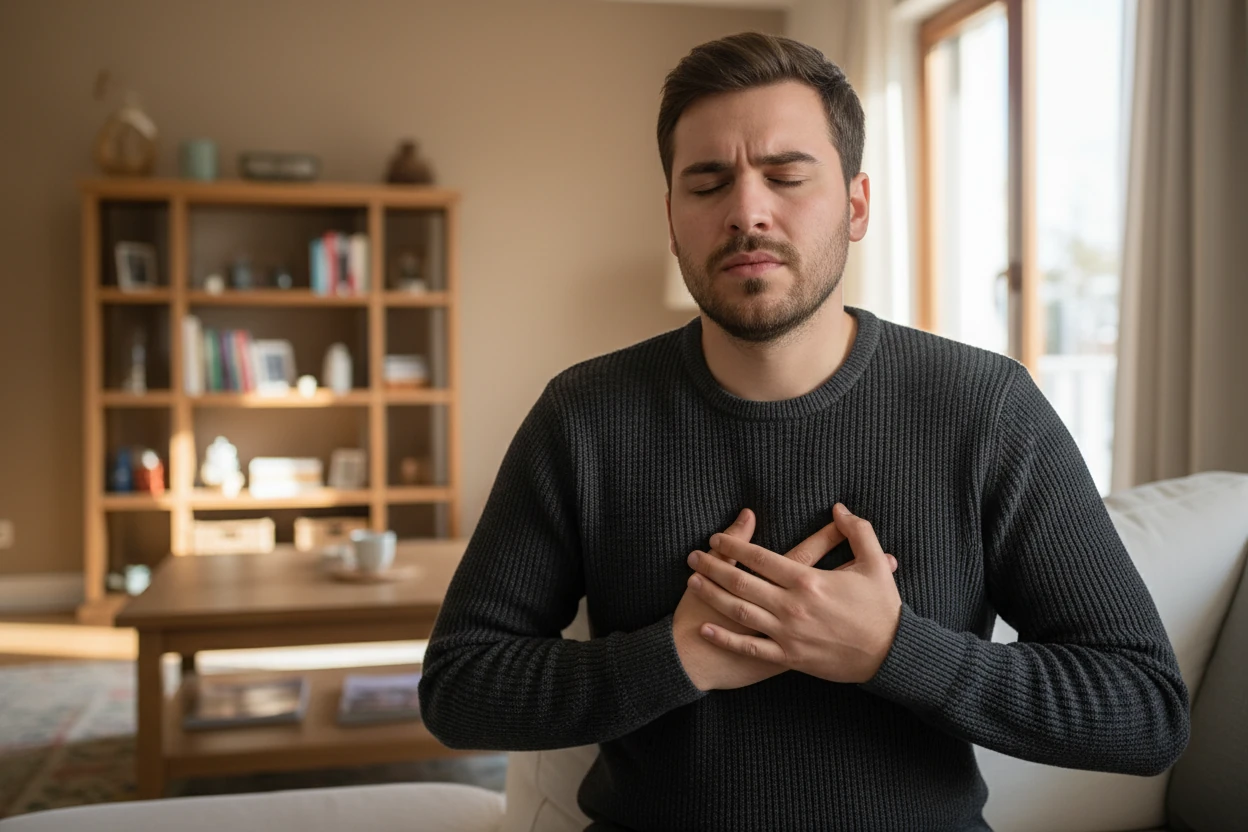
Chest pain is a common reason people visit emergency departments, yet nearly half of these patients do not have a heart problem. Instead, up to 40% of patients with chest pain meet criteria for panic-related anxiety, which often goes undiagnosed12. Anxiety triggers a surge of stress hormones that can cause physical symptoms such as chest pain, palpitations, and shortness of breath, mimicking heart conditions34. Understanding the causes, symptoms, and management of anxiety chest pain is essential to improve patient outcomes and reduce unnecessary cardiac investigations56.
Causes of Anxiety Chest Pain
Anxiety chest pain arises primarily from the body's natural stress response, known as the fight-or-flight reaction. When anxiety is triggered by real or perceived threats, the brain signals the release of stress hormones such as adrenaline (norepinephrine) and serotonin into the bloodstream789. These hormones increase heart rate and muscle tension, particularly in the chest wall muscles, which can lead to chest pain10114.
Repeated or chronic activation of this stress response causes persistent muscle tension, especially in the intercostal muscles between the ribs, resulting in spasms or strain that manifest as sharp or aching chest pain41213. Anxiety can also induce coronary endothelial dysfunction, especially in women, which may link anxiety to cardiovascular symptoms even in the absence of obstructive heart disease7.
Panic disorder, a type of anxiety disorder characterized by sudden episodes of intense fear, is a common cause of non-cardiac chest pain. Panic attacks can produce acute chest pain along with other physical symptoms, often mistaken for heart attacks5614. Misinterpretation of these symptoms frequently leads to increased healthcare utilization and repeated emergency visits10116.
“The body is very wise. It picks up when there’s a lot of emotional overload going on. When chest pain occurs from anxiety, there’s a heart, brain and body connection happening.”
— Leopold Pozuelo, MD, Cleveland Clinic4
Anxiety Chest Pain Symptoms
Chest pain caused by anxiety can vary widely in sensation and intensity. People describe it as sharp, stabbing, burning, numbness, dull aching, or tightness in the chest3. This pain often develops suddenly during a panic attack or periods of heightened anxiety and may persist for minutes to hours415.
“Any of these symptoms can be extremely frightening, says Patricia Tung, MD, of Arrhythmia Services at Beth Israel Deaconess Medical Center.”
— Patricia Tung, MD, Beth Israel Deaconess Medical Center16
Anxiety-related chest pain is commonly accompanied by other symptoms that reflect the body's stress response, including:
- Heart palpitations or rapid heartbeat54
- Shortness of breath or hyperventilation54
- Trembling or shaking1115
- Dizziness or lightheadedness415
- Gastrointestinal discomfort such as nausea or stomach upset114
- Sweating or changes in body temperature415
- Tingling or numbness in the fingers or extremities1115
These symptoms often mimic those of cardiac events, which can cause significant distress and confusion for patients615. Anxiety chest pain typically remains localized to the chest area and does not radiate to other parts of the body2.
Anxiety vs. Heart Attack Chest Pain
Distinguishing anxiety chest pain from heart attack pain is critical but challenging due to overlapping symptoms. Key differences include the nature, triggers, and associated symptoms of the pain.
Heart attack (myocardial infarction) chest pain usually:
- Develops gradually and worsens over time217
- Occurs during or after physical exertion when the heart's workload increases162
- Feels like squeezing, pressure, or heavy weight in the center or left chest182
- Radiates to the arms, jaw, neck, back, or upper abdomen182
- Is accompanied by systemic symptoms such as nausea, sweating, dizziness, or near fainting1817
In contrast, anxiety chest pain:
- Often starts suddenly and may improve gradually within 20 to 30 minutes1615
- Can occur at rest or during periods of extreme stress or worry1615
- Feels sharper, stabbing, or tight rather than heavy or crushing415
- Usually remains localized to the chest without radiation2
- Is accompanied by symptoms like trembling, tingling, shortness of breath, and palpitations1115
Other symptoms such as excessive fear, trembling, and gastrointestinal discomfort are more common with anxiety-related chest pain111920. Because symptoms can overlap, any sudden or severe chest pain should prompt immediate medical evaluation to rule out a heart attack18.
Other Conditions That Can Cause Chest Pain
While anxiety and heart attacks are common causes of chest pain, other conditions may also contribute, including:
- Esophageal spasms or reflux causing chest discomfort1221
- Musculoskeletal strain or chest wall muscle spasms due to hyperventilation or tension1213
- Postoperative chest pain after cardiac surgery22
- Psychiatric syndromes associated with atypical chest pain23
These conditions may coexist with anxiety or mimic its symptoms, complicating diagnosis and management115.
Managing Anxiety Chest Pain
Managing anxiety chest pain involves accurately distinguishing it from cardiac causes and addressing the underlying anxiety disorder. Because symptoms overlap, initial evaluation in emergency settings focuses on excluding life-threatening cardiac conditions182425.
Anxiety-related chest pain often improves with relaxation techniques and may be linked to psychological stress rather than exertion2426. Screening tools are used in emergency departments to identify panic-related anxiety among chest pain patients to guide appropriate treatment6.
Effective management strategies include:
- Cognitive-behavioral therapy (CBT), which helps patients understand and control anxiety symptoms10276
- Pharmacological treatments such as selective serotonin reuptake inhibitors (SSRIs) and benzodiazepines for anxiety reduction10276
- Lifestyle modifications including regular physical activity like walking or yoga to reduce anxiety27
- Mindfulness and relaxation exercises to relieve muscle tension and stress27
- Limiting caffeine, alcohol, and other stimulants that can worsen anxiety symptoms27
A stepped-care approach tailored to individual patient needs is recommended for optimal outcomes1. Home remedies such as deep breathing, grounding techniques, and using relaxation apps can also provide quick relief during episodes of anxiety chest pain3428.
| Management Strategy | Description | Evidence Source |
|---|---|---|
| Cognitive-behavioral therapy | Structured therapy to reduce panic and anxiety | 10276 |
| Pharmacological treatment | SSRIs and benzodiazepines to manage anxiety | 10276 |
| Physical activity | Regular exercise like walking or yoga | 27 |
| Mindfulness and relaxation | Techniques to reduce stress and muscle tension | 2728 |
| Lifestyle changes | Avoiding caffeine, alcohol, and stimulants | 27 |
“It’s my view and my personal clinical experience that anxiety disorders can play a major role in heart disease. I believe that a really careful look at anxiety would reveal the ways it can severely impact heart disease, both as a contributing factor and as an obstacle in recovery.”
— Una D McCann, M.D., Johns Hopkins Bayview Medical Center14
When to See a Doctor for Chest Pain
Chest pain should never be ignored, especially if it is sudden, severe, or accompanied by other concerning symptoms. Immediate medical attention is necessary if you experience:
- Chest pain lasting more than 2–3 minutes or worsening over time1815
- Pain radiating to the arm, jaw, neck, back, or shoulder182
- Associated symptoms such as nausea, dizziness, sweating, or shortness of breath1817
- Chest pain triggered by physical exertion or accompanied by fainting or near fainting1817
- Persistent or worsening chest pain with minimal activity18
If cardiac causes are ruled out, referral to mental health professionals for anxiety evaluation and treatment is important265. Severe or chronic anxiety and chest pain may require therapy and medication to prevent recurrence and improve quality of life10276.
- Practice deep breathing and mindfulness to manage mild symptoms at home328
- Seek emergency care if symptoms are sudden, severe, or unusual1816
- Follow up with your healthcare provider for ongoing chest pain or anxiety symptoms127
Anxiety Chest Pain Summary
Chest pain caused by anxiety is a common and often misunderstood condition that mimics heart disease but requires different management. Anxiety triggers a stress response that increases heart rate and muscle tension, leading to chest pain and other physical symptoms74. Panic disorder is a frequent cause of non-cardiac chest pain and is treatable with therapy and medications56.
Differentiating anxiety chest pain from heart attack pain relies on symptom patterns, triggers, and associated signs, but urgent evaluation is essential to exclude cardiac causes1824. Effective management combines cognitive-behavioral therapy, pharmacological treatment, lifestyle changes, and relaxation techniques10276.
Understanding the connection between anxiety and chest pain can reduce unnecessary emergency visits and improve patient outcomes through targeted treatment1529.
Key Takeaways:
- Up to 40% of emergency chest pain patients have panic-related anxiety, yet most remain undiagnosed1.
- Anxiety chest pain is caused by the body's fight-or-flight response, releasing stress hormones that increase heart rate and muscle tension74.
- Symptoms of anxiety chest pain include sharp chest pain, palpitations, shortness of breath, trembling, and gastrointestinal discomfort1115.
- Heart attack chest pain usually develops during exertion, radiates beyond the chest, and worsens over time, unlike anxiety chest pain1816.
- Treatment includes cognitive-behavioral therapy, medications, lifestyle changes, and relaxation techniques to reduce anxiety and chest pain10276.