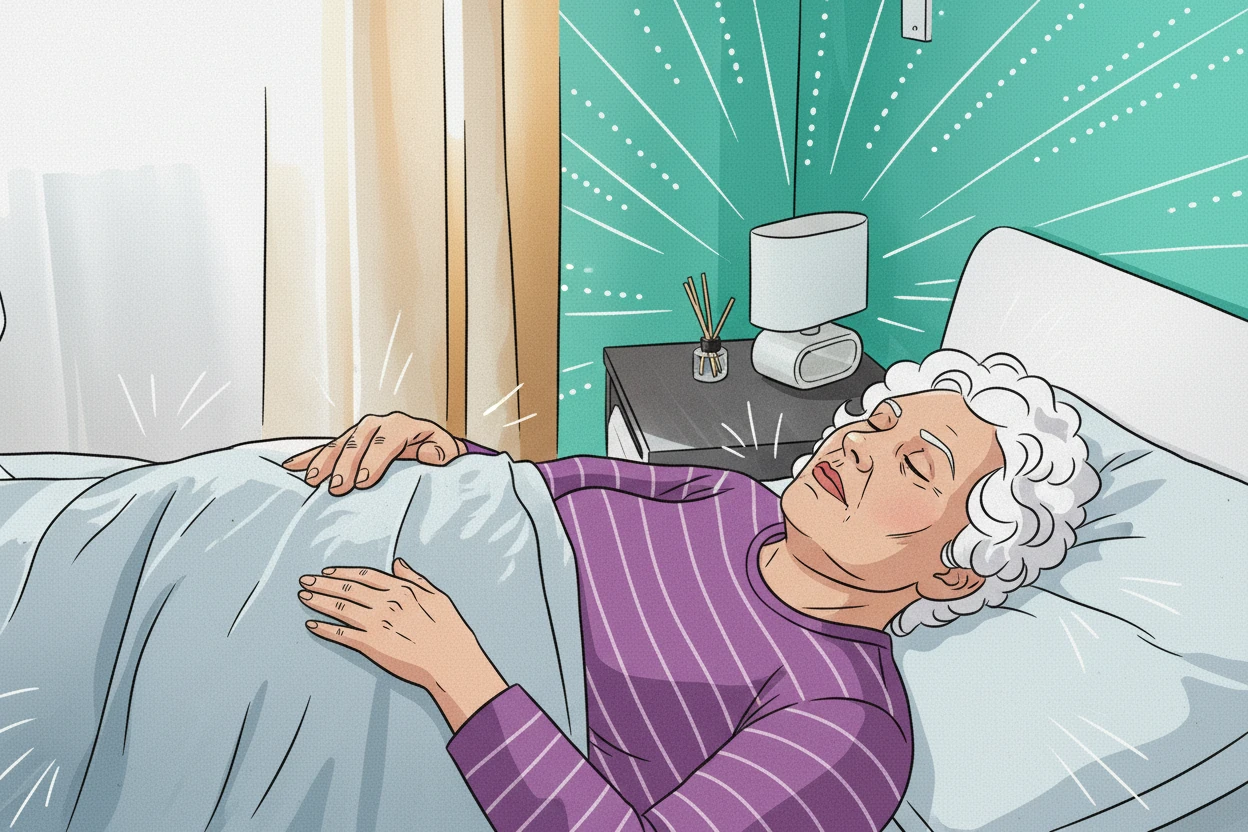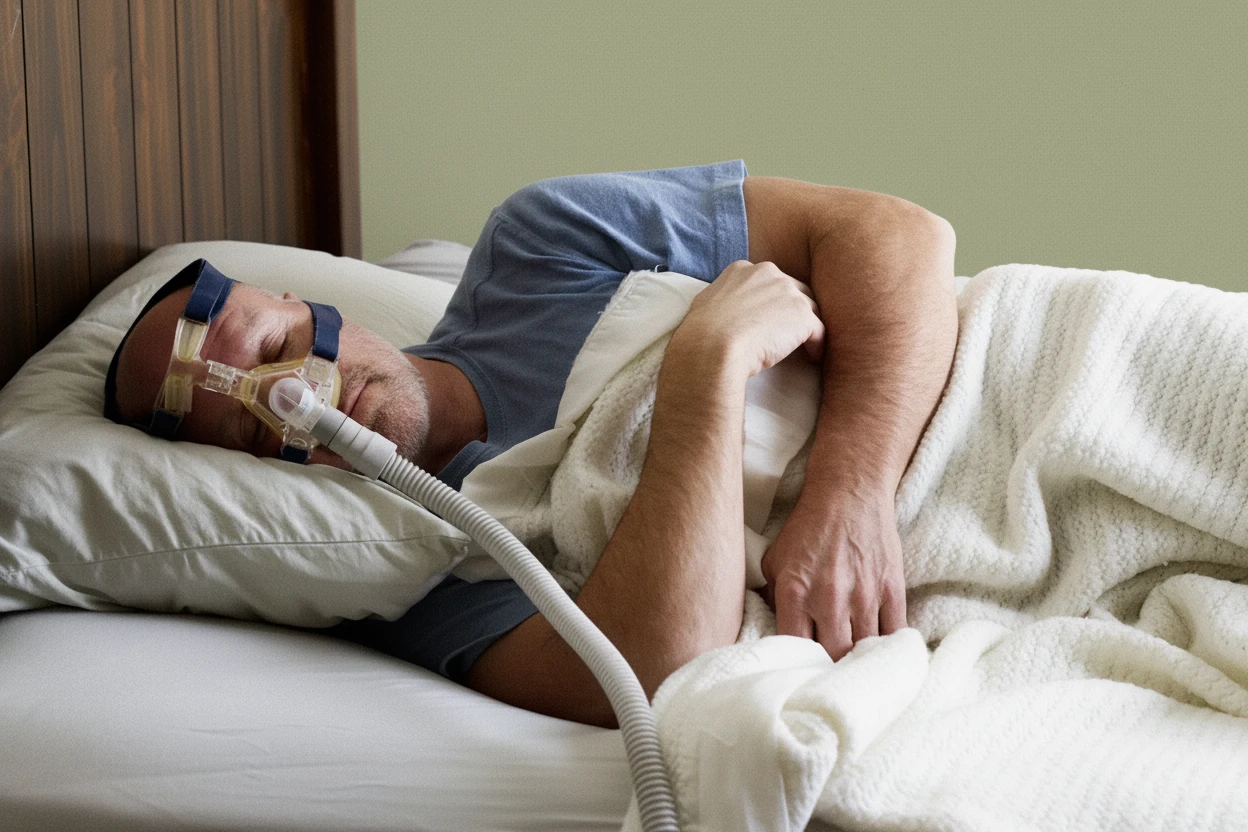
Obstructive sleep apnea (OSA) affects a significant portion of middle-aged adults and is linked to serious health issues, including an increased risk of Parkinson’s disease (PD)1. New research shows that early treatment of sleep apnea with continuous positive airway pressure (CPAP) therapy may reduce the likelihood of developing Parkinson’s, especially when started within two years of diagnosis2. This highlights the importance of timely intervention in managing sleep apnea to potentially protect brain health3.
CPAP Therapy and Reduced Parkinson's Risk
Obstructive sleep apnea is characterized by repeated episodes of airway blockage during sleep, causing intermittent hypoxia (low oxygen levels) and sleep fragmentation4. These disruptions can lead to oxidative stress and inflammation, which may damage neurons and contribute to neurodegeneration linked to Parkinson’s disease5. CPAP therapy works by delivering pressurized air through a mask to keep the airway open during sleep, improving oxygenation and reducing these harmful effects4.
A large cohort study analyzing over two decades of medical records from nearly 1.6 million veterans with OSA compared to almost 10 million without found that people with sleep apnea had a significantly higher risk of developing Parkinson’s disease3. After adjusting for age, sex, smoking, and other health factors, the incidence of Parkinson’s was 1.8 cases higher per 1,000 individuals with OSA than those without3. Importantly, among OSA patients, those who began CPAP therapy within two years of diagnosis showed a reduction of 2.3 Parkinson’s cases per 1,000 people compared to those who did not use CPAP3.
“Obstructive sleep apnea is common and previous research has found when untreated, it is associated with an increased risk of heart attack and stroke. While our study found an increased risk of Parkinson’s disease, the good news is people can do something about it, by using CPAP as soon as they are diagnosed with the sleep disorder.”
— Gregory D. Scott, VA Portland Health Care System1
The timing of CPAP initiation is critical. Starting treatment early—within two years of an OSA diagnosis—was associated with a statistically significant decrease in Parkinson’s risk, while delayed treatment beyond two years did not show a meaningful protective effect4. This suggests that early intervention may modify the disease trajectory by preventing or slowing neurodegenerative processes triggered by untreated sleep apnea6.
Key points about CPAP therapy and Parkinson’s risk include:
- CPAP maintains airway patency by delivering pressurized air during sleep, preventing airway collapse4.
- Early CPAP use reduces intermittent hypoxia and sleep fragmentation, lowering oxidative stress and inflammation in the brain5.
- Delayed CPAP treatment does not significantly reduce Parkinson’s incidence compared to no treatment4.
- CPAP adherence is essential to achieve these benefits, but many patients face challenges such as mask discomfort and nasal symptoms7.
- Early diagnosis and prompt CPAP initiation are recommended to maximize neuroprotective effects4.
Sleep Apnea's Connection to Parkinson's Disease
Sleep apnea and Parkinson’s disease share a complex and bidirectional relationship. Sleep disturbances affect up to 90% of people with Parkinson’s, including insomnia, REM sleep behavior disorder, restless legs syndrome, and sleep apnea8. OSA prevalence in Parkinson’s patients ranges widely from 20% to 60%, partly due to differences in study populations and diagnostic methods9.
OSA causes repeated airway obstruction during sleep, leading to intermittent hypoxia and fragmented sleep4. These factors promote oxidative stress, neuroinflammation, and impaired clearance of brain waste products, which may accelerate neurodegeneration10. One key pathological hallmark of Parkinson’s is the aggregation of α-synuclein protein, and hypoxia from OSA may stimulate this toxic accumulation11.
The relationship between OSA and Parkinson’s is complicated by aging, as both conditions become more common with increasing age12. Neurodegeneration in Parkinson’s can impair respiratory control, potentially worsening sleep apnea, while OSA-induced hypoxia may exacerbate neuronal injury, creating a vicious cycle13. Sleep apnea in Parkinson’s patients is linked to faster progression of motor symptoms, cognitive decline, and increased cardiovascular risk1415.
Common symptoms of obstructive sleep apnea include:
- Loud snoring and gasping or choking episodes during sleep8
- Excessive daytime sleepiness and fatigue4
- Morning headaches and dry mouth upon waking16
- Difficulty concentrating and mood changes such as depression-7-helpful-choices">depression-reliefdepression-reliefdepression or irritability16
💡 Did You Know?
People with obstructive sleep apnea have an increased risk of Parkinson's disease. Continuous positive airway pressure (CPAP) may reduce that risk if started early enough1.
Diagnosing sleep apnea typically involves an overnight sleep study (polysomnography) that monitors breathing, oxygen levels, and sleep stages16. Central sleep apnea (CSA), caused by brain signaling problems, is less common than OSA, which results from airway narrowing16.
The mechanisms linking sleep apnea to Parkinson’s include:
- Intermittent hypoxia causing oxidative stress and inflammation in brain regions vulnerable to Parkinson’s5
- Hypoxia-induced alterations in α-synuclein and other proteins contributing to neurodegeneration11
- Sleep fragmentation impairing restorative sleep and brain waste clearance10
- Neurodegeneration in Parkinson’s disrupting normal respiratory control, worsening OSA12
Benefits of Sleep Apnea Treatment
Treating obstructive sleep apnea offers multiple health benefits, especially for those at risk of or living with Parkinson’s disease. CPAP is the first-line therapy for moderate to severe OSA and works by normalizing breathing and oxygen levels during sleep4. This can improve sleep quality, reduce daytime sleepiness, and potentially slow cognitive and motor decline in Parkinson’s patients1714.
Untreated OSA is linked to increased risks of cardiovascular disease, metabolic syndrome, cognitive impairment, and mortality4. In Parkinson’s, OSA treatment may alleviate non-motor symptoms such as anxiety and cognitive dysfunction, improving overall quality of life16. Lifestyle interventions like regular exercise, smoking cessation, and a healthy diet also support brain health and may reduce neurodegenerative risk18.
Challenges to effective OSA treatment include:
Evaluation for obstructive sleep apnea in Parkinson’s disease patients with reduced cognition should be considered as OSA treatment may improve cognitive function, and possibly patient-reported and motor outcomes20.
- CPAP adherence difficulties due to mask discomfort, nasal symptoms, and psychological factors such as claustrophobia7
- Many patients using CPAP less than the recommended nightly duration, reducing therapeutic benefits7
- The need for proper mask fitting and patient education to improve tolerance and compliance7
Key benefits of treating sleep apnea include:
- Improved oxygenation and reduced intermittent hypoxia during sleep17
- Decreased oxidative stress and neuroinflammation, potentially slowing neurodegeneration10
- Better sleep quality, reducing daytime fatigue and cognitive impairment17
- Lowered cardiovascular and metabolic risks associated with untreated OSA4
- Possible reduction in Parkinson’s disease risk when CPAP is initiated early after OSA diagnosis19