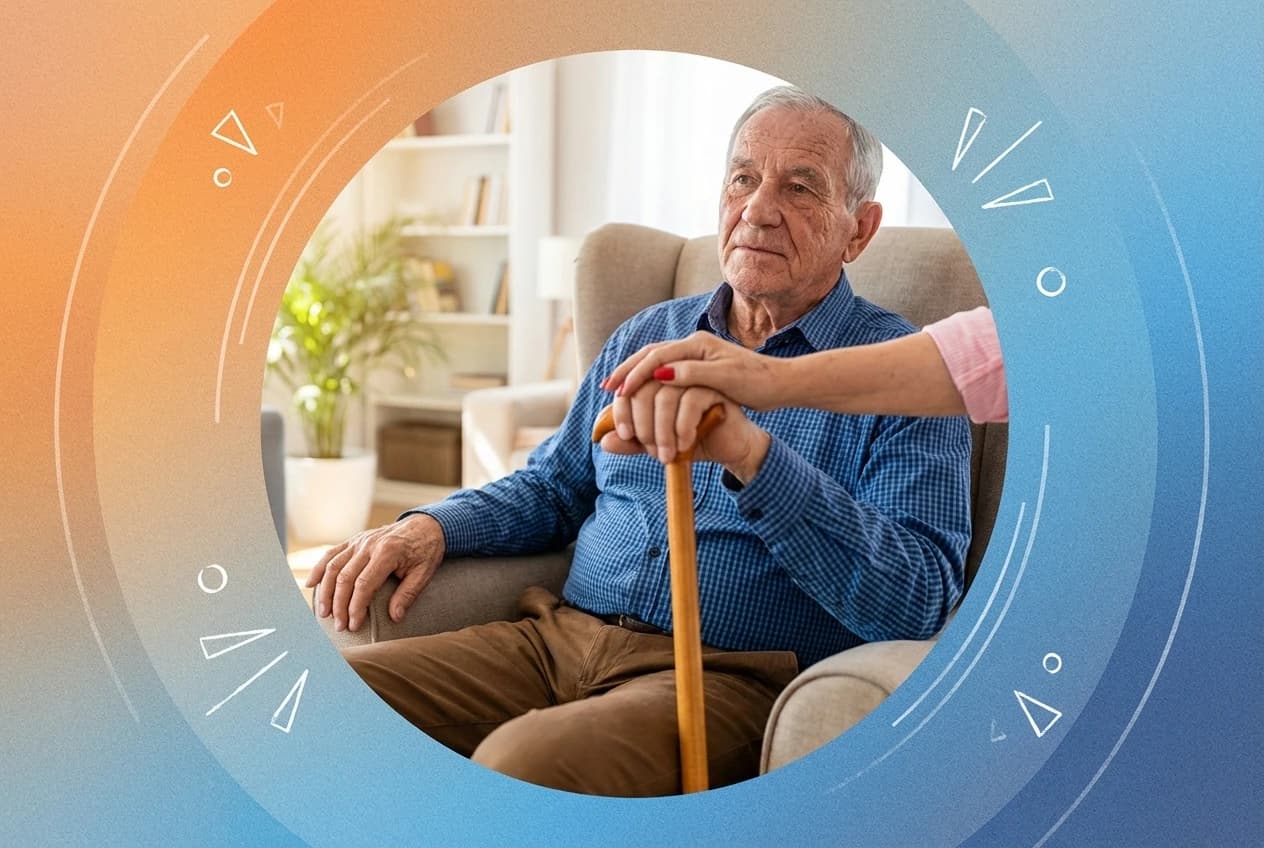
Alzheimer’s disease affects millions worldwide and often leads to severe cognitive decline and behavioral symptoms that disrupt daily life1 . Sleep disturbances and mood disorders are common in Alzheimer’s patients, worsening their quality of life and increasing caregiver burden2 . Emerging research suggests that light therapy, including bright light exposure and photobiomodulation, may help improve these symptoms by regulating circadian rhythms and brain function3 4.
Light Therapy Benefits for Alzheimer’s Symptoms
Light therapy offers a range of benefits that may directly ease symptoms associated with Alzheimer’s disease (AD) and related dementias. It primarily targets disruptions in circadian rhythms, which are biological processes that regulate sleep-wake cycles and mood4 . By modulating melatonin secretion and neurotransmitter levels such as serotonin and dopamine, light therapy helps restore more normal sleep patterns and improve mood regulation2 5.
Two main types of light therapy have been studied in AD:
-
Bright Light Therapy (BLT): This involves exposure to high-intensity light, often blue-enriched white light, typically delivered through light boxes or lamps. BLT has been shown to improve sleep efficiency, reduce agitation, and enhance mood and behavior in dementia patients3 67. It works by resetting the circadian clock in the brain’s suprachiasmatic nucleus, suppressing melatonin during the day, and increasing daytime alertness4 9.
-
Photobiomodulation Therapy (PBMT): This uses low-level red or near-infrared light to penetrate brain tissue and modulate cellular functions. PBMT enhances mitochondrial function, increases cerebral blood flow, and reduces neuroinflammation, which collectively support neuronal health and cognitive function10 1112. Early studies in animal models and small clinical trials suggest PBMT may reduce amyloid-beta accumulation and improve memory and daily functioning14 15.
“Persons living with Alzheimer’s disease very often experience behavioral and psychological symptoms of dementia as well as sleeping difficulties. Up to 90 percent of persons living with Alzheimer’s disease will experience behavioral or psychological symptoms of dementia, including agitation, physical aggression, and depressive behavior.”
— Dr. Liron Sinvani, Northwell Health19
Clinical studies typically administer light therapy daily or near-daily, with session durations ranging from 10 minutes to 1 hour, depending on the protocol1 16. Tailored lighting interventions using blue-enriched white light have demonstrated improvements in sleep quality and reductions in agitation in people with mild to moderate Alzheimer’s disease6 178.
Key benefits observed in research include:
- Improved sleep efficiency, meaning patients spend a higher proportion of time in bed actually sleeping18 19.
- Increased stability of daily activity rhythms and reduced variability, indicating more consistent rest-activity patterns18 .
- Reduction in neuropsychiatric symptoms such as agitation, aggression, depression, and anxiety20 19.
- Enhanced cognitive function and daily living activities, especially with near-infrared photobiomodulation15 .
- Modulation of neurotransmitters involved in mood and cognition, supporting behavioral improvements2 5.
💡 Did You Know?
Bright light exposure during the morning (typically >1000 lux at the cornea) has been shown to improve nighttime sleep, increase daytime wakefulness, reduce evening agitation behavior, and consolidate rest/activity patterns in people with Alzheimer’s disease and related dementias8 .
| Light Therapy Type | Mechanism of Action | Key Outcomes | Typical Session Frequency & Duration |
|---|---|---|---|
| Bright Light Therapy | Resets circadian rhythms; suppresses melatonin; increases serotonin | Improved sleep, reduced agitation, better mood and behavior3 47 | Daily or near-daily; 30–60 minutes16 21 |
| Photobiomodulation (PBMT) | Enhances mitochondrial function; reduces neuroinflammation; improves cerebral blood flow | Improved cognition, reduced amyloid-beta, better daily function11 1215 | 2–3 times per week; 10–30 minutes1 16 |
| Sources: 13471112151621 | |||
Need for More Light Therapy Research
Despite promising findings, light therapy remains an experimental intervention for Alzheimer’s disease and related dementias. Current evidence is preliminary, with many studies limited by small sample sizes, heterogeneous methodologies, and variable treatment protocols22 1823. Systematic reviews consistently call for larger, well-controlled randomized clinical trials to establish efficacy, optimal dosing, and long-term safety22 2423.
Key challenges and research needs include:
-
Standardization of Protocols: There is significant variability in light intensity, wavelength, timing, and session duration across studies, making it difficult to compare results or recommend specific treatment regimens19 25.
-
Understanding Mechanisms: While light therapy’s effects on circadian rhythms and neurotransmitters are known, the precise biological pathways, especially for photobiomodulation, require further elucidation12 2.
-
Long-Term Outcomes: Most studies focus on short-term improvements in sleep or behavior; longer follow-up is needed to assess sustained benefits and impacts on disease progression22 18.
-
Patient Selection and Tailoring: Research is needed to determine which patients (e.g., disease stage, dementia subtype) benefit most and how to customize therapy for individual needs6 21.
-
Integration with Other Treatments: Combining light therapy with pharmacological or behavioral interventions may enhance outcomes, but this approach requires systematic evaluation26 27.
Light can be a powerful but often overlooked health factor. We hope to harness the power of light to relieve the suffering that millions of Alzheimer’s disease patients and their loved ones experience every day28 .
Non-pharmacological interventions like light therapy are attractive due to their safety profile and ease of use, especially given the side effects and risks associated with many medications used to treat behavioral symptoms in dementia6 2. However, some patients may find bright light invasive or uncomfortable, and optimal intensity and duration need to be identified to maximize benefits while minimizing adverse effects19 .
| Research Challenge | Description | Research Focus |
|---|---|---|
| Variability in protocols | Differences in light type, intensity, timing | Standardize treatment parameters22 19 |
| Small sample sizes | Many studies have few participants | Conduct larger randomized controlled trials18 23 |
| Mechanistic understanding | Incomplete knowledge of biological effects | Explore cellular and neural pathways12 2 |
| Patient heterogeneity | Different dementia types and stages | Tailor interventions to patient profiles6 21 |
| Combination therapies | Integration with drugs or behavioral therapy | Test synergistic effects26 27 |
| Sources: 261218192122232627 | ||