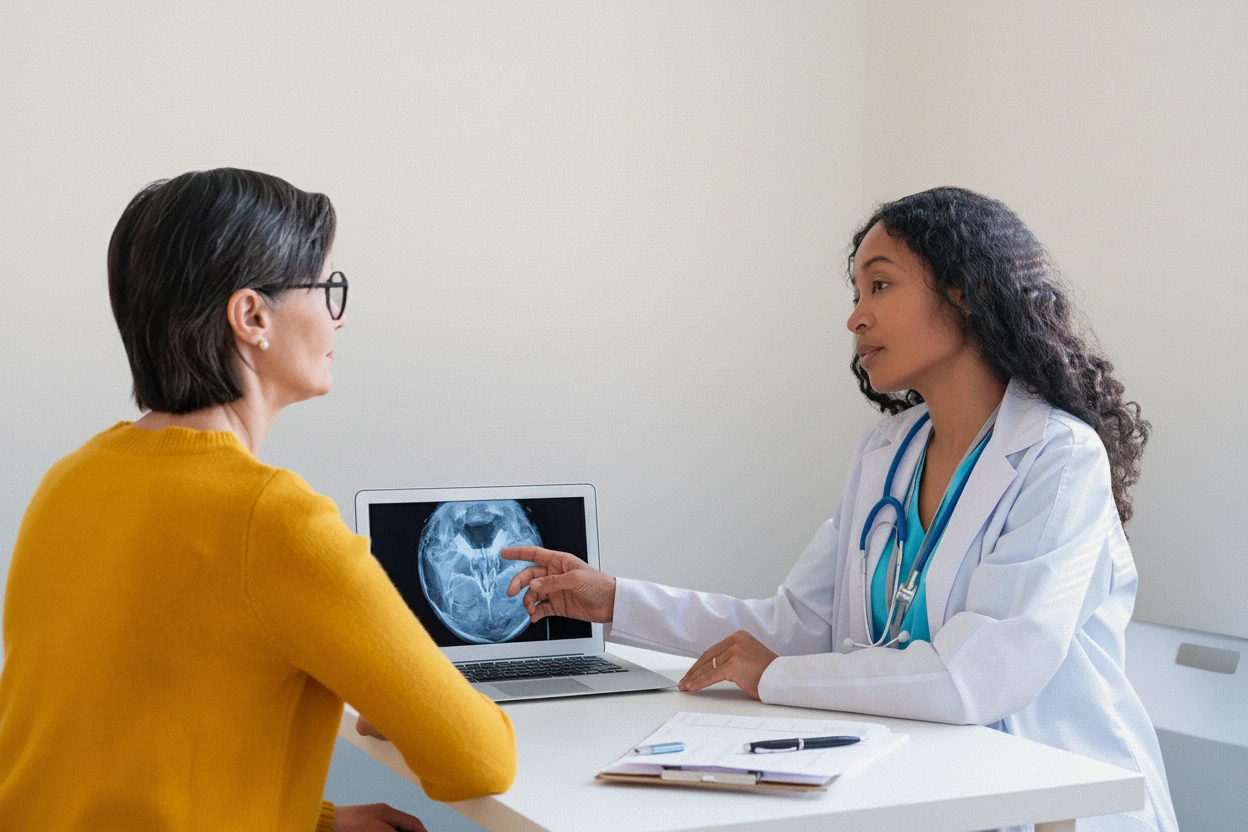
Migraine affects millions worldwide and is a leading cause of disability due to its recurrent, often severe headaches and associated symptoms12. Diagnosing migraine is a clinical process that relies heavily on detailed patient history and physical examination, as no single test or scan can definitively confirm the condition13. Understanding the diagnostic steps and criteria is essential for timely and effective management to reduce the burden of this chronic neurological disorder14.
Patient Medical History
The cornerstone of migraine diagnosis is a thorough medical and headache history. Doctors begin by asking detailed questions about the duration, frequency, location, type, and intensity of headache pain13. Patients are encouraged to describe their symptoms fully, including any sensory changes known as auras, which may involve visual disturbances like flashing lights or sensory changes such as tingling sensations15. While auras occur in some migraine sufferers, not all experience them15.
Key aspects of the headache history include:
- Recording headache frequency and severity to assess the impact and guide treatment5.
- Identifying typical migraine attack duration, which usually lasts between 4 and 72 hours without treatment3.
- Describing pain quality, often pulsating and moderate to severe in intensity6.
- Noting whether the pain is unilateral (one side of the head) but recognizing it can also be bilateral or shift sides3.
- Documenting associated symptoms such as nausea, vomiting, photophobia (sensitivity to light), and phonophobia (sensitivity to sound)56.
- Exploring potential triggers like stress, hormonal changes, certain foods, or environmental factors1.
- Gathering family history, as migraine has a genetic predisposition with about 42% of cases showing familial links13.
Patients may be advised to keep a headache diary to track headache characteristics, timing, and triggers before clinical evaluation. This diary helps identify patterns and supports accurate diagnosis51.
💡 Did You Know?
Diagnosis of migraine can also be facilitated by use of screening instruments that evaluate whether a patient's clinical features suggest migraine7.
Physical Examination
Physical examination is performed to exclude other causes of headache and to support the clinical diagnosis of migraine. This exam is typically conducted by primary care physicians or neurologists and focuses on identifying signs that might suggest secondary headache disorders53.
The physical exam includes:
- Inspection of the head, eyes, and nasal passages to rule out trauma, infections, or abnormalities3.
- Examination of the neck and throat to exclude infections or other causes of headache3.
- Vital signs assessment to detect systemic illness that might contribute to headache symptoms3.
- Assessment of functional impairment during headache attacks, which is a key consideration for diagnosis and management5.
The physical exam findings, combined with the patient history, help guide further diagnostic steps and determine if additional testing is necessary53.
Neurological Examination
A neurological exam is essential to rule out secondary neurological causes of headache and to differentiate migraine from other neurological disorders3. This exam assesses brain fog causes symptoms and treatment function and neurological integrity through various tests.
Components of the neurological examination include:
- Cognitive screening to evaluate mental status, memory, and language functions3.
- Eye examination to check for signs of raised intracranial pressure such as papilledema3.
- Motor testing to assess muscle strength and detect any neurological deficits3.
- Coordination tests, including gait assessment, to identify cerebellar or motor pathway dysfunction3.
- Reflex testing using a reflex hammer to evaluate nervous system integrity3.
- Sensory testing when neurological symptoms accompany headache to assess sensory pathways3.
These assessments help exclude conditions like brain tumors, infections, or vascular abnormalities that may mimic migraine symptoms16.
Migraines can be diagnosed by a specialist trained in treating headaches, known as a neurologist. The diagnosis is based on your medical history, symptoms, and a physical and neurological exam.
— Isaac O. Opole, American College of Physicians8
Diagnostic Imaging Tests
Imaging tests are not routinely required for migraine diagnosis but are reserved for atypical presentations or when secondary causes are suspected31. The goal of imaging is to exclude structural brain abnormalities that could explain headache symptoms.
Common imaging modalities include:
- Computed Tomography (CT) scans: Effective for detecting acute hemorrhage, fractures, and mass lesions3.
- Magnetic Resonance Imaging (MRI): Provides superior soft tissue contrast and is preferred for evaluating brain parenchyma, tumors, strokes, infections, and other neurological conditions36.
Magnetic resonance angiography (MRA) may also be used to check for vascular abnormalities such as aneurysms6. However, because migraine is a disorder of brain function rather than structure, imaging primarily serves to rule out other causes rather than confirm migraine91.
Migraine Diagnostic Criteria
Migraine diagnosis is primarily clinical and guided by standardized criteria, most notably the International Classification of Headache Disorders, 3rd edition (ICHD-3)31. These criteria help differentiate migraine from other primary and secondary headache disorders.
Key diagnostic features according to ICHD-3 include:
- At least five headache attacks fulfilling the following:
- Headache lasting 4 to 72 hours (untreated or unsuccessfully treated)310.
- Headache has at least two of the following characteristics:
- Unilateral location (one side of the head)310.
- Pulsating quality310.
- Moderate or severe pain intensity310.
- Aggravation by or causing avoidance of routine physical activity310.
- During headache, at least one of the following:
- Nausea and/or vomiting310.
- Photophobia and phonophobia (sensitivity to light and sound)310.
Migraine can be classified as:
- Migraine with aura: Includes sensory disturbances such as visual auras (flashing lights, blind spots) or other neurological symptoms preceding headache51.
- Migraine without aura: The most common type, lacking sensory warning signs but presenting with typical headache features56.
Chronic migraine is defined as having 15 or more headache days per month for at least three months, with at least 8 days meeting migraine criteria51112.
Screening tools like ID Migraine, a brief self-administered questionnaire, can aid diagnosis by assessing nausea, light sensitivity, and headache impact on daily life17.
| Diagnostic Feature | Description | Source |
|---|---|---|
| Attack frequency | ≥ 5 attacks | 310 |
| Duration | 4–72 hours (untreated) | 310 |
| Pain characteristics | Unilateral, pulsating, moderate/severe, worsened by activity | 310 |
| Associated symptoms | Nausea/vomiting, photophobia, phonophobia | 310 |
| Chronic migraine definition | ≥15 headache days/month, ≥8 migraine days | 511 |
Summary and Key Points
- Migraine diagnosis is a clinical process relying on detailed patient history and neurological examination13.
- Typical migraine attacks last 4 to 72 hours and involve moderate to severe, often unilateral, pulsating headache pain36.
- Associated symptoms include nausea, vomiting, and sensitivity to light and sound56.
- Family history is important due to genetic predisposition in many cases13.
- Physical and neurological exams help exclude secondary causes of headache31.
- Imaging tests like MRI and CT are reserved for atypical cases or when other conditions are suspected31.
- The ICHD-3 criteria provide standardized guidelines for migraine diagnosis310.
- Chronic migraine is defined by headache frequency and duration criteria511.
- Use of headache diaries and screening tools improves diagnostic accuracy and management571.
Common Questions About Migraine Diagnosis
How is migraine distinguished from other headaches?
Migraine is differentiated by its characteristic features such as pulsating pain, duration of 4–72 hours, and associated symptoms like nausea and sensitivity to light and sound. Other headaches, like tension-type or cluster headaches, have distinct patterns and symptom profiles310.
When are imaging tests necessary?
Imaging is recommended when there are red flags such as new neurological symptoms, sudden changes in headache pattern, or signs suggesting secondary causes like tumors or vascular abnormalities31.
Migraine headaches remain underdiagnosed and undertreated. While there are many pharmacologic options available to adults with migraine headache, this guideline will help clinicians assess the best course of treatment for this patient population, incorporating the best evidence and always with consideration of patients' preferences, to make shared decisions for cost-effective treatment options that are best for the individual patient.
— Isaac O. Opole, American College of Physicians8
Can migraine be diagnosed by primary care providers?
Yes, primary care providers often diagnose migraine using systematic history-taking and physical examination. Early evaluation improves management outcomes131.
What role do headache diaries play?
Keeping a headache diary helps patients and doctors track headache frequency, severity, triggers, and response to treatment, aiding in accurate diagnosis and personalized management51.
Is migraine genetic?
Migraine has a genetic component, with about 42% of cases showing familial links. Family history is an important part of the diagnostic process13.