Blood pressure is a vital indicator of cardiovascular health and a major factor in predicting heart disease and stroke risk12. Recent research shows that blood pressure readings taken while lying down (supine position) can reveal hidden risks that may not appear during traditional seated measurements34. Understanding how body position affects blood pressure can improve detection of cardiovascular problems and guide better clinical care5.
How Body Position Affects Blood Pressure
Blood pressure (BP) varies with body position due to physiological mechanisms involving gravity and the autonomic nervous system, which regulates heart attack symptoms in women rate and vascular tone to maintain stable circulation678. When a person moves from lying down to sitting or standing, gravity causes blood to pool in the lower extremities, challenging the body to adjust blood pressure to maintain adequate blood flow to vital organs8. The autonomic nervous system uses baroreflexes—rapid adjustments in heart rate and blood vessel constriction—to counteract these changes and preserve orthostatic tolerance (the ability to stand without dizziness or fainting)67.
💡 Did You Know?
The simple act of having someone lie down for a blood pressure reading might reveal more than expected about their heart health. Readings that showed high blood pressure in people who were lying down better predicted stroke, serious heart problems, and death compared with readings taken while sitting3.
Dysregulation of these compensatory mechanisms can lead to abnormal blood pressure variability and increased cardiovascular risk9. For example, some individuals exhibit supine hypertension—elevated blood pressure while lying down—which is independently linked to higher risks of coronary heart disease, heart failure, stroke, and mortality10. This condition may go undetected if blood pressure is only measured in the seated position.
The Atherosclerosis Risk in Communities (ARIC) study, which followed over 11,000 adults aged 45-64 for up to 28 years, found that 16% of participants with normal seated blood pressure had supine hypertension10. Furthermore, 74% of those with seated hypertension also had supine hypertension. Participants with hypertension in both positions faced significantly increased risks for major cardiovascular events and premature death, with hazard ratios ranging from 1.43 to 2.18 depending on the outcome10.
These findings highlight the importance of considering body position when assessing blood pressure and cardiovascular risk. Measuring blood pressure only while seated may miss a substantial portion of individuals at risk due to supine hypertension5.
The autonomic nervous system plays a crucial role in adjusting blood pressure during postural changes to maintain blood flow. Failure of these mechanisms can increase the risk of heart disease and stroke679.
Getting Blood Pressure Readings While Lying Down
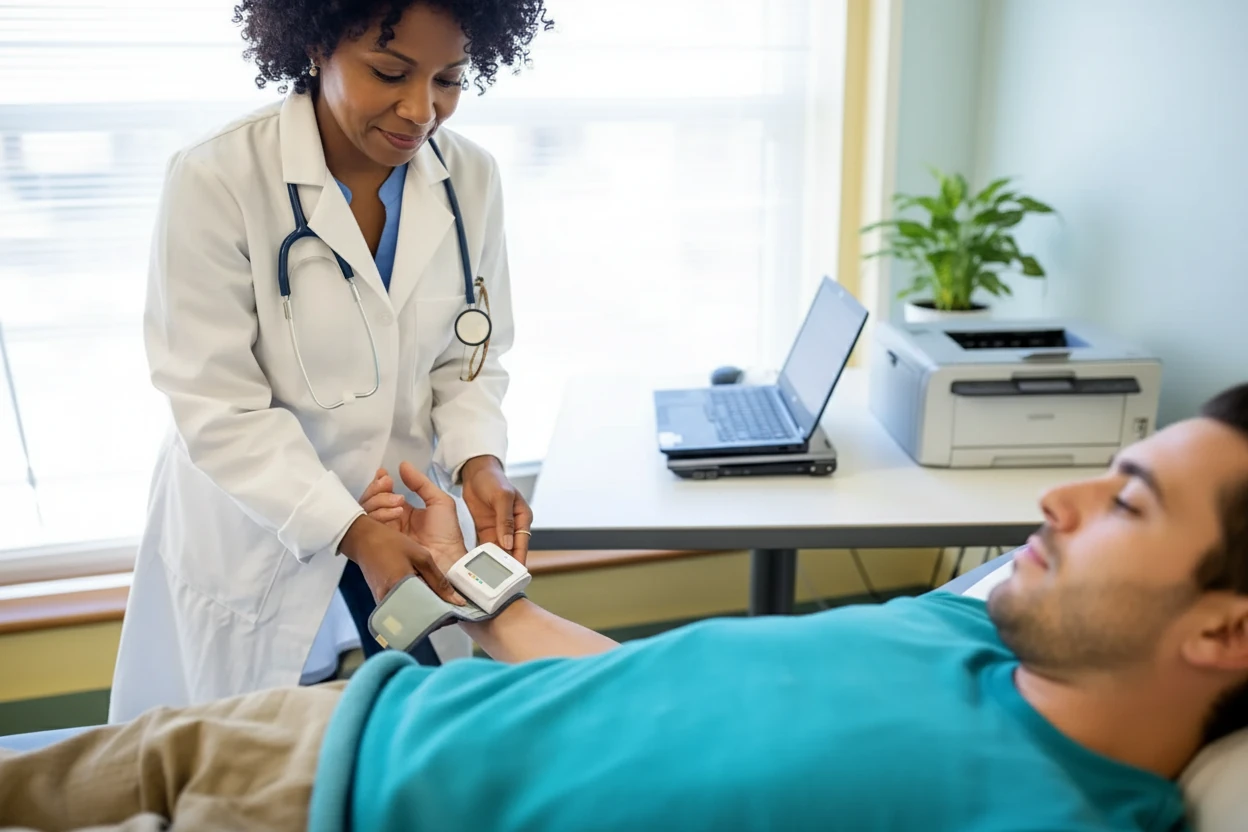
Measuring blood pressure while lying down can uncover hidden hypertension that may not be apparent during seated measurements. Adults with high blood pressure in both seated and supine positions have a higher risk of heart disease, stroke, heart failure, and premature death compared to those without hypertension in either position5. Notably, adults with high blood pressure only while lying down but not seated have similar elevated risks as those with hypertension in both positions5.
“The findings confirm that arm position makes a 'huge difference' when it comes to an accurate blood pressure measurement.”
— Tammy Brady, MD, PhD, Johns Hopkins University School of Medicine14
This suggests that supine blood pressure measurement is a valuable tool for detecting cardiovascular risk that might otherwise be missed in routine clinical practice104. Patients with known or suspected cardiovascular risk factors may particularly benefit from having their blood pressure checked while lying flat on their backs105.
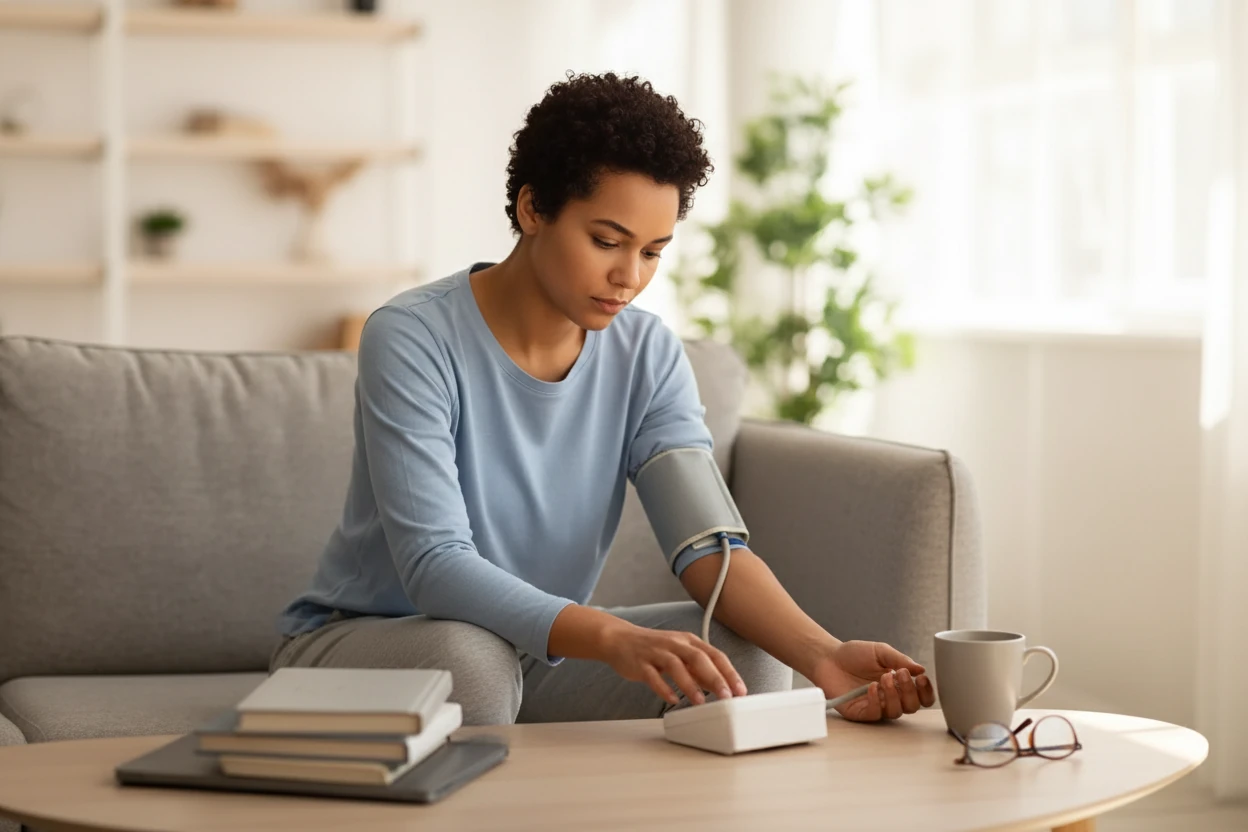
Proper technique is essential for accurate blood pressure measurement in any position. The arm should be supported at heart level, ideally resting on a firm surface such as a table or pillow when supine, to avoid falsely elevated readings1112. Improper arm positioning, such as letting the arm dangle or rest unsupported in the lap, can increase systolic blood pressure readings by 4 to 7 mm Hg, potentially leading to misdiagnosis and unnecessary treatment111314.
Clinical guidelines recommend that patients sit upright with feet flat on the floor, back supported, and arm at heart level for seated measurements. For supine measurements, the cuffed arm should be supported with a pillow to maintain correct positioning1512.
Individuals with known risk factors for heart disease and stroke may benefit from having their blood pressure checked while lying flat on their backs5.
Consistently measuring blood pressure with an unsupported arm can overestimate blood pressure by about 6.5 mm Hg, which may shift readings from normal to stage 2 hypertension, affecting diagnosis and treatment decisions14.
- Ensure the patient is relaxed and has rested for 3–5 minutes before measurement12.
- Position the arm so the cuff is at the level of the right atrium (mid-chest)12.
- Support the arm on a firm surface when supine, such as a pillow12.
- Avoid crossing legs or unsupported arm positions, which can falsely elevate readings12.
- Take multiple readings on different occasions to confirm blood pressure status12.