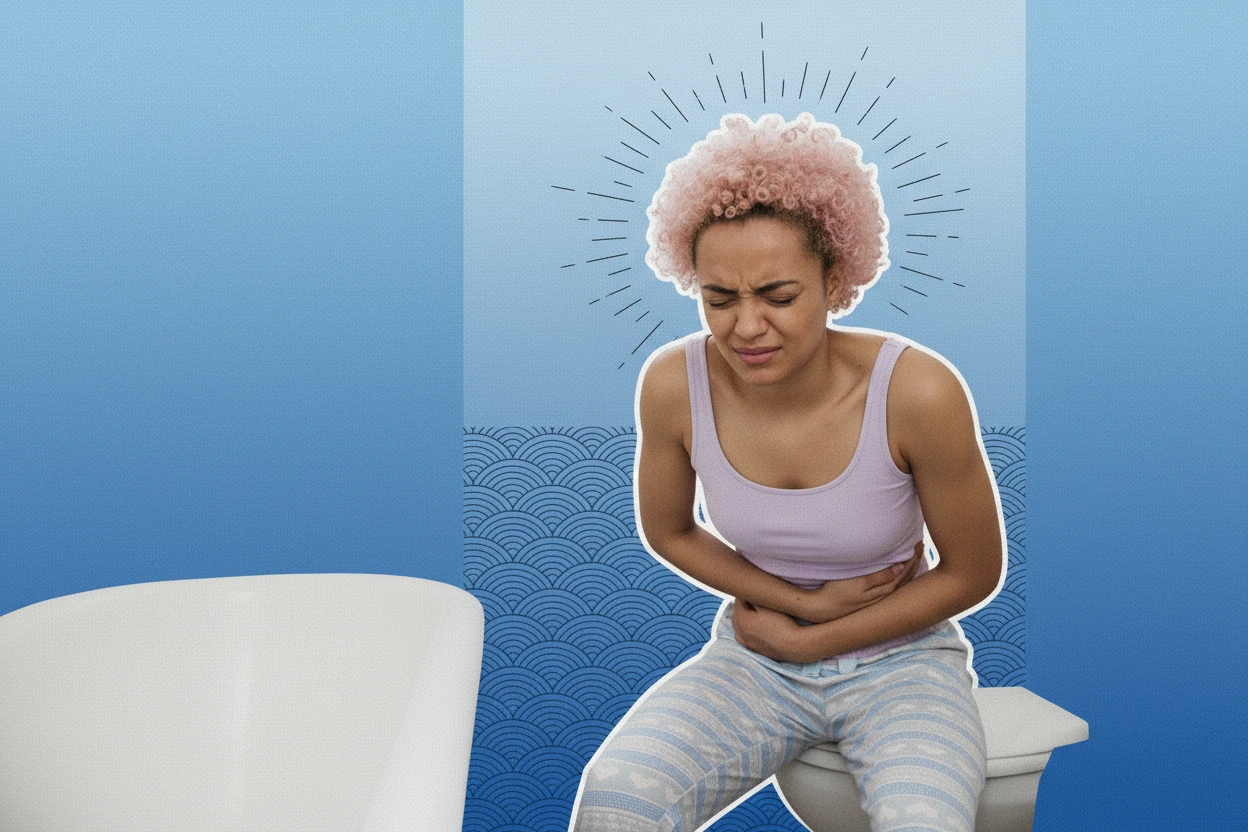
Irritable bowel syndrome (IBS) affects up to 15% of adults in the United States, making it a common but often uncomfortable digestive condition1. IBS causes abdominal pain and changes in bowel habits, including diarrhea, constipation, or a combination of both2. Understanding the different types of IBS is important because treatment varies depending on the subtype and symptoms3.
IBS With Diarrhea (IBS-D)
IBS with diarrhea (IBS-D) is the most common subtype, affecting approximately 30–40% of IBS patients45. It is characterized by frequent loose or watery stools, which occur on more than 25% of days with abnormal bowel movements according to the Rome IV criteria6. The underlying mechanisms of IBS-D include gut microbiota imbalance (dysbiosis) and increased sensitivity of the intestinal nerves (visceral hypersensitivity), which contribute to diarrhea and abdominal discomfort47.
The main symptoms of IBS-D include abdominal pain or cramps accompanied by frequent loose or watery stools1. Patients often experience urgency to have bowel movements and may notice mucus in their stool8. Bloating and gas are common, and symptoms can fluctuate unpredictably. Unlike other serious gastrointestinal diseases, IBS-D does not cause damage to the digestive tract or increase the risk of colon cancer1.
IBS With Constipation (IBS-C)
IBS with constipation (IBS-C) is defined by the Rome IV criteria as having hard or lumpy stools on more than 25% of days with abnormal bowel movements6. This subtype is more common in women and often begins in younger individuals, though it can develop at any age4. The pathophysiology of IBS-C involves slowed intestinal transit and increased water absorption in the colon, leading to hard stools4. Dietary factors such as low fiber intake also contribute to symptoms49.
Patients with IBS-C typically report abdominal pain or cramping along with infrequent bowel movements and hard, lumpy stools8. They may experience bloating, a sensation of incomplete evacuation, and straining during defecation1. Constipation can be persistent or intermittent, and symptoms may worsen with stress or dietary changes3.
IBS With Mixed Bowel Habits (IBS-M)
IBS with mixed bowel habits (IBS-M) is characterized by alternating constipation and diarrhea. According to the Rome IV criteria, IBS-M involves having more than 25% of stools as hard or lumpy and more than 25% as loose or watery on days with abnormal bowel movements6. This subtype affects men and women equally4. The symptoms of IBS-M tend to fluctuate unpredictably and can be triggered by stress and certain foods4.
People with IBS-M experience both constipation and diarrhea, often alternating between hard, lumpy stools and loose, watery stools8. Abdominal pain, bloating, and discomfort are common and may vary in intensity3. The underlying causes include an imbalance in gut motility and dysfunction in the communication between the gut and brain (gut-brain axis)4.
Identifying Your IBS Type
Determining the subtype of IBS is essential for effective management. The Rome IV criteria classify IBS based on stool consistency on days with abnormal bowel movements:
- IBS-D: More than 25% of stools are loose or watery6.
- IBS-C: More than 25% of stools are hard or lumpy6.
- IBS-M: More than 25% of stools are hard or lumpy and more than 25% are loose or watery6.
The Bristol Stool Chart is a useful tool to help patients and healthcare providers identify stool types and patterns8. Keeping a symptom and stool diary can assist in tracking bowel habits and identifying triggers such as stress or dietary factors1.
When to Consult a Doctor
If you experience recurrent abdominal pain at least once per week for three months, along with changes in stool frequency or form, it is important to consult a healthcare provider4. The Rome IV criteria are used to diagnose IBS based on symptoms rather than laboratory tests4. Diagnostic tests such as stool analysis, blood tests, and colonoscopy are primarily used to rule out other conditions like inflammatory bowel disease or infections410.
Seek medical advice promptly if you experience:
- Blood in stool or unexplained weight loss8.
- Severe abdominal pain that does not improve after bowel movements8.
- Diarrhea that wakes you up at night8.
- Vomiting or fever alongside IBS symptoms8.
Early consultation helps ensure accurate diagnosis and appropriate treatment, improving quality of life10.
IBS Prevention Strategies
While IBS cannot be completely prevented due to its unclear cause, symptom flare-ups can be minimized by avoiding known triggers1. Common strategies include:
- Managing stress through relaxation techniques such as yoga or meditation1.
- Following a balanced diet rich in fiber, while avoiding foods that trigger symptoms like dairy or gluten91.
- Drinking plenty of water to maintain bowel regularity1.
- Exercising regularly to promote healthy gut motility1.
- Keeping a food and symptom diary to identify and avoid personal triggers1.
These lifestyle changes can reduce the frequency and severity of IBS symptoms and improve overall digestive health3.
“The pathophysiology of IBS is multifactorial, involving disruptions in the gut-brain axis, visceral hypersensitivity, gastrointestinal dysmotility, alterations in gut microbiota, food intolerances, and psychosocial factors.”
— Rohit R. Nathani, MD et al.3
Key Takeaways
“IBS is a complex and highly prevalent disorder of gut-brain interaction characterized by recurrent abdominal pain and altered bowel habits, including constipation, diarrhea, or a combination of both.”
— Rohit R. Nathani, MD et al.3
- IBS is a common digestive disorder affecting up to 15% of adults, characterized by abdominal pain and altered bowel habits1.
- IBS-D involves frequent loose or watery stools and is linked to gut microbiota imbalance and visceral hypersensitivity47.
- IBS-C features hard or lumpy stools due to slowed intestinal transit and increased water absorption4.
- IBS-M includes alternating constipation and diarrhea caused by gut motility imbalance and gut-brain axis dysfunction4.
- Diagnosis is based on the Rome IV criteria, focusing on stool consistency and symptom patterns6.
- Lifestyle modifications, dietary changes, and stress management are key to managing IBS symptoms19.
- Consult a healthcare provider if symptoms persist or worsen, or if alarm signs such as blood in stool or severe pain occur8.