Hypertension, or high blood pressure, affects an estimated 1.4 billion adults worldwide, with two-thirds living in low- and middle-income countries1. Alarmingly, nearly half of these individuals are unaware they have the condition, which significantly raises the risk of heart attack symptoms in women attacks, strokes, and kidney disease1. Despite its prevalence and dangers, hypertension often remains undiagnosed and untreated, contributing to millions of preventable deaths globally2.
“Good hypertension care is affordable, within reach, and strengthens primary health care. The challenge now is to go from 'within reach' to 'reached.' This will require commitment of governments around the world.”
— Dr. Tom Frieden, Resolve to Save Lives2
What Is Hypertension—And Why Does It Matter?
Hypertension is a medical condition characterized by persistently elevated blood pressure (BP) in the arteries. It is generally defined as a systolic blood pressure (SBP) of 140 mm Hg or higher and/or a diastolic blood pressure (DBP) of 90 mm Hg or higher according to most international guidelines3. However, the 2017 American College of Cardiology/American Heart Association (ACC/AHA) guideline lowered this threshold to 130/80 mm Hg to identify individuals at risk earlier4. Blood pressure is measured as two numbers: the upper number (systolic) reflects the pressure when the heart beats, and the lower number (diastolic) shows the pressure when the heart rests between beats5.
Hypertension is often called the "silent killer" because it usually causes no symptoms while damaging vital organs such as the heart, kidneys, brain, and eyes6. It is the leading modifiable risk factor for cardiovascular disease (CVD) and premature death worldwide1. High blood pressure increases the risk of heart attacks, strokes, heart failure, atrial fibrillation, chronic kidney disease, and dementia7. Among people with type 2 diabetes, over 80% also have hypertension, further compounding their risk4.
The global burden of hypertension has grown dramatically, doubling from 650 million affected adults in 1990 to approximately 1.3 billion in recent years2. This rise is largely driven by aging populations, urbanization, and lifestyle factors such as poor diet and physical inactivity. The condition disproportionately affects low- and middle-income countries, where over three-quarters of adults with hypertension live2.
💡 Did You Know?
The overarching blood pressure treatment goal is less than 130/80 mm Hg for all adults. Among middle-aged individuals, the lifetime risk of developing hypertension is as high as 80% to 90%4.
How People Can Have Hypertension and Not Know It
One of the most concerning aspects of hypertension is that many people have it without realizing it. Globally, about 600 million adults with hypertension are unaware of their condition1. This underdiagnosis is especially common in young adults, who often do not engage regularly with healthcare services or recognize their risk8.
Community-based studies highlight this gap in awareness. For example, a study in Pakistan found that 14.8% of adults aged 18 to 35 had previously undiagnosed hypertension9. Similarly, research in Iowa revealed that only 17.4% of young adults with elevated blood pressure received a formal diagnosis within two years10. This delay in recognition increases the risk of long-term cardiovascular complications later in life8.
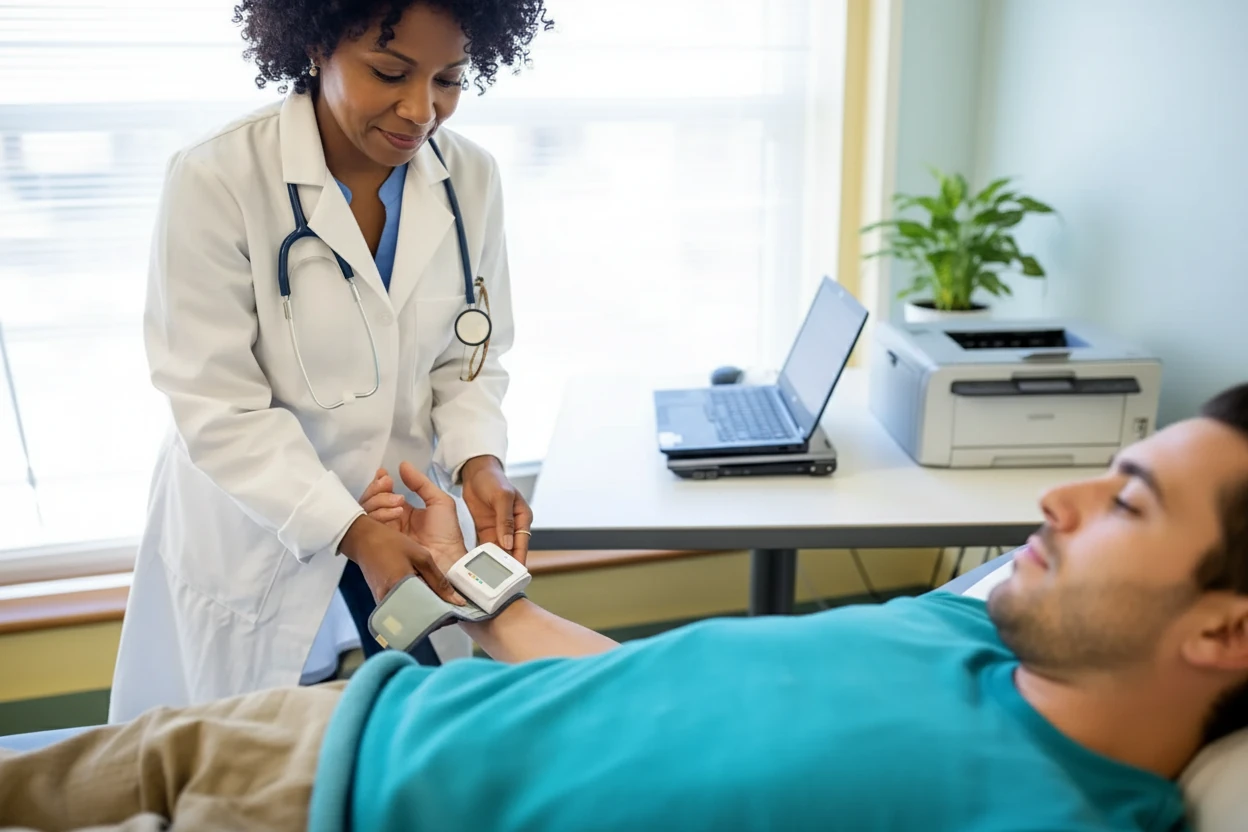
Hypertension often presents without noticeable symptoms, which contributes to its silent progression. While very high blood pressure can cause headaches, blurred vision, or chest pain, most people with elevated BP feel normal and do not seek medical attention15. This lack of symptoms means regular blood pressure screening is essential for early detection.
- Hypertension is defined as SBP ≥140 mm Hg or DBP ≥90 mm Hg by most guidelines, but some use ≥130/80 mm Hg43.
- Approximately half of all people with hypertension globally are unaware of their condition62.
- Young adults have particularly low rates of hypertension awareness and diagnosis1098.
- Hypertension causes no symptoms in most cases, earning it the nickname "silent killer"65.
- Undiagnosed hypertension increases the risk of heart attacks, strokes, and kidney damage1.
Every hour, more than 1,000 people die from strokes and heart attacks, most caused by high blood pressure. Many of these deaths could have been prevented with early diagnosis and treatment2.
Management and Treatment of Hypertension
Effective management of hypertension involves a combination of lifestyle changes and, when necessary, medication. Lifestyle interventions are the first-line approach to prevent and control high blood pressure. These include:
- Following the DASH (Dietary Approaches to Stop Hypertension) diet, rich in fruits, vegetables, whole grains, and low-fat dairy.
- Engaging in regular physical activity.
- Maintaining a healthy weight.
- Reducing sodium intake.
- Avoiding tobacco use and limiting alcohol consumption7.
When lifestyle modifications are insufficient to lower blood pressure to target levels, pharmacologic treatment is recommended. Several classes of antihypertensive drugs are available, with angiotensin-converting enzyme inhibitors (ACEi) and angiotensin receptor blockers (ARBs) often preferred as initial therapy1112. Other commonly used medications include thiazide diuretics and calcium channel blockers12.
Blood pressure treatment goals generally aim for less than 130/80 mm Hg, especially in patients with cardiovascular disease, diabetes, or chronic kidney disease41. Achieving and maintaining blood pressure control reduces the risk of heart attacks, strokes, heart failure, and kidney damage1.
Despite the availability of effective treatments, global control rates remain suboptimal. Approximately 80% of adults with hypertension are not adequately treated, particularly in low- and middle-income countries2. This gap in treatment contributes to the high burden of hypertension-related complications worldwide.
| Treatment Aspect | Details | Citation |
|---|---|---|
| Lifestyle changes | DASH diet, exercise, weight control, sodium restriction | UNVERIFIED |
| Preferred initial medications | ACE inhibitors, ARBs | 1112 |
| Blood pressure target | <130/80 mm Hg for most adults | 41 |
| Control rates globally | Only about 20% achieve adequate control | 2 |
| Challenges | Underdiagnosis, low treatment adherence | 2 |
| Sources:11124 | ||
“Hypertension can be controlled effectively with simple, low-cost medication regimens, and yet only about one in five people with hypertension have it controlled.”
— Dr. Tedros Adhanom Ghebreyesus, World Health Organization2
WHO’s Proposal for Hypertension Education
The World Health Organization (WHO) has launched initiatives to improve hypertension awareness, diagnosis, and management globally. The WHO’s “HEARTS” initiative promotes standardized hypertension management in primary care settings, focusing on treatment protocols, improving medication access, and patient-centered care2.
“Hypertension control programmes remain neglected, under-prioritized and vastly underfunded. Strengthening hypertension control must be part of every country's journey towards universal health coverage, based on well-functioning, equitable and resilient health systems, built on a foundation of primary health care.”
— Dr. Tedros Adhanom Ghebreyesus, World Health Organization2
Key strategies emphasized by WHO include:
- Increasing public awareness about hypertension risks and the importance of regular blood pressure checks6.
- Encouraging lifestyle changes such as healthy eating, physical activity, and sodium reduction1.
- Expanding access to affordable, effective antihypertensive medications2.
- Training healthcare providers in standardized blood pressure measurement and management protocols.
- Strengthening health systems to support hypertension control as part of universal health coverage2.
Despite these efforts, hypertension control programs remain underfunded and under-prioritized in many countries. WHO stresses that improving hypertension care is essential to reduce the global burden of cardiovascular disease and premature death2.
- WHO’s HEARTS initiative promotes standardized hypertension management in primary care2.
- Public education campaigns encourage regular BP checks and lifestyle changes6.
- Access to low-cost medications is a priority for improving control rates2.
- Training healthcare workers in BP measurement and treatment protocols is essential.
- Strengthening health systems supports universal hypertension care2.