Your heart attack symptoms in women rate is a vital sign that reflects how many times your heart beats per minute. For most adults, a normal resting heart rate ranges between 60 and 100 beats per minute, but this can vary based on fitness, age, and other factors1. Understanding your heart rate, both at rest and during exercise, can provide important insights into your cardiovascular health and fitness level2.
Normal Resting Heart Rate Ranges
A healthy resting heart rate (RHR) is the number of times your heart beats per minute while you are awake, calm, and not moving. For most adults, this rate falls between 60 and 100 beats per minute1. A lower resting heart rate generally indicates better cardiovascular fitness because the heart pumps blood more efficiently and does not need to beat as often3. Very fit athletes may have resting heart rates as low as 40 beats per minute due to enhanced cardiac conditioning and exercise-induced cardiac remodeling34.
Several factors influence resting heart rate:
- Physical fitness and exercise habits are major determinants, with more active individuals typically having lower RHR3.
- Genetics play a smaller but notable role in determining baseline heart rate3.
- Age affects heart rate variability and peak heart rate, but normal resting heart rate ranges remain largely consistent throughout adulthood5.
- External factors such as ambient temperature and psychological stress can temporarily raise heart rate6.
- Medications, including beta-blockers and thyroid drugs, can alter heart rate by slowing or increasing it7.
Resting heart rate can also be affected by health conditions such as heart disease, thyroid disorders, and electrolyte imbalances8. A consistently elevated resting heart rate above 100 beats per minute (tachycardia) or a resting heart rate below 60 beats per minute (bradycardia) in non-athletes may signal an underlying health issue and warrants medical evaluation89.
💡 Did You Know?
A lower resting heart rate usually means the heart doesn't have to work as hard to pump blood through the body, reflecting better fitness1.
Target Heart Rate During Exercise
During physical activity, your heart rate increases to supply more oxygen-rich blood to your muscles. The maximum heart rate (MHR) is the highest number of beats per minute your heart can safely achieve during intense exercise. It is commonly estimated by subtracting your age from 220, though individual variation exists104. For example, a 30-year-old’s estimated maximum heart rate is about 190 beats per minute10.
Exercise intensity is often guided by target heart rate zones, which are percentages of your maximum heart rate:
- Moderate-intensity exercise corresponds to 50-70% of MHR112.
- Vigorous-intensity exercise corresponds to 70-85% of MHR112.
We know the ability to raise your heart rate tends to decrease with age. But using age alone really isn't the best metric for determining your maximum heart rate4.
Improved fitness typically lowers your resting and submaximal heart rates, meaning your heart works more efficiently at lower intensities. However, fitter individuals may need to exercise harder to reach their target heart rate zones3.
Monitoring your heart rate during exercise helps optimize cardiovascular benefits and avoid overexertion. Exercising within your target heart rate zone improves heart and lung function, reduces blood pressure, and lowers the risk of cardiovascular events11.
| Exercise Intensity | Percentage of Maximum Heart Rate | Example for 50-Year-Old (MHR ≈ 170 bpm) |
|---|---|---|
| Moderate | 50-70% | 85 to 119 bpm |
| Vigorous | 70-85% | 119 to 145 bpm |
| Sources:10112 | ||
How to Check Your Pulse and Identify Irregularities
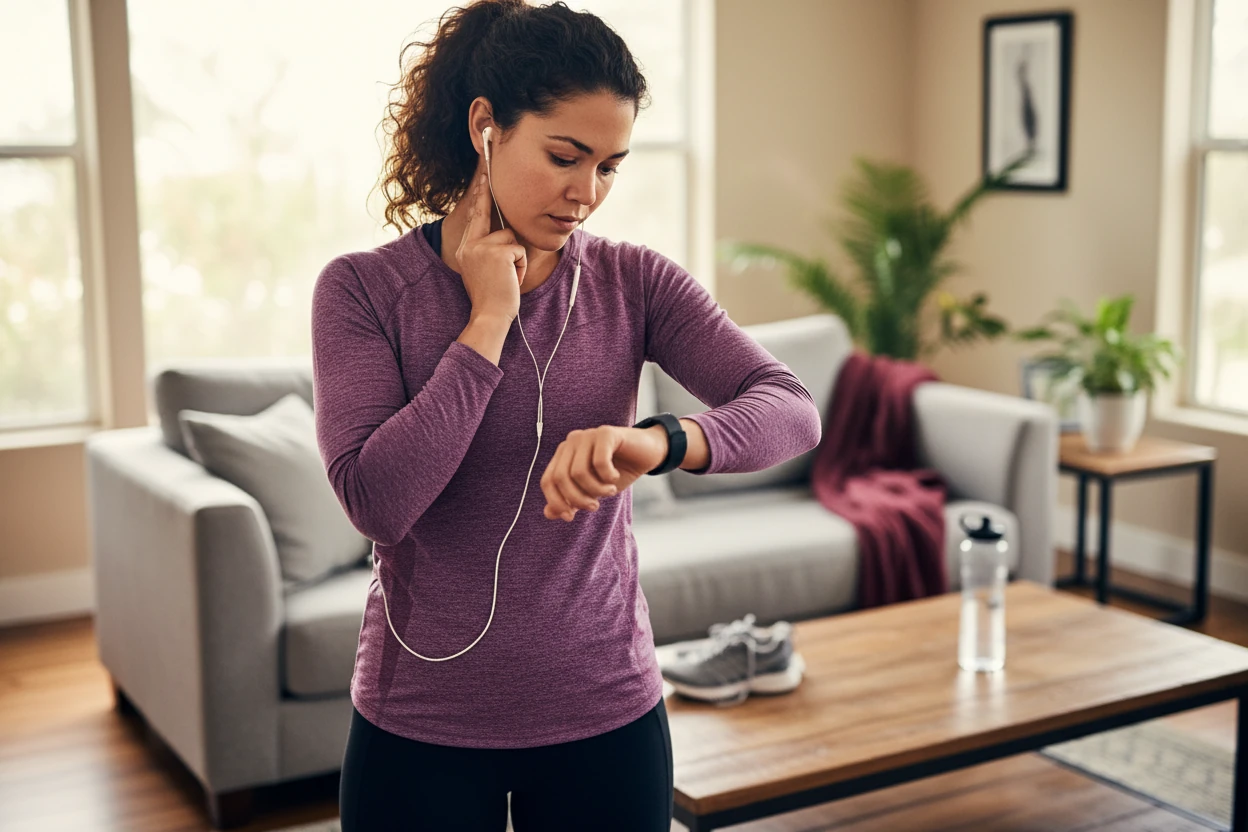
Measuring your heart rate is simple and can be done manually by palpating your pulse. Common sites to check your pulse include the radial artery at the wrist and the carotid artery at the neck11. To measure your pulse:
- Place your index and middle fingers gently over the artery.
- Count the number of beats for 15 seconds and multiply by four, or count for 30 seconds and multiply by two to get beats per minute19.
- The best time to check your resting heart rate is in the morning after a good night's sleep, before getting out of bed12.
Wearable devices such as fitness trackers and smartphone apps can provide convenient heart rate measurements and often display resting heart rate automatically. However, these devices may be less accurate during physical activity compared to manual pulse checks128.
It is important to be aware of abnormal heart rates and irregular rhythms. Signs that warrant medical evaluation include:
- Resting heart rate consistently above 100 bpm (tachycardia) or below 60 bpm (bradycardia) in non-athletes89.
- Symptoms such as dizziness, chest pain, shortness of breath, fainting, or palpitations813.
- Irregular heartbeat patterns, known as arrhythmias, which may feel like fluttering, pounding, or racing sensations14.
Your resting heart rate—or the number of heartbeats per minute while you’re at rest—should range from 60 to 100 beats per minute. It varies, but an unusually high or low resting heart rate or an irregular heartbeat can be a sign that something is wrong. So you should measure your heart rate regularly, understand what’s normal for you, and use that as a gauge8.
Arrhythmias can present as:
- Tachycardia: Fast heartbeat over 100 bpm.
- Bradycardia: Slow heartbeat under 60 bpm.
- Irregular rhythms: Uneven or chaotic heartbeats, such as atrial fibrillation, which increases stroke risk fivefold814.
Routine monitoring is important because some heart rate abnormalities may be asymptomatic but still require treatment to prevent complications like stroke or heart failure118.
- Rest for at least 5 minutes before measuring your resting heart rate9.
- Avoid measuring immediately after exercise, caffeine intake, or stressful events9.
- Use consistent timing and location for measurements to track changes reliably1.