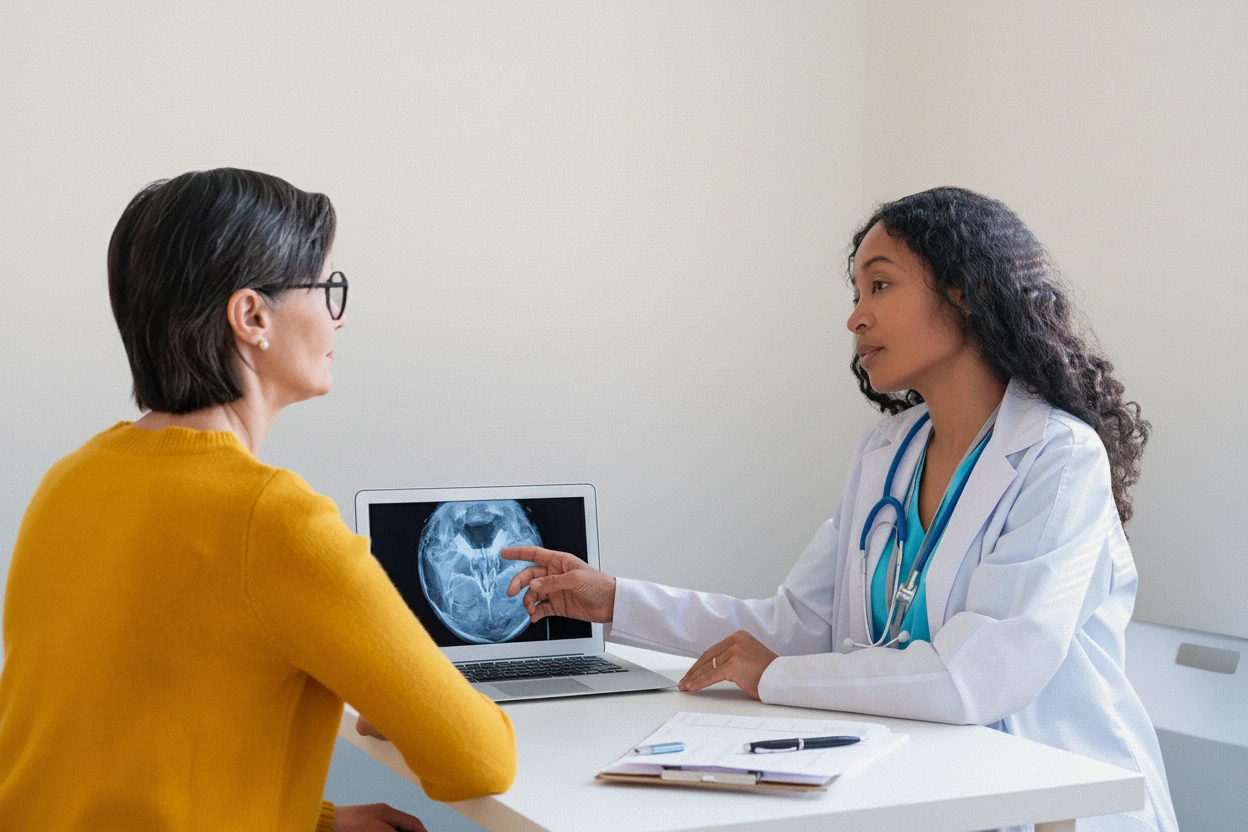
Headaches are one of the most common reasons people seek medical care, affecting over half of the population at some point in their lives1. While most headaches are benign and related to primary headache disorders like tension-type headache or migraine-relief-16-effective-treatment-optionsmigraine, some can signal serious underlying conditions that require urgent evaluation2. Accurate diagnosis is essential to guide effective treatment and improve patient outcomes3.
Patient History and Symptoms
Taking a comprehensive patient history is the cornerstone of headache diagnosis and management4. The history focuses on detailed headache characteristics, family history, associated symptoms, and potential red flags to differentiate primary from secondary headaches56. Primary headaches are not caused by other medical conditions, whereas secondary headaches result from underlying diseases such as infection, trauma, or vascular disorders7.
Key aspects of headache history include:
- Headache location, duration, and quality: Understanding if the pain is unilateral or bilateral, pulsating or pressure-like, helps classify headache type81.
- Onset and pattern: Sudden onset, especially thunderclap headaches, may indicate serious causes like subarachnoid hemorrhage9.
- Associated symptoms: Nausea, vomiting, sensitivity to light or sound suggest migraine, while autonomic symptoms like tearing or nasal congestion may point to cluster headache7.
- Family history: A positive family history of migraine significantly increases the risk of migraine in patients10.
- Medication use: Identifying overuse of analgesics or migraine medications is important to diagnose medication-overuse headache111.
- Age of onset: New headaches after age 50 warrant careful evaluation for secondary causes such as temporal arteritis89.
- History of head trauma: Relevant to exclude secondary headaches related to injury12.
- Behavior during attacks: Symptoms like irritability or confusion suggest migraine, while restlessness may be seen in cluster headache13.
Patient headache questionnaires and electronic headache diaries can improve diagnostic accuracy and assist in treatment planning by capturing headache frequency and triggers over time1415.
Most headaches diagnosed in primary care are benign, but a detailed history and physical exam are crucial to identify red flags that require further evaluation for secondary headaches. Patients with sudden severe headaches, neurological symptoms, or new headaches after age 50 should seek prompt medical attention29.
Physical and Neurological Examination
Following history, a thorough physical and neurological examination is essential to detect signs of secondary headache causes such as infection, trauma, or neurological deficits512. The exam helps distinguish benign primary headaches from those requiring urgent investigation.
Key components include:
- General inspection and palpation: Assess for signs of head or facial trauma, tenderness, or infection12.
- Neck examination: Evaluates musculoskeletal causes of headache such as cervical strain11.
- Neurological examination: Includes mental status, cranial nerves, motor strength, sensation, reflexes, and coordination to identify focal deficits1116.
- Ophthalmologic exam: Checking for papilledema or other signs of raised intracranial pressure is critical11.
- Vital signs: Blood pressure measurement can reveal hypertension contributing to headache; fever may indicate infection1217.
Red flags on examination that prompt further workup include papilledema, altered mental status, focal neurological signs, and signs of systemic illness9.
“A detailed history and physical examination can distinguish between key features of a benign primary headache and concerning symptoms that warrant further evaluation for a secondary headache. Most headaches diagnosed in primary care are benign.”
— Sachin Gujar, Johns Hopkins University18
Blood Tests and Laboratory Work
Blood tests are not diagnostic for primary headache disorders such as migraine or tension-type headache but are useful to exclude secondary causes11. Laboratory evaluation is guided by clinical suspicion based on history and exam findings.
Common blood tests include:
- Complete blood count (CBC): To detect anemia or infection5.
- Inflammatory markers: C-reactive protein (CRP) or erythrocyte sedimentation rate (ESR) may be elevated in inflammatory conditions like temporal arteritis129.
- Other tests: Depending on clinical context, tests for systemic illnesses such as infection or metabolic disorders may be ordered12.
No specific biomarkers currently exist for primary headaches, so blood tests mainly serve to rule out other causes19.
Brain Imaging Scans
Neuroimaging is reserved for patients with red flags or suspicion of secondary headache based on clinical features56. Routine imaging is not recommended for typical primary headaches without concerning signs20.
Indications for imaging include:
- Sudden onset or “thunderclap” headache9.
- Abnormal neurological examination such as focal deficits or papilledema18.
- New headache after age 50 or progressively worsening headache9.
- Headache with systemic symptoms like fever or immunosuppression12.
- Headache after head trauma12.
Imaging modalities:
| Imaging Type | Use Case | Advantages | Limitations |
|---|---|---|---|
| Noncontrast CT | Emergency evaluation of acute headache to exclude hemorrhage or mass effect21 | Rapid, widely available | Less sensitive for subtle abnormalities |
| MRI Brain | Evaluation of chronic or unexplained headaches, structural brain abnormalities4 | More sensitive, detailed images | Longer, more expensive |
| MRA/CTA | Suspected vascular abnormalities like aneurysms or dissections18 | Visualizes blood vessels | Requires contrast, specialized |
| Sources:41821 | |||
Overuse of imaging in primary headache patients remains common despite guidelines recommending selective use20.
Appropriate imaging for headaches should be guided by clinical indications and red flags to avoid unnecessary tests and optimize patient care18.
Diagnostic Criteria for Headaches
The International Classification of Headache Disorders (ICHD) criteria are the gold standard for headache diagnosis and classification2223. These criteria help clinicians differentiate primary headaches such as migraine, tension-type, and cluster headaches from secondary headaches caused by other conditions24.
Key points:
- Diagnosis depends on clinical features including headache frequency, intensity, duration, location, and associated symptoms8.
- Migraine is characterized by moderate to severe throbbing pain, often unilateral, with nausea and sensitivity to light or sound; aura occurs in about 20% of cases7.
- Tension-type headache typically causes bilateral, mild to moderate, nonpulsatile pain described as pressure or tightness1.
- Cluster headache presents with severe unilateral orbital or temporal pain accompanied by autonomic symptoms like tearing or nasal congestion7.
- Secondary headaches require exclusion of underlying pathology, especially when red flags are present9.
Accurate classification enables targeted treatment and improves patient outcomes3.
Summary of Diagnosis Steps
Diagnosing headache involves a systematic approach combining history, examination, and selective investigations to distinguish primary from secondary causes. The process includes:
💡 Did You Know?
A detailed history and physical exam can distinguish benign primary headaches from concerning secondary headaches that need further evaluation2.
- Detailed patient history: Characterize headache features, family and medication history, and identify red flags4.
- Physical and neurological exam: Assess for signs of secondary headache and neurological deficits5.
- Laboratory tests: Use blood work to exclude infection, inflammation, or systemic illness when indicated12.
- Neuroimaging: Reserve CT or MRI for patients with red flags or atypical features4.
- Apply ICHD criteria: Use standardized diagnostic criteria to classify headache type and guide management22.
This approach improves diagnostic accuracy, facilitates early detection of serious conditions, and supports individualized treatment plans325.
- Most headaches are benign primary headaches, but new onset after age 50 or sudden severe headache requires urgent evaluation9.
- Medication-overuse headache should be considered in patients with frequent analgesic use11.
- Patient education and headache diaries can support ongoing management1415.