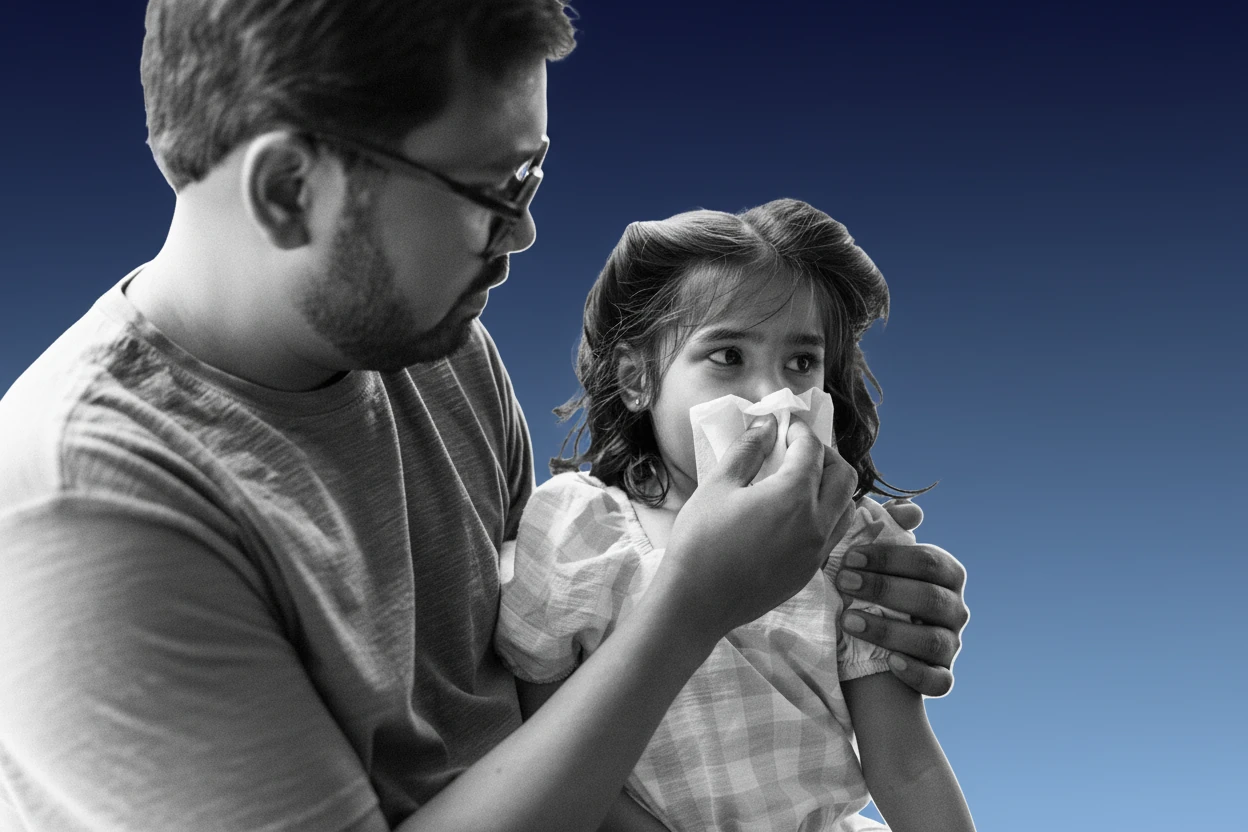
Influenza, commonly known as the flu, is a highly contagious respiratory illness that affects millions annually. People can spread the flu virus even before symptoms appear and remain contagious for several days after becoming sick1. Understanding how the flu spreads, when individuals are most contagious, and effective prevention strategies is essential to reduce transmission and protect vulnerable populations2.
Flu Transmission Methods
The flu virus primarily spreads through respiratory droplets produced when an infected person coughs, sneezes, or talks3. These droplets can enter the body through the mucous membranes of the eyes, nose, or mouth, especially when people are within about 1 meter of each other3. In healthcare settings, aerosol transmission plays a significant role, with viral particles detected up to 1.5 meters from infected patients, indicating that smaller airborne particles can contribute to spread4.
Indirect transmission also occurs when influenza viruses persist on hard surfaces for up to 48 hours. Touching contaminated surfaces followed by contact with the face can lead to infection3. Environmental factors such as indoor air quality and surface contamination influence transmission dynamics, making ventilation and cleaning important control measures45.
Children are notable contributors to community spread due to prolonged viral shedding and less effective hygiene practices, increasing the risk of transmission within households and schools673. Household studies show that once one member is infected, the risk of infection among other household contacts can be as high as 38%, typically with a delay of about 3 days between the initial and secondary cases3.
- Influenza spreads mainly via droplets from coughs, sneezes, or talking3.
- Infection risk increases when within 1 meter of an infected person3.
- Aerosolized virus particles can travel beyond 1 meter, especially in healthcare settings4.
- Viruses can survive on surfaces up to 48 hours, facilitating indirect transmission3.
- Children shed virus longer and have behaviors that increase spread3.
Influenza viruses can be detected in infected individuals starting one day before symptoms develop and remain present up to five to seven days after becoming sick, highlighting the importance of early preventive measures.1
Peak Flu Contagious Period
People infected with influenza are most contagious during the early symptomatic phase, with viral shedding peaking within the first 2 to 3 days after symptoms begin8. Viral shedding can start approximately one day before symptom onset, allowing pre-symptomatic transmission to occur, which complicates containment efforts8. Contagiousness may continue for up to a week after symptoms start in healthy adults.
Certain groups, such as young children and immunocompromised individuals, can shed the virus for more than 10 days, extending their contagious period8. Symptoms of influenza typically begin abruptly, with high fever and respiratory signs like nasal congestion distinguishing it from common colds9.
- Viral shedding peaks within the first 2–3 days of symptoms8.
- Shedding begins about 1 day before symptoms, enabling pre-symptomatic spread8.
- Contagiousness can last up to 7 days or longer in healthy adults8.
- Young children and immunocompromised persons may shed virus for over 10 days8.
- Influenza symptoms usually start suddenly with high fever and respiratory signs9.
“People with flu are most contagious in the three to four days after their symptoms start, but the contagious period begins even before symptoms appear.”2
Flu Risk Factors and Susceptibility
Susceptibility to influenza infection and severity of illness depend on several factors. Extremes of age, including very young children and older adults, have increased risk due to immature or waning immunity9. Pregnancy and immunosuppression also elevate the risk of infection and severe outcomes9. Chronic medical conditions such as asthma-types-classifications-triggers-and-severityasthma-symptoms-causes-and-treatmentasthma-types-classifications-triggers-and-severityasthma, diabetes, cardiovascular disease, and HIV further increase vulnerability9.
Close contact with infected individuals is a primary risk factor for transmission, especially in crowded settings and among healthcare workers who have frequent exposure to patients with influenza310. Immunosuppressive therapies reduce host defenses, heightening influenza risk9.
- Young children and older adults have higher susceptibility and risk of complications9.
- Pregnancy and immunosuppression increase flu risk and severity9.
- Chronic illnesses like asthma, diabetes, and heart disease elevate susceptibility9.
- Close contact with infected persons is a key transmission risk3.
- Healthcare workers face increased exposure due to patient contact3.
“Advanced age is one of the most prominent risk factors for developing severe influenza disease, with individuals over 65 accounting for approximately 90% of influenza-related deaths.11”
Preventing Flu Transmission and Infection
Annual influenza vaccination is the cornerstone of flu prevention, recommended for all persons aged 6 months and older to protect against circulating strains1213. Vaccination reduces flu illnesses, doctor visits, missed work or school, and the risk of severe complications13. High-risk groups, including the elderly, young children, pregnant women, and those with chronic conditions, are prioritized for vaccination12.
Nonpharmaceutical interventions (NPIs) complement vaccination by reducing transmission. These include:
- Frequent hand hygiene with soap and water or alcohol-based sanitizers14.
- Respiratory etiquette such as covering coughs and sneezes with tissues or elbows14.
- Avoiding close contact with sick individuals and staying home when ill14.
- Regular disinfection of frequently touched surfaces to prevent indirect transmission5.
- Improving indoor air quality through ventilation and use of HEPA filters to reduce airborne virus concentration4.
- Wearing face masks to block respiratory droplets, especially in community settings14.
“Community mitigation guidelines emphasize layered preventive measures including vaccination, hand hygiene, mask use, and environmental controls to reduce influenza transmission.”
— Qualls et al., CDC5
| Prevention Strategy | Key Benefit | Target Group/Setting |
|---|---|---|
| Annual Flu Vaccination12 | Reduces illness, severity, and complications | General population, high-risk |
| Hand Hygiene14 | Removes virus from hands | Everyone |
| Respiratory Etiquette14 | Limits droplet spread | Everyone |
| Surface Disinfection5 | Prevents indirect transmission | Homes, workplaces, healthcare |
| Improved Ventilation4 | Lowers airborne virus concentration | Indoor environments |
| Mask Use14 | Blocks respiratory droplets | Community, healthcare |
When to Seek Medical Care for Flu
Most people with flu recover at home with symptomatic care, but medical evaluation is important for those with severe or prolonged symptoms and high-risk individuals139. The Advisory Committee on Immunization Practices (ACIP) recommends annual vaccination for everyone aged 6 months and older12.
Nonpharmaceutical interventions such as isolation of symptomatic persons until at least 24 hours after fever resolution (without fever-reducing medications) help reduce spread14. Early antiviral treatment is advised for high-risk groups and those with severe illness, ideally within 48 hours of symptom onset to maximize effectiveness15.
Seek urgent medical care if experiencing emergency warning signs such as difficulty breathing, persistent chest pain, confusion, or worsening of chronic conditions1617. Pregnant women, young children, older adults, and immunocompromised persons should consult healthcare providers promptly if flu symptoms develop9.
- Get annual flu vaccination starting at 6 months of age12.
- Stay home and isolate until 24 hours after fever ends without medication14.
- Use antiviral medications early, preferably within 48 hours of symptom onset15.
- Seek medical care for severe symptoms or worsening chronic conditions16.
- High-risk groups should consult healthcare providers promptly9.
Early antiviral treatment can shorten illness duration and reduce severity, especially in high-risk individuals and those with severe symptoms.15
Key Flu Contagion Takeaways
- Influenza spreads mainly through respiratory droplets and contact with contaminated surfaces, with children playing a major role in community transmission36.
- People are most contagious during the first 3 days of symptoms but can spread the virus starting 1 day before symptoms appear and up to 7 days or longer, especially in children and immunocompromised persons81.
- High-risk groups include young children, older adults, pregnant women, and those with chronic illnesses or weakened immune systems911.
- Annual vaccination combined with hand hygiene, respiratory etiquette, surface cleaning, improved ventilation, and mask use effectively reduces flu transmission12144.
- Prompt medical evaluation and antiviral treatment are critical for severe cases and high-risk individuals to reduce complications and transmission159.