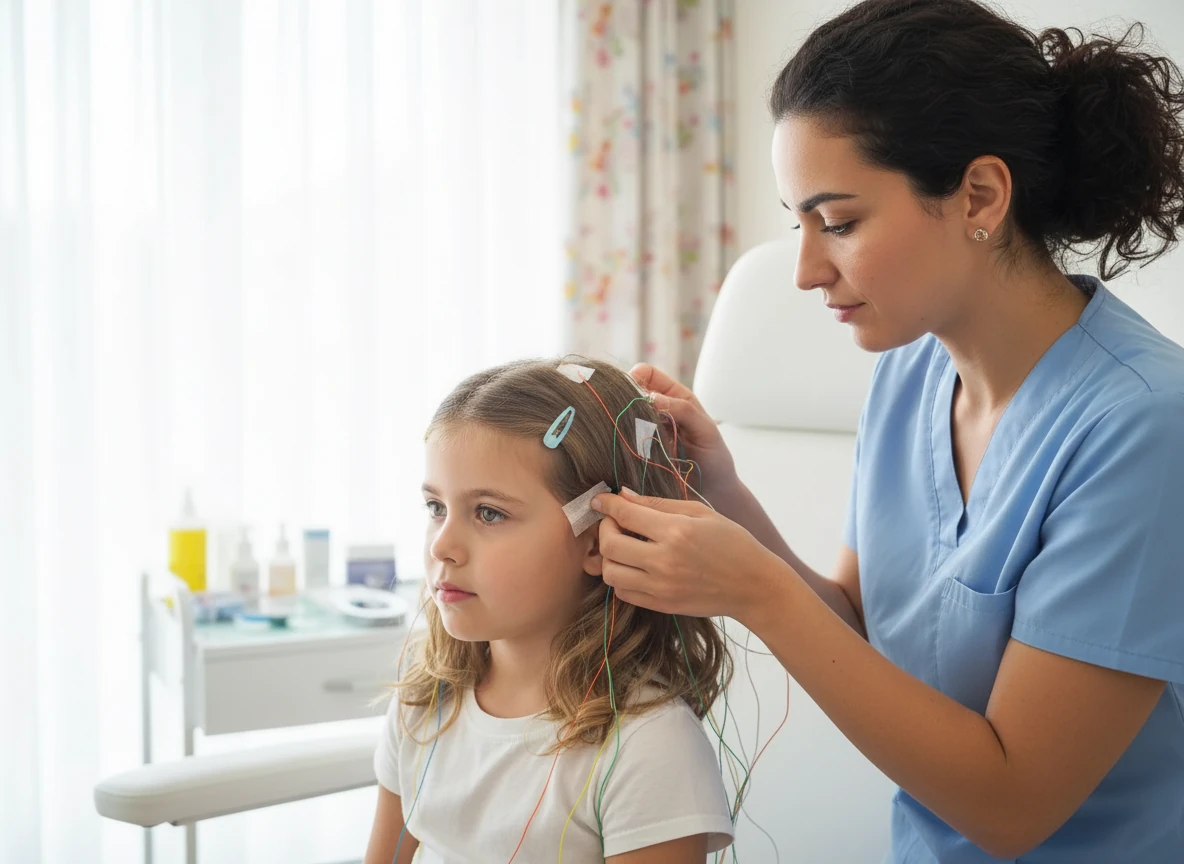
Epilepsy affects approximately 50 million people worldwide, making it one of the most common neurological disorders1. While many individuals achieve good seizure control with treatment, about 30% develop drug-resistant epilepsy, which poses significant management challenges2. Understanding the types, symptoms, causes, diagnosis, and treatment options is essential for effective care and improved quality of life1.
Epilepsy Types
Epilepsy is classified based on where seizures begin in the brain and the level of awareness during the event. The International League Against Epilepsy (ILAE) updated its classification in 2017 to emphasize seizure onset location and awareness level, which aids diagnosis and treatment planning3.
Focal Onset
Focal onset seizures start in a specific area or network of cells in one hemisphere of the brain1. These seizures are further categorized by the individual’s awareness during the event:
- Focal aware seizures: The person remains conscious and aware throughout the seizure. Symptoms may include sensory changes like unusual tastes, smells, or sounds, emotional shifts, or localized muscle jerking14.
- Focal impaired awareness seizures: Consciousness is altered or lost during the seizure. These may involve automatisms such as lip-smacking, blinking, or repetitive hand movements14.
Focal seizures produce symptoms related to the brain region involved and can manifest as motor signs (jerking or twitching) or non-motor symptoms (sensory hallucinations, emotional changes)14.
Generalized Onset
Generalized onset seizures involve both hemispheres of the brain simultaneously from the start1. They include several types:
- Absence seizures: Brief lapses in awareness, often with staring and subtle movements like eye blinking or lip-smacking. These are common in children and last only seconds14.
- Tonic seizures: Sudden muscle stiffening, often causing falls14.
- Atonic seizures: Sudden loss of muscle tone, leading to collapse or head drop14.
- Clonic seizures: Repetitive jerking movements affecting both sides of the body14.
- Myoclonic seizures: Brief, shock-like muscle jerks or twitches14.
- Tonic-clonic seizures: A combination of stiffening and rhythmic jerking, often with loss of consciousness, tongue biting, and loss of bladder or bowel control14.
Unknown Onset
When the beginning of a seizure is not observed or cannot be determined, it is classified as an unknown onset seizure1. This often occurs with nocturnal seizures or when the event is unwitnessed. As more information becomes available, unknown onset seizures may be reclassified as focal or generalized13.
Epilepsy Symptoms and Signs
Seizure symptoms vary widely depending on the seizure type and the brain region involved. Many people with epilepsy experience the same type of seizure repeatedly, but some may have multiple seizure types14.
Prodromal
Some individuals experience prodromal symptoms hours to days before a seizure. These can include mood changes, headaches, or sensory disturbances, although the exact prevalence varies54.
Symptoms of focal seizures depend on the brain area affected:
- Sensory hallucinations such as olfactory (smell) or gustatory (taste) sensations may occur as an aura14.
- Motor symptoms include jerking or twitching localized to one body part14.
- Automatisms like lip-smacking, chewing, or repetitive hand movements are common in focal impaired awareness seizures14.
- Emotional or autonomic symptoms such as fear, anxiety, or changes in heart rate may also be present14.
Generalized seizures affect awareness and muscle control broadly:
- Absence seizures cause brief staring spells with minor motor activity14.
- Tonic seizures cause sudden muscle stiffening, often leading to falls14.
- Atonic seizures result in sudden loss of muscle tone14.
- Clonic and myoclonic seizures involve rhythmic jerking or brief twitches14.
- Tonic-clonic seizures combine stiffening and jerking with loss of consciousness and may include tongue biting and incontinence14.
Epilepsy Causes and Risk Factors
Epilepsy arises from abnormal electrical activity in the brain, often due to an imbalance between excitatory and inhibitory neurotransmitters such as glutamate and GABA61. The causes of epilepsy are diverse and sometimes unknown.
Risk Factors
- Genetic factors: Genetic epilepsies account for 70–80% of cases and often present with mixed seizure types78.
- Structural brain abnormalities: Tumors, strokes, trauma, or developmental brain malformations can cause epilepsy in 20–30% of cases18.
- Neuroinflammation and autoimmune responses: Infections and immune-mediated neuronal injury contribute to epileptogenesis910.
- Metabolic disorders: Certain metabolic conditions can disrupt normal brain function and lead to seizures1.
- Other factors: Brain infections, prenatal injuries, and vascular diseases increase epilepsy risk18.
Epilepsy Diagnosis Process
Diagnosing epilepsy involves a detailed clinical history, neurological examination, and supportive investigations104. A diagnosis is typically made after two or more unprovoked seizures occurring at least 24 hours apart1.
Key diagnostic tools include:
- Electroencephalogram (EEG): Records electrical brain activity to identify abnormal patterns associated with seizures104.
- Neuroimaging: CT or MRI scans detect structural brain abnormalities such as tumors or lesions104.
- Laboratory tests: mcv blood test results meaning and normal range tests help exclude metabolic or infectious causes and assess seizure triggers like electrolyte imbalances or hyperglycemia104.
- Genetic testing: Useful in some cases, especially in children or when a hereditary epilepsy syndrome is suspected1112.
Differential diagnosis is important to exclude other causes of seizure-like events, such as syncope or psychogenic non-epileptic seizures104.
Epilepsy Treatment Options
Treatment aims to control seizures, reduce side effects, and improve quality of life. About 70% of people with epilepsy achieve seizure freedom with appropriate therapy12.
Focal Onset Medications
First-line treatment for focal seizures often includes sodium channel blockers such as carbamazepine113. Other antiseizure medications may be used depending on patient response and side effect profiles113.
Generalized Onset Medications
Treatment varies by seizure subtype:
- Valproate and levetiracetam are commonly used for generalized seizures113.
- Valproate is effective for generalized tonic-clonic and myoclonic seizures113.
- Myoclonic seizures may also respond to zonisamide113.
Medication choice considers seizure type, patient age, comorbidities, and potential side effects113.
Surgery
Surgical treatment is an option for drug-resistant epilepsy, defined as failure of two adequate antiseizure medication trials1415. Surgery aims to remove or disconnect the seizure onset zone identified through detailed evaluation1611. It is most effective in focal epilepsy where a clear seizure focus is found1611.
Brain Stimulation
Neurostimulation techniques, such as deep brain stimulation of the anterior thalamic nucleus, provide an alternative for patients not eligible for surgery or with persistent seizures217. These devices modulate brain activity to reduce seizure frequency over time217.
Ketogenic Diet
The ketogenic diet, high in fat and low in carbohydrates, is used mainly in children with refractory epilepsy1814. It alters brain metabolism by increasing ketone bodies, which may stabilize neuronal activity and reduce seizures1814.
Epilepsy Prevention Strategies
Prevention of epilepsy is limited due to many cases having unknown causes81. However, risk reduction focuses on:
- Managing infections through vaccination to prevent meningitis and other brain infections18.
- Controlling vascular risk factors such as hypertension and hyperlipidemia to reduce stroke-related epilepsy18.
- Preventing traumatic brain injury by using helmets, seat belts, and safety measures18.
- Maintaining proper hygiene and food safety to avoid parasitic infections like neurocysticercosis18.
Conditions Related to Epilepsy
Epilepsy is often accompanied by comorbidities that affect patient well-being:
- Cognitive and psychiatric disorders, including depression and anxiety, affect 30–40% of patients119.
- Social stigma and discrimination, especially in children, can lead to isolation and mental health issues2010.
- Sudden unexpected death in epilepsy (SUDEP) is a serious but poorly understood risk, accounting for 7.5–17% of epilepsy-related deaths2110.
Living With Epilepsy Management
Many people with epilepsy lead active lives with proper management. Key aspects include:
- Adhering strictly to prescribed medications to prevent seizure recurrence2223.
- Keeping a detailed seizure diary to monitor frequency, triggers, and medication effects11.
- Avoiding seizure triggers such as sleep deprivation, stress, and alcohol12.
- Understanding driving restrictions and safety precautions24.
- Seeking psychological and social support to address stigma and mental health challenges2010.
Abrupt cessation of antiseizure drugs can provoke seizures and should be avoided without medical supervision2223.