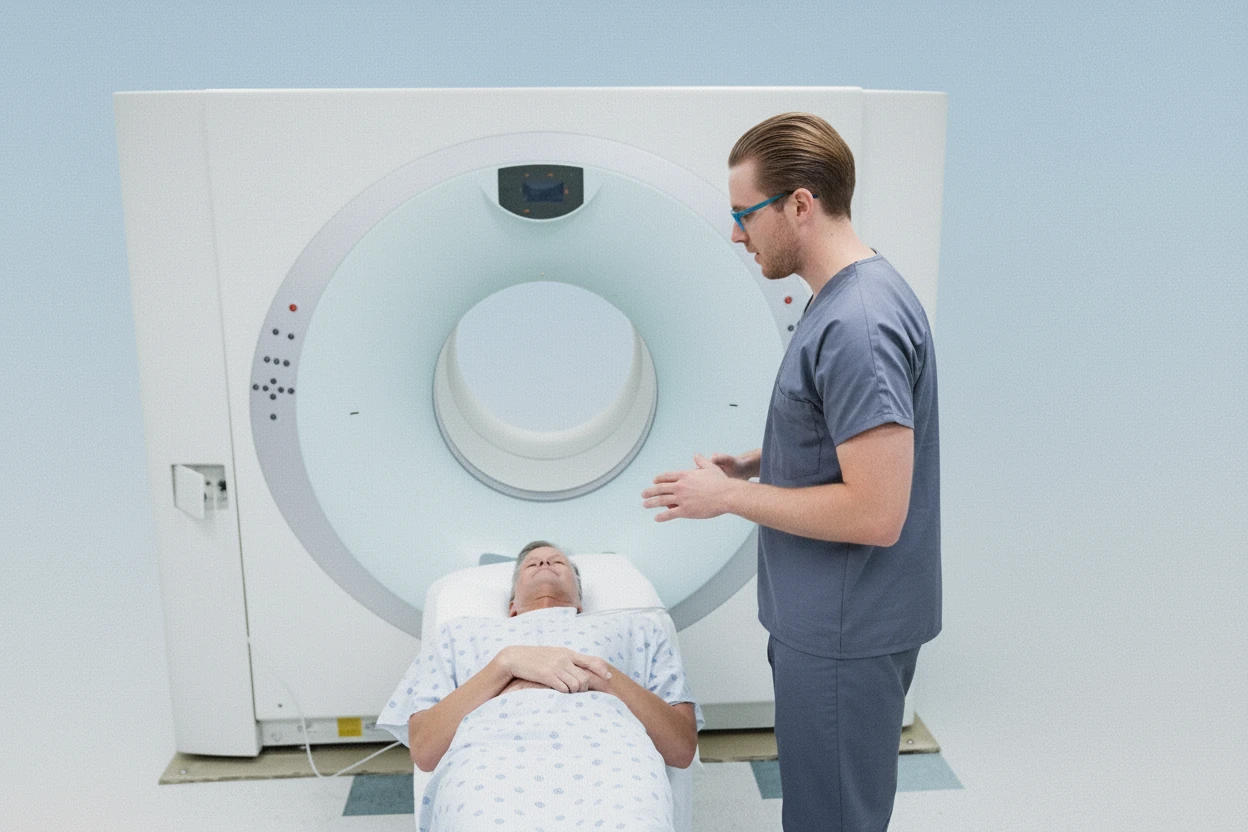
Epilepsy affects millions worldwide and requires careful diagnosis to ensure effective treatment and management1. Diagnosing epilepsy involves gathering detailed information about seizure events and using specialized tests to identify the type and cause of seizures1. Accurate diagnosis is essential to distinguish epilepsy from other conditions and to guide appropriate therapy1.
Patient Medical History and Symptoms
A thorough medical history is the foundation of epilepsy diagnosis1. Since seizures are often unpredictable and may not be witnessed by healthcare providers, detailed accounts from patients and eyewitnesses are critical2. Patients may have impaired recall of seizure events, so information from family members or observers helps clarify the nature of the episodes12.
Key aspects of the medical history include:
- Description of seizure events, including symptoms, duration, and frequency12
- Any warning signs or auras preceding seizures2
- Circumstances before, during, and after seizures, such as activity, time of day, and triggers123
- Past medical history, including prior illnesses, head injuries, infections like meningitis or encephalitis, and medication use123
- Family history of epilepsy or related neurological conditions12
- Observations of abnormal movements, loss of consciousness, bladder or bowel control loss, tongue biting, or confusion after seizures23
Keeping a seizure diary or video recordings of events can assist healthcare providers in making an accurate diagnosis24.
Epilepsy Classification Criteria
Epilepsy diagnosis includes classifying the seizure type, epilepsy type, and epilepsy syndrome, which helps tailor treatment and prognosis156.
Seizure Type
Seizures are classified based on where they begin in the brain56:
- Generalized seizures: Involve both cerebral hemispheres from the onset56
- Focal seizures: Originate in a specific brain region and may spread56
- Unknown onset seizures: When the starting point cannot be determined56
Accurate classification relies on clinical history and diagnostic tests such as EEG15.
Epilepsy Type
Epilepsy types are categorized according to seizure onset and other clinical features56:
- Focal epilepsy: Seizures arise from one area of the brain56
- Generalized epilepsy: Seizures involve both hemispheres simultaneously56
- Combined generalized and focal epilepsy: Both types occur in the same patient56
- Unknown epilepsy: When the type cannot be clearly identified56
Epilepsy Syndrome
An epilepsy syndrome is a cluster of features including seizure types, EEG patterns, age of onset, and other clinical characteristics1. Identifying a syndrome can guide prognosis and treatment decisions1.
Blood Tests for Epilepsy Diagnosis
Blood tests are routinely performed to identify metabolic or systemic conditions that may provoke seizures or contribute to epilepsy1.
Common blood tests include:
- Complete blood count (CBC) to detect anemia or infection1
- Blood chemistry panels to assess metabolic disturbances such as electrolyte imbalances, hypoglycemia, or hyperglycemia1
- Tests for underlying conditions like diabetes or liver and kidney function1
Genetic Testing
Genetic testing can identify inherited mutations or de novo variants associated with epilepsy syndromes1. This is especially useful in children or adults with unexplained epilepsy or suspected genetic causes17.
Brain Imaging and EEG Tests
Diagnostic imaging and electroencephalography (EEG) are essential tools for confirming epilepsy and localizing seizure origins156.
Neurological Exam
A neurological examination assesses brain function, including cognition, strength, sensation, reflexes, coordination, and mental status18. It helps detect focal neurological deficits or cognitive impairment that may suggest structural brain abnormalities or guide further testing18.
Magnetoencephalography (MEG)
MEG records magnetic fields generated by brain activity, offering high-resolution mapping of epileptogenic zones18. It is valuable for localizing seizure foci and delineating boundaries of affected brain areas, often complementing EEG and MRI findings18.
Computed Tomography (CT)
CT scans provide structural images of the brain and are useful for detecting lesions such as tumors, vascular malformations, or acute injuries18. CT is often used in emergency settings or when MRI is contraindicated18.
Magnetic Resonance Imaging (MRI)
MRI is the gold standard for detailed brain imaging in epilepsy diagnosis18. It visualizes brain anatomy and can detect subtle structural abnormalities like hippocampal sclerosis or cortical malformations18. However, a normal MRI does not exclude epilepsy, especially in genetic or idiopathic cases1.
Single-Photon Emission Computed Tomography (SPECT)
SPECT imaging measures cerebral blood flow during and between seizures18. Ictal SPECT (during a seizure) can highlight areas of increased blood flow corresponding to seizure onset zones, aiding surgical planning when EEG and MRI are inconclusive18.
Wada Test
The Wada test is used pre-surgically to assess language and memory functions in each hemisphere8. It helps predict the impact of epilepsy surgery on cognitive abilities and guides surgical planning to preserve critical brain areas8.
Positron Emission Tomography (PET)
PET scans evaluate brain metabolism by detecting glucose uptake8. Areas of hypometabolism often correspond to epileptogenic regions, providing additional localization information, especially in focal epilepsy8.
“Epilepsy is a syndrome diagnosis. It's a symptom that describes brainwave abnormalities. There are underlying causes that need to be evaluated. MRI of the brain is used to look for structural abnormalities, and EEG is used to examine brainwave activity characteristics so the physician can categorize the type or types of seizures the patient has.”
— Lily Wong-Kisiel, M.D., Mayo Clinic7
Evaluating Related Health Conditions
Epilepsy diagnosis involves distinguishing unprovoked seizures from provoked or acute symptomatic seizures caused by other medical conditions1.
“Routine EEG involves monitoring electrical signals in the brain with electrodes attached to the scalp, usually performed in a specialized outpatient clinic. These studies are interpreted by a trained neurologist. Clinicians can detect abnormal electrical activity in the brain and determine the type or types of seizures a patient is experiencing, as well as their origin, by measuring brain waves over minutes to a couple of hours.”
— Staff Neurologists, Johns Hopkins Medicine9
First Seizures
A single seizure does not necessarily mean epilepsy1. Diagnosis requires at least two unprovoked seizures more than 24 hours apart or a high risk (≥60%) of recurrence after one seizure510. Early diagnosis guides treatment to prevent further seizures and complications1.
Febrile Seizures
Febrile seizures occur in children with fever and are usually benign2. They are distinct from epilepsy but may warrant evaluation if seizures persist or have atypical features2.
Non-Epileptic Events
Some conditions mimic seizures, such as syncope, psychogenic non-epileptic seizures, or movement disorders12. Accurate diagnosis prevents unnecessary treatment and directs appropriate care1.
Status Epilepticus
Status epilepticus is a medical emergency characterized by prolonged or repeated seizures without recovery between them11. Prompt recognition and treatment are critical to reduce morbidity and mortality11.
Sudden Unexpected Death in Epilepsy (SUDEP)
SUDEP is a rare but serious risk in epilepsy, involving sudden death without a clear cause1. Accurate diagnosis and seizure control are essential to reduce this risk1.
Epilepsy Diagnosis Summary
Diagnosing epilepsy is a complex process that integrates detailed patient history, clinical examination, and a range of diagnostic tests1. The International League Against Epilepsy (ILAE) provides standardized criteria and classification systems that guide diagnosis and treatment56. Key steps include:
- Comprehensive history-taking with eyewitness accounts to characterize seizures12
- Neurological examination to identify deficits and guide testing18
- EEG to detect abnormal brain electrical activity and classify seizure type19
- Brain imaging (MRI, CT, SPECT, PET) to identify structural or functional abnormalities18
- Blood tests and genetic testing to uncover metabolic or inherited causes17
- Differentiation of epilepsy from provoked seizures and seizure mimics for appropriate management1
Early and accurate diagnosis improves treatment outcomes, reduces complications, and enhances quality of life for people with epilepsy15.