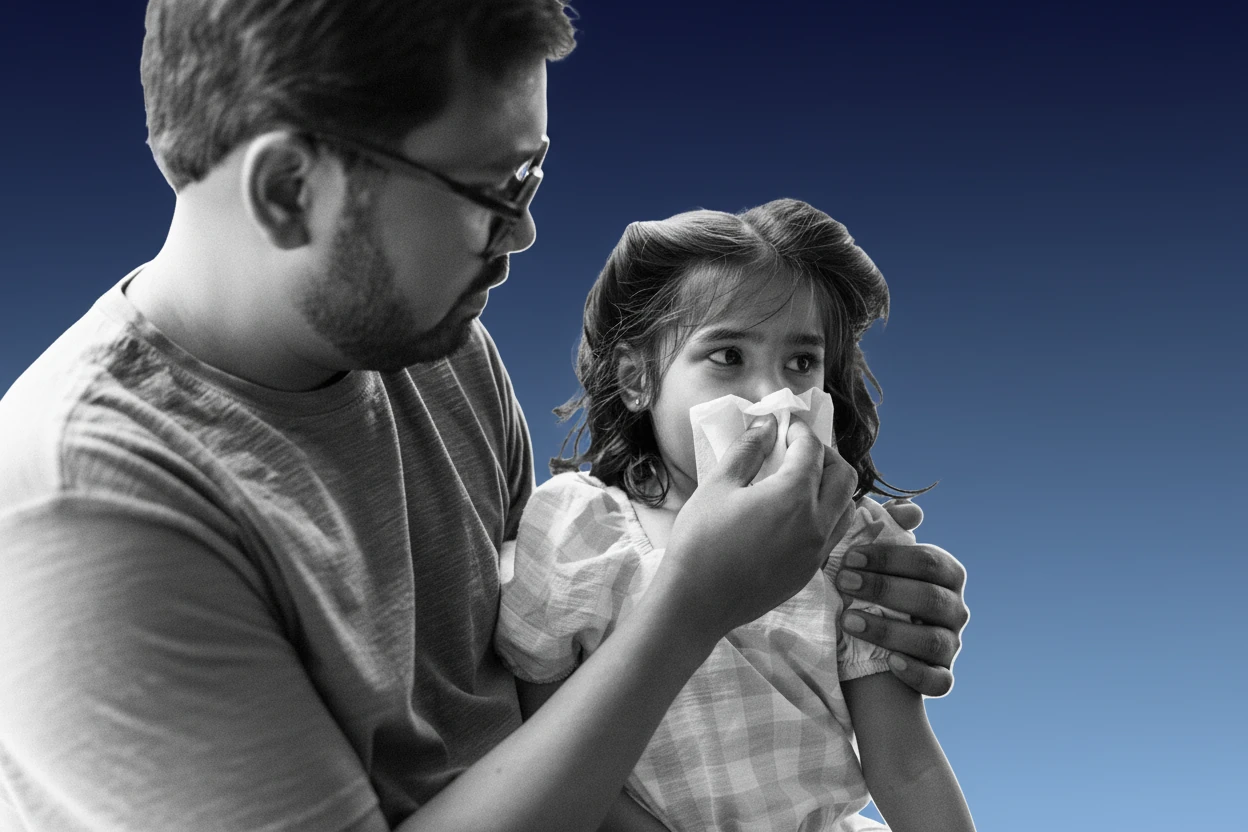
The common cold is one of the most widespread infectious diseases affecting people worldwide, with adults typically experiencing two to three colds annually and children even more frequently1. Over 200 different viruses can cause cold symptoms, but rhinoviruses and coronaviruses are the leading culprits1. Understanding the different viral types that cause colds helps in recognizing symptoms, managing illness, and preventing spread2.
Rhinovirus Infections
Rhinoviruses are the most common cause of upper respiratory infections (URIs) in both children and adults, responsible for about 50% of adult colds34. There are more than 100 distinct rhinovirus serotypes, which contributes to their widespread prevalence and frequent reinfections3. Rhinovirus infections peak seasonally in early fall and late spring, coinciding with increased transmission in crowded places such as schools and offices51. The virus mainly spreads through hand-to-hand contact, followed by touching the face, nose, or eyes6.
Rhinovirus causes an upper respiratory syndrome characterized by nasal congestion and runny nose (rhinorrhea), often accompanied by sore throat, sneezing, and cough3. Fever is uncommon in adults but may occur in children3. Most symptoms last 1 to 2 weeks, with improvement typically seen after the first week7. While complications are rare, they can include ear infections (otitis media), sinusitis, and exacerbations of asthma or chronic obstructive pulmonary disease (COPD), especially in high-risk groups8.
Symptoms
- Runny or stuffy nose1
- Sneezing3
- Mild sore throat1
- Cough1
- Mild fever, more common in children than adults3
Common Cold Coronaviruses
Coronaviruses cause approximately 10–15% of common colds3. The four common cold coronaviruses—229E, OC43, NL63, and HKU1—are distinct from the novel SARS-CoV-2 virus responsible for COVID-199. These viruses typically cause mild upper respiratory symptoms and are self-limited in healthy individuals3. Coronavirus infections tend to peak during winter and spring seasons5.
Compared to rhinoviruses, coronaviruses are generally associated with more severe symptoms but still cause an upper respiratory syndrome marked by nasal obstruction, rhinorrhea, sore throat, sneezing, and cough310. In elderly or immunocompromised individuals, coronavirus infections can lead to severe lower respiratory tract disease3. Diagnostic testing is not usually necessary for common cold coronaviruses, as symptoms overlap with other cold viruses and most cases resolve without intervention7.
- Mild cough1
- Runny nose3
- Sneezing3
- Sore throat3
- Occasional low-grade fever1
- Less commonly, gastrointestinal symptoms such as stomach upset1
Enterovirus Symptoms
Enteroviruses account for 5% to 15% of viral respiratory infections4. They belong to the picornavirus family, which also includes rhinoviruses. While rhinoviruses are the primary cause of common colds, enteroviruses can occasionally cause upper respiratory symptoms4. Enteroviruses comprise approximately 70 antigenic types and are more often linked to non-respiratory illnesses such as aseptic meningitis and hand, foot, and mouth disease (HFMD)411.
Enteroviruses can cause a range of symptoms from mild cold-like illness to more severe manifestations, especially in infants, children, and immunocompromised individuals1112. Respiratory symptoms include cough, runny nose, sore throat, and wheezing. Some enteroviruses, such as Enterovirus D68 and Enterovirus 71, can cause neurological complications like paralysis and encephalitis11.
- Nasal congestion and runny nose11
- Cough and sore throat11
- Mild fever and body aches11
- Wheezing or difficulty breathing in severe cases11
- Mouth sores or blisters (herpangina, hand-foot-and-mouth disease)11
- Rare neurological symptoms such as muscle weakness or paralysis11
💡 Did You Know? Enteroviruses can cause both respiratory and gastrointestinal symptoms, and persistent infections may lead to fatigue, muscle pain, and cognitive issues11.
Human Parainfluenza Virus
Human parainfluenza viruses (HPIV) are important causes of respiratory infections, especially in children under 5 years, the elderly, and immunocompromised adults1. There are four types of HPIV, with types 1 and 2 peaking in autumn and type 3 peaking in late spring and early summer51. Type 4 circulates year-round but is less commonly detected1.
HPIV infections can cause both upper and lower respiratory tract illnesses. Types 1 and 2 are commonly associated with croup (laryngotracheobronchitis), which causes swelling around the vocal cords leading to a barking cough and breathing difficulties in young children1. Type 3 is more often linked to bronchiolitis and pneumonia-symptoms-recognizing-the-signspneumonia, particularly in infants1.
- Fever1
- Sore throat1
- Runny or stuffy nose1
- Barking cough or croup symptoms (hoarseness, difficulty breathing)1
- Wheezing or chest discomfort in lower respiratory infections1
Adenovirus Complications
Adenoviruses cause respiratory infections that can last longer than those caused by rhinoviruses, sometimes persisting for weeks or months1. They tend to produce epidemics during winter and spring but can occur year-round51. Adenovirus spreads easily in crowded settings such as daycares, hospitals, military barracks, and schools1.
Besides causing cold symptoms, adenoviruses are known to cause a variety of clinical syndromes, including conjunctivitis (pink eye), gastroenteritis, cystitis (bladder infection), bronchitis, and pneumonia, especially in immunocompromised individuals1. Respiratory symptoms may be more severe and prolonged compared to other cold viruses1.
- Cough1
- Fever1
- Runny nose1
- Sore throat1
- Conjunctivitis (eye redness and irritation)1
Human Metapneumovirus (HMPV)
Human metapneumovirus (HMPV) is a leading cause of respiratory tract infections in young children, with most infections occurring by age 51. The virus circulates predominantly in late winter and early spring1. While healthy adults typically experience mild symptoms, infants under 6 months, the elderly, and immunocompromised individuals are at higher risk for severe disease, including bronchiolitis and pneumonia1.
HMPV infection symptoms overlap with other respiratory viruses but can include wheezing and difficulty breathing in severe cases1. Hospitalization rates are higher in infants under 6 months compared to older children1.
- Cough1
- Fever1
- Runny nose1
- Sore throat1
- Wheezing or difficulty breathing in severe cases1
Identifying Your Cold Type
Determining the exact virus causing a cold is challenging due to overlapping symptoms among different viruses7. However, certain patterns can provide clues. For example, a barking cough often indicates croup caused by parainfluenza virus, while a cold accompanied by conjunctivitis (pink eye) suggests adenovirus infection1. Testing for specific viruses is generally reserved for severe or complicated cases, as most colds are self-limited and do not require viral identification7.
When to Seek Medical Care
💡 Did You Know? Most adults get 2–3 colds per year, while children experience colds more frequently, especially in school settings where viruses spread easily1.
Most common colds resolve within 1 to 2 weeks without complications7. Over-the-counter medications can relieve symptoms but do not cure the illness13. It is advisable to see a healthcare provider if symptoms worsen or persist beyond 10 days, or if any of the following occur:
- High fever lasting more than four days1
- Worsening cough or difficulty breathing1
- Signs of dehydration such as dry skin or reduced urine output1
- Exacerbation of chronic respiratory conditions like asthma or COPD8
- Severe symptoms in infants, elderly, or immunocompromised individuals1
Early medical attention is important for those at higher risk to prevent complications such as pneumonia or secondary bacterial infections1.
Cold Prevention Strategies
There is no vaccine for the common cold, so prevention focuses on reducing transmission7. Key strategies include:
- Frequent handwashing with soap and water for at least 20 seconds1
- Avoiding close contact with people who are sick1
- Covering coughs and sneezes with a tissue or elbow1
- Cleaning and disinfecting frequently touched surfaces1
- Staying home when ill to prevent spreading the virus1
Supplements such as vitamin C, zinc, echinacea, and elderberry have limited and inconsistent evidence for cold prevention or treatment7. Decongestants and antipyretics may relieve symptoms but do not shorten illness duration713.
Key Takeaways
- Rhinoviruses cause up to 50% of common colds and peak in early fall and late spring35.
- Common cold coronaviruses cause 10–15% of colds, mostly in winter and spring, and can be more severe in vulnerable populations35.
- Enteroviruses cause 5–15% of viral respiratory infections and may cause more severe symptoms including neurological complications411.
- Human parainfluenza viruses cause respiratory illnesses with seasonal peaks and can lead to croup and pneumonia in children51.
- Adenoviruses cause prolonged respiratory symptoms and can lead to outbreaks in crowded settings with additional complications like conjunctivitis51.
- Human metapneumovirus primarily affects young children and can cause severe lower respiratory infections in high-risk groups1.