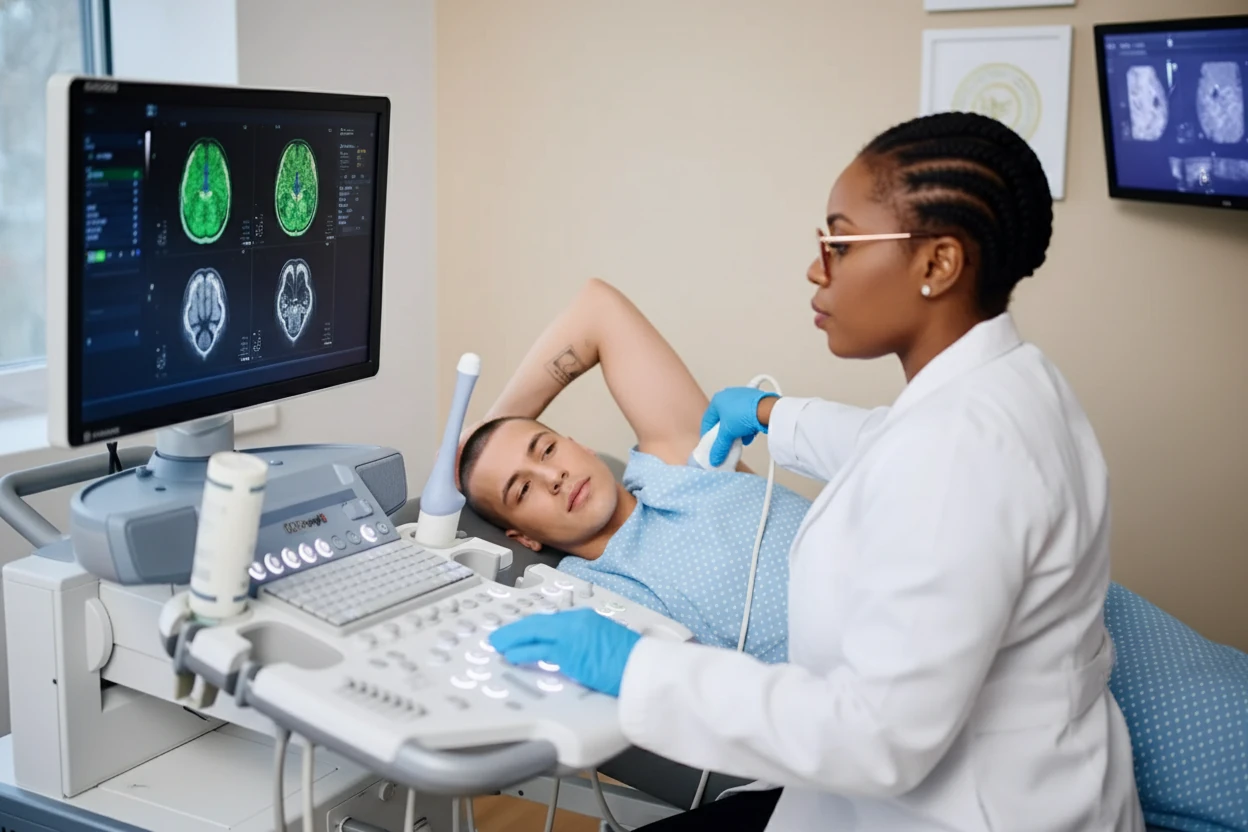
Breast cancer is the most commonly diagnosed cancer deaths in women worldwide, with millions of new cases each year1. It arises from abnormal growth of breast cells, which can invade surrounding tissues and spread to other parts of the body2. Understanding the causes and risk factors of breast cancer is essential for prevention, early detection, and effective treatment2.
Understanding Breast Cancer Causes
Breast cancer develops when cells in the breast tissue undergo mutations that cause them to grow and multiply uncontrollably3. These mutations can affect the DNA inside the cells, but the exact triggers for these changes are often unclear2. Most breast cancers start in the milk ducts, known as ductal carcinoma, while some originate in the lobules, the glands that produce milk, called lobular carcinoma2.
Genetic mutations play a key role in breast cancer development. Tumor suppressor genes such as BRCA1 and BRCA2 normally regulate cell growth and prevent tumors, but mutations in these genes impair their function, increasing the risk of breast and ovarian cancers24. About 5-10% of breast cancers are hereditary and linked to inherited gene mutations, especially BRCA1 and BRCA2526. These mutations are present in approximately 0.2% of women in the general population2.
Besides genetics, breast cancer risk is influenced by a combination of hormonal, environmental, and lifestyle factors2. Prolonged exposure to estrogen, reproductive history, obesity, alcohol consumption, and physical inactivity are established contributors to breast cancer risk542. Environmental exposures, such as air pollution and radiation, are also under investigation for their roles in breast cancer development78.
Breast cancer starts when something changes the DNA inside cells in the breast tissue. Factors that may increase the risk include genes, hormones, lifestyle, and environment. Most breast cancers occur in women over 50, but some women develop breast cancer without any known risk factors.29
Key Breast Cancer Risk Factors
Breast cancer risk factors can be divided into non-modifiable and modifiable categories. Having risk factors increases the probability of developing breast cancer but does not guarantee it210. Understanding these factors helps guide prevention and screening strategies.
Age is the most significant risk factor for breast cancer. The incidence increases with age, especially after 50 years, and most breast cancers are diagnosed in women aged 50 or older210. The risk doubles approximately every 10 years until menopause2. For men, breast cancer is rare, and age is also the primary risk factor, with the median diagnosis age around 70-71 years2.
Being female is the main risk factor for breast cancer. Women have a lifetime risk of about 12-13%, whereas male breast cancer is rare, with a lifetime risk of approximately 0.1-0.13%210. Although men have breast tissue and can develop breast cancer, it is much less common and less well understood2.
A personal history of breast cancer significantly increases the risk of developing cancer again, either in the same or the other breast211. Women with certain benign breast conditions, such as atypical hyperplasia or lobular carcinoma in situ, also have a higher risk211.
Family history is a strong risk factor. Having a first-degree relative (mother, sister, or daughter) with breast or ovarian cancer nearly doubles a woman’s risk21112. The risk increases with the number of affected relatives. Inherited mutations in genes like BRCA1 and BRCA2 further elevate risk, with carriers having up to a 70% chance of developing breast cancer by age 802116.
Genetic counseling and testing are recommended for individuals with a family history or other risk factors to identify inherited mutations and guide risk management2.
Alcohol intake increases breast cancer risk in a dose-dependent manner. The more alcohol a woman drinks, the higher her risk, particularly for hormone receptor-positive breast cancer298. Even moderate consumption can raise risk, making alcohol a modifiable factor to consider in prevention8.
Exposure to radiation, especially to the chest area before age 30, increases breast cancer risk later in life2118. Women who received radiation therapy for other cancers or conditions during childhood or young adulthood are at higher risk211. Environmental sources of radiation and air pollution are also being studied for their potential impact on breast cancer risk7.
“Your risk for breast cancer is due to a combination of factors. The main factors that influence risk include being a woman and getting older.10”
Early onset of menstruation (before age 12) is associated with a slightly increased risk of breast cancer211. This is likely due to longer lifetime exposure to estrogen and other hormones that influence breast cell growth2.
Late menopause (after age 55) also raises breast cancer risk by extending the duration of hormone exposure211. Women who experience menopause later have a longer period during which breast tissue is exposed to estrogen, increasing the chance of mutations2.
Having the first full-term pregnancy after age 30 is linked to a higher breast cancer risk compared to earlier childbirth29. Women who never have a full-term pregnancy or do not breastfeed also face increased risk298. Pregnancy and breastfeeding can reduce lifetime exposure to hormones, providing some protective effect2.
Pregnancy history affects breast cancer risk. Women who have never been pregnant or had their first pregnancy late tend to have higher risk29. Breastfeeding for more than one year has been shown to lower breast cancer risk, likely through hormonal and cellular changes in breast tissue28.
Hormone replacement therapy (HRT) during menopause, especially when used for more than five years, can increase breast cancer risk298. Certain oral contraceptives have also been linked to a slight increase in risk29. The risk varies depending on the type and duration of hormone use.
Overweight and obesity, particularly after menopause, elevate breast cancer risk2138. Excess body fat increases estrogen production, which can promote breast cancer development. Studies show that maintaining a healthy weight and physical activity can reduce risk138.
| Risk Factor | Effect on Breast Cancer Risk | Notes |
|---|---|---|
| Age | Risk increases with age, especially after 502 | Most cases diagnosed in women >50 years |
| Sex | Women have ~12-13% lifetime risk; men ~0.1%2 | Male breast cancer is rare |
| Family History & Genetics | First-degree relatives double risk; BRCA mutations increase risk up to 70%2116 | Genetic counseling recommended |
| Alcohol Consumption | Increases risk dose-dependently298 | Modifiable risk factor |
| Radiation Exposure | Chest radiation before age 30 raises risk211 | Includes therapeutic and environmental sources |
Summary and Key Takeaways
Breast cancer arises from complex interactions of genetic, hormonal, environmental, and lifestyle factors214. While some risk factors like age, sex, and genetics cannot be changed, many modifiable factors such as alcohol use, body weight, physical activity, and hormone therapy can be managed to reduce risk108.
“While some risk factors can't be changed, others can be. Talk with your primary care provider (PCP) or gynecologist about your health history and lifestyle. Together, you can discuss options for breast cancer screening and steps you can take to help reduce your risk.”
— Amy Comander, Mass General Brigham Cancer Institute16
Screening plays a critical role in early detection. Guidelines recommend that women begin biennial mammography screening at age 40, with annual screening advised for women aged 45 to 54, and options to continue annual or switch to biennial screening after 551516.
Understanding personal risk factors and maintaining a healthy lifestyle are key strategies for breast cancer prevention. Regular breast self-exams and awareness of breast changes can help detect cancer early when treatment is most effective16.
- Breast cancer risk increases with age and is much higher in women than men210.
- Genetic mutations, especially BRCA1 and BRCA2, significantly elevate breast cancer risk26.
- Modifiable factors include alcohol consumption, obesity, physical inactivity, and hormone therapy use298.
- Early detection through mammography starting at age 40 is recommended for average-risk women1516.
- Maintaining a healthy lifestyle and discussing personal risk with healthcare providers can help reduce breast cancer risk1016.