Many women experience menopause as a natural phase of life, often accompanied by symptoms like hot flashes and mood changes. Understanding when menopause begins can be confusing, especially during the transitional phase called perimenopause, which may last several years1. While at-home menopause tests have become popular, experts caution that these tests may not provide clear or reliable answers about menopausal status2. Instead, clinical evaluation remains the cornerstone for diagnosis and management3.
How At-Home Menopause Tests Work
At-home menopause tests primarily measure hormone levels associated with ovarian function, most commonly follicle-stimulating hormone (FSH). FSH is produced by the pituitary gland and stimulates ovarian follicles to mature eggs during the menstrual cycle45. Normally, FSH levels fluctuate throughout the cycle, peaking in the follicular phase and declining after ovulation46.
During perimenopause and menopause, ovarian hormone production declines, leading to reduced estrogen feedback and a compensatory rise in FSH levels57. Persistently elevated FSH is considered a biomarker suggestive of menopausal transition57. Some at-home tests also measure luteinizing hormone (LH) and estradiol metabolites to provide a broader hormonal profile48.
These tests collect samples using various methods:
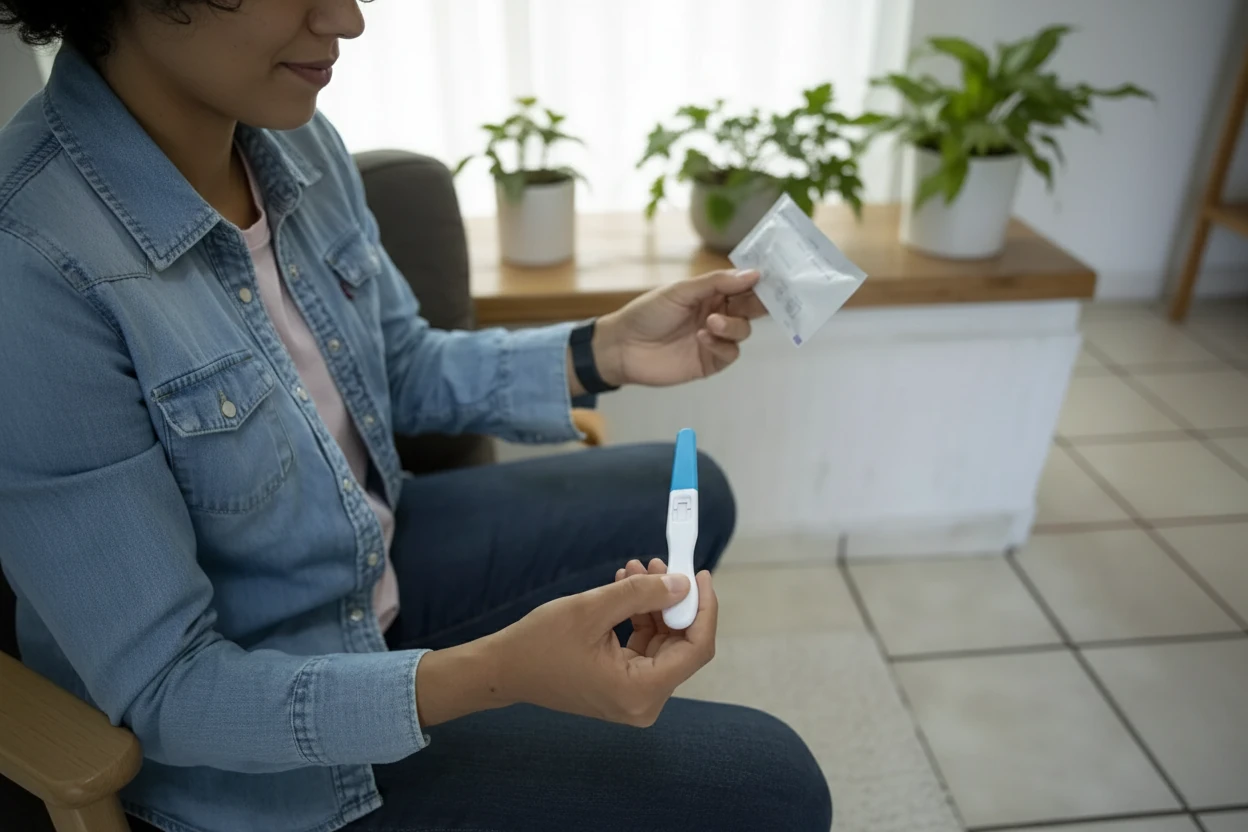
- Urine samples: Many kits, including popular brands, require urine collection, often first morning urine, over multiple days to capture hormone fluctuations9101.
- Saliva samples: Some tests use saliva, but experts note these may have poor accuracy98.
- Finger-prick blood samples: A few kits collect small blood samples at home, which are then sent to laboratories for analysis1112.
“If you’re concerned enough to consider getting an at-home kit, you should instead seek help from a clinician who can clarify what’s going on and help with your symptoms.”
— Jessica Chan, MD, Cedars-Sinai19
Apps linked to these tests help interpret hormone patterns by integrating personal data such as age and menstrual history, aiming to estimate menopausal stage910. Quantitative hormone monitors have shown good correlation with laboratory assays for urinary FSH and other hormones, supporting their technical validity13148.
Anti-Müllerian hormone (AMH) is an emerging marker reflecting ovarian reserve and menopause timing, but it is not yet routinely used in at-home testing or clinical diagnosis45.
| Sample Type | Hormones Measured | Accuracy Profile | Convenience |
|---|---|---|---|
| Urine | FSH, LH, estradiol metabolites | Good correlation with lab assays13148 | Easy, non-invasive910 |
| Saliva | FSH, estradiol | Poor accuracy1345 | Non-invasive but less reliable98 |
| Finger-prick blood | FSH, estradiol, progesterone | More reliable than urine or saliva1112 | Requires mailing samples11 |
Are At-Home Menopause Tests Worth It?
The clinical utility of at-home menopause tests is limited due to the inherent variability of hormone levels during perimenopause. FSH levels fluctuate daily and even hourly, making single or even serial hormone measurements unreliable for definitive diagnosis516. Many professional societies, including The North American Menopause Society, advise against relying on salivary or urine hormone tests because of poor accuracy134516.
“These tests may be convenient and easy to use, but the results can’t reliably tell you if you’re in menopause.”
— Sobia Khan, MD, Cleveland Clinic18
Even blood tests, considered more reliable, cannot definitively confirm menopausal transition because hormone levels vary widely day-to-day516. Clinical diagnosis is primarily based on age, menstrual patterns, and symptom assessment rather than hormone tests516.
Some clinicians view at-home tests as capitalizing on anxiety and uncertainty about menopause without offering practical benefits for patient care51617. Misleading or inconclusive results may cause psychological distress13.
However, hormone testing can be useful to exclude other causes of amenorrhea (absence of menstruation), such as premature ovarian insufficiency, especially in younger women who stop menstruating early516.
The cost of these tests varies widely, often ranging from $10 to nearly $200, and they may not be covered by insurance1. Considering their limited diagnostic value, many experts recommend saving money and consulting a healthcare provider instead.
- Pros:
- Convenient and private testing at home181
- May confirm elevated FSH levels, suggesting menopausal transition18
-
Can prompt women to seek medical advice181
-
Cons:
- Hormone levels fluctuate, limiting test reliability516
- Saliva and urine tests have poor accuracy1345
- Single hormone values can be misleading516
- May cause unnecessary anxiety or false reassurance1316
- Do not replace clinical evaluation or symptom assessment193
What to Do If You Suspect Perimenopause
Perimenopause is a transitional phase marked by fluctuating hormones and variable symptoms such as irregular periods, hot flashes, night sweats, sleep disturbances, and mood swings1620. Because hormone levels vary widely during this time, at-home hormone tests have limited diagnostic value516.
Clinical diagnosis relies heavily on:
- Age and menstrual cycle history516
- Symptom assessment and severity516
- Exclusion of other medical conditions that may mimic menopause symptoms, such as thyroid disorders or anemia221
If you suspect you are perimenopausal, the best approach is to consult a healthcare provider experienced in midlife women's health. Preparing for the visit by tracking symptoms and menstrual changes can improve communication and treatment planning131617.
Hormone testing may be ordered to rule out other causes, especially if menstruation ceases prematurely516. However, hormone levels alone cannot definitively stage menopause or perimenopause516.
Specialist care by certified menopause practitioners can improve management outcomes and provide personalized symptom relief1722.
- Monitor and document symptoms such as hot flashes, mood changes, and menstrual irregularities2023
- Seek evaluation from a gynecologist or menopause specialist1722
- Discuss treatment options for symptom relief, including lifestyle changes and hormone therapy if appropriate221
- Rule out other health conditions with appropriate blood tests (thyroid, anemia, vitamin deficiencies)221
- Use symptom tracking apps or journals to prepare for medical visits1316