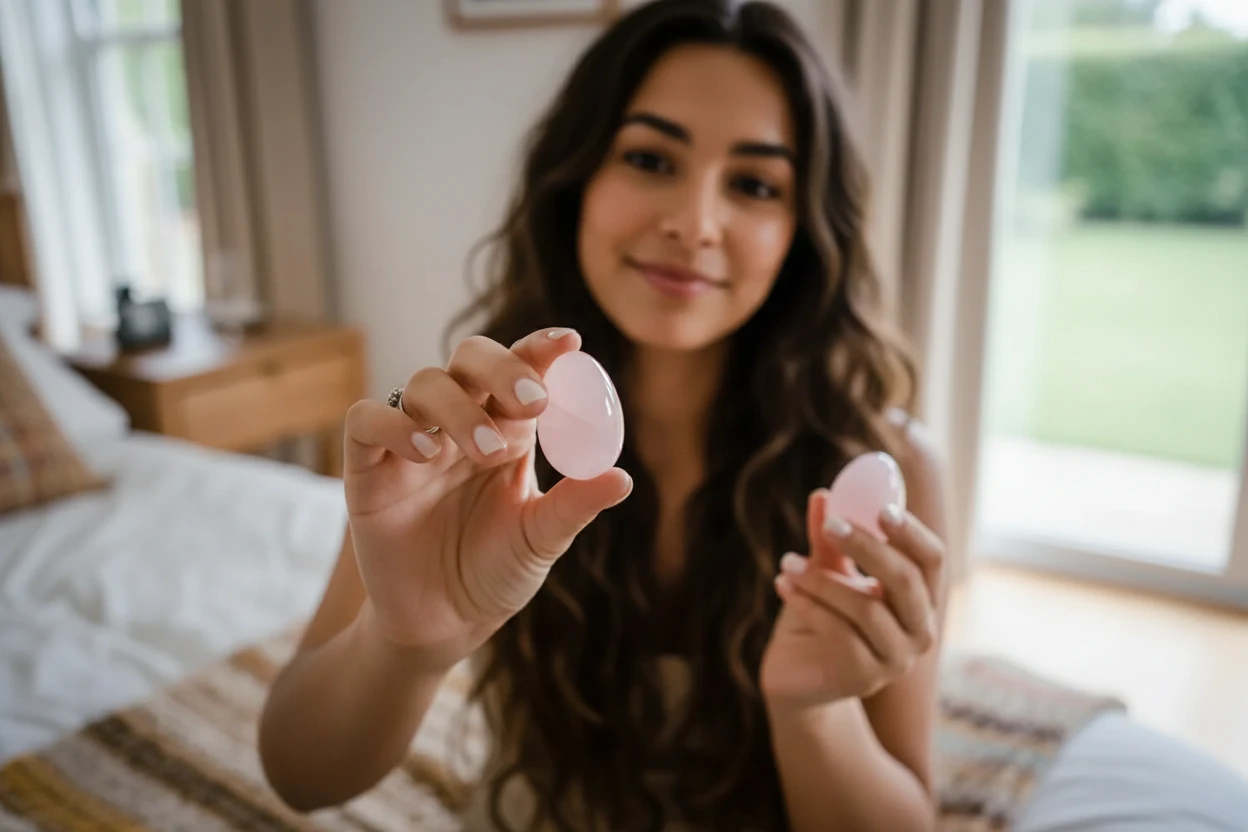
Yoni eggs are egg-shaped stones designed for vaginal insertion, often made from materials like jade, quartz, or obsidian1 . They are marketed with claims of balancing menstrual cycles, enhancing libido, easing cramps, and strengthening vaginal muscles, but none of these benefits are supported by scientific evidence1 . Despite their popularity, medical experts warn that using yoni eggs can pose significant health risks, including infections and pelvic muscle strain2 . This article explores the origins, purported benefits, safety concerns of yoni eggs, and safer alternatives for vaginal health3 .
Yoni eggs may seem like a natural way to improve vaginal health, but their porous nature makes them difficult to clean, increasing the risk of serious infections like toxic shock syndrome. Medical experts recommend evidence-based pelvic floor exercises instead. 25
Yoni Egg Overview
Yoni eggs are smooth, egg-shaped gemstones intended to be inserted into the vagina for varying durations, from a few minutes to overnight3 . The stones used include jade, quartz, and obsidian, which are often semi-porous materials1 . Proponents claim that yoni eggs can balance hormones, improve menstrual health, increase sexual pleasure, and strengthen vaginal muscles1 . However, there is no scientific data supporting these claims, and the vagina is naturally self-cleaning, requiring little intervention to maintain its health1 .
Using yoni eggs requires continuous contraction of the vaginal muscles to hold the egg in place, which differs from the recommended pelvic floor exercises that involve contracting and relaxing these muscles2 . Prolonged insertion may interfere with the vagina’s natural secretions and drainage, potentially leading to bacterial accumulation3 .
💡 Did You Know?
Yoni eggs are egg-shaped stones that go inside your vagina. Yoni eggs can be made of various kinds of stones, including jade, quartz and obsidian1 .
Yoni Egg Origins
Despite claims that yoni eggs have ancient Chinese origins and were used historically for sexual health or pelvic muscle training, there is no archeological or historical evidence supporting these assertions4 . Investigations into ancient Chinese practices have found no recommendation or use of vaginal jade eggs in sexual health or pelvic exercises4 . The modern popularity of yoni eggs appears to be a recent marketing phenomenon rather than a continuation of traditional medical practice.
“The stones are really porous, so it is unclear how they could be cleaned or sterilized between uses.”
— Jen Gunter, MD, San Francisco-based OB-GYN5
Purported Yoni Egg Benefits
Advocates of yoni eggs suggest a variety of health benefits, including:
- Balancing menstrual cycles and hormonal regulation1
- Reducing menstrual cramps and dysmenorrhea1
- Enhancing libido and orgasm intensity1
- Strengthening vaginal muscles to prevent urinary incontinence and pelvic organ prolapse3
- Improving urinary and digestive health through pelvic floor support1
However, these claims lack scientific validation. Medical experts emphasize that yoni eggs do not restore hormones, cure incontinence, or improve sexual function3 . The vagina’s self-cleaning ability and natural muscle function are best supported through evidence-based methods rather than unproven products1 .
Yoni Egg Safety Concerns
Medical professionals widely caution against the use of yoni eggs due to several safety risks:
- Risk of Infection: The semi-porous nature of stones like jade and quartz allows bacteria to lodge within the egg, making thorough cleaning and sterilization impossible5 . This can introduce harmful bacteria into the vagina, increasing the risk of bacterial vaginosis, fungal infections, and toxic shock syndrome (TSS) 67.
- Vaginal Irritation and Injury: Using yoni eggs can cause scratches, tears, or irritation in the vaginal lining due to the rough edges or chips that may develop on natural stones3 . These micro-injuries provide entry points for bacteria3 .
- Pelvic Floor Muscle Strain: Holding a yoni egg requires constant contraction of pelvic muscles, which differs from the recommended practice of contracting and relaxing muscles during pelvic floor exercises. Continuous contraction can lead to muscle spasms, pelvic pain, constipation, and discomfort during intercourse2 3.
- Interference with Vaginal Self-Cleaning: Prolonged insertion of a foreign object can block natural secretions, disrupting the vagina’s pH balance and microbiome, potentially resulting in infections3 8.
Most gynecologists advise against yoni egg use because of these risks and the lack of proven benefits9 .
“Putting a crystal egg inside your vagina does not have a positive impact on menstrual cycle regularity or PMS.”
— Suchetha Kshettry, MD, Cleveland Clinic1
- Bacterial and fungal infections including bacterial vaginosis and toxic shock syndrome6 7
- Vaginal irritation, scratches, or tears from rough or chipped stones3
- Pelvic floor muscle spasms and pain due to constant muscle contraction2 3
- Disruption of vaginal pH and microbiome balance8
- Difficulty sterilizing porous stones, leading to persistent bacterial contamination5
Safe Vaginal Health Alternatives
For those seeking to improve pelvic floor strength, sexual function, or menstrual health, there are safer, evidence-based alternatives:
- Kegel Exercises: These involve contracting and relaxing pelvic floor muscles to strengthen them effectively without causing muscle strain2 5. Kegels can improve urinary continence, pelvic organ support, and sexual satisfaction1 .
- Medically Designed Pelvic Trainers: Devices such as the Elvie Trainer are designed to provide biofeedback and guided pelvic floor muscle training, ensuring proper technique and safety1 .
- Genital Vibration Therapy: Reviewed as an effective treatment for sexual dysfunction, this therapy can enhance orgasmic function and improve sexual health1 .
- Medical Evaluation for Symptoms: For issues like severe menstrual cramps, pelvic organ prolapse, or low libido, consulting a healthcare provider is essential. They can diagnose underlying conditions such as ovarian cysts or fibroids and recommend treatments including hormonal birth control, medications, or stress reduction techniques1 .
- Maintaining Vaginal Health: The vagina is self-cleaning, so routine hygiene without invasive objects is sufficient to maintain balance1 .
- Consult a gynecologist or pelvic floor specialist for personalized assessment1
- Practice Kegel exercises regularly with proper guidance2
- Use medically approved pelvic floor devices if recommended1
- Explore genital vibration therapy for sexual dysfunction under professional advice1
- Address menstrual or pelvic pain with appropriate medical treatments1
“Using a jade egg is not going to restore your hormones, cure incontinence, make sex more pleasurable, or help heal someone’s trauma.”
— Lauren Streicher, MD, Northwestern University3
Key Takeaways
- Yoni eggs are smooth, egg-shaped stones marketed for vaginal insertion, but their health benefits are unproven and unsupported by scientific evidence1 2.
- There is no historical or archeological evidence supporting the use of yoni eggs in ancient Chinese culture or traditional medicine4 .
- Using yoni eggs poses significant risks including bacterial infections, toxic shock syndrome, vaginal injury, and pelvic muscle strain due to continuous contraction6 35.
- The vagina is self-cleaning, and prolonged insertion of foreign objects like yoni eggs can disrupt its natural balance and increase infection risk3 8.
- Safer alternatives for pelvic floor strengthening and sexual health include Kegel exercises, medically designed pelvic trainers, genital vibration therapy, and professional medical evaluation1 2.