The XBB.1.5 subvariant of covid-test-accuracy-for-eg5-and-ba286-variantscovid-test-accuracy-for-eg5-and-ba286-variants">COVID-19 has rapidly become the dominant strain in many regions, accounting for over 40% of cases in the United States alone1. This subvariant’s enhanced transmissibility and ability to evade immune defenses pose ongoing challenges for public health, despite widespread vaccination and prior infections2. Understanding its transmission dynamics, symptom profile, and management strategies is critical as the virus continues to evolve3.
Increased Transmissibility of XBB.1.5
XBB.1.5 is a recombinant subvariant of the Omicron BA.2 lineage, first identified in the United States in late 2022, with rapid spread especially in the Northeast region45. It is part of the XBB lineage, which arose through genetic recombination between two Omicron subvariants, BA.2.10.1 and BA.2.75, making XBB.1.5 a “fifth grandchild” of the original XBB variant6. This subvariant is considered the most transmissible Omicron subvariant known to date7.
The enhanced spread of XBB.1.5 is largely attributed to a key mutation in the spike protein, specifically the F486P mutation in the receptor-binding domain (RBD). This mutation improves the virus’s ability to bind to the ACE2 receptor on human cells, facilitating easier entry and infection48. Additionally, XBB.1.5 exhibits immune evasion properties, allowing it to partially escape neutralizing antibodies generated by previous infections or vaccinations910.
Epidemiological data confirm the rapid geographic expansion of XBB.1.5, which is poised to become a dominant global strain due to these biological advantages411. Wastewater-based genomic surveillance has been instrumental in tracking its spread, especially during periods of limited clinical testing, offering a cost-effective method to monitor outbreaks12.
Population immunity from vaccination and prior infections is expected to mitigate severe outcomes and reduce hospital surges during waves of XBB.1.5 infections23. However, hospitalization data may be confounded by incidental COVID-19 detections during unrelated admissions, complicating severity assessments73.
Key factors contributing to XBB.1.5’s increased transmissibility:
- Recombinant origin from two Omicron subvariants, enhancing genetic diversity64
- Spike protein F486P mutation improving ACE2 receptor binding48
- Immune evasion reducing neutralizing antibody effectiveness910
- Rapid geographic spread and dominance in multiple countries4116
- Detection in wastewater surveillance systems indicating widespread circulation12
“XBB.1.5 is arguably the most genetically rich and most transmissible SARS-CoV-2 Omicron subvariant yet.”
— Sameer Elsayed, Western University6
XBB.1.5 Symptoms and Severity
The clinical presentation of XBB.1.5 infection generally mirrors that of other Omicron subvariants, with predominantly mild, flu-like symptoms1314. Common symptoms include upper respiratory tract manifestations such as cough, congestion, sore throat, and fatigue. While loss of taste and smell can still occur, it has become less common compared to earlier variants15. Symptoms typically last five to seven days but may vary among individuals15.
Despite its high transmissibility and immune evasion, XBB.1.5 does not appear to cause more severe illness than previous Omicron subvariants163. The World Health Organization (WHO) notes that XBB.1.5 lacks mutations associated with increased severity6. However, vulnerable populations such as the elderly and immunocompromised remain at risk for serious outcomes, including hospitalization163.
Mild symptoms can still temporarily incapacitate individuals, even those with prior immunity from vaccination or infection23. Long COVID remains a concern, as post-COVID conditions can affect anyone infected, regardless of illness severity. New research suggests that long COVID symptoms tend to resolve within a year in those with mild illness15.
Typical symptom profile of XBB.1.5 infection:
- Mild, flu-like symptoms including cough, congestion, sore throat, and fatigue1314
- Fever, chills, muscle aches, nausea, vomiting, and diarrhea may occur15
- Loss of taste and smell is less common than in earlier variants15
- Symptom duration generally 5–7 days, variable by individual15
- Risk of severe illness remains for elderly and immunocompromised persons163
- Potential for long COVID, even after mild infection15
The experts generally believe that the symptoms of COVID have become less severe over time15.
Managing COVID-19 Risk This Winter
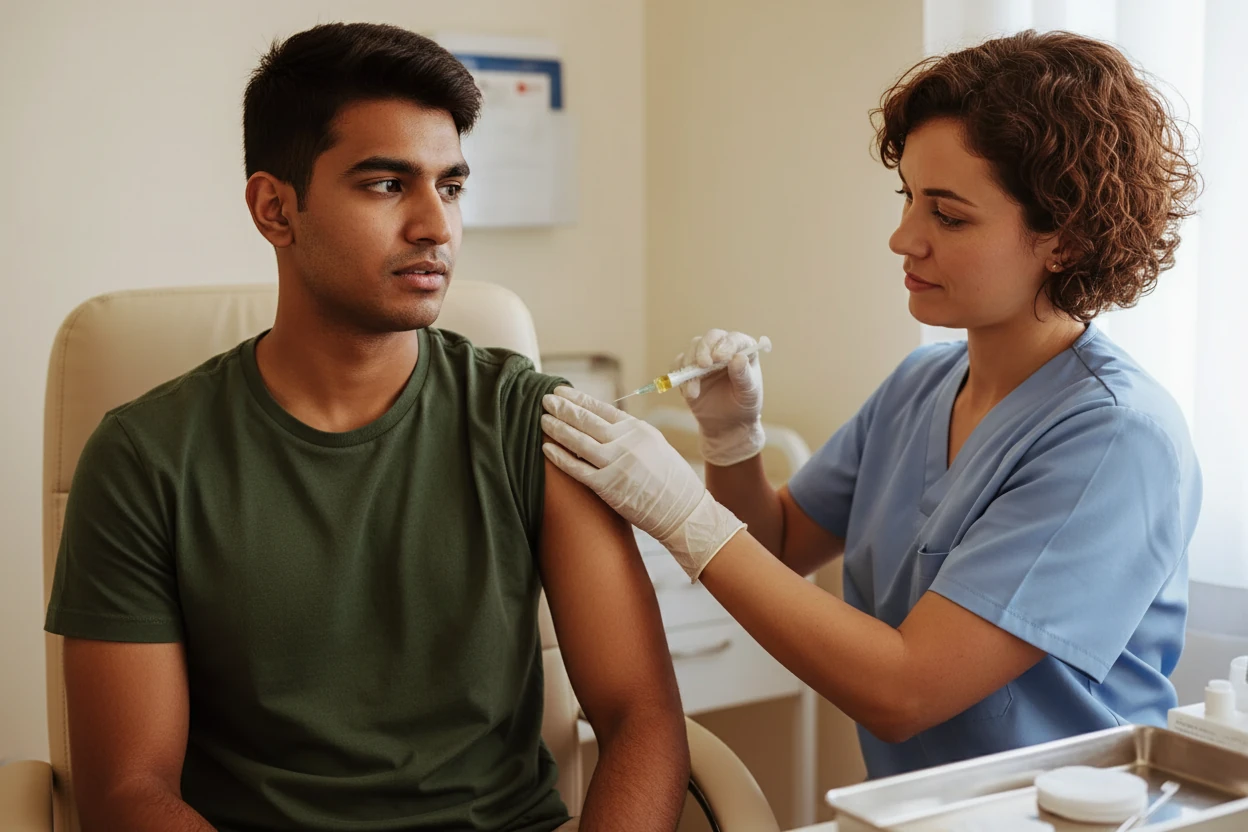
As XBB.1.5 continues to spread globally, managing COVID-19 risk requires a combination of vaccination, personal precautions, and effective treatments. Vaccination remains the cornerstone of protection, especially with updated bivalent boosters targeting XBB.1.51718. These vaccines have demonstrated moderate to high effectiveness in preventing severe disease, hospitalization, and death across age groups, including older and immunocompromised adults1920.
However, vaccine effectiveness (VE) against infection wanes over time. Meta-analyses show that VE against SARS-CoV-2 infection starts around 53% in the first month post-vaccination but declines to approximately 27% by the fifth month19. Protection against hospitalization and death remains more robust but also decreases gradually19. Emerging variants like JN.1 have further reduced vaccine effectiveness, underscoring the need for timely vaccine updates2119.
Monoclonal antibody therapies have reduced efficacy against XBB.1.5 due to its immune evasion capabilities, and some previously authorized antibodies such as Evusheld are not expected to neutralize this subvariant effectively2215. In contrast, antiviral medications like Paxlovid and molnupiravir remain effective as they target viral replication rather than antibody binding15.
“The XBB.1.5 COVID-19 vaccine promotes more durable binding and neutralizing antibodies than prior ancestral WA1 or bivalent vaccines.”
— Sanjeev Kumar23
Standard infection control measures continue to be effective against XBB.1.5 and include indoor masking, social distancing, hand hygiene, and avoiding poorly ventilated spaces15. Mask quality matters; well-fitted, high-filtration masks provide better protection15. Testing remains important to differentiate COVID-19 from other respiratory illnesses and guide treatment decisions15.
Key strategies to reduce COVID-19 risk during XBB.1.5 waves:
- Stay up to date with COVID-19 vaccinations, including XBB.1.5-adapted bivalent boosters171819
- Use high-quality masks in indoor or crowded settings15
- Practice social distancing and avoid poorly ventilated spaces15
- Seek testing promptly if symptomatic to guide care15
- Use antiviral treatments when eligible, as monoclonal antibodies may be less effective2215
Safety data from large observational studies indicate no increased risk of serious adverse events, including myocarditis or colonic diverticulitis, following administration of XBB.1.5-containing mRNA vaccines24. This supports the continued use of these vaccines in eligible populations.
| Vaccine Effectiveness Against XBB.1.5 Outcomes | First Month Post-Vaccination | Fifth Month Post-Vaccination |
|---|---|---|
| Infection | 52.9% (95% CI: 47.6–57.6%) | 26.7% |
| Hospitalization | 64.4% (95% CI: 59.3–68.9%) | 52.3% |
| Death | 77.3% (95% CI: 67.1–84.3%) | 69.4% |
| Sources:19 | ||