Thyroid Eye Disease (TED) is an autoimmune condition that affects the tissues around the eyes, causing inflammation and swelling of muscles and fat within the eye sockets1. It most commonly occurs in people with Graves’ disease but can also affect those with normal or low thyroid hormone levels2. TED symptoms range from mild irritation to severe eye bulging and vision loss, impacting quality of life for many patients3.
Thyroid Eye Disease Symptoms: Early Signs, Eye Changes & Vision Problems
TED symptoms vary widely among individuals and can affect one or both eyes, often asymmetrically45. Common early signs include eyelid retraction, where the eyelids pull back more than usual, and proptosis, which is the forward bulging of the eyes67. Patients frequently report irritation, redness, and a gritty sensation in the eyes7. Pain behind the eyes and during eye movements is also common, along with photophobia, or sensitivity to bright light6.
More severe symptoms include diplopia (double vision) due to restricted eye movement from enlarged extraocular muscles6. In rare but serious cases, optic nerve compression can occur because of swelling within the orbit, threatening vision8. This can lead to dysthyroid optic neuropathy, which may cause progressive vision loss if untreated89.
Typical symptoms of TED include:
- Eyelid retraction and swelling6
- Bulging eyes (proptosis)5
- Double vision (diplopia)6
- Eye irritation and redness7
- Pain behind the eyes and with eye movement6
- Sensitivity to light (photophobia)6
- Restricted eye movement due to muscle enlargement6
- Vision changes due to optic nerve compression in severe cases8
“The earliest signs are dry eyes and red eyes, followed by eyelid retraction, often described as ‘stare,’ and proptosis, in which the eyes bulge forward. More severe signs are restricted eye movements and lagophthalmos, in which patients cannot fully close their eyes.”
— Andrew R. Carey, M.D., Johns Hopkins Medicine10
Thyroid Eye Disease Causes: Autoimmune Factors, Graves' Disease & Risk Factors
TED is an autoimmune inflammatory disorder of the orbit, where the immune system mistakenly attacks tissues around the eyes, including muscles and fat111. The most common underlying cause is Graves’ disease, an autoimmune thyroid condition characterized by autoantibodies that bind to the thyrotropin receptor (TSHR)1213. These autoantibodies can cross-react with similar receptors in orbital tissues, triggering inflammation and tissue remodeling12.
Although about 90% of TED patients have Graves’ hyperthyroidism, TED can also occur in people with hypothyroidism or even normal thyroid function (euthyroidism)41415. Other autoimmune thyroid diseases, such as Hashimoto thyroiditis, may also be associated with TED14.
Risk factors for developing or worsening TED include:
- Female sex, with women affected about five times more than men1216
- Smoking, which significantly increases risk and severity816
- Family history and genetic predisposition8
- Radioactive iodine therapy for hyperthyroidism, which may trigger or worsen TED82
- Other autoimmune conditions that increase immune system dysregulation8
The exact pathogenesis remains incompletely understood but involves activation of orbital fibroblasts by autoantibodies, leading to swelling, fibrosis, and fat expansion in the orbit1117.
Diagnosing Thyroid Eye Disease: Clinical Evaluation, Imaging & Lab Tests
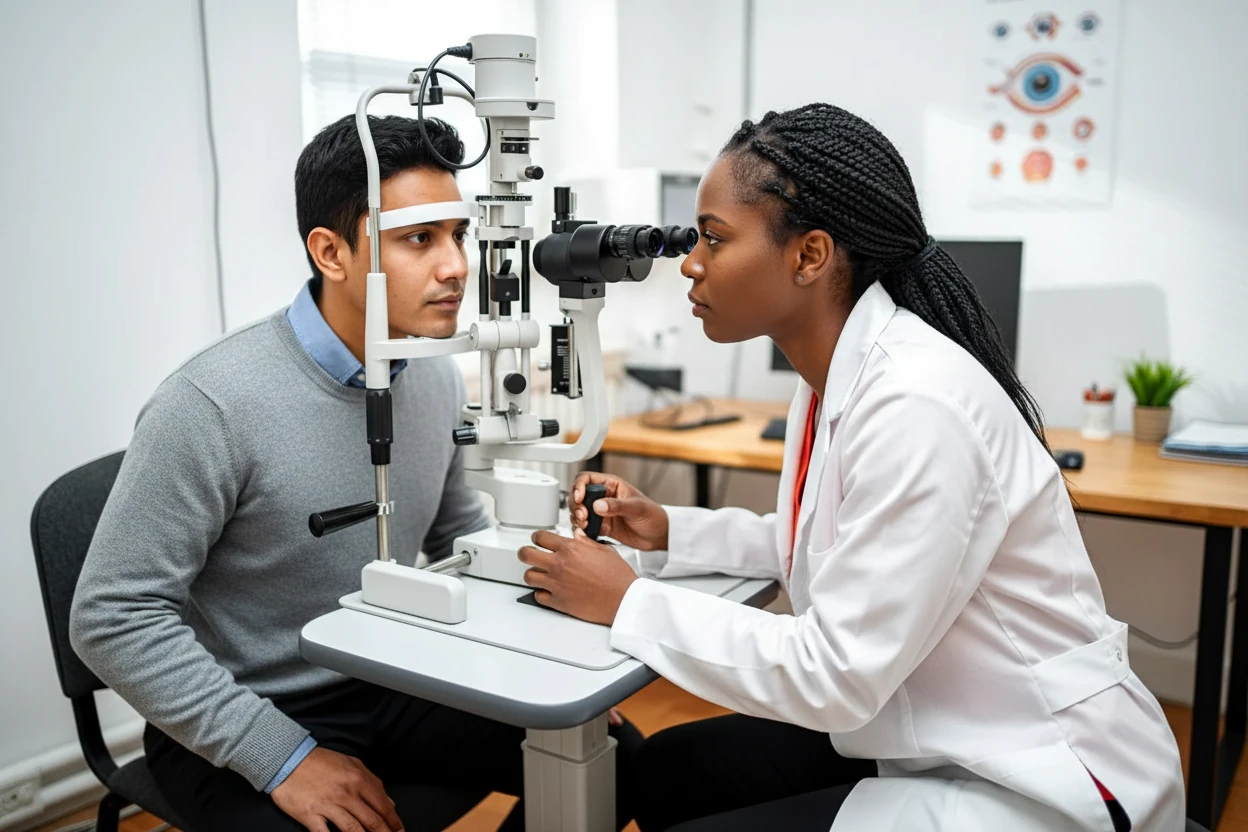
Diagnosis of TED requires a thorough clinical evaluation, imaging studies, and laboratory testing1112. A multidisciplinary approach involving ophthalmologists and endocrinologists is recommended for accurate diagnosis and management1118.
Key diagnostic steps include:
- Detailed patient history and physical examination focusing on eye symptoms and thyroid disease11
- Measurement of eye bulging using exophthalmometry11
- Assessment of eye movement and eyelid position11
- Color vision and visual field testing to detect optic nerve involvement11
- diabetes mellitus symptoms causes and treatment tests for thyroid function and thyroid-stimulating immunoglobulin (TSI) antibodies412
- Orbital imaging (CT or MRI) to evaluate extraocular muscle enlargement, fat expansion, and optic nerve compression126
Imaging typically reveals asymmetric bilateral involvement, with enlargement of extraocular muscles sparing their tendons126. Early diagnosis is critical to prevent vision-threatening complications18.
Thyroid Eye Disease Treatment Options: Medications, Surgery & Symptom Management
Treatment of TED depends on disease severity and activity, aiming to reduce inflammation, preserve vision, and improve symptoms. Management includes at-home remedies, medications, and surgery.
At-Home Remedies
For mild TED symptoms, supportive care can improve comfort and reduce irritation112. Recommended measures include:
- Use of lubricating eye drops (artificial tears) to relieve dryness and irritation112
- Applying cool compresses to reduce swelling and discomfort11
- Wearing sunglasses to protect against light sensitivity and wind112
- Elevating the head during sleep to decrease orbital swelling2
- Smoking cessation to reduce disease progression and severity1182
These measures help manage symptoms during the active inflammatory phase and improve quality of life.
Medications
Medical treatment is tailored to disease activity and severity. Corticosteroids remain the primary therapy for moderate to severe active TED, reducing inflammation and swelling1911. They can be administered orally or intravenously depending on severity11.
Teprotumumab, a monoclonal antibody targeting the insulin-like growth factor-1 receptor (IGF-1R), has shown significant improvements in reducing proptosis and inflammation and is FDA-approved for TED treatment20413. It represents a novel disease-modifying therapy.
Other medical options include:
- Selenium supplementation, which may lessen inflammation in mild disease1921
- Radiation therapy to reduce orbital inflammation, often combined with steroids1122
- Immunosuppressive agents such as rituximab in select cases236
Management of the underlying thyroid disorder is essential but may not fully resolve TED symptoms112.
Surgery
Surgical intervention is generally reserved for chronic stable disease or sight-threatening complications192. Common surgical procedures include:
- Orbital decompression surgery to remove bone and/or fat from the eye socket, relieving pressure on the optic nerve and reducing eye bulging192
- Strabismus surgery to correct double vision caused by muscle scarring and misalignment2
- Eyelid surgery to reposition retracted eyelids, improving eye closure and appearance2
Emergency orbital decompression may be necessary in cases of optic nerve compression not responsive to medical therapy182.
| Treatment Type | Purpose | Typical Use |
|---|---|---|
| At-home remedies | Symptom relief and comfort | Mild TED |
| Corticosteroids | Reduce inflammation | Moderate to severe active TED |
| Teprotumumab | Targeted immune modulation | Moderate to severe TED |
| Radiation therapy | Decrease orbital inflammation | Adjunct to steroids |
| Surgery | Correct structural complications | Chronic stable or sight-threatening TED |
| Sources:2411131922 | ||
Preventing Thyroid Eye Disease: Risk Reduction, Smoking Cessation & Early Intervention
Preventing TED is challenging due to its autoimmune nature11. However, certain measures can reduce the risk of onset or worsening:
- Smoking cessation is the most effective preventive step, as smoking increases TED risk and severity1182
- Maintaining euthyroid status by controlling thyroid hormone levels reduces disease activity192
- Avoiding or carefully managing radioactive iodine therapy in patients with active eye disease82
- Early diagnosis and referral to specialists for patients with Graves’ disease18
These steps help lower morbidity and improve quality of life for patients at risk18.
Thyroid Eye Disease Complications: Vision Loss, Diplopia & Eye Damage
TED can lead to serious complications if untreated or poorly managed. These include:
- Exposure keratopathy caused by incomplete eyelid closure, leading to corneal damage1123
- Optic neuropathy from optic nerve compression, risking permanent vision loss89
- Persistent proptosis resulting in facial disfigurement11
- Diplopia due to extraocular muscle fibrosis and misalignment11
- Glaucoma secondary to orbital congestion and increased intraocular pressure11
Early intervention and multidisciplinary care are crucial to prevent these outcomes1118.
Living With Thyroid Eye Disease: Coping Strategies, Support & Quality of Life
TED significantly impacts quality of life due to discomfort, vision changes, and cosmetic concerns2124. Patients may experience chronic dry eyes, double vision, and altered appearance, which can affect emotional well-being3. Appropriate management, including medical treatment and surgery when needed, helps preserve vision and improve daily functioning11.
Support from healthcare providers and patient support groups is important for coping with the disease’s physical and psychological effects3. Regular follow-up is essential to monitor disease activity and adjust treatment18.
“Thyroid eye disease exists on a spectrum. At Yale, we recognize that no two patients are alike. We offer a cutting-edge, multidisciplinary approach to thyroid eye disease, integrating expertise from oculoplastic surgeons, endocrinologists, strabismus surgeons, oncologists, and others to provide personalized, comprehensive care using the latest advancements in medical treatments and surgical procedures.”
— Michelle M. Maeng, MD, Yale Medicine3
Thyroid Eye Disease FAQs: Common Questions & Expert Answers
Thyroid Eye Disease severity varies widely, with most cases being mild and self-limiting46. The active phase typically lasts 18 to 24 months before stabilizing24. Only a minority of patients require systemic therapy or surgery6.
Early diagnosis and individualized management are key to preventing serious complications and preserving vision11. Patients should promptly report worsening symptoms or vision changes to their healthcare provider2.