covid-test-accuracy-for-eg5-and-ba286-variants">covid-test-accuracy-for-eg5-and-ba286-variants">COVID-19 viral genetic material can be detected in stool samples of nearly half of infected individuals, sometimes persisting for months after respiratory symptoms have resolved1. This prolonged shedding in feces highlights the gastrointestinal involvement of SARS-CoV-2 and raises questions about the reliability and role of stool testing for COVID-19 diagnosis2. Despite this, stool-based testing is not currently recommended for routine diagnosis due to accuracy and standardization challenges3.
COVID-19 Detection in Stool Samples
SARS-CoV-2 RNA is detectable in stool samples of approximately 40–50% of COVID-19 patients, with some studies reporting detection rates up to 75% in certain cohorts45. Viral shedding in feces often lasts longer than in respiratory samples, sometimes persisting for weeks or even months after respiratory clearance62. This prolonged fecal shedding correlates with gastrointestinal symptoms such as nausea, vomiting, and abdominal pain in some patients, although not all individuals with fecal viral RNA exhibit symptoms71.
The presence of SARS-CoV-2 RNA in stool reflects active or past infection of the gastrointestinal tract. Laboratory and autopsy studies have shown that SARS-CoV-2 can infect intestinal cells, suggesting the gut as a viral reservoir2. However, the detection of viral RNA does not necessarily indicate the presence of infectious virus particles. Multiple studies have failed to isolate viable SARS-CoV-2 from stool samples despite positive PCR results, indicating that fecal-oral transmission is unlikely8.
Wastewater surveillance programs utilize PCR-based testing of community sewage to monitor SARS-CoV-2 spread at the population level. These programs can detect rising viral levels before clinical case increases are reported, serving as an early warning system910. However, due to sample dilution and complexity, wastewater testing cannot be used for individual diagnosis113.
“This is a sensitive and reproducible assay for detection of SARS-CoV-2 RNA in human stool, with potential uses in fecal microbiota transplantation donor screening, sewage monitoring, and further research into the effects of fecal shedding on the epidemiology of the COVID-19 pandemic.”
— Michael P. Coryell, The Lancet Microbe; US National Institutes of Health and US Food and Drug Administration16
Stool PCR testing has been proposed as an adjunct diagnostic tool, particularly when respiratory samples are negative but clinical suspicion remains high1213. Concordant positive results in respiratory and stool samples strengthen the diagnosis, while isolated stool positivity should be interpreted cautiously1213. The variability in fecal viral load and intermittent shedding complicate interpretation, and negative stool tests do not rule out infection143.
Key points about COVID-19 detection in stool samples:
- SARS-CoV-2 RNA is found in stool in about 40–50% of infected patients415.
- Viral RNA shedding in feces can persist for months after respiratory clearance21.
- Gastrointestinal symptoms correlate with fecal viral RNA presence but are not universal71.
- Infectious virus is rarely isolated from stool, making fecal-oral transmission unlikely8.
- Wastewater surveillance provides community-level data but is unsuitable for individual diagnosis911.
Ensuring Accuracy in At-Home COVID Tests
Some people attempt stool testing for COVID-19 when respiratory tests are inconclusive or negative, but experts warn this practice is unreliable and not recommended. Stool viral RNA can persist long after recovery, leading to positive results that do not indicate active infection18203.
“I wonder if it’s a less-robust and vigorous immune response in the gut versus the respiratory system,” Bhatt speculated. “Because the gut is home to trillions of bacteria, maybe it’s more tolerant of SARS-CoV-2.”
— Ami Bhatt, MD, PhD, Stanford University2
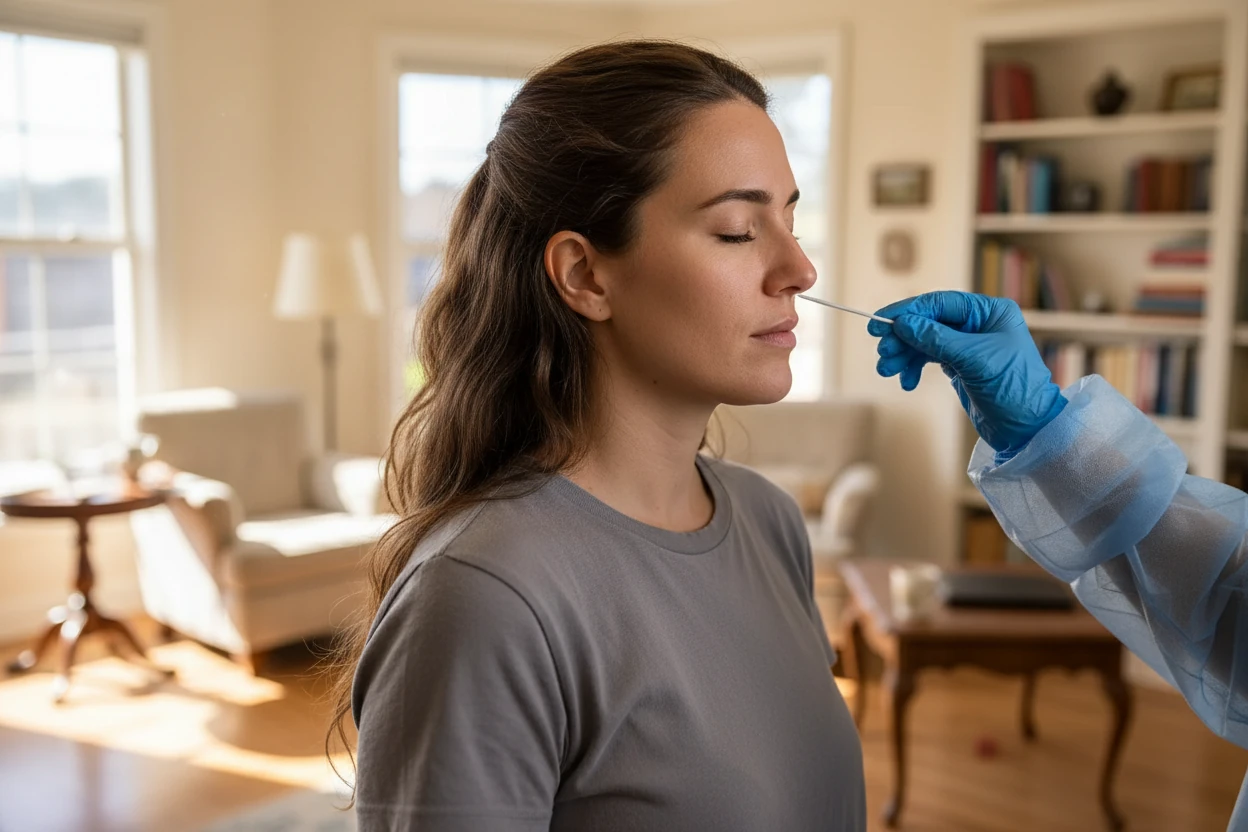
At-home COVID-19 tests primarily use antigen detection methods designed for respiratory samples such as nasal or throat swabs17. These tests detect viral proteins and are not validated for stool specimens, limiting their reliability when used on fecal samples318. Using at-home antigen kits on stool can yield false-negative results and is generally considered unreliable318.
PCR-based stool testing can detect viral RNA with high sensitivity in laboratory settings, but it is not standardized or widely available for routine diagnosis1412. Proper sample collection and adherence to testing protocols are essential for accuracy in any COVID-19 test1719. Deviations from recommended procedures, such as using stool samples with antigen tests or improper handling, compromise test validity1719.
Repeated nasal swab testing over several days is advised for symptomatic individuals with initial negative results to improve diagnostic sensitivity1719. Serial testing post-exposure also enhances detection rates1719. Nasal swab antigen tests generally provide sufficient accuracy for most diagnostic needs, making stool testing redundant in clinical practice1718.
Cross-contamination and inherent test limitations can lead to false-positive stool test results for SARS-CoV-2, further complicating interpretation113. Clinicians should interpret discordant stool and respiratory test results cautiously, considering clinical context and repeat testing when necessary1213.
Key recommendations to ensure accurate COVID-19 testing:
- Use nasal or throat swabs for at-home antigen tests, not stool samples173.
- Follow test instructions carefully to avoid invalid results1719.
- Repeat nasal swab testing over several days if symptoms persist despite negative tests1719.
- PCR testing remains the gold standard for diagnosis due to higher sensitivity1719.
- Avoid relying on stool testing for individual diagnosis due to lack of validation and standardization113.