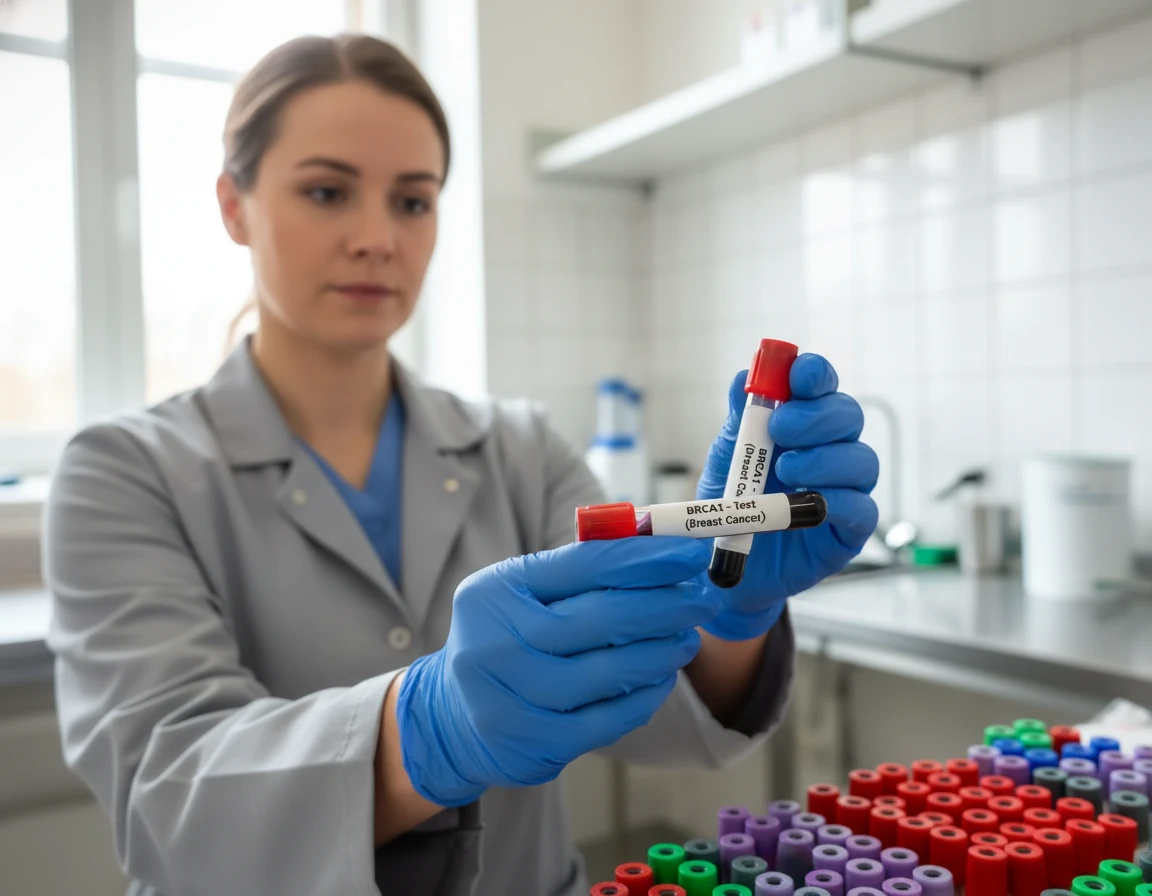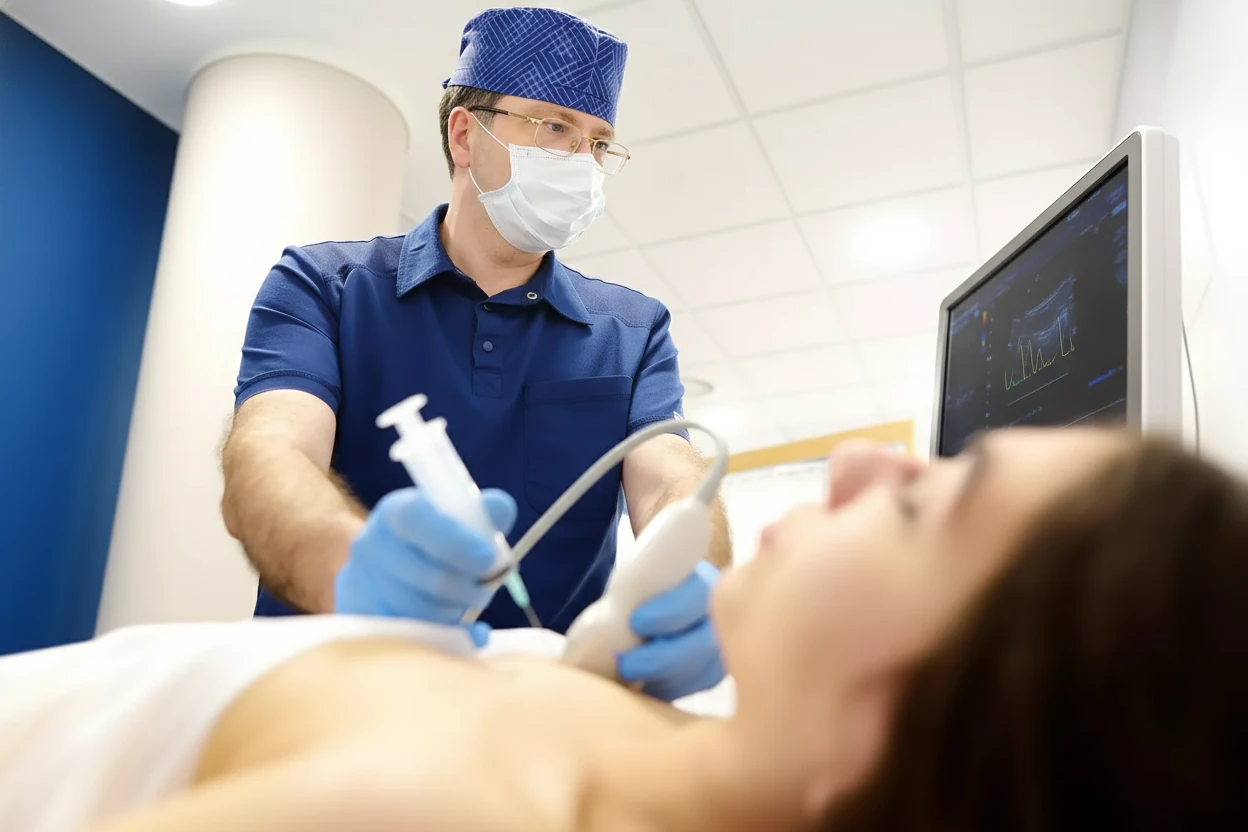
Breast abnormalities detected on mammograms often require further evaluation to determine if they are benign or malignant. Stereotactic breast biopsy is a minimally invasive procedure that uses mammographic imaging to accurately locate and sample suspicious breast tissue for diagnosis1. This procedure typically takes about an hour and provides critical information to guide treatment decisions, often avoiding the need for more invasive surgery2.
Why is a Stereotactic Breast Biopsy Performed?
Stereotactic breast biopsy is primarily used to sample suspicious non-palpable breast lesions that are detected on mammography or digital breast tomosynthesis but are not visible on ultrasound3. It is especially useful for investigating microcalcifications and architectural distortions seen on mammograms43. This biopsy technique helps distinguish between benign and malignant lesions, which is essential for formulating an appropriate management strategy for early breast cancer43.
The procedure is preferred over surgical excision for benign lesions, reducing unnecessary surgeries and associated risks3. However, it is important to note that the upgrade rate from benign biopsy results to invasive disease at surgery is approximately 10-15% for vacuum-assisted biopsies, underscoring the need for careful follow-up5.
Stereotactic breast biopsy can also be used to evaluate new abnormalities at previous surgical sites, providing a non-surgical method to assess changes in breast tissue3.
Comparing Breast Biopsy Types: Stereotactic vs. Other Methods
Breast biopsy techniques vary depending on the lesion characteristics and patient factors. The two main types used in stereotactic breast biopsy are core needle biopsy and vacuum-assisted biopsy3.
- Core Needle Biopsy: This involves using a hollow needle to obtain tissue samples from the targeted lesion. It is minimally invasive, typically performed under local anesthesia, and widely used due to its safety and effectiveness36.
- Vacuum-Assisted Biopsy: This technique uses a vacuum-powered device connected to a needle to collect multiple tissue samples through a single insertion. It allows for removal of larger or more complex lesions and has a higher diagnostic yield, especially for microcalcifications43.
Compared to core needle biopsy, vacuum-assisted biopsy has a lower rate of underestimating malignancy and is preferred for sampling suspicious calcifications43. The choice between these techniques depends on lesion size, complexity, and patient-specific considerations3.
Other breast biopsy methods include fine-needle aspiration, ultrasound-guided biopsy, MRI-guided biopsy, and surgical biopsy, but stereotactic biopsy is specifically indicated for mammographically detected non-palpable lesions76.
How to Prepare for Your Stereotactic Breast Biopsy Appointment
Proper preparation helps ensure the safety and accuracy of the stereotactic breast biopsy. Patients receive specific instructions from their healthcare provider before the procedure38.
Key preparation steps include:
- Inform your healthcare provider about all medications, including prescriptions, over-the-counter drugs, and herbal supplements. Blood thinners such as aspirin may need to be stopped 3 to 7 days before the biopsy to reduce bleeding risk389.
- Notify your provider if you are pregnant or suspect pregnancy, as the procedure involves low-dose X-rays that may harm the fetus. Alternative approaches may be considered389.
- Avoid wearing deodorant, powder, lotion, or perfume on your breasts or underarms on the day of the biopsy, as these can interfere with imaging389.
- Remove jewelry and metal accessories before the procedure to prevent imaging artifacts38.
- Wear comfortable, loose-fitting two-piece clothing to facilitate changing into a gown and accommodate breast compression during the procedure89.
- Plan for a trusted person to drive you home if you feel emotionally or physically fatigued after the biopsy, although most patients can drive themselves18.
Patients are typically advised to eat and drink normally before the biopsy unless otherwise instructed89.
Stereotactic Breast Biopsy: Step-by-Step Procedure Guide
During the Test
Stereotactic breast biopsy is usually performed in a hospital or specialized radiology clinic by a radiologist trained in breast imaging32. The patient remains awake throughout the procedure, which generally lasts about an hour, with the actual tissue sampling taking only a few minutes32.
The breast is positioned and compressed between two plates to immobilize it and allow precise targeting of the lesion. Although compression may cause some discomfort, it is essential for accurate localization32.
Local anesthesia is administered to numb the breast tissue, minimizing pain during the biopsy. Patients may feel a brief pinch or burning sensation during the injection of anesthetic328.
Imaging and Localization
The procedure relies on mammographic imaging taken from multiple angles to create stereo images that pinpoint the exact location of the suspicious lesion312. These images are processed by computer software to calculate the coordinates for needle placement32.
The patient lies face down on a specialized biopsy table with the breast positioned through an opening, or alternatively, may be seated depending on the equipment used328. The table or chair is adjusted to allow the radiologist access to the breast.
Additional mammograms are taken during the procedure to confirm the needle's position within the lesion before tissue sampling begins32.
Biopsy
After numbing the area, the radiologist makes a tiny skin incision to facilitate needle insertion32. A biopsy needle or vacuum-assisted device is then inserted and advanced to the lesion using the computer-guided coordinates32.
Multiple tissue samples are collected through the single skin nick. If microcalcifications are being sampled, the tissue samples are X-rayed to ensure adequate calcifications have been obtained for analysis32.
A small metal clip is usually placed at the biopsy site to mark the location for future imaging or surgery if needed. The clip is safe, MRI-compatible, and does not cause discomfort or interfere with metal detectors328.
After the Test
Once tissue sampling is complete, the needle is removed, and pressure is applied to the biopsy site to stop any bleeding32. The site is covered with a bandage or wound closure strips, and an ice pack may be provided to reduce swelling and bruising328.
A final mammogram is performed to verify the clip's placement32. Patients are typically observed briefly before being discharged and can usually resume normal activities within a day, avoiding strenuous activity and heavy lifting for 24 to 48 hours328.
Mild soreness, bruising, or swelling around the biopsy site is common and usually resolves within 7 to 10 days328.
Stereotactic Breast Biopsy Risks, Complications & Safety Precautions
Stereotactic breast biopsy is generally safe and well-tolerated, with a low risk of serious complications32. Common minor side effects include:
- Bleeding or bruising at the biopsy site, which usually resolves without intervention32.
- Mild discomfort or soreness during and after the procedure, managed with over-the-counter pain relievers32.
- Rare risk of infection at the biopsy site, with symptoms such as redness, warmth, or pus requiring medical attention32.
- Extremely rare risk of pneumothorax (collapsed lung) if the needle passes through the chest wall, mostly when the lesion is near the chest wall3210.
The radiation exposure from the mammographic imaging used during the biopsy is very low and considered safe, with the benefits of accurate diagnosis outweighing the minimal risk328.
Patients are advised to report significant pain, swelling, bleeding, or signs of infection promptly to their healthcare provider328.
💡 Did You Know?
Stereotactic breast biopsy uses low-dose X-rays to guide the needle precisely to the suspicious area, allowing for accurate tissue sampling without surgery11.
Understanding Your Stereotactic Breast Biopsy Results & Next Steps
Interpreting Your Results
Biopsy samples are examined by a pathologist who evaluates the tissue under a microscope to determine if cancer deaths cells or other abnormalities are present31. Results typically become available within a week after the procedure312.
Biopsy results can be:
Stereotactic breast biopsy is a reliable and relatively noninvasive method to confirm whether a person has breast cancer1.
- Positive: Cancer cells or precancerous changes are detected. Further testing and treatment planning will follow31.
- Negative: No cancer or significant abnormalities are found. Routine screening or monitoring may be recommended31.
- Inconclusive: The sample may not provide a definitive diagnosis, requiring additional biopsy or imaging31.
If the pathology results do not match the imaging findings, a repeat biopsy or surgical excision may be necessary to clarify the diagnosis31.
Patients are usually scheduled for a follow-up appointment to discuss results and next steps with their healthcare provider31.
Stereotactic Breast Biopsy: Key Takeaways & Patient Summary
- Stereotactic breast biopsy is a minimally invasive, image-guided procedure used to evaluate suspicious breast lesions detected on mammography, providing accurate tissue diagnosis to distinguish benign from malignant lesions and guide further management31.
- The procedure is safe, typically lasts about an hour, and is performed under local anesthesia with minimal discomfort. Preparation includes medication review and avoiding substances that interfere with imaging328.
- After the biopsy, patients may experience mild soreness or bruising but can usually resume normal activities within a day328.
- Results are generally available within a week and are critical for determining the appropriate course of treatment.
| Aspect | Details |
|---|---|
| Procedure Duration | About 1 hour32 |
| Anesthesia | Local anesthesia32 |
| Tissue Sampling Methods | Core needle or vacuum-assisted biopsy3 |
| Common Side Effects | Bruising, soreness, minor bleeding32 |
| Result Turnaround Time | Typically within 1 week31 |