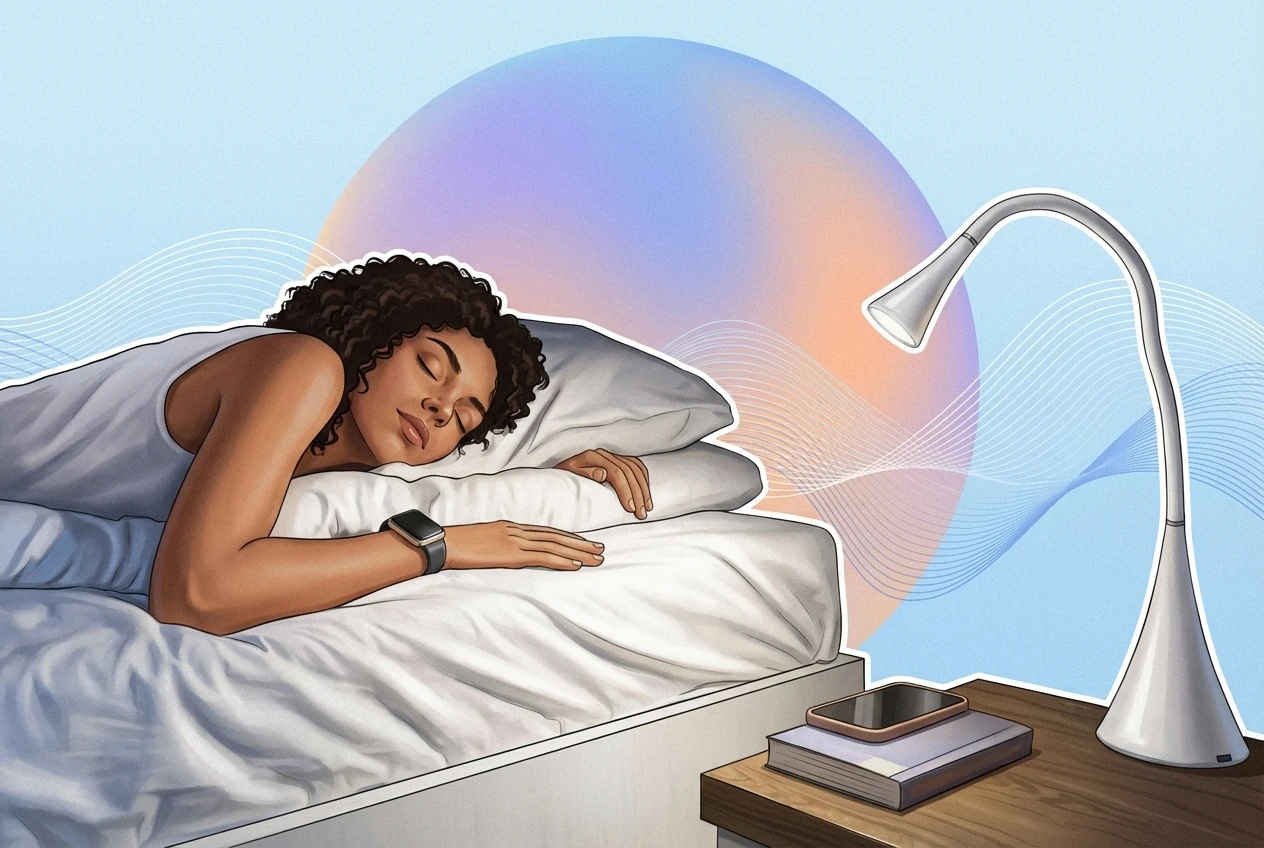
Nearly 9 in 10 adults who report good sleep satisfaction experience flourishing well-being, while less than half of those with poor sleep satisfaction report similar levels of well-being1. Sleep quality and mental health are closely linked, with poor sleep contributing to the onset and progression of depressive disorders2. However, the relationship between how people feel about their sleep and what sleep trackers report remains complex and not fully understood3.
Sleep Satisfaction and Well-Being Link
Sleep and mental health share a dynamic, two-way relationship where poor sleep can worsen mood and mental health conditions, and mood disorders can disrupt sleep4. People with insomnia are 10 times more likely to experience depression-7-helpful-choices">depression-reliefdepression-reliefdepression and 17 times more likely to have anxiety compared to the general population4. Sleep disturbances are a core symptom of depressive episodes and are associated with both the onset and progression of depressive disorders23.
💡 Did You Know?
Nearly 9 in 10 adults who report good sleep satisfaction are flourishing, while less than half of those with poor sleep satisfaction experience the same level of well-being1.
Research shows that subjective sleep satisfaction strongly correlates with well-being and mood. For example, a study in young women found that menstrual status alone did not impact mood, but after nights of perceived poor sleep, positive mood was lower during menses compared to other cycle phases. After good sleep, mood was equivalent across the cycle phases, indicating that perceived sleep quality can buffer mood fluctuations5. Similarly, in medical interns, each hour of reduced sleep was linked to increased depression symptoms, and later bedtimes predicted higher depression risk6.
Sleep regularity and duration have been shown to predict daily mood with 65–80% accuracy, highlighting the importance of consistent sleep patterns for emotional well-being7. Greater variability in daily sleep efficiency predicts depression and anxiety in young adults, suggesting that not only total sleep time but also sleep consistency matters for mood regulation2.
- People with insomnia have significantly higher risks of depression and anxiety4.
- Subjective sleep satisfaction is a stronger predictor of mood and well-being than objective sleep measures3.
- Poor sleep quality is linked to the onset and worsening of depressive disorders2.
- Sleep regularity and duration can predict daily mood states with high accuracy7.
- Perceived good sleep acts as a mood buffer during vulnerable times such as menstruation5.
Why Sleep Trackers and Feelings Disagree
Despite the growing use of consumer sleep trackers, a disconnect remains between objective sleep data and subjective sleep reports. Validation studies reveal that many devices tend to overestimate total sleep time (TST) and sleep efficiency (SE) while underestimating wake after sleep onset (WASO)89. For example, the Beddit Sleep Tracker underestimated WASO and overestimated TST and SE, failing to detect rapid eye movement (REM) sleep stages accurately8. The EMFIT QS device similarly overestimated TST by nearly three hours and underestimated WASO, showing very low agreement in sleep-wake detection9.
Going to bed early and waking early is better for mental health, even for night owls. Participants who went to bed late had higher risks of depression, anxiety and other mental health disorders.
Among 11 widely used consumer sleep trackers, some showed substantial agreement with polysomnography (the gold standard for sleep measurement), while others were only partially consistent, indicating device-specific variability in accuracy10. Wearables often show high proportional bias in sleep efficiency, whereas nearables (devices placed near the bed) show bias in sleep latency measurement10. Sensitivity for discriminating between sleep stages among top wearables ranges widely from 50% to 86%11.
The literature frequently reports little to no association between self-reported sleep quality and objectively measured sleep parameters12. This weak correlation suggests that subjective and physiological sleep assessments measure different constructs. For example, self-reported sleep disturbances correlate strongly with depression symptoms and neurocognitive performance, while physiological measures detect only a few symptoms3. This discrepancy is especially pronounced in individuals with higher depression severity3.
- Many consumer sleep trackers overestimate total sleep time and sleep efficiency89.
- Device accuracy varies widely, with some trackers showing only partial consistency with polysomnography10.
- Wearables and nearables have different biases in sleep measurement parameters10.
- Sensitivity for detecting sleep stages ranges from moderate to high but is inconsistent11.
- Subjective sleep quality and objective sleep measures often do not correlate strongly, especially in depression123.
Improving Well-Being Through Quality Sleep
Improving sleep quality has a significant positive impact on mental health, including reductions in depression, anxiety, and rumination14. Greater improvements in sleep quality lead to greater improvements in mental health outcomes, confirming a causal relationship between sleep and mood14. Interventions such as cognitive behavioral therapy for insomnia (CBTi) are the gold standard for treating sleep problems and have been shown to reduce symptoms of depression and anxiety414.
Sleep consistency is as important as total sleep time. Greater variability in daily sleep efficiency predicts depression and anxiety in young adults, emphasizing the need for regular sleep patterns2. In medical interns, reduced total sleep time and later bedtimes were associated with increased depression risk, highlighting the importance of both sleep duration and timing6. Among office workers, longer sleep durations were linked to decreased sleepiness and higher energy levels the following day, demonstrating real-world benefits of quality sleep15.
Improving sleep leads to a significant medium-sized effect on composite mental health, depression, anxiety, and rumination. Greater improvements in sleep quality led to greater improvements in mental health.
Maintaining good sleep hygiene can support better sleep and mood:
- Avoid caffeine after early afternoon4.
- Avoid alcohol before bedtime4.
- Keep the bedroom comfortable and conducive to sleep4.
- Maintain a consistent sleep schedule4.
- Avoid screen time before bed4.
| Sleep Factor | Mental Health Impact | Source |
|---|---|---|
| Consistent sleep timing | Lower depression and anxiety risk | 62 |
| Longer sleep duration | Decreased sleepiness and increased energy | 15 |
| Improved sleep quality | Medium-sized effect on depression, anxiety, and rumination | 14 |
| Cognitive behavioral therapy for insomnia | Reduces depression and anxiety symptoms | 414 |