During the COVID-19 pandemic, many patients experienced a condition called "silent hypoxia," where oxygen levels in the blood-pressure-signs-and-symptomsblood-pressure-signs-and-symptomsblood-pressure-effective-strategies-and-tipsblood-pressure-effective-strategies-and-tipsblood drop dangerously low without obvious symptoms1. This phenomenon led to widespread interest in pulse oximeters as a tool for home monitoring to detect early signs of deterioration2. While pulse oximetry can help identify patients needing medical care sooner, its effectiveness compared to symptom-based monitoring alone remains uncertain3.
Pulse oximeters have often been applied because of concerns that patients might not notice their blood oxygen levels sliding dangerously. But people in Penn Medicine's COVID Watch program—which uses automated text messages to keep tabs on patients recovering at home—had the same outcomes whether they used oxygen-measuring devices or not20.
How Pulse Oximeters Function
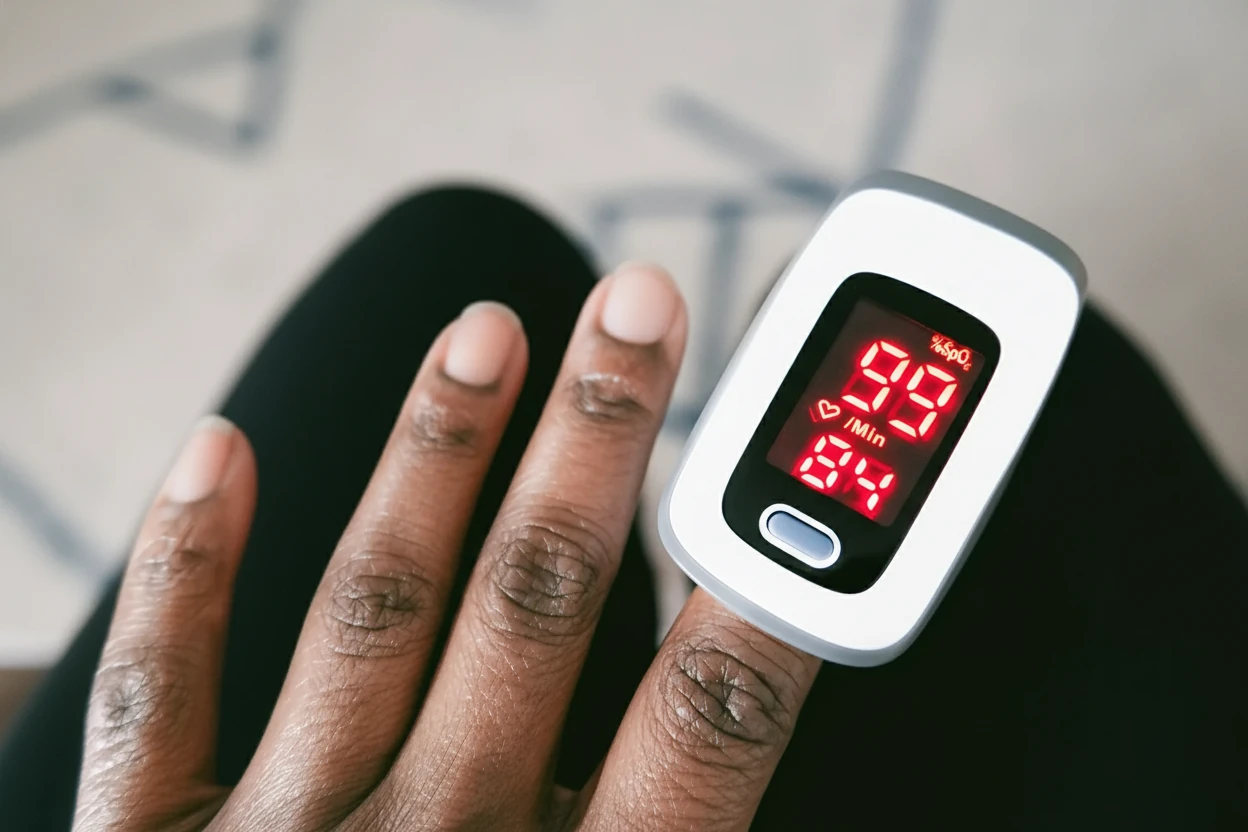
A pulse oximeter is a small, noninvasive device that clips onto a fingertip and estimates arterial oxygen saturation (SpO₂) and pulse rate by beaming different wavelengths of light through the finger42. It provides rapid, real-time measurements that are crucial for monitoring COVID-19 patients, especially to detect hypoxemia—low blood oxygen levels—that may not be accompanied by noticeable symptoms56.
Fingertip pulse oximeters are widely used as a standard medical tool to assess oxygenation status in patients76. They measure peripheral oxygen saturation, which is a key indicator of respiratory function and potential deterioration in COVID-195. Clinical guidelines recommend monitoring both at-rest SpO₂ and post-exertional SpO₂, with thresholds for escalation set at ≤92% at rest or a drop of 5% or more after exertion5.
However, the accuracy of pulse oximeters can vary significantly depending on the device model and patient factors such as skin pigmentation4. Studies have reported false negative rates up to 24.5% and false positive rates of 11.2% in home-use devices4. In particular, pulse oximeters tend to overestimate oxygen saturation in patients with darker skin, which may delay recognition of hypoxemia and necessary COVID-19 therapy8.
💡 Did You Know?
We then review some potential pitfalls with pulse oximetry monitoring that could affect accuracy and implementation of a monitoring program10.
User factors also affect measurement accuracy. For example, the warmth of the hands and steadiness during measurement can impact results9. Despite these limitations, pulse oximetry remains a cornerstone of remote COVID-19 monitoring in many health systems45.
Key points about pulse oximeter function:
- Measures oxygen saturation (SpO₂) and pulse rate noninvasively via fingertip42.
- Provides rapid, real-time readings critical for detecting hypoxemia56.
- Recommended to monitor at rest and after exertion, with specific thresholds for care escalation5.
- Accuracy varies by device and patient skin color, with risk of overestimation in darker skin tones48.
- User technique and hand conditions (warmth, steadiness) influence measurement reliability9.
Text Message vs. Pulse Oximeter Home Monitoring
Remote monitoring programs for COVID-19 have utilized both pulse oximetry and symptom-tracking methods such as text messaging or smartphone apps511. These approaches aim to detect early signs of deterioration and reduce hospital admissions while maintaining patient safety.
In one pilot randomized controlled trial, adherence to twice-daily pulse oximetry measurements was high at 97.6%, and patients reported a strong sense of safety using the device12. However, anxiety levels did not differ significantly compared to those monitored by symptom reporting alone12. Both groups had similar rates of primary care consultations, and no participants required intensive care or died during follow-up12.
Symptom-based monitoring, such as automated text messages asking about dyspnea (shortness of breath), has also proven effective in identifying patients needing escalation11. This method can be especially useful when combined with clinical support to guide patients on when to seek care11.
Pulse oximetry offers a distinct advantage in detecting "silent hypoxia," where patients have dangerously low oxygen levels without obvious symptoms513. Early identification of hypoxemia through pulse oximetry can prompt timely medical intervention11. For example, in one study, 10 participants reported hypoxemia (SpO₂ <94%), and six of them consulted their general practitioner as instructed12.
Comparison of home monitoring methods:
- Pulse oximetry provides objective oxygen saturation data, useful for detecting silent hypoxia513.
- Symptom tracking via text or app is accessible and effective when paired with clinical support11.
- High adherence and patient-reported safety with pulse oximetry, but anxiety levels similar to symptom monitoring12.
- Similar primary care consultation rates and no difference in severe outcomes between methods12.
- Both methods enable early detection and escalation of care when needed1211.
Pulse oximeter use enhanced patient self-assurance and empowered patients and informal caregivers in managing COVID-19 at home. Despite this, research shows that monitoring oxygen levels with a pulse oximeter did not result in more days alive and out of the hospital compared to symptom-based monitoring alone143.
Remote Monitoring Saves Lives and Costs
Remote monitoring programs for COVID-19, whether using pulse oximetry or symptom tracking, have been widely adopted to reduce the burden on hospitals and enable early discharge of patients1516. These programs are feasible in high-income settings and can safely manage many patients at home with low rates of unplanned hospitalization and mortality1617.
Pulse oximetry is an affordable, reliable, and easy-to-use tool that can be applied even in resource-limited settings, although cost and device availability remain barriers in low-income countries1815. The pandemic accelerated the integration of digital health tools into routine care, with potential applications beyond COVID-19, such as in chronic respiratory and cardiac diseases19.
Home telemonitoring typically involves daily recording of oxygen saturation, temperature, and respiratory symptoms via smartphone or tablet applications16. This approach supports early hospital discharge and continuous patient assessment without overwhelming healthcare facilities1516.
Benefits of remote monitoring programs:
- Alleviate pressure on health systems by enabling home management of COVID-19 patients15.
- Facilitate early hospital discharge through continuous monitoring16.
- Affordable and reliable pulse oximetry can be used broadly, including in some resource-limited settings15.
- Digital health tools integrated into routine care with potential for chronic disease management19.
- Remote monitoring reduces unplanned hospitalizations and mortality in well-supported systems1617.
The COVID-19 pandemic has prompted rapid adoption of home oxygen monitoring and therapy, highlighting the value of remote care models for managing respiratory illnesses19.
Do You Need a Home Pulse Oximeter?
The role of home pulse oximetry in COVID-19 recovery monitoring remains uncertain, with mixed evidence about its added value over symptom monitoring alone125. While patients generally show high adherence to home monitoring protocols and report increased feelings of safety, the impact on clinical outcomes such as hospital admission or mortality is less clear1214.
Many people with COVID-19 have low levels of oxygen in their blood, even when they feel well. Low oxygen levels can be an early warning sign that medical care is needed. A pulse oximeter measures how much oxygen is in someone's blood. We do not recommend using a pulse oximeter as a way to tell if someone has COVID-19. If someone has COVID-19, a pulse oximeter may help them keep watch over their health and to know if they need medical care21.
Device accuracy varies by model and patient characteristics, with notable concerns about reliability in individuals with darker skin tones and the risk of false reassurance from consumer-grade devices4188. General practitioners consider pulse oximeters useful diagnostic tools but emphasize the importance of interpreting readings within clinical context and having clear escalation pathways14.
In resource-limited settings, the cost and availability of quality pulse oximeters pose significant barriers to widespread adoption18. Even when devices are available, some are not quality-certified or are expensive, limiting their practical use18.
Patients and clinicians generally have positive perceptions of pulse oximetry for remote COVID-19 monitoring, indicating high acceptability and usability9. However, factors such as hand warmth and steadiness can affect measurement accuracy, and users should be aware of these potential pitfalls910.
Considerations for home pulse oximeter use:
- Useful for patients with COVID-19 symptoms such as cough, fever, or shortness of breath1.
- Normal oxygen saturation is generally 95% or higher; readings below 94% warrant medical advice21.
- Device accuracy can be compromised in people with darker skin, requiring attention to trends rather than single values82.
- False negatives and positives occur; clinical context and clear care escalation plans are essential414.
- Cost and availability limit use in low-resource settings18.