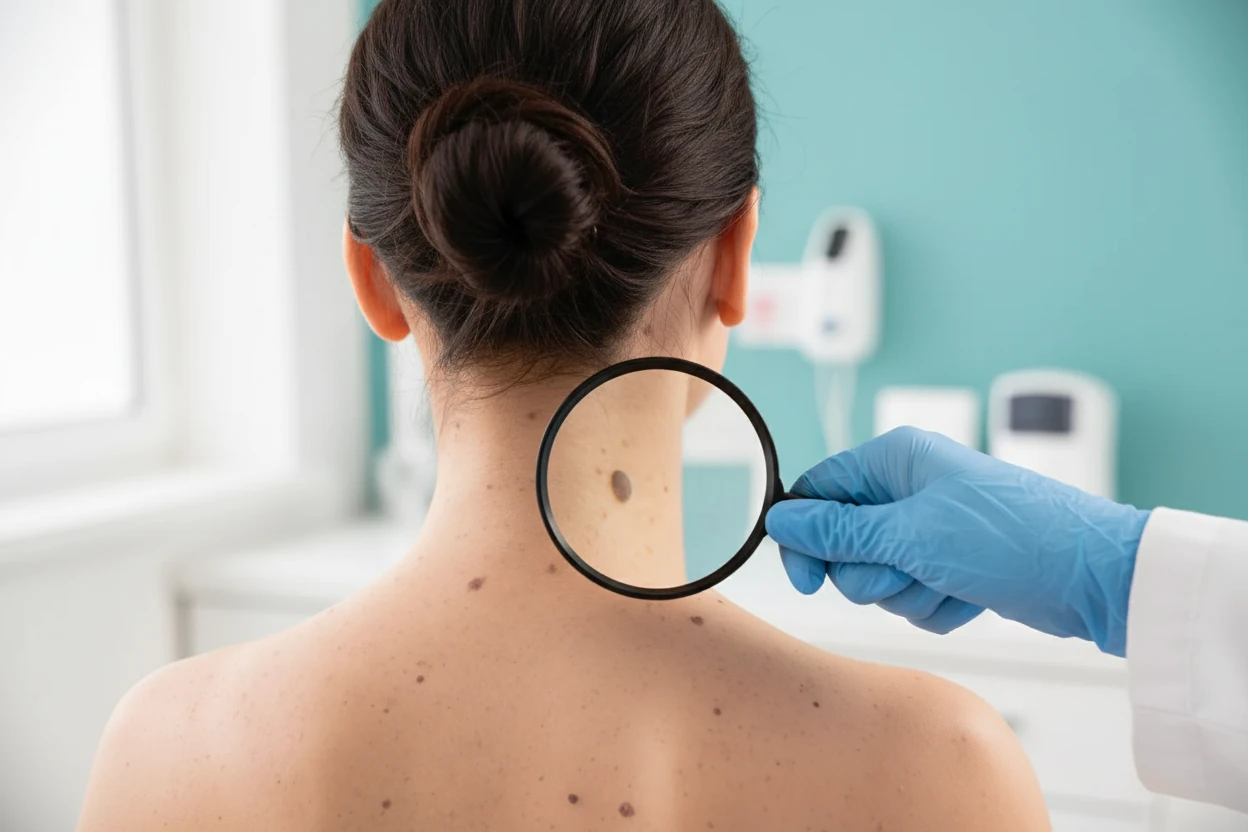
Melanoma, a deadly form of skin cancer, has seen rising incidence worldwide, posing a significant health challenge1. Recent advances in immunotherapy have transformed treatment options, with personalized mRNA vaccines emerging as a promising new approach to reduce melanoma relapse after surgery2. These vaccines are designed uniquely for each patient’s tumor, harnessing the immune system to target residual cancer cells and improve survival outcomes32.
Custom mRNA Treatment for Individual Melanoma Cases
Melanoma is characterized by a high mutational burden, which generates numerous tumor-specific neoantigens—unique proteins arising from cancer mutations34. This makes melanoma particularly suitable for personalized mRNA vaccine strategies that encode these neoantigens to stimulate a targeted immune response3. Unlike prophylactic vaccines, personalized mRNA vaccines are therapeutic and require tumor tissue sequencing to identify the specific neoantigens for each patient34.
The process involves sequencing both the tumor and normal tissue to pinpoint mutations, followed by computational algorithms that select the most immunogenic neoantigens3. These neoantigens are then encoded into mRNA molecules, which are delivered via lipid nanoparticles (LNPs) to the patient’s immune system, primarily targeting dendritic cells. These cells present the neoantigens to T lymphocytes, activating a cytotoxic T-cell response against melanoma cells345.
Personalized mRNA vaccines typically encode multiple neoantigens—up to 34 in some cases—tailored to the individual’s tumor mutational profile34. The mRNA platform allows relatively rapid manufacturing compared to traditional vaccine approaches, although timelines vary and require further optimization63. This individualized approach contrasts with “off-the-shelf” vaccines that target common melanoma-associated antigens but lack patient specificity34.
Clinical trials have demonstrated the safety and tolerability of personalized mRNA vaccines, with mostly mild side effects reported35. These vaccines are often combined with immune checkpoint inhibitors, such as pembrolizumab, which release the brakes on the immune system and enhance T-cell activity34. This combination aims to maximize the immune attack on residual melanoma cells after surgery.
Key benefits of personalized mRNA vaccines include:
- Encoding tumor- and patient-specific neoantigens for precise immune targeting34
- Inducing robust cytotoxic T-cell responses against melanoma cells34
- Leveraging rapid mRNA manufacturing and AI-driven neoantigen selection4
- Combining effectively with checkpoint inhibitors to improve outcomes34
- Maintaining a favorable safety profile with manageable toxicities5
“The landscape for melanoma has changed dramatically. Our group at MSK was involved in the early trials of checkpoint inhibitors more than 15 years ago. Since that time, we have been working on how to best use these drugs in many disease settings. There are exciting opportunities for further improvement.”
— James Smithy, MD, Memorial Sloan Kettering Cancer Center7
Progress to Phase 3 Clinical Trials
The KEYNOTE-942 trial marked a milestone in melanoma adjuvant therapy by demonstrating that adding the personalized mRNA vaccine mRNA-4157/V940 to pembrolizumab significantly improves recurrence-free survival (RFS) in patients with resected high-risk melanoma (stage III/IV)4. In this randomized phase IIb study, the combination therapy achieved an 18-month RFS rate of 79%, compared to 62% with pembrolizumab alone48. The 2.5-year update confirmed sustained benefits, with RFS of 74.8% versus 55.6%, and improved distant metastasis-free survival4.
The hazard ratio for recurrence or death was 0.561 (95% CI 0.309–1.017), indicating a substantial 44% reduction in relapse risk when the vaccine was added49. These findings underscore the potential of personalized mRNA vaccines to enhance the effectiveness of immune checkpoint blockade in the adjuvant setting.
Building on these promising results, a global phase III trial (V940-001) is underway to confirm the clinical benefit of mRNA-4157/V940 combined with pembrolizumab in a larger patient population3410. Additionally, the V940-012/INTerpath-012 trial is recruiting patients with unresectable melanoma to assess whether the vaccine improves progression-free survival when added to first-line pembrolizumab in advanced disease3.
“The implications are extraordinary—this could revolutionize the entire field of oncologic care. We could design an even better nonspecific vaccine to mobilize and reset the immune response, in a way that could essentially be a universal, off-the-shelf cancer vaccine for all cancer patients.”
— Elias Sayour, M.D., Ph.D., University of Florida11
The integration of mRNA vaccines into standard melanoma treatment could represent a new paradigm in personalized cancer immunotherapy. However, challenges remain, including:
- Standardizing rapid manufacturing and delivery of individualized vaccines3
- Establishing biomarkers to select patients most likely to benefit34
- Monitoring immune responses and vaccine efficacy in vivo3
- Balancing cost and accessibility given the complexity of personalized production34
- Evaluating long-term safety and durability of response in larger trials4
| Trial Name | Phase | Setting | Treatment Regimen | Key Outcome |
|---|---|---|---|---|
| KEYNOTE-942 | IIb | Adjuvant | Pembrolizumab ± mRNA-4157/V940 | 18-month RFS: 79% vs. 62%48 |
| V940-001 | III | Adjuvant | Pembrolizumab ± mRNA-4157/V940 | Ongoing; confirmatory trial34 |
| V940-012/INTerpath-012 | III | Advanced melanoma | Pembrolizumab ± mRNA-4157/V940 | Assessing PFS in unresectable cases3 |
Personalized mRNA vaccines are also being explored in other solid tumors with high neoantigen burdens, such as non-small cell lung cancer and bladder cancer, leveraging the scalable mRNA platform and AI-driven antigen selection64. The success in melanoma serves as a model for broader oncology applications.