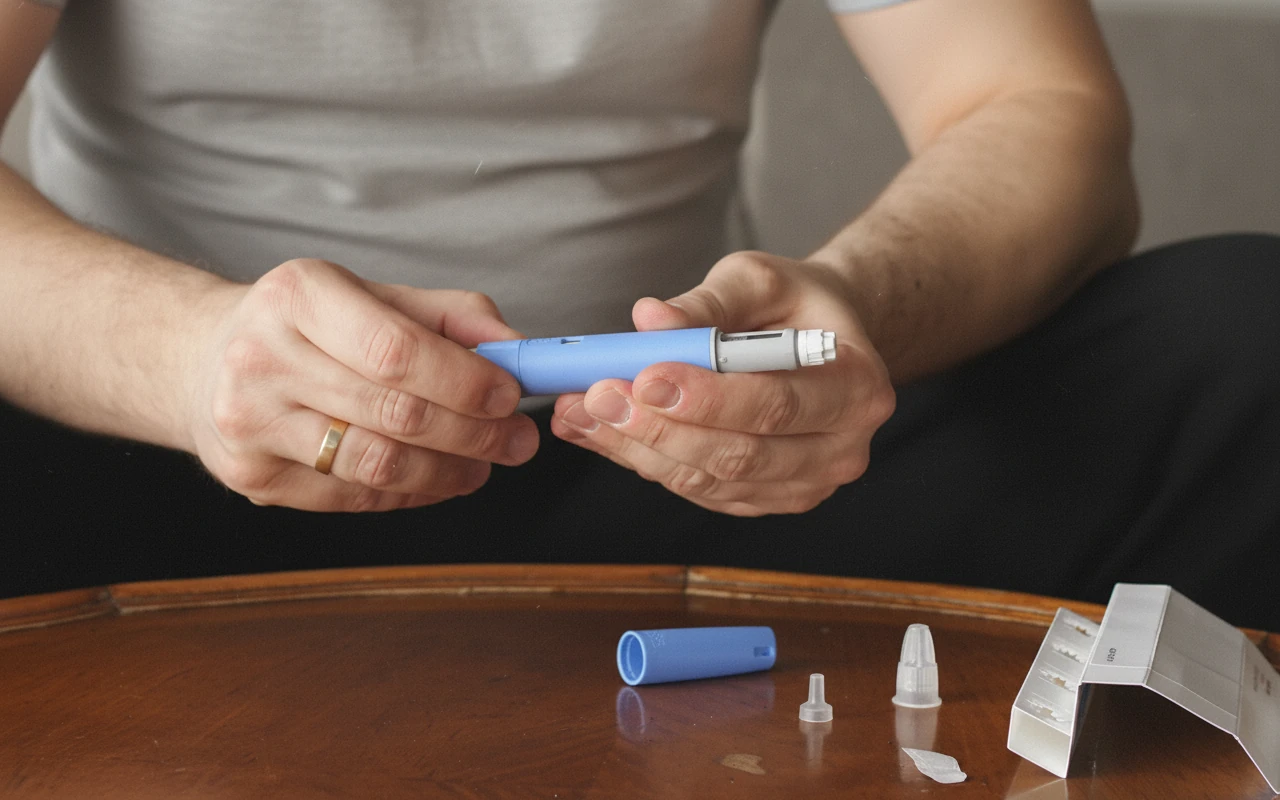
The demand for semaglutide medications like Ozempic and Wegovy has surged dramatically in recent years, leading to widespread shortages that affect patients with type 2 diabetesdiabetesdiabetes-managementdiabetes-managementdiabetes who rely on these drugs for glycemic control12. This shortage is largely driven by off-label use for weight loss, fueled by social media and celebrity endorsements, which has strained the supply chain and complicated access for those with medical needs34. The high cost and inconsistent insurance coverage further exacerbate barriers to treatment, raising concerns about health outcomes for vulnerable populations56.
How Ozempic and Wegovy Work
Ozempic and Wegovy both contain semaglutide, a synthetic analogue of the naturally occurring hormone glucagon-like peptide-1 (GLP-1), which is secreted by intestinal cells78. Semaglutide functions as a GLP-1 receptor agonist, replicating the effects of endogenous GLP-1 to enhance glucose-dependent insulin secretion, improve insulin sensitivity, and regulate blood glucose levels8. This mechanism helps patients with type 2 diabetes achieve better glycemic control when combined with diet and exercise9.
GLP-1 is an incretin hormone that also acts on the central nervous system to reduce appetite and regulate food intake, contributing to weight loss7. Semaglutide has a longer half-life than natural GLP-1, allowing sustained receptor activation and prolonged appetite suppression8. This dual effect on glucose metabolism and appetite makes semaglutide effective for both diabetes management and chronic weight management.
Although Ozempic and Wegovy share the same active ingredient, they differ in dosing and approved clinical indications. Ozempic was FDA-approved in 2017 specifically for type 2 diabetes treatment as a once-weekly injection9, while Wegovy received FDA approval in 2021 for chronic weight management in adults with obesity or overweight conditions with related comorbidities7. Novo Nordisk emphasizes that these medications have distinct dosing regimens and should not be substituted for one another7.
| Drug Name | FDA Approval Year | Indication | Dosing Frequency | Approximate Monthly Price |
|---|---|---|---|---|
| Ozempic | 2017 | Type 2 diabetes | Weekly | ~$900 |
| Wegovy | 2021 | Chronic weight management | Weekly | ~$1,350 |
| Saxenda | 2014 | Weight management | Daily | Variable |
| Tirzepatide (Mounjaro) | 2022 | Type 2 diabetes | Weekly | Variable |
| Sources:78910 | ||||
These medications have transformed diabetes and obesity management by improving glycemic control and inducing significant weight loss, with semaglutide’s appetite-suppressing effects playing a key role108. However, the increased off-label use of Ozempic for weight loss in non-obese patients, which is medically controversial and not FDA-approved, has contributed to supply challenges1112.
Semaglutide functions as a GLP-1 receptor agonist, replicating the effects of endogenous GLP-113.
Access Barriers for Medical Semaglutide Users
The soaring popularity of semaglutide for weight loss, amplified by social media and celebrity endorsements, has led to unprecedented demand that the supply chain has struggled to meet23. This surge has created significant barriers for patients with type 2 diabetes who depend on Ozempic for glycemic control.
Many patients report difficulty filling their prescriptions, with pharmacies often out of stock or only offering lower doses that may be less effective4. Some have been forced to ration their medication or switch to alternative drugs, which may not provide the same benefits214. Interruptions in semaglutide therapy can worsen glycemic control, increasing the risk of cardiovascular events such as heart attack and stroke14.
They should have been prepared to meet demand given their very aggressive advertising campaigns2.
Insurance coverage remains inconsistent, especially for anti-obesity medications like Wegovy and off-label weight loss use of Ozempic. High out-of-pocket costs, ranging from $800 to $1,400 per month depending on the formulation and indication, further restrict access for many patients5615. Co-pays can be a significant barrier to adherence, particularly for those without comprehensive insurance coverage5.
Obesity, recognized as a chronic disease that exacerbates other health conditions, remains under-recognized in many insurance policies, limiting patient affordability for effective pharmacotherapy5. The increased off-label demand for semaglutide has led some pharmacy benefit managers to require prior authorization to prioritize patients with documented diabetes, but this approach can also delay treatment2.
- High demand driven by off-label weight loss use reduces availability for diabetes patients23.
- Pharmacies report frequent stockouts and dose limitations4.
- Insurance coverage for semaglutide is inconsistent and often excludes weight loss indications5.
- High monthly costs limit patient access and adherence615.
- Prior authorization requirements may delay or restrict access for some patients2.
Managing the Semaglutide Shortage
The semaglutide shortage has prompted healthcare providers and patients to seek alternatives and strategies to manage treatment disruptions. Off-label use of Ozempic for weight loss in non-obese patients is medically controversial and not FDA-approved, and experts warn against misuse that contributes to shortages impacting patients with diabetes111216.
The surge in off-label use of semaglutide for cosmetic weight loss has led to shortages that threaten the health of patients with type 2 diabetes who rely on these medications to manage their condition. Responsible prescribing and prioritization are essential to ensure access for those with medical needs2123.
Several alternative medications are available for patients affected by semaglutide shortages:
- Liraglutide (Saxenda): A GLP-1 receptor agonist approved for weight management, requiring daily injections7.
- Dulaglutide and Exenatide: Other GLP-1 receptor agonists used for type 2 diabetes management9.
- Tirzepatide (Mounjaro): A dual GIP/GLP-1 receptor agonist approved for type 2 diabetes, offering an alternative with a weekly dosing schedule17.
Compounded semaglutide products emerged during the shortage but are not FDA-approved and pose safety concerns due to unknown additives and lack of quality control111819. The FDA advises against the use of compounded semaglutide because of potential risks, including contamination and inconsistent dosing1120.
Pharmacists and clinicians encourage patients to:
- Contact multiple pharmacies to locate available doses or alternatives14.
- Discuss alternative GLP-1 receptor agonists with their healthcare providers16.
- Avoid unregulated online sources and compounded formulations due to safety risks20.
The FDA has recently declared an end to the nationwide shortage of semaglutide and tirzepatide as of early 2025, with manufacturers ramping up production and supply stabilizing2019. However, intermittent and localized supply disruptions may persist as the supply chain adjusts.
The shortage highlights the need for equitable access to these medications and the development of novel therapies combining multiple gut hormone receptor agonists to improve metabolic health1718. It also underscores the importance of responsible prescribing practices to prioritize patients with approved indications.
| Alternative Medication | Indication | Dosing Frequency | FDA Approval Status | Notes |
|---|---|---|---|---|
| Liraglutide (Saxenda) | Weight management | Daily | Approved | Requires daily injections7 |
| Dulaglutide | Type 2 diabetes | Weekly | Approved | Alternative GLP-1 RA9 |
| Exenatide | Type 2 diabetes | Twice daily/weekly | Approved | Alternative GLP-1 RA9 |
| Tirzepatide (Mounjaro) | Type 2 diabetes | Weekly | Approved | Dual GIP/GLP-1 RA17 |
- Avoid compounded semaglutide due to safety concerns1119.
- Use approved alternatives when semaglutide is unavailable16.
- Consult healthcare providers before switching medications14.
- Be cautious of counterfeit products sold online21.
- Follow responsible prescribing to prioritize medical need1221.