covid-test-accuracy-for-eg5-and-ba286-variantscovid-test-accuracy-for-eg5-and-ba286-variants">COVID-19 continues to pose a significant health threat, especially with the emergence of new Omicron subvariants that evade immunity. Updated bivalent boosters targeting these variants offer enhanced protection, yet uptake remains suboptimal across the United States1. Modeling studies suggest that increasing booster coverage could prevent tens of thousands of deaths during the upcoming winter season2.
Bivalent Vaccine Awareness Gap
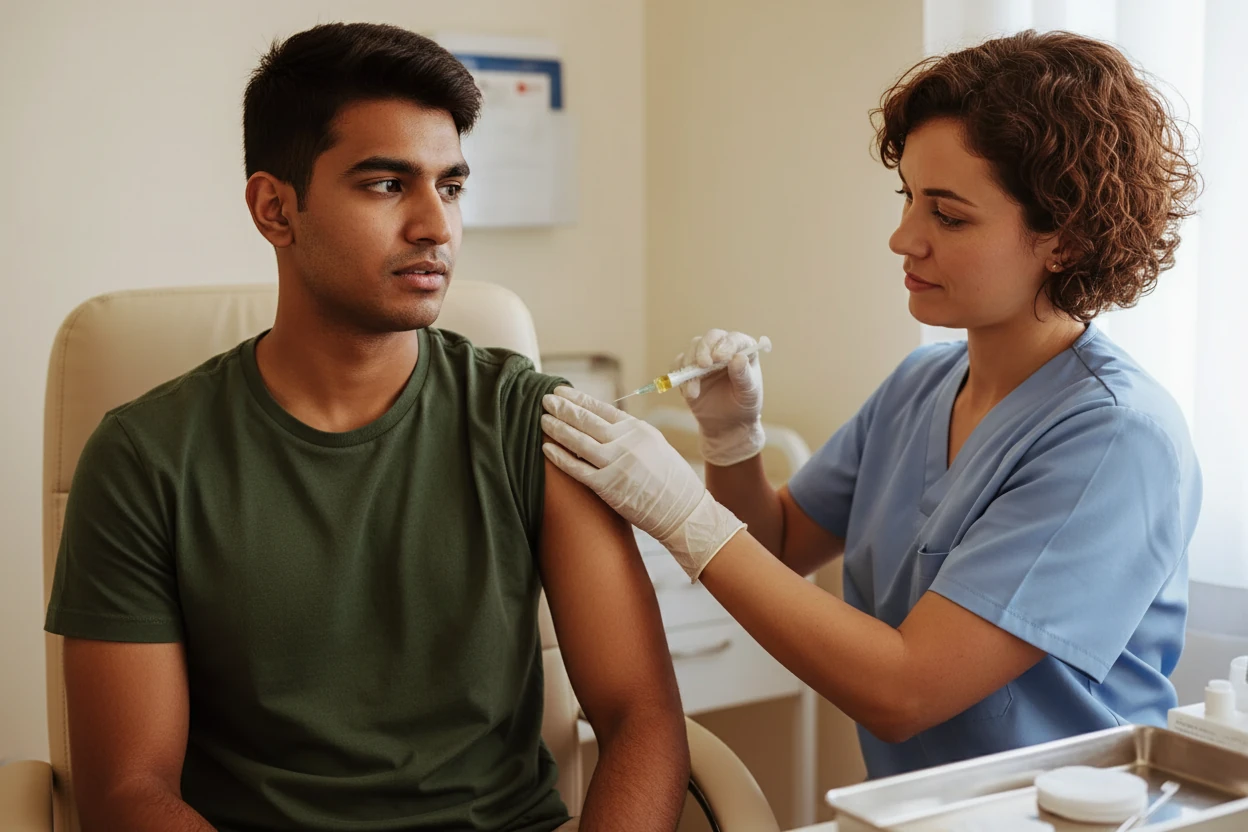
Bivalent mRNA boosters, designed to target both the original SARS-CoV-2 strain and Omicron subvariants BA.4 and BA.5, were authorized in the U.S. in late 2022 to improve protection against evolving variants3. These vaccines contain two messenger RNA components: half targeting the original strain and half targeting the Omicron subvariants, which are currently the dominant circulating strains4. The bivalent boosters have been shown to elicit a broader antibody response, increasing neutralizing antibodies not only against Omicron variants but also other SARS-CoV-2 variants5.
💡 Did You Know?
The risk of non-COVID-19 mortality was lower or similar in the 5 or 8 weeks following a first or second vaccine dose compared to no vaccination, supporting vaccine safety7.
Despite clear authorization and recommendations for all adults who have completed a primary vaccination series, public awareness and understanding of bivalent booster eligibility remain limited3. Surveys indicate that only about one-third of adults and roughly half of adults aged 65 and older have received or plan to receive the bivalent booster by fall 20221. Many individuals remain uncertain about their eligibility and the benefits of the booster, which contributes to low uptake1.
The safety profile of bivalent boosters is consistent with earlier COVID-19 vaccines, with common side effects including fatigue, headache, muscle aches, chills, and fever6. No unexpected adverse events have been reported, and the risk of myocarditis, a rare inflammation of the heart muscle, remains low and primarily observed in younger males after monovalent vaccines6. Importantly, the risk of myocarditis is higher after COVID-19 infection than after vaccination6.
| Vaccine Feature | Details | Source |
|---|---|---|
| Target strains | Original SARS-CoV-2 + Omicron BA.4 and BA.5 | 45 |
| Eligibility | All adults who completed primary vaccination | 3 |
| Common side effects | Fatigue, headache, muscle aches, chills, fever | 6 |
| Myocarditis risk | Rare, mainly in young males, lower than infection risk | 6 |
| Booster timing | At least 2 months after last vaccine or infection | 4 |
Barriers to Booster Access and Motivation
Early COVID-19 vaccination campaigns benefited from extensive infrastructure, including mass vaccination sites, employer mandates, and incentives such as free transportation, which facilitated high vaccine uptake1. Over time, many of these supports have been scaled back or ended, leading to more fragmented vaccine access and reduced convenience for booster doses1. This shift has made it harder for some individuals to find a vaccination site or receive a booster shot promptly.
Federal funding for free COVID-19 vaccines may become limited in the near future, potentially affecting vaccine availability and cost for some populations1. In addition, public fatigue with COVID-19 messaging and reduced media coverage have contributed to decreased demand for boosters1. Vaccine hesitancy and discomfort with COVID-19 vaccines remain significant barriers in certain groups1.
Bivalent boosters are designed to broaden immune protection against current Omicron subvariants, which are more transmissible and immune-evasive. Increasing booster uptake could prevent tens of thousands of deaths this winter, highlighting the urgent need for improved public health strategies123.
The circulation of new immune-evasive Omicron subvariants poses a risk of increased transmission and severe outcomes, especially during winter months389. Experts warn that waning immunity from prior vaccination and infection could lead to a surge in cases unless booster coverage improves31.
Key barriers to booster uptake include:
- Reduced availability of mass vaccination sites and incentives1
- Fragmented vaccine access leading to inconvenience1
- Potential future limitations in federal funding for free vaccines1
- Pandemic fatigue and decreased public health communication1
- Persistent vaccine hesitancy and concerns about side effects1
Promoting Vaccination Amid Pandemic Fatigue
Despite challenges in public engagement, bivalent boosters remain a critical tool to prevent severe COVID-19 disease and deaths, particularly with anticipated winter surges1. Modeling by the Commonwealth Fund estimates that increasing booster coverage to levels similar to seasonal influenza vaccination rates could save approximately 75,000 lives this winter12. Other research suggests that Omicron-specific boosters could prevent up to 90,000 deaths if uptake improves significantly210.
Strategies to increase booster uptake focus on convenience, motivation, and communication:
- Linking COVID-19 booster campaigns with seasonal influenza vaccination efforts to reach receptive populations1
- Using reminders and small financial incentives to encourage vaccination1
- Balancing public messaging to maintain awareness without causing pandemic fatigue or complacency1
- Emphasizing the importance of timely booster vaccination, especially for older adults and vulnerable groups3111
The new booster is a bivalent vaccine containing two messenger RNA (mRNA) components of the coronavirus. Half of the vaccine targets the original strain, and the other half targets the BA.4 and BA.5 Omicron subvariant lineages.
— Carrie MacMillan, Yale Medicine4
Vaccination remains effective in reducing COVID-19-related emergency department visits, hospitalizations, and deaths. Recent data show that bivalent boosters provide superior protection compared to original monovalent vaccines, with vaccine effectiveness against COVID-19-associated death reaching up to 64%1213. Protection wanes over time, highlighting the need for timely booster doses12.
| Outcome | Vaccine Effectiveness (%) | Risk Difference per 10,000 Persons | Source |
|---|---|---|---|
| COVID-19-associated ED visits | 29.3 | 18.3 | 12 |
| COVID-19-associated hospitalizations | 39.2 | 7.5 | 12 |
| COVID-19-associated deaths | 64.0 | 2.2 | 12 |
Public health experts emphasize ongoing vaccination and precautions as key to managing COVID-19 without returning to severe restrictions1. The co-administration of COVID-19 boosters with flu vaccines is safe and encouraged to improve coverage and convenience14.