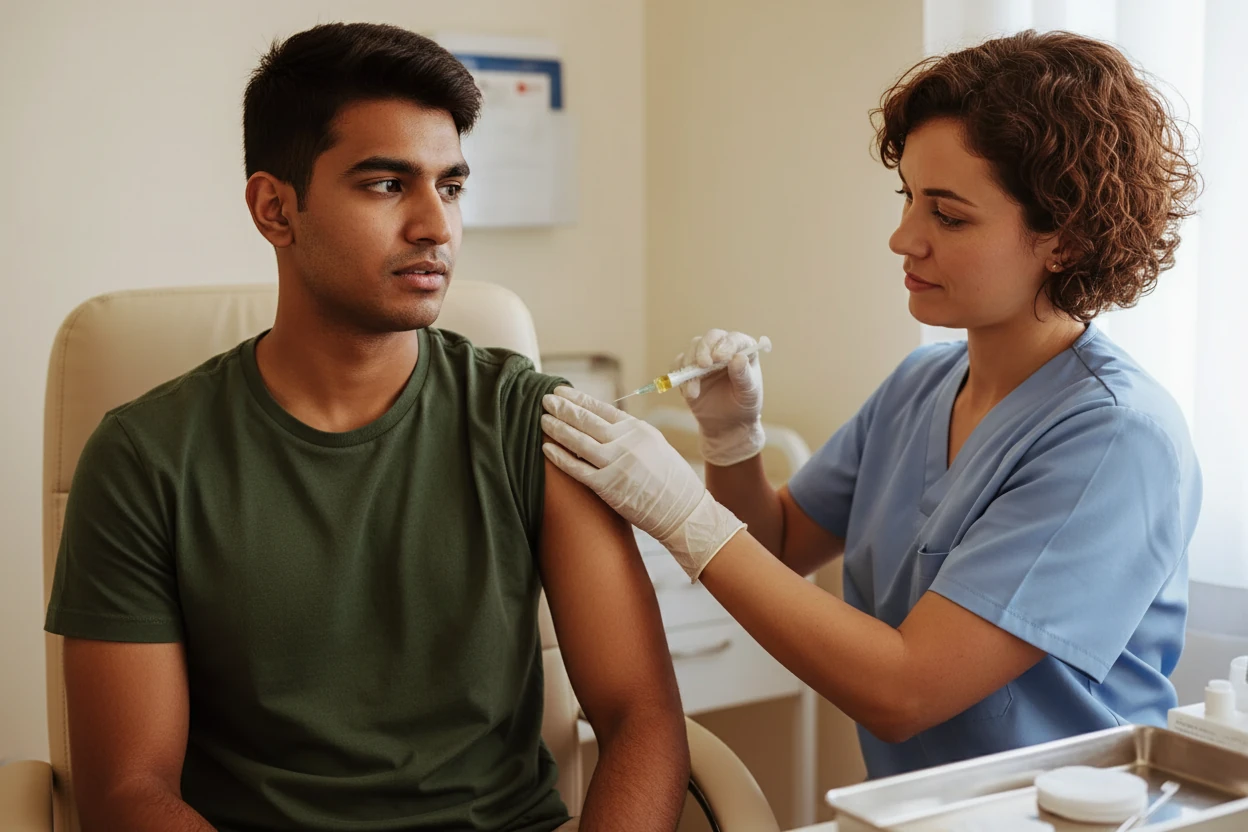
Lyme disease affects nearly 476,000 people annually in the United States, making it the most common tick-borne illness nationwide1. A new oral pill called TP-05 shows promise in preventing Lyme disease by rapidly killing ticks after they attach to human skin, potentially stopping the transmission of the bacteria that cause the disease23. Early clinical trials have demonstrated high tick mortality rates shortly after dosing and sustained protection for up to 30 days4.
Lyme Disease and Treatment Mechanism
Lyme disease is caused by the bacterium Borrelia burgdorferi, which is transmitted to humans through the bite of infected black-legged ticks (Ixodes scapularis)5. These ticks are primarily found in the Northeast, mid-Atlantic, and Midwest regions of the U.S., though climate change is expanding their geographic range and increasing the risk of infection6. Early symptoms of Lyme disease include a characteristic red, expanding rash called erythema migrans and fever7. If untreated, the infection can spread to the nervous system, heart, and joints, causing serious complications7.
Current prevention strategies focus on avoiding tick bites and promptly removing ticks before they can transmit infection8. Transmission of Borrelia burgdorferi typically requires the tick to be attached for at least 24 to 48 hours, providing a window for intervention8. TP-05 is an oral therapeutic containing lotilaner, a compound previously used in veterinary medicine to kill ticks and fleas on dogs9. Lotilaner is also approved in an ophthalmic solution for treating eyelid mite infestations in humans10.
TP-05 works by killing ticks rapidly after they attach to the skin, ideally within the 24-hour window before the bacteria can be transmitted11. This rapid tick-killing mechanism could prevent Lyme disease and potentially other tick-borne illnesses, such as babesiosis and anaplasmosis, which also require prolonged tick feeding for transmission12. The drug’s systemic action allows it to remain effective in the bloodstream for up to a month, offering durable protection11.
- Lyme disease is caused by Borrelia bacteria transmitted by Ixodes scapularis ticks56.
- Climate change is increasing tick populations and expanding their habitats6.
- Early Lyme symptoms include erythema migrans rash and fever; untreated infection can lead to neurological, cardiac, and joint complications7.
- TP-05 contains lotilaner, a systemic tick-killing agent previously used in dogs and in human eye treatments109.
- The drug kills ticks within 24 hours of attachment, preventing bacterial transmission8.
Clinical Trial Results and Findings
TP-05 has undergone early-phase clinical trials to evaluate its safety and efficacy in humans. In these studies, sterile, non-pathogenic nymphal ticks were placed on healthy volunteers at two separate times: once before dosing and again 30 days after dosing114. Volunteers were randomized to receive either a placebo or low and high doses of TP-05.
On the first day after dosing, tick mortality was remarkably high in the treatment groups: 97% of ticks died in the high-dose group and 92% in the low-dose group, compared to only 5% mortality in the placebo group112. When ticks were placed on volunteers 30 days later, the drug maintained its efficacy, killing approximately 89-91% of ticks in the treated groups versus 9% in the placebo group112.
The medication was generally well tolerated, with no serious adverse events reported during these trials11. However, the data have not yet been published in peer-reviewed journals, and larger, controlled studies are needed to confirm these findings and evaluate safety in diverse populations, including those on other medications1113.
“The tick-kill rates seen at Day 1 and Day 30 suggest that TP-05 may have the potential to provide both rapid and durable protection against multiple tick-borne diseases, which would be a welcome alternative to vaccines in the prevention armamentarium.”
— Linden Hu, Tufts University School of Medicine4
- Phase 2a trials showed 92-97% tick mortality shortly after dosing11.
- Tick-killing efficacy remained high (~90%) 30 days post-treatment11.
- Placebo groups showed only 5-9% tick mortality at corresponding times11.
- TP-05 was generally well tolerated with no serious adverse events11.
- Larger trials are needed to confirm safety and efficacy13.
Potential Approval Timeline
While early clinical trials of TP-05 have shown promising results, the drug has not yet entered later-stage trials such as phase 2b or 2c3. The company developing TP-05, Tarsus Pharmaceuticals, has indicated that it is too early to predict when the medication might become available to the public14. Additional studies are necessary to confirm the drug’s safety and effectiveness in larger and more diverse populations.
Cost and insurance coverage will also play significant roles in the accessibility and uptake of TP-05 once approved118. Experts emphasize that affordability will be key to maximizing the public health benefits of this new prophylactic option118.
- TP-05 has completed early-phase trials but has not yet started phase 2b/2c studies113.
- The timeline for FDA approval remains uncertain14.
- Cost and insurance coverage will influence patient access118.
- Affordability is critical to widespread adoption and public health impact118.
“Lotilaner has been available for dogs for a long time, but no one has thought to develop innovative formulations to potentially prevent Lyme disease in humans before this.”
— Linden Hu, Tufts University School of Medicine12
Alternative Lyme Prevention Drugs
TP-05 is not the only new intervention under development for Lyme disease prevention. Several other promising approaches include vaccines and monoclonal antibodies.
💡 Did You Know?
A single dose of TP-05 killed 97% of ticks in the high-dose group and 92% in the low-dose group on day one, with about 90% tick mortality observed even 30 days later2.
Pfizer and Valneva are developing an OspA-based vaccine candidate called VLA15, which targets the outer surface protein A of Borrelia bacteria115. This vaccine has shown immunogenicity and safety in phase 2 clinical trials and aims to prevent Lyme disease by inducing antibodies that block bacterial transmission from ticks to humans15.
Another innovative approach involves monoclonal antibodies designed to kill Borrelia bacteria within ticks before transmission occurs. MassBiologics at the University of Massachusetts Medical School is developing a single-dose seasonal monoclonal antibody prophylaxis that targets the bacteria in the tick’s gut166. Clinical trials are ongoing to evaluate the safety and efficacy of this method166.
- VLA15 is an OspA-based Lyme vaccine candidate in phase 2 trials115.
- Vaccines work by inducing antibodies that prevent bacterial transmission from ticks15.
- Monoclonal antibodies targeting Borrelia in ticks are in development as single seasonal shots166.
- These alternatives may complement or compete with oral prophylactics like TP-0517.
- Comparative effectiveness, safety, and duration of protection will guide future choices17.
Recent research from Northwestern University has also identified piperacillin, an antibiotic in the penicillin class, as a promising targeted treatment for Lyme disease. Piperacillin effectively cured Lyme infection in mice at doses 100 times lower than doxycycline, the current standard treatment, and had minimal impact on beneficial gut bacteria18. This antibiotic may offer a more precise and less disruptive treatment option for Lyme disease, especially for those who do not respond well to doxycycline or are at high risk of side effects18.
Lyme Disease Risk Reduction Strategies
Until new prophylactic drugs or vaccines become widely available, traditional personal protective measures remain the cornerstone of Lyme disease prevention819. These strategies help reduce the risk of tick bites and subsequent infection.
- Use EPA-approved insect repellents containing DEET on exposed skin819.
- Wear permethrin-treated clothing to repel and kill ticks on contact819.
- Avoid tick habitats such as tall grass, leaf litter, and dense bushes819.
- Stay on cleared hiking trails to minimize exposure to ticks819.
- Wear long-sleeved shirts and long pants, tucking pants into socks to prevent tick attachment819.
- Conduct thorough tick checks on the body, clothing, pets, and gear after outdoor activities819.
These measures remain essential even as new prevention options like TP-05 are developed and tested118.