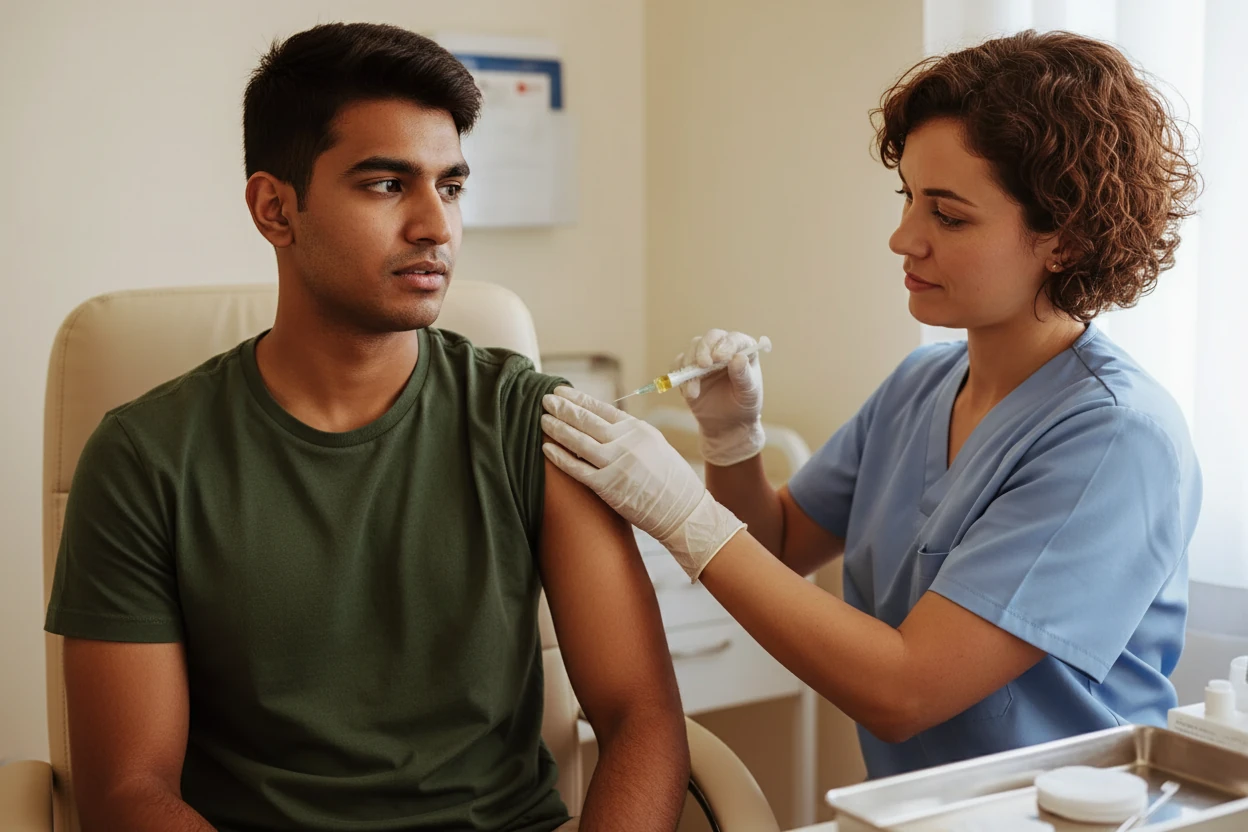
Lyme disease is the most common vector-borne illness in the United States, with an estimated 476,000 people diagnosed and treated annually, far exceeding reported cases12. The disease is caused by the bacterium Borrelia burgdorferi and transmitted through the bite of infected blacklegged ticks, whose geographic range is expanding due to climate change and land use changes31. Despite growing awareness and increasing incidence, no human vaccine is currently available, highlighting an urgent need for effective prevention34.
Addressing the Growing Lyme Disease Threat
Lyme disease is caused by Borrelia burgdorferi, a spiral-shaped bacterium transmitted to humans primarily through bites from infected blacklegged ticks (Ixodes scapularis)3. It is endemic in parts of the United States, Europe, and Asia, with incidence rising in these regions4. The expanding geographic range of ticks is driven by factors such as climate change—warmer winters and wetter conditions allow ticks to survive longer and thrive in new areas—and changes in land use that increase human exposure to tick habitats315.
The disease often begins with early symptoms such as fatigue, fever, headache, muscle aches, and a characteristic expanding red rash called erythema migrans, which appears in 70-80% of infected individuals but is absent in many cases31. If untreated, Lyme disease can progress to serious complications including arthritis, carditis (heart attack symptoms quick recognition saves lives inflammation), and neurological disorders31. Early diagnosis and antibiotic treatment are critical to prevent these outcomes3.
Currently, prevention relies heavily on personal protective measures, as no human vaccine has been licensed since the withdrawal of LYMErix in 2002346. LYMErix targeted the outer surface protein A (OspA) of Borrelia and was effective in clinical trials but faced low uptake due to public concerns about potential side effects, including arthritis, and limited geographic demand at the time67. This experience has influenced vaccine development and public acceptance challenges for new candidates.
The investigational vaccine VLA15, co-developed by Pfizer and Valneva, is a multivalent recombinant protein vaccine targeting OspA from six Borrelia serotypes prevalent in North America and Europe81. This vaccine works by inducing antibodies that neutralize the bacteria within the tick’s gut during feeding, preventing transmission to humans1. Preclinical studies demonstrated broad protective immune responses against multiple Borrelia species89. Phase 2 trials showed VLA15 to be safe, well-tolerated, and immunogenic in adults and children1011.
“The prevalence of this disease remains high, despite a growing awareness. In areas where this disease is endemic (constantly present), up to half of surveyed ticks can carry the Borrelia bacteria.”
— Raphael Simon, PhD, Pfizer1
- Expansion of tick habitats due to climate change, including milder winters and wetter conditions35
- Increased human exposure from suburban development near forested areas1
- Growing diversity and prevalence of tick species carrying Lyme and other diseases5
- High infection rates in tick populations, with up to 50% of adult blacklegged ticks carrying Borrelia112
- Rising incidence of Lyme disease cases in both rural and urban areas17
Projected Lyme Vaccine Availability Timeline
VLA15 is currently the only Lyme disease vaccine candidate in advanced human clinical trials, representing the first potential human vaccine for Lyme disease in over two decades1381. The Phase 3 clinical trial named VALOR (Vaccine Against Lyme for Outdoor Recreationists) is a multicenter, placebo-controlled, randomized, observer-blinded study enrolling participants aged 5 years and older across the U.S., Canada, and Europe in Lyme-endemic regions1412.
Participants receive a three-dose primary vaccination series at months 0, 2, and 6, followed by a booster dose approximately one year after the third dose1412. The vaccine targets six OspA serotypes to cover the dominant Borrelia strains in both North America and Europe81. The trial aims to evaluate vaccine efficacy, safety, tolerability, immunogenicity, and lot consistency14.
As of mid-2024, the primary vaccination series in the VALOR trial has been completed, and participants are being monitored for Lyme disease cases through the 2025 tick season14. A second Phase 3 trial focusing on pediatric safety and immunogenicity in children aged 5 to 17 years has completed enrollment1415. VLA15 has demonstrated a favorable safety profile with no significant safety concerns reported by independent monitoring boards1415.
Pfizer plans to submit a Biologics License Application (BLA) to the U.S. Food and Drug Administration (FDA) and a Marketing Authorization Application (MAA) to the European Medicines Agency (EMA) in 2026, contingent on positive Phase 3 data1412. The FDA granted VLA15 Fast Track designation in 2017 to expedite its development12.
Other vaccine development approaches are also underway, including monoclonal antibody therapies and vaccines targeting tick saliva proteins, but VLA15 is the furthest along in clinical development7.
| Phase 3 Lyme Disease Vaccine Trial Milestones | Details |
|---|---|
| Trial Name | VALOR (Vaccine Against Lyme for Outdoor Recreationists)14 |
| Participants | Ages 5 years and older, ~6,000 enrolled14 |
| Vaccination Schedule | 3 doses at months 0, 2, 6 + booster at ~month 181412 |
| Geographic Coverage | U.S., Canada, Europe (Lyme-endemic areas)14 |
| Expected Regulatory Submission | FDA BLA and EMA MAA in 20261412 |
| Safety Profile | Favorable; no major safety concerns1415 |
“The completion of the primary series of our VALOR trial is a critical step toward our goal of providing a safe and effective vaccine against Lyme disease.”
— Annaliesa Anderson, Ph.D., Pfizer14
Current Lyme Disease Prevention Methods
Until a safe and effective Lyme disease vaccine becomes widely available, prevention depends on personal protective measures and early diagnosis34. The Centers for Disease Control and Prevention (CDC) emphasizes that the most common early sign of Lyme disease is an expanding red rash called erythema migrans at the site of the tick bite, although not all patients develop this rash3. Early symptoms may also include fever, fatigue, headache, and muscle aches3.
Prompt recognition and antibiotic treatment are essential to prevent serious complications such as Lyme arthritis, carditis, and neurological involvement3. However, many patients do not recall a tick bite, making awareness of symptoms and risk factors critical3.
Current prevention strategies recommended by health authorities include:
- Avoiding tick-infested areas, especially during peak tick activity seasons34
- Wearing protective clothing such as long sleeves and pants when in wooded or grassy areas3
- Using tick repellents containing DEET or permethrin-treated clothing34
- Performing thorough tick checks on the body and pets after outdoor activities34
- Prompt removal of attached ticks using proper techniques to reduce infection risk3
Despite these measures, evidence for their effectiveness in preventing Lyme disease is limited, and the expanding tick population increases exposure risk161. Therefore, vaccination remains a critical unmet need to reduce the growing burden of Lyme disease17.
“We’re seeing more diverse species of ticks, more often. Tick ranges are expanding with changing climate, and milder winters mean more ticks survive through the season.”
— Timothy Driscoll, WVU Eberly College of Arts and Sciences5
- Personal protective measures remain the mainstay of prevention34
- Early symptom recognition and treatment are vital to avoid complications3
- Tick avoidance and repellents reduce but do not eliminate risk3
- Public education on tick checks and safe tick removal is essential3
- Vaccine development progress offers hope for future widespread prevention1412