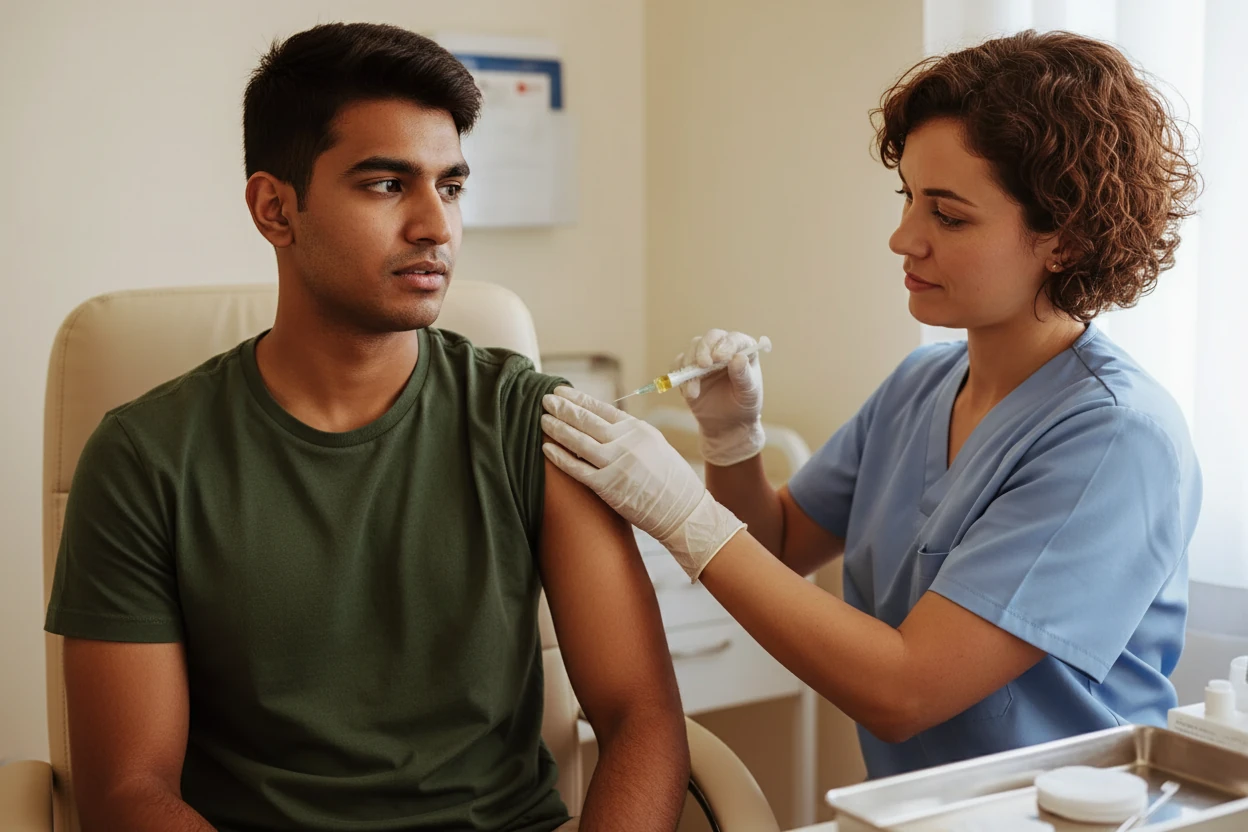
The covid-test-accuracy-for-eg5-and-ba286-variantscovid-test-accuracy-for-eg5-and-ba286-variants">COVID-19 virus has rapidly evolved, leading to the emergence of new variants that challenge the effectiveness of existing vaccines1. To maintain protection against these variants, updated booster vaccines have been developed and authorized using an accelerated approval process similar to that used for annual influenza vaccines2. These boosters are designed to better match circulating strains and help restore immunity, especially in vulnerable populations3.
Accelerated Booster Approval Explained
The rapid mutation of SARS-CoV-2, particularly with variants like Omicron and its sublineages BA.4 and BA.5, has necessitated frequent updates to COVID-19 vaccines to maintain their effectiveness24. Traditional vaccine approval processes, which often require extensive human clinical trials, can lag behind the fast pace of viral evolution. To address this, regulatory agencies like the FDA have implemented an accelerated approval pathway for updated boosters.
This expedited process relies on several key factors:
- Prior extensive safety and efficacy data from the original monovalent COVID-19 vaccines and earlier variant-targeted vaccines25.
- Immunogenicity and safety data from bivalent vaccines targeting earlier Omicron subvariants, such as BA.124.
- Non-clinical animal studies supporting the immune response and safety of updated formulations2.
- Real-world evidence from millions of vaccinated and infected individuals informing ongoing safety assessments6.
This approach mirrors the strategy used for annual influenza vaccines, which are updated seasonally without requiring new human trials each time2. The use of the same mRNA platform technology for the updated boosters facilitates extrapolation of safety and efficacy from prior data1.
💡 Did You Know?
The FDA and CDC have authorized updated Pfizer boosters for people aged 5 and older and Moderna boosters for those aged 6 and older, expanding protection to younger populations710.
The FDA's authorization of bivalent boosters targeting Omicron subvariants BA.4 and BA.5 was supported by this totality of evidence, allowing for faster availability of vaccines better matched to circulating strains46. This balance between rapid vaccine availability and thorough evaluation reflects a public health strategy to address the dynamic pandemic landscape51.
- Utilization of prior clinical data from monovalent vaccines2.
- Immunogenicity data from bivalent BA.1 boosters as a reference4.
- Animal and laboratory studies supporting safety without new human trials2.
- Continuous post-authorization safety monitoring to detect rare adverse events2.
Evidence for Booster Vaccine Safety
Experts widely agree that the updated COVID-19 boosters are safe, despite the absence of new large-scale human clinical trials before authorization4. The safety profile of these boosters is supported by several factors:
- The updated bivalent boosters use the same mRNA technology as the original vaccines, which have an extensive safety record from billions of doses administered worldwide17.
- The BA.4 and BA.5 spike proteins targeted by the new boosters are very similar to the BA.1 variant spike protein, which underwent human clinical trials without identifying new safety concerns47.
- Clinical trials of the BA.1 bivalent boosters showed common side effects similar to those of the original vaccines, such as injection-site pain, fatigue, headache, muscle aches, chills, joint pain, and fever7.
- Animal studies and laboratory data provided additional safety evidence supporting authorization without new human trials2.
- Post-authorization surveillance continues to monitor vaccine safety in real time, often identifying rare side effects more effectively than pre-approval trials27.
- Known rare risks such as myocarditis and pericarditis have been identified and included in vaccine fact sheets, with highest risk observed in young males after the second dose or first booster of original mRNA vaccines78.
Real-world safety data from millions of doses administered, including over 26 million bivalent vaccine doses in the United States, reinforce the confidence in the safety of updated boosters7. Experts emphasize that the updated vaccines differ only slightly from original formulations, mainly in the spike protein target, supporting expectations of similar safety profiles4.
Dr. Ashish Jha, head of the White House COVID-19 Response Team, highlighted the rationale behind the updated boosters’ safety and effectiveness, stating that the updated bivalent vaccines should provide a much higher degree of protection than the original prototype vaccine7.
- Pain, redness, and swelling at the injection site7.
- Fatigue and headache7.
- Muscle and joint pain, chills, and fever7.
Benefits of COVID-19 Booster Shots
Boosters play a critical role in restoring waning immunity and enhancing protection against COVID-19, especially as new variants continue to emerge1. The updated bivalent boosters are designed to better match the currently circulating Omicron subvariants BA.4 and BA.5, potentially improving vaccine effectiveness6.
The importance of timely booster administration is underscored by several factors:
- Booster doses significantly reduce severe COVID-19 outcomes, including emergency department visits, hospitalizations, and deaths, particularly in older adults and vulnerable populations39.
- The strategy for updating COVID-19 boosters parallels that of influenza vaccines, which rely on prior safety and immunogenicity data rather than new human trials each season24.
- Regulatory decisions are informed by extensive prior clinical data and real-world evidence, supporting confidence in booster safety and effectiveness26.
- Higher booster coverage is expected to reduce COVID-19 case surges during winter seasons when indoor gatherings increase3.
- Updated boosters provide a hedge against emerging variants by including the original virus strain alongside Omicron subvariants in a bivalent formulation7.
“This finding calls into question the idea that younger individuals and those without risk factors don’t need the vaccine,” said Nisha Viswanathan, medical director of the University of California’s Long COVID program, emphasizing the broad benefits of boosters9.
Public health guidelines recommend that eligible individuals receive updated boosters at least two months after their last COVID-19 vaccine dose or booster410. For those recently infected with COVID-19, delaying booster vaccination by about three months may optimize immune response11.
Healthcare professionals strongly recommend booster vaccination to maintain immunity and reduce the risk of severe disease310. Individuals are encouraged to consult healthcare providers to make informed decisions about booster timing and eligibility11.
- Restores declining immunity and enhances protection against infection and severe disease1.
- Reduces emergency department visits by nearly 30%, hospitalizations by almost 40%, and deaths by approximately 64%9.
- Provides better protection against currently circulating Omicron subvariants67.
- Supports community immunity, reducing strain on healthcare systems9.
- Offers particular benefit to older adults, immunocompromised individuals, and those with underlying health conditions310.