Nearsightedness and farsightedness are two of the most common vision problems worldwide, affecting millions of people across all ages1. These conditions impact how light focuses on the retina, leading to blurry vision either at a distance or up close2. Understanding their differences, symptoms, and treatments is essential for maintaining good eye health and quality of life3.
Symptoms of Nearsightedness vs. Farsightedness
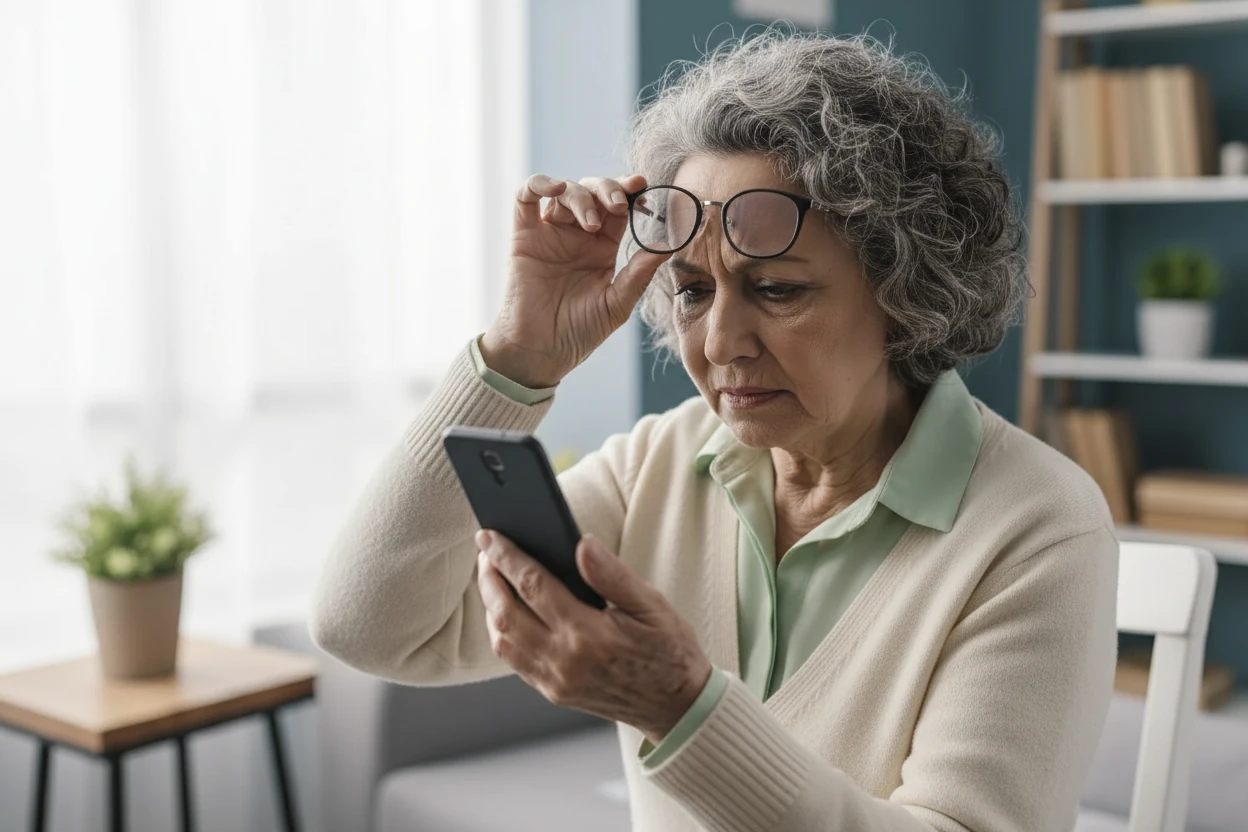
Nearsightedness, also known as myopia, causes difficulty seeing distant objects clearly while near objects remain sharp3. People with myopia often hold reading materials very close to their eyes to see clearly and may struggle to recognize faces across a room4. Common symptoms include blurry distance vision, eye strain, headaches, frequent squinting, and sometimes sitting very close to screens or the television43.
Farsightedness, or hyperopia, primarily affects the ability to see objects up close, while distant vision is usually clearer5. Children with hyperopia may experience blurred near vision, eye strain, headaches, and difficulty concentrating on close tasks such as reading or schoolwork5. Symptoms can also include double vision, irritability after sustained focus, and holding reading materials at arm’s length53.
Both conditions can cause eye discomfort and headaches due to the extra effort the eyes make to focus45. However, farsightedness often presents with more difficulty during near activities, while nearsightedness mainly affects distance vision.
Differences
They Have Unique Refractive Errors
Nearsightedness and farsightedness are types of refractive errors, meaning the eye does not focus light correctly on the retina6. In myopia, the eyeball is too long or the cornea too curved, causing light to focus in front of the retina. This results in blurry vision for distant objects but clear vision up close72. Conversely, hyperopia occurs when the eyeball is too short or the cornea too flat, causing light to focus behind the retina. This makes near objects appear blurry, and sometimes distant objects as well82.
| Feature | Nearsightedness (Myopia) | Farsightedness (Hyperopia) |
|---|---|---|
| Image Focus | In front of the retina7 | Behind the retina8 |
| Eyeball Shape | Too long or cornea too curved7 | Too short or cornea too flat8 |
| Vision Impact | Blurry distance vision, clear near vision4 | Blurry near vision, sometimes distant vision5 |
| Sources:4578 | ||
Prevalence and Age of Onset Differs
Myopia is increasingly common worldwide, especially in East Asia, with onset typically between ages 6 and 12910. It affects up to 85% to 90% of young adults in some Asian countries and 30% to 40% in the United States and Europe7. The prevalence of myopia rises with age during childhood and peaks in young adulthood7.
Hyperopia is more common in infancy and early childhood, affecting about 4.6% of children globally, with higher rates in the Americas (14.3%) and lower rates in Southeast Asia (2.2%)5. Babies are usually born moderately farsighted, but this decreases as their eyes grow, often reducing hyperopia by age 3 or 48. Unlike myopia, farsightedness tends to improve with age during childhood as the eye develops8.
Nearsightedness May be Preventable
While farsightedness is generally stable or improves as the eye grows, myopia often progresses during childhood and adolescence10. Environmental factors such as increased screen time and less outdoor activity may contribute to the rising rates of myopia3. Treatments like specialized contact lenses (e.g., MiSight® 1 day lenses) and orthokeratology can help slow myopia progression in children10.
In contrast, there is currently no treatment to prevent farsightedness from worsening, though it often becomes less severe naturally as the eye grows8.
Similarities
Similar Diagnostic Methods
Both nearsightedness and farsightedness are diagnosed through comprehensive eye exams that assess visual acuity and refractive errors3. Tests typically include reading letters on a chart at various distances and refraction assessments to determine the correct prescription3. In some cases, pupil dilation may be used to examine the eye’s internal structures and ensure accurate diagnosis3.
Similar Treatments
The primary treatments for both conditions include prescription eyeglasses and contact lenses, which correct the way light focuses on the retina8. Refractive surgeries such as LASIK and PRK can also reshape the cornea to improve vision in both myopia and hyperopia1. These treatments help restore clear vision but do not cure the underlying refractive error.
Both Can Affect Quality of Life
Uncorrected refractive errors can significantly impact daily activities, including reading, driving, and school performance1112. Eye strain, headaches, and fatigue are common symptoms that reduce comfort and productivity45. Correcting these errors improves quality of life but may not fully restore vision to the level of those without refractive errors11.
Both Require Regular Eye Exams
💡 Did You Know?
Normal vision occurs when light focuses directly on the retina, allowing clear vision at all distances. Nearsightedness and farsightedness occur when light focuses either in front of or behind the retina, respectively2.
Regular eye exams are essential for monitoring vision changes and updating prescriptions as needed3. Children, in particular, benefit from routine screenings to detect and manage refractive errors early, preventing complications such as amblyopia or strabismus513. Adults should also have periodic exams to identify age-related changes like presbyopia, which affects near vision14.
Can You Have Both Nearsightedness and Farsightedness?
It is rare but possible for an individual to have nearsightedness in one eye and farsightedness in the other, a condition known as anisometropia10. This situation affects less than 1% of children and adults and can cause difficulty focusing or require turning the head to compensate10. However, having both conditions in the same eye is uncommon.
It is possible for a child to be both nearsighted and farsighted, but not in the same eye. This condition is rare, occurring in less than 1% of children and adults. The most common symptom is trouble focusing or tilting the head to compensate10.
When To Seek Care and Who to Contact
If you experience persistent blurry vision, eye strain, headaches, or difficulty focusing, it is important to schedule an eye exam with an optometrist or ophthalmologist3. Children should have regular vision screenings to detect refractive errors early and prevent complications such as amblyopia (lazy eye) or strabismus (eye misalignment)513.
Presbyopia, an age-related condition causing difficulty focusing on near objects, typically begins around age 40 to 45 and requires corrective lenses1415. Over half of the global population affected by presbyopia cannot afford proper spectacles, highlighting the importance of accessible eye care16.
Eye care professionals can provide comprehensive exams, prescribe corrective lenses, and discuss treatment options such as contact lenses or refractive surgery17. Early intervention is key to maintaining good vision and quality of life.
Both nearsightedness and farsightedness can cause eye strain and headaches due to the extra effort needed to focus. Early diagnosis and correction can improve comfort and prevent further vision problems1145.
A Quick Review
- Nearsightedness (myopia) causes blurry distance vision due to light focusing in front of the retina, often from an elongated eyeball or curved cornea72.
- Farsightedness (hyperopia) causes blurry near vision because light focuses behind the retina, often from a short eyeball or flat cornea82.
- Myopia is common in school-aged children and young adults, especially in East Asia, and tends to worsen with age during childhood97.
- Hyperopia is common in infants and young children and often decreases as the eye grows58.
- Both conditions are diagnosed with eye exams and treated with glasses, contact lenses, or surgery83.
- Rarely, a person can have myopia in one eye and hyperopia in the other10.
- Regular eye exams are essential for early detection and management of refractive errors and related conditions like presbyopia143.