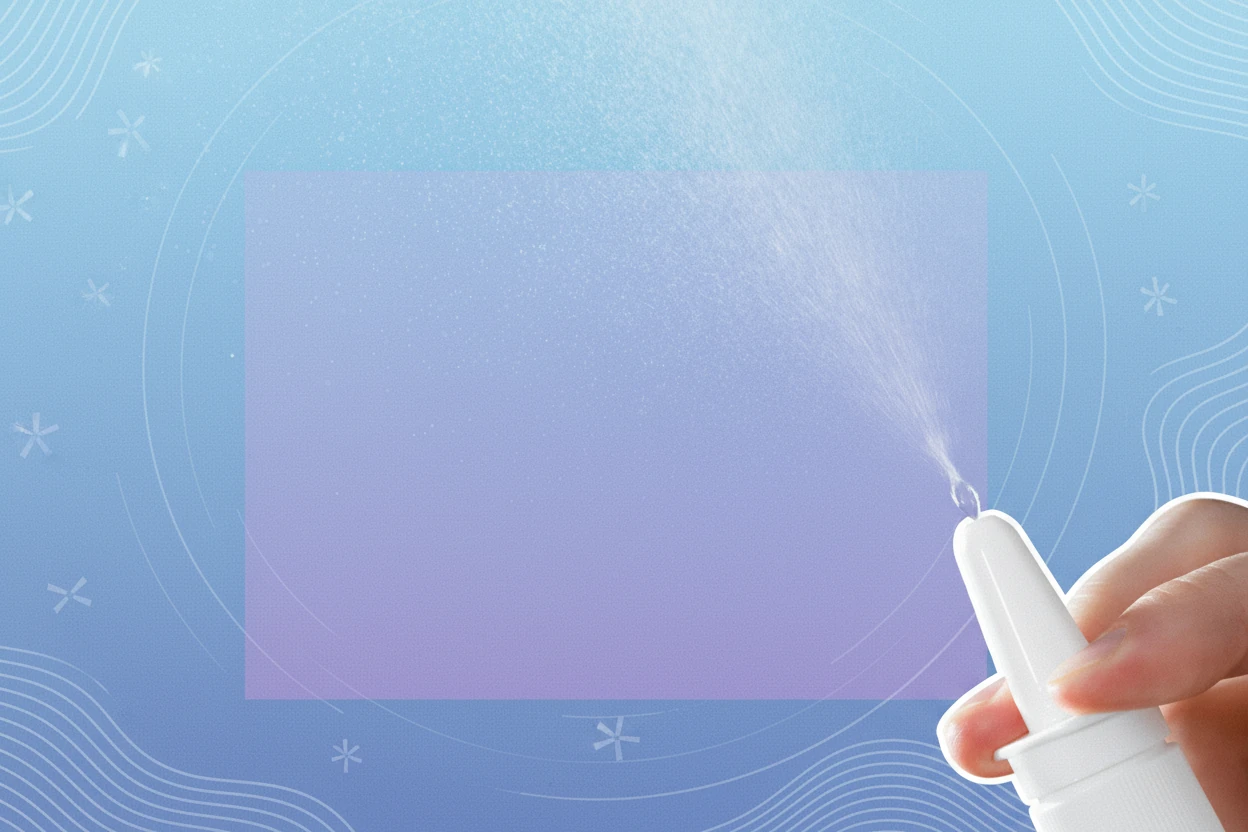
Nasal spray covid-test-accuracy-for-eg5-and-ba286-variantscovid-test-accuracy-for-eg5-and-ba286-variants">COVID-19 vaccines represent a promising advancement in the fight against the pandemic by targeting immunity directly at the site where the virus first enters the body. Recent studies have shown that these vaccines can generate strong local immune responses in the respiratory tract, potentially offering broader and longer-lasting protection against SARS-CoV-2 variants12. While several nasal vaccine candidates are in clinical development, widespread regulatory approval and public availability remain pending as ongoing trials continue to evaluate their safety and effectiveness34.
“Understanding how this safe and simple nasal booster promotes protective mucosal immunity will make it easier to develop this approach for human use in the near future.”
— Akiko Iwasaki, Yale University20
How Nasal Spray Vaccines Work
Nasal spray vaccines are designed to stimulate both systemic immunity (throughout the body) and mucosal immunity, which is the immune response at mucous membranes such as those lining the nose and respiratory tract567. The nasal mucosa is the primary entry point for SARS-CoV-2, making it a strategic target for vaccination89. By delivering the vaccine intranasally, these vaccines induce the production of secretory immunoglobulin A (IgA), an antibody that neutralizes viruses at the site of infection before they can spread107.
Preclinical studies in animal models have demonstrated that intranasal vaccination can generate broad and long-lasting immunity against various SARS-CoV-2 variants, including Omicron BA.5, with protective effects lasting at least 15 months2. This immunity includes robust T cell responses and systemic antibody production, which are crucial for preventing severe disease and viral transmission1110. For example, mucosal SARS-CoV-2 vaccination in rodents elicited superior systemic T central memory function, enhancing long-term immune defense11.
Advanced delivery systems such as nanoparticles and viral vectors are being explored to improve the immunogenicity and safety of nasal vaccines121314. These technologies help ensure that the vaccine components are effectively absorbed by nasal tissues and stimulate a strong immune response without causing significant side effects.
“Our study shows how a simple viral protein antigen can boost respiratory tract immune responses against viruses.”
— Akiko Iwasaki, Yale School of Medicine1
Nasal Vaccine Benefits and Limitations
Nasal vaccines offer several advantages over traditional intramuscular injections, primarily due to their ability to induce mucosal immunity at the virus's entry point. This localized immune response can block infection and reduce viral shedding, potentially decreasing transmission from infected individuals101516. Unlike intramuscular vaccines, which mainly produce circulating antibodies and provide short-lived immunity that does not fully prevent infection or transmission, nasal vaccines target the nasal mucosa to provide a first line of defense1510.
“These findings help explain why nasal boosters do not require adjuvant to induce robust mucosal immunity at the respiratory mucosa and can be used to design safe and effective vaccines against respiratory virus pathogens.”
— Dong-il Kwon, Yale School of Medicine1
Key benefits of nasal vaccines include:
- Needle-free delivery, which improves patient comfort and acceptance17.
- Potential for self-administration, reducing the need for healthcare personnel during vaccination campaigns17.
- Induction of secretory IgA antibodies in the nasal passages and lungs, enhancing protection where the virus first attacks1.
- Ability to generate both systemic and mucosal immune responses, offering broader protection1011.
- Potential to reduce virus transmission by lowering viral load in the nasal passages1819.
However, nasal vaccines also have limitations and challenges:
- Most clinical trial data are still emerging, and the durability of immunity in humans compared to injectable vaccines remains unclear3.
- Some nasal vaccines may still require refrigeration, posing logistical challenges similar to injectable vaccines17.
- The immune response generated may vary depending on the vaccine platform and formulation3.
- Regulatory approval processes are ongoing, and no nasal COVID-19 vaccine has yet achieved widespread authorization comparable to intramuscular vaccines34.
- The need for repeated booster doses is likely, due to waning immunity and the emergence of new variants20.
| Benefits | Limitations |
|---|---|
| Needle-free and potentially self-administered17 | Limited clinical data on long-term immunity3 |
| Induces mucosal IgA and systemic immunity101 | Possible refrigeration requirements17 |
| May reduce viral transmission1518 | Regulatory approval still pending34 |
| Broad and long-lasting immunity in animal models2 | Likely need for repeated boosters20 |
| Lower reactogenicity and fewer adverse events reported in trials22 | Variable immune response by vaccine type3 |
When Nasal COVID Vaccines Launch
As of 2025, multiple nasal COVID-19 vaccine candidates are in various stages of clinical development worldwide. At least six intranasal vaccines are undergoing clinical trials, employing platforms such as viral vectors, protein subunits, and inactivated virus formulations422. Some candidates, including Razi Cov Pars and iNCOVACC, have reported promising phase 3 trial results demonstrating safety and immunogenicity623.
Despite encouraging data, no nasal COVID-19 vaccine has yet received widespread regulatory approval comparable to the currently authorized intramuscular vaccines. The timeline for public availability depends on the successful completion of large-scale efficacy trials and regulatory review processes, which are ongoing34.
Several nasal vaccines are designed to complement existing intramuscular vaccines by providing a mucosal booster that enhances protection where the virus first attacks1.
“The antibodies that are trying to protect you from having the virus enter your body are right there on the front lines protecting you.”
— Dr. Anthony Fauci, National Institute of Allergy and Infectious Diseases20
| Vaccine Candidate | Platform | Clinical Stage | Key Findings |
|---|---|---|---|
| Razi Cov Pars | Protein subunit | Phase 3 | Safe and immunogenic booster in adults6 |
| iNCOVACC | Viral vector | Phase 3 | Effective booster with fewer adverse events2322 |
| CVXGA1 | Protein antigen | Phase 1 | Induced significant mucosal antibody response26 |
| Aerosolized Ad5-nCoV | Viral vector (aerosol) | Clinical trials | Safe and highly immunogenic as heterologous booster22 |
| Nasal vaccine by WashU | Viral vector | Phase 1 (US) | Effective in animal studies; entering human trials2719 |
| Dry powder nasal vaccine | Nanoliposomal adjuvant | Preclinical/early clinical | Thermostable, suitable for distribution without cold chain24 |
Key factors influencing the launch of nasal vaccines include:
- Completion of phase 3 clinical trials to confirm safety and efficacy in diverse populations622.
- Regulatory evaluation and approval by health authorities3.
- Manufacturing scale-up and distribution logistics, including cold chain considerations for some formulations1724.
- Integration into existing vaccination programs as boosters or primary doses2220.
- Continued monitoring of vaccine effectiveness against emerging SARS-CoV-2 variants1625.
Several studies have shown that nasal vaccines used as boosters following intramuscular vaccination can enhance mucosal immunity and increase antibody levels in the respiratory tract122. For example, a phase 3 trial of the intranasal iNCOVACC vaccine as a booster demonstrated safety, immunogenicity, and fewer adverse events compared to injectable vaccines22. Similarly, nasal boosters have been shown to induce strong local immune responses without the need for adjuvants, which are substances that enhance vaccine effectiveness but may cause side effects1.