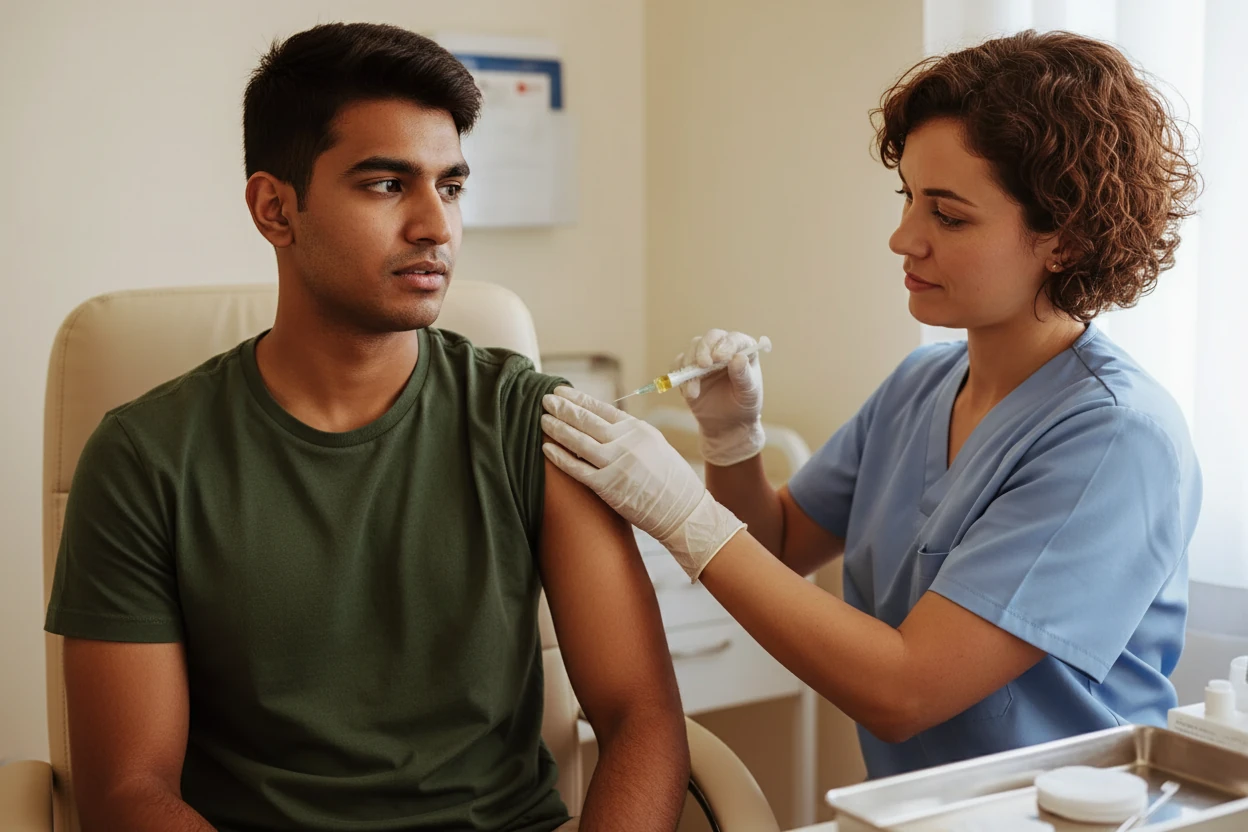
Monkeypox is a potentially serious disease caused by infection with the monkeypox virus, a zoonotic orthopoxvirus closely related to smallpox12. Vaccination remains a key strategy to prevent monkeypox infection and reduce disease severity, especially in at-risk populations34. Two vaccines are currently approved in the United States for monkeypox prevention: JYNNEOS and ACAM2000, with JYNNEOS being preferred due to its improved safety profile and non-replicating nature56. Understanding the side effects and dosing options of these vaccines helps optimize protection while managing adverse reactions effectively78.
“The most common vaccine side effects are pain, redness, swelling, hardness, itching at the injection site.”
— Elsbet Servay, Callen-Lorde Community Health Center8
Monkeypox Vaccines: Who is Eligible & At-Risk Groups
Two vaccines are authorized by the FDA to prevent monkeypox: JYNNEOS and ACAM200056. JYNNEOS is a live, non-replicating Modified Vaccinia Ankara (MVA) vaccine, while ACAM2000 is a live, replication-competent vaccinia virus vaccine910. The non-replicating nature of JYNNEOS means it does not produce infectious virus in humans and cannot cause clinical vaccinia infections, making it safer for widespread use1. In contrast, ACAM2000 can cause clinical vaccinia infections and shed live virus from the vaccination site, posing transmission risks to close contacts115.
JYNNEOS is administered as a two-dose series, with doses given 28 days apart73. Full protection develops approximately two weeks after the second dose8. The vaccine can be given either subcutaneously or intradermally; the latter route has been authorized under emergency use to extend vaccine supply by using a smaller volume per dose while maintaining effectiveness712. ACAM2000 is given as a single dose via percutaneous scarification but is contraindicated in immunocompromised individuals and those with certain skin conditions due to higher risks of serious side effects1113.
The Centers for Disease Control and Prevention (CDC) recommends JYNNEOS as the primary vaccine for monkeypox prevention because of its better safety profile and ease of administration13. Vaccination is advised for people with known or suspected exposure to monkeypox, men who have sex with men and transgender or nonbinary individuals with certain risk factors, those with recent sexual partners diagnosed with monkeypox, and persons at occupational risk for orthopoxvirus exposure3.
| Vaccine | Type | Dose Schedule | Key Risks/Side Effects | Administration Route |
|---|---|---|---|---|
| JYNNEOS | Live, non-replicating | 2 doses, 28 days apart | Injection site reactions, mild systemic symptoms | Subcutaneous or intradermal |
| ACAM2000 | Live, replicating | Single dose | Myocarditis, pericarditis, transmission risk | Percutaneous scarification |
“One time I bumped the back of my arm on something and it hurt a LOT for a few seconds, like a stubbed toe.”
— Graham Walker, San Francisco ER8
Common Monkeypox Vaccine Side Effects: What to Expect
Side effects from monkeypox vaccines are generally uncommon and mostly mild, with serious adverse events being very rare1024. The most frequently reported side effects of the JYNNEOS vaccine are local reactions at the injection site, including pain, redness, swelling, hardness, and itching172526. These local reactions may be more pronounced with intradermal injections compared to subcutaneous shots, often resulting in a bump or hard lump that can linger for days or weeks178. Systemic symptoms such as headache, fatigue, muscle aches (myalgia), chills, fever, and nausea have also been observed following JYNNEOS vaccination222726.
Severe allergic reactions to JYNNEOS are rare but can include anaphylaxis symptoms such as swelling and respiratory difficulty, which require immediate medical attention2122. Importantly, data from clinical trials involving nearly 8,000 participants, including those with HIV or other immunocompromising conditions, showed a favorable safety profile for JYNNEOS without increased risk of myocarditis or pericarditis compared with placebo controls1.
In contrast, ACAM2000 has a higher risk of serious side effects. Common side effects include rash, fever, fatigue, itching, swollen lymph nodes, and sore arm18101. More severe adverse events associated with ACAM2000 include myocarditis and pericarditis, occurring at a rate of approximately 1 in 175 vaccine recipients (about 570 per 100,000), as well as encephalitis, eczema vaccinatum, and ocular complications that can lead to blindness111328. Because ACAM2000 vaccination sites can shed live virus, there is a risk of transmission to unvaccinated contacts if proper care is not taken513.
Common side effects of monkeypox vaccines include:
- Pain, redness, swelling, hardness, and itching at the injection site268
- Fever, headache, tiredness, chills, and nausea263
- Local skin reactions such as bumps or lumps that may last days or weeks, especially after intradermal JYNNEOS administration178
- Rash and swollen lymph nodes, more common with ACAM2000181
- Rare severe allergic reactions including anaphylaxis2122
Managing Monkeypox Vaccine Reactions & Post-Vaccination Care
Managing side effects from monkeypox vaccines primarily involves supportive care, which can alleviate symptoms and promote recovery1022. Over-the-counter analgesics such as acetaminophen and nonsteroidal anti-inflammatory drugs (NSAIDs) are recommended to relieve pain, fever, and muscle aches1022. Adequate hydration is also advised to help mitigate side effects and support the immune response1622.
💡 Did You Know?
Severe and long-term side effects like myopericarditis have been reported to be found in approximately every 20 individuals out of 100,000 receiving ACAM200028.
Intradermal administration of JYNNEOS, authorized under emergency use to extend vaccine supply, tends to cause less pain but may lead to more prolonged local skin reactions such as redness, itching, swelling, thickening, and discoloration of the skin at the injection site17218. These reactions are generally mild and self-limited.
Severe allergic reactions or cardiac symptoms such as chest pain, palpitations, or shortness of breath after vaccination require urgent medical evaluation1113. Myocarditis and pericarditis, while rare, are recognized adverse events associated with ACAM2000 vaccination and necessitate close monitoring and treatment if they occur13. Because ACAM2000 vaccination sites can shed live virus, proper wound care and hygiene are essential to prevent transmission to others513.
Key steps to manage monkeypox vaccine side effects include:
- Use acetaminophen or NSAIDs to relieve pain, fever, and muscle aches1022
- Maintain adequate fluid intake to support recovery1622
- Monitor injection site for prolonged redness, swelling, or itching, especially after intradermal JYNNEOS1721
- Seek urgent medical care for severe allergic reactions or cardiac symptoms1113
- Follow proper wound care instructions after ACAM2000 vaccination to prevent virus transmission513