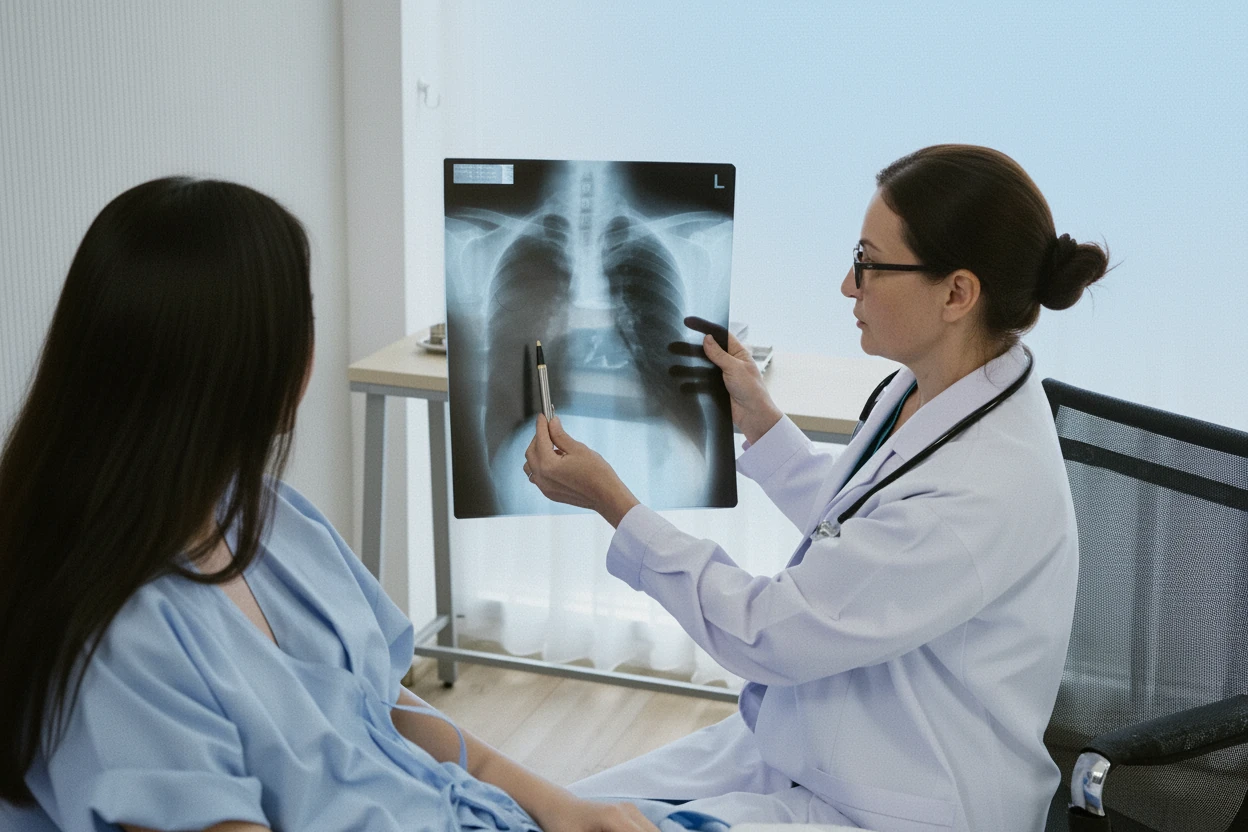
Mesothelioma is a rare but aggressive cancer that primarily affects the lining of the lungs, known as the pleura, but can also involve other serosal surfaces such as the abdomen and heart1. This disease is strongly linked to asbestos exposure, often developing decades after initial contact with asbestos fibers2. Despite advances in treatment, mesothelioma remains challenging to cure, making early diagnosis and comprehensive management crucial for improving patient outcomes3.
Types of Mesothelioma
Mesothelioma is classified based on the location of the tumor and its histological subtype24. The most common site is the pleura, the lining surrounding the lungs, accounting for approximately 72% of cases5. Other less frequent sites include the peritoneum (lining of the abdomen), pericardium (lining around the heart), and the tunica vaginalis (lining around the testes)23.
Histologically, mesothelioma is divided into three major subtypes:
- Epithelioid Mesothelioma: The most common subtype, comprising about 80% of cases, characterized by epithelial-like cells. It generally has a better prognosis compared to other types4.
- Sarcomatoid Mesothelioma: The least common and most aggressive form, representing around 10% of cases. It features spindle-shaped cells and tends to respond poorly to treatment4.
- Biphasic Mesothelioma: A combination of epithelioid and sarcomatoid cells, with prognosis and treatment response varying depending on the dominant cell type4.
The subtype and tumor location influence treatment decisions and expected outcomes4.
Symptoms and Warning Signs
Symptoms of mesothelioma vary depending on the tumor location but often include both local and systemic manifestations.
Systemic Symptoms
Common systemic symptoms across all mesothelioma types include:
- Unexplained weight loss23
- Fatigue and general tiredness23
- Fever23
These symptoms reflect the body's response to cancer and may precede localized signs.
Respiratory Symptoms
Pleural mesothelioma, the most frequent form, primarily affects the lungs' lining and presents with:
- Shortness of breath (dyspnea)23
- Chest pain, often persistent and worsening23
- Painful coughing6
- Lumps under the skin on the chest in advanced cases6
Fluid accumulation in the chest (pleural effusion) can further impair breathing3.
Abdominal Symptoms
Peritoneal mesothelioma affects the abdominal lining and typically causes:
- Abdominal pain and tenderness23
- Abdominal swelling or distension due to fluid buildup (ascites)23
- Nausea and digestive discomfort1
These symptoms often mimic other gastrointestinal conditions, complicating early diagnosis.
Cardiac Symptoms
Pericardial mesothelioma, a rare form, involves the lining around the heart and may present with:
- Chest pain23
- Difficulty breathing due to fluid accumulation around the heart (pericardial effusion)23
- Cardiac symptoms such as palpitations or arrhythmias1
Mesothelioma of the tunica vaginalis testis is extremely rare and may appear as swelling or a mass in the scrotal area23.
Primary Causes and Risk Factors
The primary cause of mesothelioma is exposure to asbestos fibers, which are inhaled or ingested and lodge in the mesothelial cells lining various organs23. Asbestos fibers induce chronic inflammation and genetic changes in these cells, leading to uncontrolled proliferation and tumor formation2.
The latency period between asbestos exposure and mesothelioma development is typically 20 to 40 years, making early detection challenging23. Other factors influencing risk include age, sex, and genetic predisposition23.
Risk Factors
- Occupational Asbestos Exposure: Jobs involving mining, construction, shipbuilding, and insulation increase risk due to direct contact with asbestos fibers23.
- Secondary Exposure: Living with someone who works with asbestos may expose individuals to fibers brought home on clothing or skin1.
- Age: Mesothelioma is more commonly diagnosed in individuals over 45 years old23.
- Sex: Males are more frequently affected, likely due to occupational exposure patterns23.
- Genetic Factors: Mutations in genes such as BAP1 have been linked to increased susceptibility23.
- Radiation Exposure: Previous radiation therapy to the chest may elevate risk1.
Diagnostic Procedures and Tests
Diagnosing mesothelioma requires a combination of clinical evaluation, imaging studies, and histopathological confirmation23.
- Medical History and Physical Exam: Assessment focuses on symptoms and history of asbestos exposure23.
- Imaging: Chest X-rays and computed tomography (CT) scans are primary tools for detecting pleural abnormalities and tumor extent23. Magnetic resonance imaging (MRI) provides detailed soft tissue evaluation, especially for assessing invasion into adjacent structures23.
- Fluid Analysis: Sampling of pleural or peritoneal fluid can reveal malignant cells23.
- Serum Biomarkers: Mesothelin levels may assist in diagnosis but are not definitive alone7.
- Biopsy: Tissue sampling remains the gold standard for diagnosis, allowing histological subtype identification23.
Stages of Mesothelioma
Mesothelioma staging is essential for treatment planning and prognosis. Early-stage disease is localized and may be amenable to curative surgery, while advanced stages involve spread to lymph nodes or distant organs, limiting treatment options23. Most cases are diagnosed at advanced stages due to nonspecific symptoms23.
| Stage | Description | Treatment Implications |
|---|---|---|
| I | Tumor confined to the lining of the lung or abdomen23 | Potential for curative surgery23 |
| II | Involvement of nearby tissues or lymph nodes23 | Multimodal treatment recommended23 |
| III | Extensive local spread, unresectable disease23 | Palliative and systemic therapies23 |
| IV | Distant metastasis present23 | Focus on symptom management23 |
Treatment Options and Approaches
Mesothelioma treatment is multimodal and tailored to the disease stage, histological subtype, and patient health23.
Surgery
Surgical options aim to remove as much tumor as possible and include:
- Pleurectomy/Decortication (P/D): Removal of the pleura lining while preserving the lung23.
- Extrapleural Pneumonectomy (EPP): More extensive surgery removing the lung, pleura, diaphragm, and pericardium23.
Surgery is generally considered in early-stage disease and for patients with good performance status23.
Chemotherapy
The standard chemotherapy regimen combines pemetrexed and cisplatin23. This combination improves survival and symptom control but is not curative23.
Radiation Therapy
Radiotherapy is often used for palliation to relieve symptoms such as pain and to control local tumor growth23. Its efficacy as a primary treatment is limited due to the diffuse nature of mesothelioma23.
Immunotherapy
Immunotherapy with agents like nivolumab and ipilimumab is approved for advanced mesothelioma (stages II-IV)23. These drugs help the immune system recognize and attack cancer cells, offering improved outcomes in some patients23.
Palliative Procedures
Palliative care focuses on symptom relief and quality of life. Procedures may include:
- Draining pleural or peritoneal effusions to ease breathing or abdominal discomfort23.
- Managing pain and other distressing symptoms23.
Pain Management
Effective pain control is a critical component of mesothelioma care, involving medications, nerve blocks, and supportive therapies to improve patient comfort23.
Prevention Strategies and Risk Reduction
Preventing mesothelioma centers on minimizing exposure to asbestos fibers23.
- Workplace Safety: Use of protective equipment and adherence to safety protocols in industries handling asbestos23.
- Professional Asbestos Testing: Homes built before 1979 should be inspected by experts to assess asbestos risk23.
- Avoid Disturbing Asbestos: Leaving asbestos-containing materials undisturbed reduces fiber release23.
- Public Awareness: Educating at-risk populations about asbestos hazards and exposure reduction23.
Associated Health Conditions
Mesothelioma and its treatments can lead to various complications and comorbidities, including:
- Chronic obstructive pulmonary disease (copd-diagnosis-tests-and-procedures-explainedcopd-treatment-options-and-management">copd-treatment-options-and-managementCOPD)23
- Coronary artery disease (CAD)23
- Hypertension23
- Diabetes, potentially as a side effect of chemotherapy or surgery23
- Surgical site infections and organ failure following invasive procedures23
These conditions require careful monitoring and management alongside cancer treatment.
Managing Life With Mesothelioma
Living with mesothelioma involves coping with physical symptoms, treatment side effects, and emotional challenges23. Patients often face respiratory difficulties, fatigue, and pain, necessitating comprehensive supportive care23. Psychological support for patients and caregivers is essential to address anxiety, depression, and stress related to the disease23.
Mesothelioma FAQs
What is the typical prognosis for mesothelioma?
Mesothelioma is an aggressive cancer with a median survival of about 9 to 12 months after diagnosis23. Early detection and multimodal treatment can extend survival to approximately 18 months or longer in some cases23.
Can mesothelioma be cured?
Curative treatment is possible mainly in early-stage disease through surgery combined with chemotherapy and radiation. However, most cases are diagnosed late, limiting curative options23.
What are the main symptoms to watch for?
Symptoms vary by tumor location but commonly include chest or abdominal pain, shortness of breath, cough, weight loss, and fatigue326.
Is asbestos exposure the only cause?
While asbestos exposure is the primary cause, not all mesothelioma patients have known exposure. Genetic factors and prior radiation therapy may also contribute123.