The HV.1 variant of COVID-19 emerged as a dominant strain in the United States during late 2023, rapidly spreading across the population1. Despite its high contagiousness, HV.1 does not appear to cause more severe illness than previous Omicron subvariants, though it remains a significant contributor to COVID-19 cases nationwide2. Vaccination efforts, including updated boosters, continue to play a crucial role in reducing severe outcomes from HV.1 and related variants3.
Current HV.1 Variant Information
HV.1 is an Omicron subvariant that evolved from the EG.5 lineage, itself a descendant of the XBB lineage of SARS-CoV-23. It shares many biological and clinical characteristics with other Omicron subvariants, including symptoms and transmissibility patterns3. HV.1 became the dominant COVID-19 strain in the U.S. by November 2023, accounting for up to 31% of cases before being overtaken by the JN.1 variant in December 202312.
Genetically, HV.1 carries numerous mutations: 44 in the spike (S) protein, 2 in membrane and envelope proteins, 5 in nucleocapsid, and multiple mutations across open reading frames such as Orf1a, Orf3a, Orf6, Orf8, and Orf101. Key mutations like L452R and A475V in the spike protein contribute to its increased ability to enter human cells and evade immune responses, although these do not appear to increase disease severity1.
The symptoms of HV.1 infection closely resemble those of other Omicron variants and generally involve upper respiratory tract manifestations. The most common symptoms include congestion, sore throat, and dry cough, alongside fatigue, headache, muscle aches, fever or chills, and sometimes gastrointestinal symptoms like nausea or diarrhea12. These symptoms are typically mild and similar to a cold or flu4.
HV.1 is highly transmissible, consistent with the overall Omicron family traits. Its rapid spread is likely due to mutations that enhance binding to respiratory tract cells and partial immune evasion2. Despite this, current data do not indicate an increase in hospitalizations or mortality associated with HV.1 compared to earlier strains such as EG.535. Surveillance studies have shown that HV.1 infections are less likely to require hospitalization than infections caused by EG.5, suggesting a trend toward reduced clinical severity56.
- Descendant of EG.5 and part of the XBB lineage31
- Contains multiple spike protein mutations enhancing infectivity and immune evasion1
- Symptoms similar to other Omicron variants: congestion, sore throat, dry cough42
- Highly transmissible, contributing to rapid spread in late 20232
- No evidence of increased severity or hospitalization risk compared to earlier variants35
“One of the characteristics of this entire Omicron family is that they are highly transmissible. Just like other Omicron subvariants, HV.1 is highly transmissible.”
— William Schaffner, Vanderbilt University Medical Center2
Preparing for Ongoing Omicron Mutations
The continuous evolution of SARS-CoV-2, particularly within the Omicron lineage, underscores the need for ongoing preparedness and adaptation of public health strategies3. HV.1 is part of a broader pattern of emerging subvariants, including JN.1, which has since become the predominant strain in the U.S.47. These variants share genetic features that allow them to partially evade immunity from prior infection and vaccination, though vaccines remain effective at preventing severe disease3.
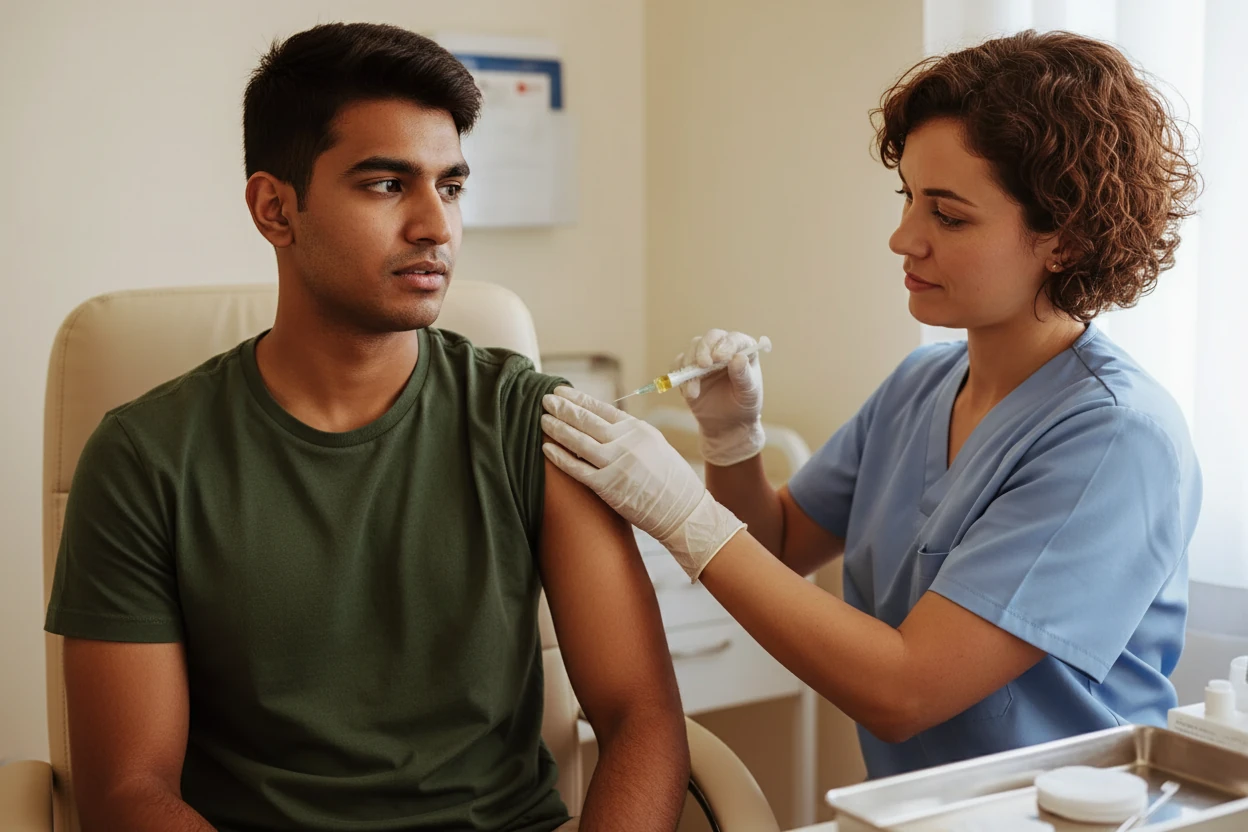
The monovalent XBB.1.5 vaccine, introduced in 2024, has demonstrated the ability to induce lasting cross-reactive antibody responses against HV.1 and other recent Omicron subvariants3. While the vaccine elicits limited antibodies specifically against XBB.1.5 itself, it boosts immunity broadly across related variants, helping reduce the risk of severe illness3. Despite this, vaccine uptake has been slow, with only about 18% of adults and 7% of children in the U.S. having received the updated booster as of late 20232.
Antiviral treatments such as Paxlovid target viral proteins that are more conserved than the spike protein, making them less susceptible to mutations seen in HV.1 and other subvariants3. This supports their continued use in managing COVID-19 infections caused by emerging variants.
- Stay informed through trusted sources like the CDC and WHO for updates on variants and vaccine guidance4
- Receive the updated COVID-19 vaccine booster, especially for individuals aged 6 months and older32
- Practice good hygiene, including frequent handwashing and mask-wearing in crowded or indoor settings4
- Get tested promptly if symptomatic or after exposure to COVID-19, as symptoms overlap with other respiratory viruses42
- Support public health initiatives and encourage vaccination in communities to reduce transmission and severe outcomes4
“The problem is that most people's immunity has faded from past outbreaks and our vaccine uptake is still very low, so it's too soon to draw any conclusions about HV.1 evading immunity from prior infection or vaccination.”
— Priya Sampathkumar, Mayo Clinic2
Surveillance remains a cornerstone of the response to HV.1 and other variants. The CDC continues to monitor variant proportions, hospitalizations, and vaccine effectiveness to guide public health recommendations387. Expanded wastewater and airport testing programs are also being implemented to detect emerging variants early and prevent outbreaks8.
- Updated vaccination with XBB.1.5 monovalent booster3
- Use of antiviral treatments like Paxlovid3
- Frequent hand hygiene and mask use in high-risk settings4
- Prompt testing after symptoms or exposure4
- Following public health guidance and vaccination campaigns48