Many people who recover from covid-test-accuracy-for-eg5-and-ba286-variants">covid-test-accuracy-for-eg5-and-ba286-variants">COVID-19 continue to test positive for the virus for weeks or even months. This prolonged positive result is often due to leftover viral genetic material rather than an active infection. Understanding how different COVID-19 tests work and what a positive result means after recovery is important for managing isolation and preventing unnecessary worry12.
COVID-19 Test Types and Results
There are two main types of COVID-19 tests: molecular tests, such as polymerase chain reaction (PCR) tests, and rapid antigen tests. PCR tests detect viral RNA with high sensitivity and specificity, making them the gold standard for diagnosing SARS-CoV-2 infection34. These tests require laboratory processing and usually take 1 to 3 days to return results4.
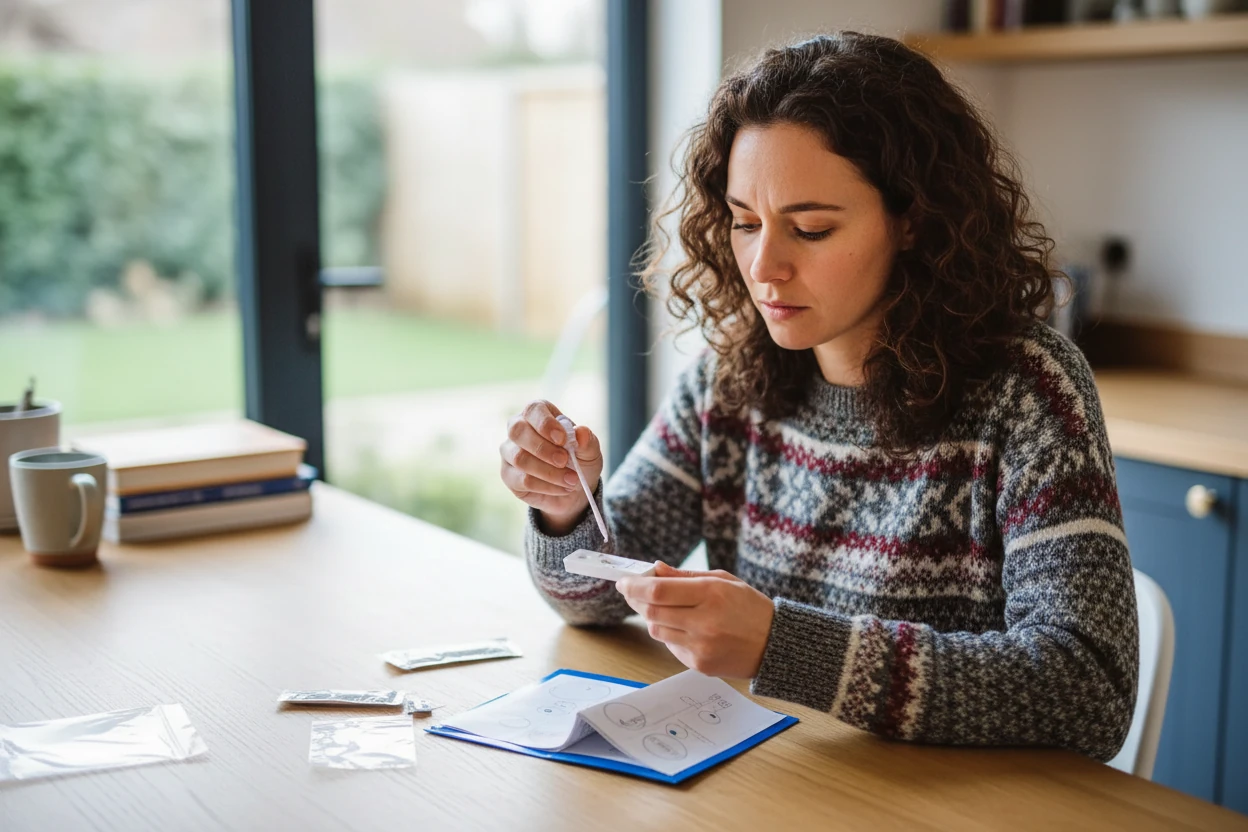
Rapid antigen tests detect viral proteins and provide results within 15 to 30 minutes, often at home. However, antigen tests have lower sensitivity, especially in people without symptoms, which can lead to false-negative results3. Because of these differences, PCR and antigen tests can sometimes give discordant results, with PCR detecting virus when antigen tests do not5.
PCR tests can detect very low levels of viral RNA, including in asymptomatic individuals, and a single positive PCR test is sufficient to confirm COVID-19 infection4. For antigen tests, if symptoms persist after a negative result, repeat testing 24 to 48 hours later is recommended to improve accuracy3.
| Test Type | Detects | Sensitivity | Result Time | Typical Use |
|---|---|---|---|---|
| PCR (Molecular) | Viral RNA | High (even low viral loads) | 1–3 days (lab processed) | Diagnostic gold standard, clinical settings34 |
| Rapid Antigen | Viral proteins | Lower, especially in asymptomatic | 15–30 minutes (at home) | Quick screening, home use3 |
| Sources:345 | ||||
Reasons for a Positive COVID-19 Test After Illness
Testing positive for COVID-19 after recovery is common, especially with PCR tests. This occurs because PCR can detect fragments of viral RNA that remain in the respiratory tract even after the active infection has resolved36. These RNA fragments are non-infectious and do not indicate ongoing viral replication or contagiousness367.
Rapid antigen tests usually become negative within about 9 to 10 days after symptom onset, while PCR tests can remain positive for weeks or even months, sometimes up to 90 days or longer346. People with weakened immune systems, such as those on hemodialysis, may take longer to clear the virus, leading to prolonged positive PCR results8.
Other factors influencing prolonged positivity include age and severity of illness, with elderly and immunocompromised patients more likely to have extended PCR positivity9. Importantly, vaccination does not cause a positive COVID-19 test1.
Contagiousness After a Positive COVID-19 Test
A positive PCR test after recovery does not necessarily mean a person is still contagious. PCR detects viral RNA fragments, which can persist long after the infectious virus is gone36. Viral culture studies show that live, infectious virus is rarely recoverable beyond 9 to 10 days after symptom onset in most cases10116.
People with mild or no symptoms typically stop being contagious within 10 days of symptom onset64. Rapid antigen tests better correlate with contagiousness because they detect viral proteins associated with active viral replication34. Therefore, a positive antigen test is a more reliable indicator of infectiousness than a positive PCR test34.
Transmission risk is minimal after 10 days in mild cases and after symptoms have resolved134. However, immunocompromised individuals may remain infectious for longer periods and require tailored isolation and testing strategies1415.
“Some people continue to test positive by PCR even after they’re clearly no longer infectious. For whatever reason, there is still viral genetic material hanging out in their nose.”
— Gigi Gronvall, PhD, Johns Hopkins Bloomberg School of Public Health1
When to Retest After COVID-19
Retesting after a positive COVID-19 test is generally not required to end isolation. The Centers for Disease Control and Prevention (CDC) recommends a symptom-based and time-based approach rather than a test-based strategy due to prolonged PCR positivity416.
Isolation can typically end after 5 days if symptoms are improving and the person has been fever-free for at least 24 hours without fever-reducing medications. Masking should continue through day 10 to reduce transmission risk416.
If retesting is desired or required (such as for travel or institutional policies), rapid antigen tests are preferred over PCR within 90 days of a prior infection because they better reflect current infectiousness416. Repeat antigen testing 24 to 48 hours after a negative result is recommended if symptoms persist3.
| When to Retest | Recommended Test Type | Notes |
|---|---|---|
| To end isolation (optional) | Rapid antigen | PCR not recommended due to prolonged positivity416 |
| After exposure or symptoms | Rapid antigen | Repeat testing 24–48 hours after negative if symptomatic3 |
| For travel or institutional use | Rapid antigen | Testing may be required within 3 months of prior infection416 |
| Sources:3416 | ||
People with moderate to severe illness or immunocompromised status may require longer isolation and consultation with healthcare providers before ending isolation15.
Key Takeaways
“A positive test can be short-lived or can persist for months. Different types of tests may or may not be persistently positive.”
— Robert Amler, MD, New York Medical College1
- PCR tests are highly sensitive and can detect viral RNA for weeks to months after COVID-19 recovery, while rapid antigen tests usually become negative within about 9 to 10 days346.
- Prolonged PCR positivity reflects non-infectious viral RNA fragments and does not indicate contagiousness367.
- Infectiousness generally ends within 10 days after symptom onset in mild or asymptomatic cases, supported by viral culture studies showing no viable virus beyond 9 days10116.
- CDC recommends ending isolation based on symptom improvement and time rather than test results, with 5 days isolation followed by 5 days of masking416.
- Rapid antigen tests are preferred for retesting within 90 days of infection due to better correlation with contagiousness3416.