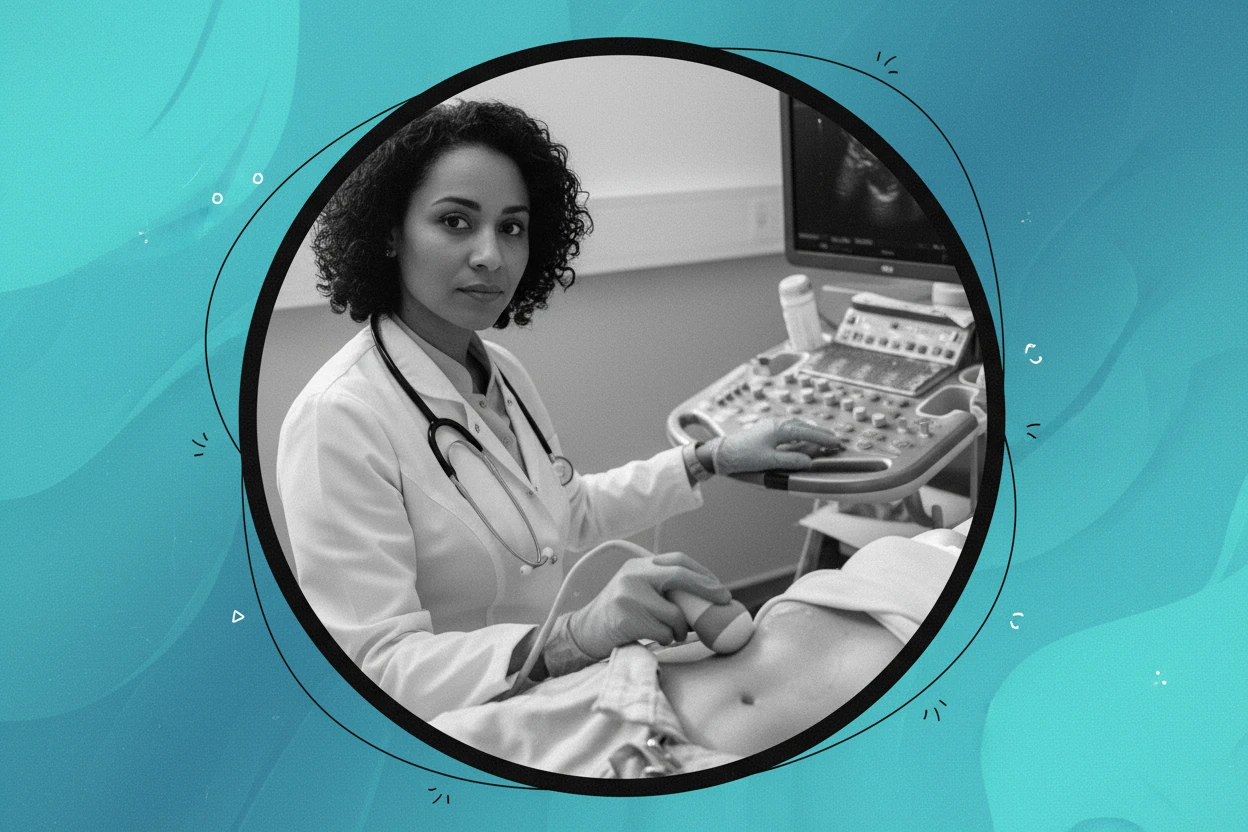
Liver disease affects millions worldwide, often progressing silently until advanced stages. FibroScan, a non-invasive diagnostic tool, helps detect and monitor liver scarring and fat buildup, offering a safer alternative to liver biopsy12. This quick and painless procedure provides immediate results that guide treatment decisions and track disease progression34.
FibroScan Purpose and Uses
Detect Liver Diseases
FibroScan is a specialized ultrasound-based test that measures liver stiffness, which reflects the amount of scarring or fibrosis in the liver5. Liver fibrosis results from the accumulation of tough connective tissue, increasing liver stiffness and impairing liver function34. It is a common feature in chronic liver diseases such as viral hepatitis, alcoholic liver disease, and metabolic-associated steatotic liver disease (MASLD), formerly known as nonalcoholic fatty liver disease (NAFLD)367.
FibroScan is effective in detecting cirrhosis, the most advanced stage of liver scarring, which significantly affects liver function8. By quantifying liver stiffness, FibroScan helps identify the severity of fibrosis and the presence of fat in the liver, known as steatosis, through the controlled attenuation parameter (CAP) score34.
Manage Liver Diseases
FibroScan is widely used to monitor liver disease progression or regression over time, providing valuable information on how the liver responds to treatment34. Liver stiffness measurements predict liver-related complications and mortality in chronic liver disease, helping clinicians make informed decisions about therapy timing and type49.
This tool supports ongoing management by offering reproducible, immediate results that can be used during patient visits to adjust care plans2. It complements other diagnostic methods such as mcv blood test results meaning and normal range tests and imaging, enhancing overall liver disease assessment4.
Preparing for Your FibroScan
Preparation for a FibroScan is straightforward and important for accurate results. Patients are usually instructed to fast for at least two to three hours before the test, avoiding food and drink to prevent temporary changes in liver stiffness34. Drinking small amounts of water to take medications is generally allowed12.
Wearing loose-fitting clothing is recommended to allow easy access to the right upper abdomen where the liver is located1210. Patients will lie on their back with the right arm raised behind the head during the test, so clothing that can be easily adjusted is ideal11011.
Insurance and Costs
FibroScan is often covered by insurance when ordered for appropriate indications such as chronic liver disease evaluation. Patients should bring their insurance card, photo ID, and a list of current medications to the appointment111. The procedure is less expensive than liver biopsy and does not require sedation, reducing overall costs and recovery time2.
Patients are advised to check with their healthcare provider or insurance company about coverage details and any potential out-of-pocket expenses before the test111.
How FibroScan Technology Works
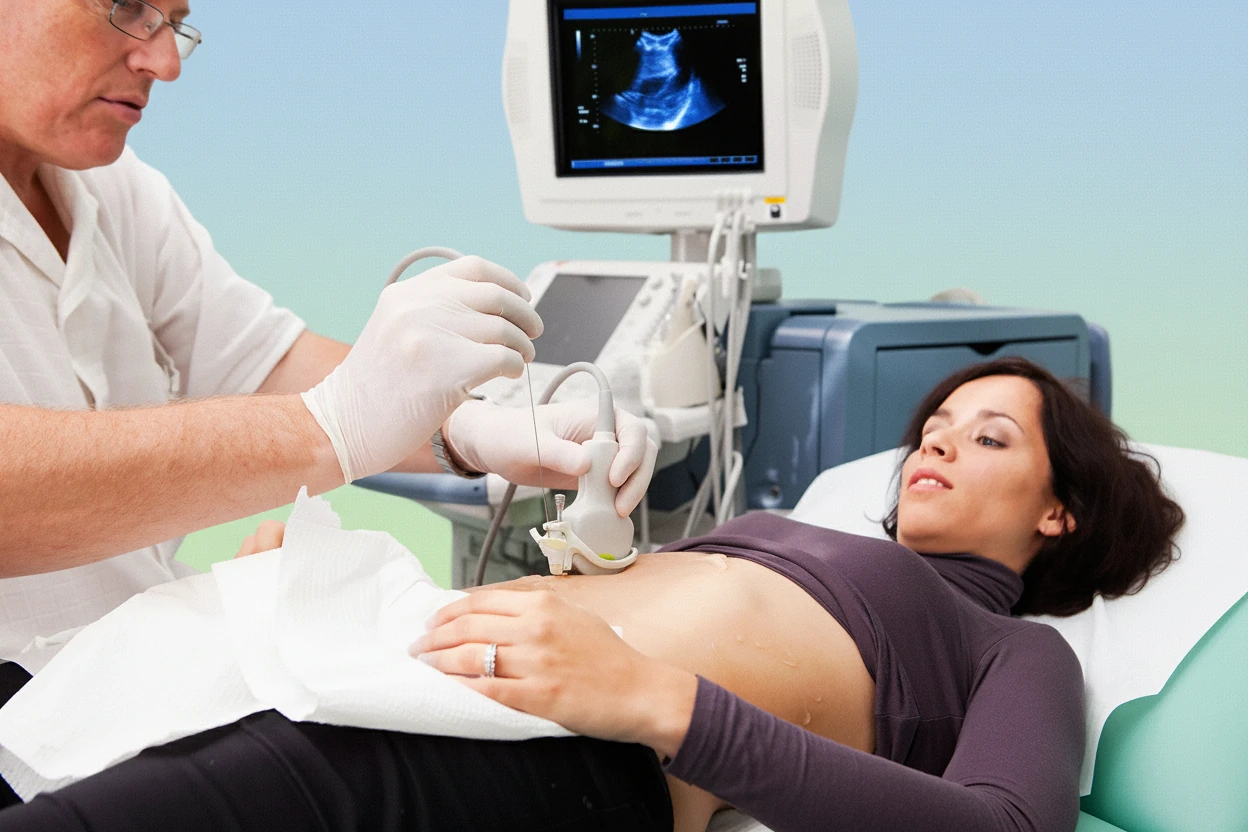
FibroScan uses transient elastography, a technique that sends low-frequency vibrations through the liver to measure its stiffness13142. A handheld ultrasound probe placed on the skin over the liver generates shear waves, and the device measures the velocity of these waves as they travel through liver tissue142.
Higher shear wave velocities correspond to increased liver stiffness, indicating more severe fibrosis or cirrhosis414. The results are expressed in kilopascals (kPa), providing a quantitative measure of liver scarring38.
During the Test
The test is performed in outpatient clinics or hospital radiology departments and usually takes about 5 to 15 minutes12110. The patient lies supine or on the left side with the right arm elevated to expose the right upper abdomen12111.
A water-based gel is applied to the skin to improve contact between the probe and the body12. The probe emits painless vibrations that the patient may feel as mild vibrations but no pain1210. Patients are asked to hold their breath briefly during measurements to reduce motion artifacts and improve accuracy12.
After the Test
FibroScan requires no recovery time, and patients can resume normal activities immediately after the procedure1011. The device analyzes the data instantly, and results are sent to the ordering healthcare provider for interpretation111.
Patients typically receive their results within a few days, and their provider will discuss the findings and next steps during follow-up visits1015.
FibroScan Risks and Precautions
Transient elastography is a rapid, non-invasive, and well-tolerated method to assess liver stiffness4. It does not involve radiation, sedation, or anesthesia, making it a safe option for most patients12.
The main limitation is that certain conditions can interfere with the accuracy or feasibility of the test. These include obesity, ascites (fluid buildup in the abdomen), biliary obstruction, and scar tissue near the liver812. The presence of ascites often prevents the propagation of the vibration wave, leading to failure in obtaining reliable readings16.
FibroScan is generally considered safe, but its safety during pregnancy is not well established, and it is not recommended for patients with pacemakers81216.
Understanding FibroScan Results
FibroScan results provide two key measurements: liver stiffness measurement (LSM) and the controlled attenuation parameter (CAP) score. LSM reflects the degree of liver fibrosis, while CAP quantifies liver fat content315.
Certain factors such as obesity, recent alcohol use, liver inflammation, tumors, or congestion can falsely elevate liver stiffness readings, leading to overestimation of fibrosis815. In such cases, healthcare providers may recommend additional testing like imaging or blood tests to confirm the diagnosis8.
Interpreting Your Results
FibroScan offers a painless, quick alternative to liver biopsy, providing immediate insights into liver fibrosis and fat content. This helps patients avoid invasive procedures and supports timely treatment decisions.1012
Liver stiffness is measured in kilopascals (kPa), with normal values typically ranging between 2 and 7 kPa1516. Fibrosis staging is commonly classified from F0 to F4 based on stiffness values:
| Fibrosis Stage | Description | Liver Stiffness Range (kPa) |
|---|---|---|
| F0 | No fibrosis (healthy liver) | 2 to 7 |
| F1 | Minimal fibrosis | 2 to 7 |
| F2 | Moderate fibrosis (clinical attention needed) | 7 to 11 (varies by disease) |
| F3 | Advanced fibrosis | 11 to 19 (varies by disease) |
| F4 | Cirrhosis (severe scarring) | >19 (varies by disease) |
The CAP score is measured in decibels per meter (dB/m) and indicates the degree of liver steatosis (fat content). Normal liver fat content is generally 5% or less, corresponding to CAP scores below approximately 238 dB/m715.
| CAP Score (dB/m) | Steatosis Grade | Portion of Liver Affected by Fat |
|---|---|---|
| <238 | S0 (normal) | ≤5% |
| 238–260 | S1 (mild) | 11%–33% |
| 260–290 | S2 (moderate) | 34%–66% |
| >290 | S3 (severe) | >67% |
Providers interpret these results alongside clinical history and other tests to guide diagnosis and treatment planning15.
FibroScan Summary and Takeaways
FibroScan is a safe, non-invasive, and rapid procedure that measures liver stiffness to assess fibrosis and liver fat content41. It is widely used to detect liver diseases such as viral hepatitis, alcoholic liver disease, and MASLD, and to monitor disease progression or response to therapy34.
Key points to remember:
- FibroScan requires minimal preparation, mainly fasting for 2–3 hours and wearing loose clothing for easy access to the liver area1210.
- The procedure is painless, takes about 5–15 minutes, and does not require sedation or recovery time110.
- Results provide quantitative measures of liver fibrosis (LSM) and steatosis (CAP), which help guide clinical decisions315.
- Certain factors like obesity, ascites, and liver inflammation can affect test accuracy, and additional tests may be needed in these cases815.
- FibroScan complements other diagnostic tools and reduces the need for invasive liver biopsy in many patients216.
FibroScan represents a significant advancement in liver disease management, enabling earlier detection and better monitoring of liver health.